What would you do if you had no access to Scripture? Most Americans have multiple Bibles at home, dozens of translations at our fingertips, and devotional apps on every device. Yet for believers living in hostile areas and restricted nations, a single torn page of the New Testament is a treasure worth suffering for.
For many Christians around the world, owning a Bible is illegal. It can cost a believer their freedom or even their life. Yet, in the darkest prison cells and most hostile corners of the world, the Word of God remains the most desired possession.
During 25+ years serving at The Voice of the Martyrs, I’ve had the honor to meet with persecuted Christians living and serving in the most dangerous and difficult places to follow Christ. Often, they share their inspiring testimonies.
Recently I came across five powerful stories about what having access to Scripture meant to imprisoned Christians.
1. Brother Joe
Brother Joe, a former prisoner in North Africa, received a smuggled portion of the Bible — just Psalms and part of the Gospel of John. For him, those verses were life itself.
“I would cry over the words,” he said. “Not because I was sad, but because it was like Jesus Himself was sitting in my cell with me.”
Even as Brother Joe endured torture, he began copying verses by hand to share with other prisoners. The guards tried to stop him, but the Word kept spreading. As the prophet Isaiah wrote, “The word of our God shall stand forever.”
2. Helen Berhane
Helen Berhane, an Eritrean gospel singer who was imprisoned in a metal shipping container for over two years, had no Bible at all — but she had memorized verses before her arrest.
“The Word became my song, my food, my comfort,” she shared. “I had no book, but I had Him.”
Even today, years later, those memorized verses continue to sustain her.
3. Aaron
Aaron, a front-line worker, told me about a woman jailed for leading Bible studies in China, where the underground church is heavily persecuted. Fellow inmates, recalling verses they had memorized, pieced together entire chapters from memory. When a contraband Bible finally arrived, they tore it apart — not to destroy it, but to share it.
“In that cell,” Aaron said, “the Bible wasn’t just a book — it was their breath.”
4. Ali
Perhaps the most startling transformation came in the life of Ali, a former jihadist who encountered the Gospel of Luke in prison. The Bible turned his world upside down.
“I had studied violence all my life,” he said. “Then I met Jesus in a jail cell in the pages of that book. That Bible broke me.”
Ali found, for the first time, a God who loves His enemies and sent His Son to die for them.
The Bible is more than print on paper — it’s living and active. The Word of God has the power to sustain people’s faith under the most intense persecution. For the millions of Christians in hostile nations, a Bible is not just a comfort. It is what carries them through their torture and suffering.
5. Iranian prisoner
Hormoz Shariat, the founder of Iran Alive Ministries known as “the Billy Graham of Iran,” shared how one Iranian prisoner risked his life to possess a single page of Scripture. That page became a spark. He memorized it and passed it to another inmate, who did the same.
“They shared one torn page like it was gold,” Shariat said. “It was enough to bring light into total darkness.”
In Iran, where printing or importing Farsi Bibles is illegal, believers face prison or death for sharing God’s Word. And yet, they do it anyway. The hunger for the Bible is so deep that even a fragment — one Psalm, one parable — is worth everything.
Every April, VOM focuses on getting Bibles to persecuted Christians. This year, our ministry has identified 458,000 Christians, by name, who are waiting for a Bible in hostile areas and restricted nations.
Through front-line workers, the ministry is positioned to deliver these Bibles directly into the hands of those who need them most. Imagine being the reason a believer in prison experiences the presence of Christ in their darkest hour!
There are many lessons to learn from others who have suffered for their faith. The stories here are just a small example of the power of God’s Word to bring hope and strength to our brothers and sisters in Christ.
Maybe our first lesson is not to take for granted what others are risking everything to hold.
Todd Nettleton is Vice President for Message at The Voice of the Martyrs and host of The Voice of the Martyrs Radio. He is the author of When Faith Is Forbidden: 40 Days on the Frontlines with Persecuted Christians.
READER NOTE: Voice of The Martyrs charges $10 per Bible per their donation page. Asia Harvest charges $3 to print and deliver a Bible per their donation page. Asia Harvest and the underground church in China estimate that for every Bible given to a believer in China, at least one other individual comes to Christ. Not a bad $3 investment in the Kingdom of God!
Asia Harvest’s ministry is limited to Asia. They print Bibles in 163 different Asian languages. Our family has supported this effort for about three years.
Voice of the Martyrs ministry is worldwide evidently.
May you do your part to spread His Word in this dark world.
What do Mormon women and Prozac have in common? Quite a bit, because research has shown that “Utah residents currently use more antidepressant drugs, notably Prozac, than the residents of any other US state.”* Since over 70% of Utahans are members of the Church of Jesus Christ of Latter-day Saints, there is an obvious link between Mormonism and depression. According to this same research, the problem is more noticeable among women than men. This data can be shocking if all someone knows about the LDS church is what is seen on the TV commercials. These families seem so happy and the husband and wife seem to have such a great marriage. Why this apparent contradiction?
What most people do not see is the “pressure-cooker” environment that these women endure day-in and day-out. When you peel off the mask of Mormonism from these women’s faces, what you see is immense pain. Does LDS theology contribute to the problem? Most definitely. Basic Mormon teaching emphasizes the need for perfection. The most inexperienced LDS missionary will be able to quote Mathew 5:48 “Be ye therefore perfect, even as your Father in heaven is perfect.” The LDS take this command very seriously. When you combine this requirement with the role of having larger-than-average families, the problem is understandable for the women. She is expected to bear and raise as many children as possible, take care of the home, be supportive of her husband in his career (sometimes even work outside the home to pay for his higher education), be active in her church callings and duties, and serve in the community. Sometimes the pressure to fulfill all these roles becomes unbearable.
A story may illustrate this in a more vivid way. This is taken from the LDS Stephen E. Robinson’s book … where he tells us about his wife, Janet. Mr. Robinson is a religion professor at Brigham Young University.
“A number of years ago our family lived in Williamsport, Pennsylvania. Things were pretty good there…Janet had a particularly exciting year that year. Besides being Relief Society president, she graduated from college for the second time (in accounting), she passed the CPA exam and took a job with a local firm, and she gave birth to our fourth child (Michael)—all in her spare time, of course. Actually, Janet was under a lot of pressure that year, but like many husbands, I didn’t notice or appreciate how much pressure she was under until something blew. And blow it did.
One day the lights just went out. It was as though Janet had died to spiritual things; she had burned out… One of the worst aspects of this sudden change was that Janet wouldn’t talk about it; she wouldn’t tell me what was wrong.
Finally, after almost two weeks, I made her mad with my nagging one night as we lay in bed, and she said, “All right. Do you want to know what’s wrong? I’ll tell you what’s wrong—I can’t do it anymore. I can’t lift it. My load is just too heavy. I can’t do all the things I’m supposed to. I can’t get up at 5:30, and bake bread, and sew clothes, and help the kids with their homework, and do my own homework, and make their lunches, and do the housework, and do my Relief Society stuff, and have scripture study, and do my genealogy, and write my congressman, and go to PTA meetings, and get our year’s supply organized, and go to my stake meetings, and write the missionaries . . . “I’m just not perfect—I’m never going to be perfect, and I just can’t pretend anymore that I am. I’ve finally admitted to myself that I can’t make it to the celestial kingdom, so why should I break my back trying?”
Janet Robinson’s feelings are very typical of how many Mormon women feel. She had obviously come to the place where she was facing the doctrine that her church had taught her and being honest with herself about her inability to live up to it. When Mormon women become born-again Christians, many of these pressures are still hard to gain freedom from. It has been so ingrained in them from childhood that they must be perfect. One of my favorite verses to help in this process when discipling these women is Romans 8:1&2 – “Therefore, there is now no condemnation for those who are in Christ Jesus. Because through Christ Jesus, the law of the spirit of life set me free from the law of sin and death.” I always like to point out what it doesn’t say. It doesn’t say that there is “some” condemnation. Also, the spirit of life “sets me free”, not “keeps me bound”. These truths are part of what it takes to free these women from what the LDS church has led them to believe that God requires.
When discussing this topic with some of the women that I’m discipling, the conversation became very lively! They all agreed that many more are clinically depressed who don’t do anything about it. They cannot even acknowledge or call attention to the fact that they’re struggling because to do so would be an admission that they are not living up to the Church’s standards. When they had these feelings themselves, they immediately assumed that the problem was with them, not their Church, because the Church is perfect. They just needed to try harder. One woman illustrated it this way from her life’s experience: “LDS women are put up on a pedestal for all to see…This is NOT the abundant life that Jesus talked about in John 10:10.
Why discuss the life of the LDS woman in this way? My purpose is to enlighten as many as I can so that, as Christians, our hearts will break for the LDS women that we know and compel us to reach out to them and share the truly good news of Jesus with them.
“Some want to live within the sound of church or chapel bell. I want to run a rescue shop within a yard of hell.” William Booth, founder of the Salvation Army
From time to time, we receive very sensitive reports from our partners in Asia. We often refrain from sharing such stories to protect the safety of our partners, while striving to create a balanced newsletters that don’t overly burden our readers and leave them with broken hearts.
Sadly, many of the stories include suffering and reflect some of the worst depravity of mankind.
While we love to encourage readers with stories of revival and Gospel breakthroughs, to only share those would be unbalanced. Asia is also a place of intense spiritual darkness, and sometimes things that are difficult to read are necessary to share so that believers around the world can know how to pray.
Now take a moment to consider William Booth’s quote cited above. Have you ever considered what it might actually look like to run a rescue shop just outside the boundary of hell? What we are about to share with you in this newsletter is the result of believers doing just that in Myanmar today.
Last year, we were excited to receive a call from one of our dearest ministry partners on the field in Asia. He is seeing God move powerfully among hungry hearts, with thousands of people having been added to the family of God.
However, what he shared that day caused our hearts to grieve and tears to fill our eyes. …the Lord is saving countless beautiful children in Myanmar. Yet Satan does not let any genuine move of God go unchallenged, and the story we are about to share is both gripping and heavy. Please read it through to the end, as there is a message of hope at its conclusion.
THE FOLLOWING TRUE STORY IS NOT RECOMMENDED FOR CHILDREN. READER DISCRETION IS ADVISED.
Eva (not her real name) was just 11 years old when a great darkness visited the slum she calls home…
It happened on a sunny day, just like any other. The streets were buzzing with life as schoolchildren were on holiday and were making the most of their young lives in the impoverished neighborhood.
“Following me for some free candy!” one child shouted to groups of playing children. Eva’s belly growled at the thought of eating something sweet. She frequently felt hunger pangs at home due to a lack of food, so she welcomed the invitation and hurried over along with the other children for some free candy.
Eva had noticed that some of her friends as well as others had disappeared from time to time, never to return. This made many in her village aware of the dangers around them and suspicious of strangers. But the young boy leading them to get candy was a familiar face in the neighborhood, and his parents met the group of children along the way, putting Eva’s heart at ease.
As the group walked quite a distance from the village, the boy’s parents excitedly told them about a free medical clinic that would be distributing candy along with a free vaccine for each child. Coming from destitute families who can’t afford the most basic medical procedures without becoming enslaved by debt to violent gang lenders, the children considered the offer of medical help one less cost for their parent to worry about.
Finally, beyond earshot of the village, the group of now 20 children, along with a pregnant mother, entered the local graveyard. It seemed like an odd place for candy and vaccines to be distributed, but sure enough, there was a table set up with medical instruments operated by staff dressed in white lab coats.
The children formed a line and quickly, one by one, received an injection in the arm, followed by a piece of candy. While they were all enjoying their candy, Eva noticed something very odd beginning to happen to each one of them.
A strange fog clouded their judgement and made them dizzy.
And then it happened.
The pregnant mother was suddenly murdered right in front of the children by these criminals dressed as doctors and nurses. With no concern for the sanctity of human life, they proceeded to slash open the deceased mother’s stomach, pulling her precious unborn child from her womb.
Terror of the worst kind gripped every child. Drugged beyond the point of being able to resist and now threatened with death themselves if they did not cooperate, the children were herded into the backs of open-bed trucks and driven through their village to a nearby fishing pier, where they were placed on boats.
Eva inwardly screamed for help, but no words made it to her lips because of the drug-induced state she was in. It was at that horrifying moment that she remembered the words she had heard at a Christian meeting she had attended since she gave her life to Jesus. It was there that she first learned that Jesus cares for everyone and can save people when they call upon His name.
“Jesus!” she cried out in Burmese. It was all she was capable of saying.
The boat that took the children across the river docked on the far side, and each child was whisked through the fish market and hurriedly pushed into cars that drove them away. Eva watched with crippling fear as she was pushed closer to one of the cars, its door opening for her as she approached.
Then, out of nowhere, two very tall white, angelic beings appeared! They released her from the arms of her captors, brought her back to the pier, and put her on a boat returning to her village on the other side of the river. Eva made it safely home and has been slowly recovering from the trauma, but sadly, none of the 19 other children have returned to their families since that day.
Most children who disappear in Myanmar under these circumstances do not live to tell their stories. Asia Harvest has since learned from our partners in the slums that the 19 children were most likely sent to various hospitals, where they were sedated before surgeons removed all their organs, killing them in the process. The murder of the pregnant mother and the nature of the diabolical events of that day confirm these children were victims of human organ harvesting. Key organs, such as livers, kidneys, hearts, and lungs, are sold for transplant in wealthier countries.
Ongoing civil war in Myanmar has torn the country apart and resulted in the breakdown of society and the failure of the justice system. As a result, the police do nothing to assist victims, creating an environment in which such monstrous evil can thrive.
While the Church in Myanmar lacks the human ability to get judicial help against these threats, God’s children there have learned that the Lord Jesus is the true source of their rescue. The Scriptures have become very real in their lives, such as Psalm 20:7: “Some trust in chariots and some in horses, but we trust in the name of the Lord our God.”
Perhaps God moving so mightily in Myanmar today –the likes of which have never been seen before among the Buddhist majority — is Heaven’s response to the cries of desperate believers who lack an army of chariots and human forces to rescue them. With no such resources outside of Christ, they have been discovering the blessing that this “last resort” was all along their only lasting hope.
Through this profound discovery, God’s revival fires are burning ever brighter amidst Myanmar’s darkest hours.
Please pray for Eva to completely heal from the deep trauma she endured and for the 19 families who now live with the painful void of their children having been so brutally snatched from them.
Every day our coworkers help precious children like Eva, and multitudes of young children and teenagers have been rescued who would have otherwise been trafficked by gangs in sex work, drug dealing, and many other types of modern-day slavery. By the power of the Holy Spirit, thousands of at-risk families have come to a saving knowledge of Jesus. Not only have many vulnerable individuals come to Christ and been radically transformed, but many traffickers and gang members have also repented and surrendered their lives to the Lord Jesus!
Last year, Asia Harvest leaders visited the very slum where this diabolical incident occurred, and we even crossed on the same boats that took the kidnapped children across the river. We have personally witnessed the powerful work the Holy Spirit is doing in those poor communities, and we can declare with great conviction that Jesus IS the answer and the only hope for Myanmar and the world.
The End.
Thank you for taking time to read this article. Please pray for the people and Christians of Myanmar. Please visit Asia Harvest if you wish to learn more about how to help their work through The Children’ Fund or Bibles for Asia ($3 each) fund. While seeking an Asia ministry we could trust, we were directed to Asia Harvest by a close friend who worked as an underground missionary in communist China for many years. We give monthly to their work.
(The following is an article from Biblical Archaeology Society by Lawrence Mykytiuk (bio at end of article). If you are interested in archaeology and its relationship to the Bible, we recommend looking at this organization.)
After two decades toiling in the quiet groves of academe, I published an article in BAR titled “Archaeology Confirms 50 Real People in the Bible.”a The enormous interest this article generated was a complete surprise to me. Nearly 40 websites in six languages, reflecting a wide spectrum of secular and religious orientations, linked to BAR’s supplementary web page.b Some even posted translations.
I thought about following up with a similar article on people in the New Testament, but I soon realized that this would be so dominated by the question of Jesus’ existence that I needed to consider this question separately. This is that article:
Did Jesus of Nazareth, who was called Christ, exist as a real human being, “the man Christ Jesus” according to 1 Timothy 2:5?
The sources normally discussed fall into three main categories: (1) classical (that is, Greco-Roman), (2) Jewish and (3) Christian. But when people ask whether it is possible to prove that Jesus of Nazareth actually existed, as John P. Meier pointed out decades ago, “The implication is that the Biblical evidence for Jesus is biased because it is encased in a theological text written by committed believers. What they really want to know is: Is there extra-Biblical evidence … for Jesus’ existence?”c
Therefore, this article will cover classical and Jewish writings almost exclusively.
Tacitus—or more formally, Caius/Gaius (or Publius) Cornelius Tacitus (55/56–c. 118 C.E.)—was a Roman senator, orator and ethnographer, and arguably the best of Roman historians. His name is based on the Latin word tacitus, “silent,” from which we get the English word tacit. Interestingly, his compact prose uses silence and implications in a masterful way. One argument for the authenticity of the quotation below is that it is written in true Tacitean Latin. But first a short introduction.
Tacitus’s last major work, titled Annals, written c. 116–117 C.E., includes a biography of Nero. In 64 C.E., during a fire in Rome, Nero was suspected of secretly ordering the burning of a part of town where he wanted to carry out a building project, so he tried to shift the blame to Christians. This was the occasion for Tacitus to mention Christians, whom he despised. This is what he wrote—the following excerpt is translated from Latin by Robert Van Voorst:
[N]either human effort nor the emperor’s generosity nor the placating of the gods ended the scandalous belief that the fire had been ordered [by Nero]. Therefore, to put down the rumor, Nero substituted as culprits and punished in the most unusual ways those hated for their shameful acts … whom the crowd called “Chrestians.” The founder of this name, Christ [Christus in Latin], had been executed in the reign of Tiberius by the procurator Pontius Pilate … Suppressed for a time, the deadly superstition erupted again not only in Judea, the origin of this evil, but also in the city [Rome], where all things horrible and shameful from everywhere come together and become popular.
Tacitus’s terse statement about “Christus” clearly corroborates the New Testament on certain historical details of Jesus’ death. Tacitus presents four pieces of accurate knowledge about Jesus: (1) Christus, used by Tacitus to refer to Jesus, was one distinctive way by which some referred to him, even though Tacitus mistakenly took it for a personal name rather than an epithet or title; (2) this Christus was associated with the beginning of the movement of Christians, whose name originated from his; (3) he was executed by the Roman governor of Judea; and (4) the time of his death was during Pontius Pilate’s governorship of Judea, during the reign of Tiberius. (Many New Testament scholars date Jesus’ death to c. 29 C.E.; Pilate governed Judea in 26–36 C.E., while Tiberius was emperor 14–37 C.E.)
Tacitus, like classical authors in general, does not reveal the source(s) he used. But this should not detract from our confidence in Tacitus’s assertions. Scholars generally disagree about what his sources were. Tacitus was certainly among Rome’s best historians—arguably the best of all—at the top of his game as a historian and never given to careless writing.
Earlier in his career, when Tacitus was Proconsul of Asia, he likely supervised trials, questioned people accused of being Christians and judged and punished those whom he found guilty, as his friend Pliny the Younger had done when he too was a provincial governor. Thus Tacitus stood a very good chance of becoming aware of information that he characteristically would have wanted to verify before accepting it as true.
The other strong evidence that speaks directly about Jesus as a real person comes from Josephus, a Jewish priest who grew up as an aristocrat in first-century Palestine and ended up living in Rome, supported by the patronage of three successive emperors. In the early days of the first Jewish Revolt against Rome (66–70 C.E.), Josephus was a commander in Galilee but soon surrendered and became a prisoner of war. He then prophesied that his conqueror, the Roman commander Vespasian, would become emperor, and when this actually happened, Vespasian freed him. “From then on Josephus lived in Rome under the protection of the Flavians and there composed his historical and apologetic writings” (Gerd Theissen and Annette Merz). He even took the name Flavius, after the family name of his patron, the emperor Vespasian, and set it before his birth name, becoming, in true Roman style, Flavius Josephus. Most Jews viewed him as a despicable traitor. It was by command of Vespasian’s son Titus that a Roman army in 70 C.E. destroyed Jerusalem and burned the Temple, stealing its contents as spoils of war, which are partly portrayed in the imagery of their gloating triumph on the Arch of Titus in Rome. After Titus succeeded his father as emperor, Josephus accepted the son’s imperial patronage, as he did of Titus’s brother and successor, Domitian.
Yet in his own mind, Josephus remained a Jew both in his outlook and in his writings that extol Judaism. At the same time, by aligning himself with Roman emperors who were at that time the worst enemies of the Jewish people, he chose to ignore Jewish popular opinion.
Josephus stood in a unique position as a Jew who was secure in Roman imperial patronage and protection, eager to express pride in his Jewish heritage and yet personally independent of the Jewish community at large. Thus, in introducing Romans to Judaism, he felt free to write historical views for Roman consumption that were strongly at variance with rabbinic views.
In his two great works, The Jewish War and Jewish Antiquities, both written in Greek for educated people, Josephus tried to appeal to aristocrats in the Roman world, presenting Judaism as a religion to be admired for its moral and philosophical depth. The Jewish War doesn’t mention Jesus except in some versions in likely later additions by others, but Jewish Antiquities does mention Jesus—twice.
The shorter of these two references to Jesus (in Book 20) is incidental to identifying Jesus’ brother James, the leader of the church in Jerusalem. In the temporary absence of a Roman governor between Festus’s death and governor Albinus’s arrival in 62 C.E., the high priest Ananus instigated James’s execution. Josephus described it:
Being therefore this kind of person [i.e., a heartless Sadducee], Ananus, thinking that he had a favorable opportunity because Festus had died and Albinus was still on his way, called a meeting [literally, “sanhedrin”] of judges and brought into it the brother of Jesus-who-is-called-Messiah … James by name, and some others. He made the accusation that they had transgressed the law, and he handed them over to be stoned.
James is otherwise a barely noticed, minor figure in Josephus’s lengthy tome. The sole reason for referring to James at all was that his death resulted in Ananus losing his position as high priest. James (Jacob) was a common Jewish name at this time. Many men named James are mentioned in Josephus’s works, so Josephus needed to specify which one he meant. The common custom of simply giving the father’s name (James, son of Joseph) would not work here, because James’s father’s name was also very common. Therefore Josephus identified this James by reference to his famous brother Jesus. But James’s brother Jesus (Yehoshua) also had a very common name. Josephus mentions at least 12 other men named Jesus. Therefore Josephus specified which Jesus he was referring to by adding the phrase “who is called Messiah,” or, since he was writing in Greek, Christos. This phrase was necessary to identify clearly first Jesus and, via Jesus, James, the subject of the discussion. This extraneous reference to Jesus would have made no sense if Jesus had not been a real person.
Few scholars have ever doubted the authenticity of this short account. On the contrary, the huge majority accepts it as genuine. The phrase intended to specify which Jesus, translated “who is called Christ,” signifies either that he was mentioned earlier in the book or that readers knew him well enough to grasp the reference to him in identifying James. The latter is unlikely. First-century Romans generally had little or no idea who Christus was. It is much more likely that he was mentioned earlier in Jewish Antiquities. Also, the fact that the term “Messiah”/“Christ” is not defined here suggests that an earlier passage in Jewish Antiquities has already mentioned something of its significance. This phrase is also appropriate for a Jewish historian like Josephus because the reference to Jesus is a noncommittal, neutral statement about what some people called Jesus and not a confession of faith that actually asserts that he was Christ.
This phrase—“who is called Christ”—is very unlikely to have been added by a Christian for two reasons. First, in the New Testament and in the early Church Fathers of the first two centuries C.E., Christians consistently refer to James as “the brother of the Lord” or “of the Savior” and similar terms, not “the brother of Jesus,” presumably because the name Jesus was very common and did not necessarily refer to their Lord. Second, Josephus’s description in Jewish Antiquities of how and when James was executed disagrees with Christian tradition, likewise implying a non-Christian author.
This short identification of James by the title that some people used in order to specify his brother gains credibility as an affirmation of Jesus’ existence because the passage is not about Jesus. Rather, his name appears in a functional phrase that is called for by the sense of the passage. It can only be useful for the identification of James if it is a reference to a real person, namely, “Jesus who is called Christ.”
This clear reference to Jesus is sometimes overlooked in debates about Josephus’s other, longer reference to Jesus (to be treated next). Quite a few people are aware of the questions and doubts regarding the longer mention of Jesus, but often this other clear, simple reference and its strength as evidence for Jesus’ existence does not receive due attention.
The longer passage in Josephus’s Jewish Antiquities (Book 18) that refers to Jesus is known as the Testimonium Flavianum.
If it has any value in relation to the question of Jesus’ existence, it counts as additional evidence for Jesus’ existence. The Testimonium Flavianum reads as follows; the parts that are especially suspicious because they sound Christian are in italics:
Around this time there lived Jesus, a wise man, if indeed one ought to call him a man. For he was one who did surprising deeds, and a teacher of such people as accept the truth gladly. He won over many Jews and many of the Greeks. He was the Messiah. When Pilate, upon hearing him accused by men of the highest standing among us, had condemned him to be crucified, those who in the first place came to love him did not give up their affection for him, for on the third day, he appeared to them restored to life. The prophets of God had prophesied this and countless other marvelous things about him. And the tribe of Christians, so called after him, have still to this day not died out.
All surviving manuscripts of the Testimonium Flavianum that are in Greek, like the original, contain the same version of this passage, with no significant differences.
The main question is: Did Flavius Josephus write this entire report about Jesus and his followers, or did a forger or forgers alter it or possibly insert the whole report? There are three ways to answer this question:
Alternative 1: The whole passage is authentic, written by Josephus.
Alternative 2: The whole passage is a forgery, inserted into Jewish Antiquities.
Alternative 3: It is only partly authentic, containing some material from Josephus, but also some later additions by another hand(s).
Regarding Alternative 1, today almost no scholar accepts the authenticity of the entire standard Greek Testimonium Flavianum. In contrast to the obviously Christian statement “He was the Messiah” in the Testimonium, Josephus elsewhere “writes as a passionate advocate of Judaism,” says Josephus expert Steve Mason. “Everywhere Josephus praises the excellent constitution of the Jews, codified by Moses, and declares its peerless, comprehensive qualities … Josephus rejoices over converts to Judaism. In all this, there is not the slightest hint of any belief in Jesus” as seems to be reflected in the Testimonium.
The bold affirmation of Jesus as Messiah reads as a resounding Christian confession that echoes St. Peter himself! It cannot be Josephus. Alternative 1 is clearly out.
Regarding Alternative 2—the whole Testimonium Flavianum is a forgery—this is very unlikely. What is said, and the expressions in Greek that are used to say it, despite a few words that don’t seem characteristic of Josephus, generally fit much better with Josephus’s writings than with Christian writings. It is hypothetically possible that a forger could have learned to imitate Josephus’s style or that a reviser adjusted the passage to that style, but such a deep level of attention, based on an extensive, detailed reading of Josephus’s works and such a meticulous adoption of his vocabulary and style, goes far beyond what a forger or a reviser would need to do.
Even more important, the short passage (treated above) that mentions Jesus in order to identify James appears in a later section of the book (Book 20) and implies that Jesus was mentioned previously.
The best-informed among the Romans understood Christus to be nothing more than a man’s personal name, on the level of Publius and Marcus. First-century Romans generally had no idea that calling someone “Christus” was an exalted reference, implying belief that he was the chosen one, God’s anointed. The Testimonium, in Book 18, appropriately found in the section that deals with Pilate’s time as governor of Judea, is apparently one of Josephus’s characteristic digressions, this time occasioned by mention of Pilate. It provides background for Josephus’s only other written mention of Jesus (in Book 20), and it connects the name Jesus with his Christian followers. The short reference to Jesus in the later book depends on the longer one in the earlier (Book 18). If the longer one is not genuine, this passage lacks its essential background. Alternative 2 should be rejected.
Alternative 3—that the Testimonium Flavianum is based on an original report by Josephus that has been modified by others, probably Christian scribes, seems most likely. After extracting what appear to be Christian additions, the remaining text appears to be pure Josephus. As a Romanized Jew, Josephus would not have presented these beliefs as his own. Interestingly, in three openly Christian, non-Greek versions of the Testimonium Flavianum analyzed by Steve Mason, variations indicate changes were made by others besides Josephus. The Latin version says Jesus “was believed to be the Messiah.” The Syriac version is best translated, “He was thought to be the Messiah.” And the Arabic version with open coyness suggests, “He was perhaps the Messiah concerning whom the prophets have recounted wonders.” Alternative 3 has the support of the overwhelming majority of scholars.
We can learn quite a bit about Jesus from Tacitus and Josephus, two famous historians who were not Christian. Almost all the following statements about Jesus, which are asserted in the New Testament, are corroborated or confirmed by the relevant passages in Tacitus and Josephus. These independent historical sources—one a non-Christian Roman and the other Jewish—confirm what we are told in the Gospels:
1. He existed as a man. The historian Josephus grew up in a priestly family in first-century Palestine and wrote only decades after Jesus’ death. Jesus’ known associates, such as Jesus’ brother James, were his contemporaries. The historical and cultural context was second nature to Josephus. “If any Jewish writer were ever in a position to know about the non-existence of Jesus, it would have been Josephus. His implicit affirmation of the existence of Jesus has been, and still is, the most significant obstacle for those who argue that the extra-Biblical evidence is not probative on this point,” Robert Van Voorst observes. And Tacitus was careful enough not to report real executions of nonexistent people.
2. His personal name was Jesus, as Josephus informs us.
3. He was called Christos in Greek, which is a translation of the Hebrew word Messiah, both of which mean “anointed” or “(the) anointed one,” as Josephus states and Tacitus implies, unaware, by reporting, as Romans thought, that his name was Christus.
4. He had a brother named James (Jacob), as Josephus reports.
5. He won over both Jews and “Greeks” (i.e., Gentiles of Hellenistic culture), according to Josephus, although it is anachronistic to say that they were “many” at the end of his life. Large growth in the number of Jesus’ actual followers came only after his death.
6. Jewish leaders of the day expressed unfavorable opinions about him, at least according to some versions of the Testimonium Flavianum.
7. Pilate rendered the decision that he should be executed, as both Tacitus and Josephus state.
8. His execution was specifically by crucifixion, according to Josephus.
9. He was executed during Pontius Pilate’s governorship over Judea (26–36 C.E.), as Josephus implies and Tacitus states, adding that it was during Tiberius’s reign.
Some of Jesus’ followers did not abandon their personal loyalty to him even after his crucifixion but submitted to his teaching. They believed that Jesus later appeared to them alive in accordance with prophecies, most likely those found in the Hebrew Bible. A well-attested link between Jesus and Christians is that Christ, as a term used to identify Jesus, became the basis of the term used to identify his followers: Christians. The Christian movement began in Judea, according to Tacitus. Josephus observes that it continued during the first century. Tacitus deplores the fact that during the second century it had spread as far as Rome.
As far as we know, no ancient person ever seriously argued that Jesus did not exist. Referring to the first several centuries C.E., even a scholar as cautious and thorough as Robert Van Voorst freely observes, “… [N]o pagans and Jews who opposed Christianity denied Jesus’ historicity or even questioned it.”
Nondenial of Jesus’ existence is particularly notable in rabbinic writings of those first several centuries C.E.: “… [I]f anyone in the ancient world had a reason to dislike the Christian faith, it was the rabbis. To argue successfully that Jesus never existed but was a creation of early Christians would have been the most effective polemic against Christianity … [Yet] all Jewish sources treated Jesus as a fully historical person … [T]he rabbis … used the real events of Jesus’ life against him” (Van Voorst).
Thus his birth, ministry and death occasioned claims that his birth was illegitimate and that he performed miracles by evil magic, encouraged apostasy and was justly executed for his own sins. But they do not deny his existence.
Lucian of Samosata (c. 115–200 C.E.) was a Greek satirist who wrote The Passing of Peregrinus, about a former Christian who later became a famous Cynic and revolutionary and died in 165 C.E. In two sections of Peregrinus—here translated by Craig A. Evans—Lucian, while discussing Peregrinus’s career, without naming Jesus, clearly refers to him, albeit with contempt in the midst of satire:
It was then that he learned the marvelous wisdom of the Christians, by associating with their priests and scribes in Palestine. And—what else?—in short order he made them look like children, for he was a prophet, cult leader, head of the congregation and everything, all by himself. He interpreted and explained some of their books, and wrote many himself. They revered him as a god, used him as a lawgiver, and set him down as a protector—to be sure, after that other whom they still worship, the man who was crucified in Palestine because he introduced this new cult into the world.
For having convinced themselves that they are going to be immortal and live forever, the poor wretches despise death and most even willingly give themselves up. Furthermore, their first lawgiver persuaded them that they are all brothers of one another after they have transgressed once for all by denying the Greek gods and by worshiping that crucified sophist himself and living according to his laws.
Although Lucian was aware of the Christians’ “books” (some of which might have been parts of the New Testament), his many bits of misinformation make it seem very likely that he did not read them. The compound term “priests and scribes,” for example, seems to have been borrowed from Judaism, and indeed, Christianity and Judaism were sometimes confused among classical authors.
Lucian seems to have gathered all of his information from sources independent of the New Testament and other Christian writings. For this reason, this writing of his is usually valued as independent evidence for the existence of Jesus.
This is true despite his ridicule and contempt for Christians and their “crucified sophist.” “Sophist” was a derisive term used for cheats or for teachers who only taught for money. Lucian despised Christians for worshiping someone thought to be a criminal worthy of death and especially despised “the man who was crucified.”
Other testimony that has some value, but much less, as evidence regarding the existence of Jesus appears in the writings of the following people:
Celsus, the Platonist philosopher, considered Jesus to be a magician who made exorbitant claims.
Pliny the Younger, a Roman governor and friend of Tacitus, wrote about early Christian worship of Christ “as to a god.”
Suetonius, a Roman writer, lawyer and historian, wrote of riots in 49 C.E. among Jews in Rome which might have been about Christus but which he thought were incited by “the instigator Chrestus,” whose identification with Jesus is not completely certain.
Mara bar Serapion, a prisoner of war held by the Romans, wrote a letter to his son that described “the wise Jewish king” in a way that seems to indicate Jesus but does not specify his identity.
Other documentary sources are doubt-ful or irrelevant.
One can label the evidence treated above as documentary (sometimes called literary) or as archaeological. Almost all sources covered above exist in the form of documents that have been copied and preserved over the course of many centuries, rather than excavated in archaeological digs. Therefore, although some writers call them archaeological evidence, I prefer to say that these truly ancient texts are ancient documentary sources, rather than archaeological discoveries.
Some ossuaries (bone boxes) have come to light that are inscribed simply with the name Jesus (Yeshu or Yeshua‘ in Hebrew), but no one suggests that this was Jesus of Nazareth. The name Jesus was very common at this time, as was Joseph. So as far as we know, these ordinary ossuaries have nothing to do with the New Testament Jesus. Even the ossuary from the East Talpiot district of Jerusalem, whose inscription is translated “Yeshua‘, son of Joseph,” does not refer to him.
As for the famous James ossuary first published in 2002,d whose inscription is translated “Jacob, son of Joseph, brother of Yeshua‘,” more smoothly rendered, “James, son of Joseph, brother of Jesus,” it is unprovenanced, and it will likely take decades to settle the matter of whether it is authentic. Following well-established, sound methodology, I do not base conclusions on materials whose authenticity is uncertain, because they might be forged. Therefore the James ossuary, which is treated in many other publications, is not included here.
As a final observation: In New Testament scholarship generally, a number of specialists consider the question of whether Jesus existed to have been finally and conclusively settled in the affirmative. A few vocal scholars, however, still deny that he ever lived.
Lawrence Mykytiuk is Emeritus Professor of Library Science and former Associate Professor of History (courtesy) at Purdue University. He holds a Ph.D. in Hebrew and Semitic Studies and is the author of Identifying Biblical Persons in Northwest Semitic Inscriptions of 1200–539 B.C.E. (2004).
By Anugrah Kumar, Christian Post Contributor Thursday, February 20, 2025
Seventy Christians were discovered beheaded inside a Protestant church in the Democratic Republic of Congo’s North Kivu Province, according to reports, which say the victims had been kidnapped by suspected Allied Democratic Forces terrorists.
The terrorists arrived in Mayba, a village in the territory of Lubero, at around 4 a.m. last Thursday and ordered residents to quietly get out, said Open Doors, adding that at least 20 Christian men and women had to leave their homes, leading to their capture.
Later, concerned residents gathered to plan a rescue, but the armed group is said to have surrounded the village and managed to seize 50 more believers. The abducted residents were then taken to a Protestant church in Kasanga, where they were found beheaded, said the ministry.
Families in the area could not immediately bury their relatives because of persistent security threats.
The U.S.-based persecution watchdog International Christian Concern called the attack “a brutal massacre,” and said the ADF held the hostages for days before executing them.
“This recent massacre, where 70 Christians lost their lives, is not an isolated incident but part of a grim tapestry of violence that has claimed over 6 million lives in the DRC over two decades of on-and-off war,” said ICC President Jeff King in a statement provided to The Christian Post. “The vast majority of the DRC’s residents are Christian, so this is a religious genocide carried out by radical Islamic terrorists (the ADF).”
He continued, “It’s time for more than prayers; we must demand an all-African military force to intervene in this failed state, to restore order and save countless more people from becoming victims of this endless cycle of bloodshed.”
Open Doors quoted a local primary school director, speaking from Kombo school, as saying that churches and health centers in the region had already halted operations due to widespread violence. They had to relocate all their activities.
Many Christians have reportedly fled Lubero for safety. One community elder from the local CECA20 church commented, “We don’t know what to do or how to pray; we’ve had enough of massacres. May God’s will alone be done.”
The ADF, which is associated with the Islamic State terror group, has intensified assaults in northeastern Congo for several years. In 2014, the group escalated attacks in Beni territory of North Kivu province, later expanding into Irumu and Mambasa in Ituri province.
A local news outlet reported that more than 200 individuals were killed in Baswagha chiefdom last month.
DRC moved six places higher on the World Watch List, ranking 35th in the most recent evaluation. Recorded deaths for faith-related reasons rose from 261 to 355 last year, and thousands of people were internally displaced.
Houses in affected regions have been looted, churches closed and some Christian villages left abandoned. In the midst of this turmoil, the presence of M23 rebels, reportedly supported by Rwanda, has contributed to the insecurity.
Rwanda has been accused of supporting M23 in the hope of annexing some of its mineral rich territory. Rwanda, in turn, has accused DRC of supporting anti-government militias in its territory and of harboring those responsible for the 1994 Rwandan genocide.
Amid the exchange of blame between Rwanda and the DRC, M23 recently claimed control of the eastern Congolese city of Goma. Local Christian leaders have pledged to work toward peace and harmony among neighbors.
Meanwhile, John Samuel, Open Doors’ legal expert for sub-Saharan Africa, described the violence as taking place “in a context of impunity, where almost no one is held accountable.”
Samuel urged the international Christian community to “remain in prayer for Christians and vulnerable communities in eastern DRC” and to seek “an end to violence” while advocating “impartial” and “transparent” efforts by the government.
A previous report by the U.S. State Department noted, “The Islamic State of Iraq and Syria-Democratic Republic of the Congo (ISIS-DRC), known locally as the Allied Democratic Forces (ADF), a U.S.-designated terrorist organization, continued to attack civilians indiscriminately in North Kivu and Ituri Provinces, on occasion targeting churches and religious leaders. The violence targeted all communities, but most victims were Christian, the religious majority.”
It is believed that there are around 7 million internally displaced people in the DRC, more than any other country in the world. Christian charity World Vision has called on the international community to do more to help child refugees in the country. Since 1998, it is believed that over 6 million people have been killed in the conflict.
Christians hold various opinions about Halloween, but one thing it certainly points to is the human fascination with the supernatural. Although many in the West pride themselves on being secular and scientific, everyone has an innate curiosity about what may lie beyond the world we experience with our five senses. History shows humans have always acknowledged the existence of the supernatural and engaged in practices to worship or manipulate it.
This is unsurprising in light of the fact that humans are spiritual beings (e.g., Matt. 10:28), and that we interact with the spiritual realm — for example, by entering into a relationship with God, who is also spirit (John 4:24). The author of Ecclesiastes tells us that God has “set eternity in the human heart” (Eccles. 3:11), and Augustine echoes this when he writes, “You have made us for yourself, O Lord, and our heart is restless until it rests in you.”1
Although humankind should seek transcendence in God, because of the fall, many seek it elsewhere. If one is coming into contact with the spiritual realm apart from God, they are interacting with the only other spiritual reality that exists, that of Satan and his demons — the world of the occult.
What C. S. Lewis perceptively wrote about demons also applies to the occult in general: “There are two equal and opposite errors into which our race can fall about the devils. One is to disbelieve in their existence. The other is to believe, and to feel an excessive and unhealthy interest in them.”2 In the same way, it is a mistake either to deny or underestimate the reality of the occult, or to spend a great deal of time and energy dwelling on it (unless one is called to a ministry that requires deeper engagement). Yet, since the occult is prevalent in the world, we should be aware, at least, of the main forms that it takes. As Paul wrote, “we are not unaware of [Satan’s] schemes” (2 Corinthians 2:11).
What is the occult and how widespread is it in the US?
The occult can be defined as “[Phenomena], events, and religious practices engaging a practitioner in a realm of the supernatural that is rooted in things secret or hidden.”3 More specifically, “The term frequently refers to certain practices (occult ‘arts’) that include divination, fortunetelling, spiritism (necromancy), and magic.”4
The US government doesn’t keep detailed records on religious affiliation, so precise numbers of occult-oriented religions aren’t available. But the Pew Research Center’s 2014 Religious Landscape Study estimated that 0.4% of the US population, about 1.3 million people, subscribe to a “New Age” religion, with most of these identifying as Wiccan or Pagan. By comparison, the Presbyterian Church (USA) has about 1.2 million members.5
In 2007, an executive with Barnes & Noble estimated the American “Pagan Buying Audience” as numbering 10 million people.6
What are some examples of occult groups and practices in the US?
Since the largest occult-oriented groups cited in the Pew survey above consist of New Age and Wiccan or Pagan adherents, we’ll examine the beliefs of those groups below, followed by a brief discussion of some of the most common occult practices. There is a tremendously diverse spectrum of beliefs among both New Agers and Pagans/Wiccans, so the following survey attempts to identify the beliefs most commonly shared by these respective groups.7
New Age movement
The New Age movement is a “loosely structured network of individuals and organizations who share a vision of a new age of enlightenment and harmony . . . and who subscribe to a common ‘worldview.’”8 As with Wiccans, there is a vast array of beliefs among New Agers (though many don’t necessarily identify with this label). Despite the diversity of beliefs, there are some commonalities, including the following.
An emphasis on personal experience and mysticism rather than dogma.
A belief in monism (all reality is one) or pantheism (everything is God).
Adoption of beliefs from a variety of world religions and/or mystical traditions.
Rejection of the idea that any single religion or belief system is exclusively true.
Humans are divine and don’t need salvation, but enlightenment, which involves embracing one’s true divine identity.
A belief in the sacredness of the earth, which is sometimes viewed as a living organism.
Belief that humans can bring about a utopia through enlightenment and personal transformation.
There are various organizations devoted to New Age beliefs, but most adherents engage in spiritual practices alone, or with a small group. Popular practices include astrology, the use of crystals (for meditation or healing), the pursuit of altered states of consciousness (sometimes using hallucinogenic drugs), attempting to interact with spiritual beings (through mediums or channeling), and the use of psychic powers to gain knowledge beyond the five senses.
Paganism/Wicca
Paganism is an umbrella term that encompasses modern attempts to revive pre-Christian religions (such as Greek, Roman, and Germanic), but mostly consists of those who identify as Wiccans (witches).9 There is no centralized Wiccan teaching authority, or set of beliefs that all adherents agree to, but the following are generally applicable.
An emphasis on practice and personal experience rather than dogma.
Belief in gods and goddesses, or pantheism (everything is God), or panentheism (everything is part of God), or animism (everything possesses a spiritual essence), or a combination of these.
Most Wiccans deny the existence of Satan.
Humans are basically good and divine, or potentially divine. Sin as defined by Christianity does not exist, but one can be in disharmony with oneself, others, or supernatural beings. Since there is no sin, salvation isn’t necessary.
All living things are sacred.
Magic (sometimes spelled with a “k” [magick] to distinguish it from tricks performed by illusionists) can be used to bring about change in people and the world, and can be used for both good and evil purposes.
Many Wiccans believe in some form of reincarnation.
Many Wiccans celebrate eight Sabbats (festivals) throughout the year, and perform rituals either privately or with other Wiccans. Some Wiccans meet in small, autonomous groups called covens.
Of these two groups, New Age beliefs are far more popular and prevalent in the US. Many of these ideas have taken root in popular culture and are promoted by celebrities, movies and TV shows, music, and bestselling books.
Practices
Necromancy
Necromancy refers to the attempt to contact the spirits of the dead in order to obtain otherwise hidden knowledge or to communicate with deceased relatives or friends, often for the purpose of emotional comfort or closure. Mediums claim the ability to act as a bridge between the living and the dead, and the attempt to contact spirits is sometimes called a séance (from the French word for “session”).
Divination
Divination is the attempt to gain knowledge of future events or other hidden knowledge by interpreting signs, contacting spiritual entities, or through supernatural powers. Divination has been practiced throughout human history and is still prevalent today. Modern forms include the use of tarot cards, psychic readings, astrology, palm reading, and Ouija boards.
Magic
Magic can be defined as the use of rituals or actions performed for the purpose of manipulating natural or supernatural forces or beings. Both necromancy and divination can be considered forms of magic, as well as the casting of spells, which often involve incantations, physical rituals, and the use of herbs, potions, or amulets.10
A Christian response
Space prohibits a detailed response to each of the beliefs and practices listed above, but the following comments briefly address some of the big-picture issues raised by the occult, along with most of the practices described above.11
First, occult beliefs and activities are an attempt to circumvent God’s authority and go beyond the revelation provided in Scripture. This temptation is as old as humankind itself and was precisely what Satan offered Adam and Eve in the garden. Satan insisted that there was knowledge to be had that God was withholding and that gaining this knowledge would elevate the human couple to a godlike status (Gen. 3).
In this light, it’s not surprising that Paul refers to false teachings as “things taught by demons” and that some who abandon the faith “follow deceiving spirits” (1 Tim. 4:1). Much of Satan’s activity in the world involves producing and disseminating ideas that contradict or distort God’s revelation.
The occult is also a form of idolatry — giving ultimate allegiance to someone or something other than God. Whether it’s the Mother Goddess worshiped by some Wiccans, or a deified self-pursued by New Agers, all occult belief systems replace the Creator who has revealed himself in Scripture with some type of counterfeit deity.
In addition, all of the categories of occult activities noted above (necromancy, divination, magic) are expressly prohibited in Scripture. As the Lord warned the Israelites before they entered the promised land:
Let no one be found among you who sacrifices their son or daughter in the fire, who practices divination or sorcery, interprets omens, engages in witchcraft, or casts spells, or who is a medium or spiritist or who consults the dead. Anyone who does these things is detestable to the Lord; because of these same detestable practices the Lord your God will drive out those nations before you (Deut. 18:10-12).
We are all tempted to try to discover what will happen in the future or to gain other knowledge not attainable through natural means. But as the late biblical scholar Merrill Unger pointed out:
“There is everything wrong in prying into the future, which God has not revealed and, for our own welfare, does not want us to know. Such knowledge is contrary to God’s Word and will, but it is the kind of knowledge that Satan and demons give. . . . Although God has revealed His general plan for the future for both the saved and the unsaved, it is not normally His purpose for us to know the specifics of that plan or the details of individual lives.”12
Thus, Moses told the people of Israel, “The secret things belong to the Lord our God, but the things revealed belong to us and to our children forever” (Deut. 29:29).
Finally, participation in occult activities opens a person up to demonic influence. This is true for both Christians and non-Christians. Paul warned the Corinthians that “the sacrifices of pagans are offered to demons, not to God, and I do not want you to be participants with demons. You cannot drink the cup of the Lord and the cup of demons too; you cannot have a part in both the Lord’s table and the table of demons” (1 Cor. 10:20-21).
The following true stories illustrate this danger.
Heath Adamson’s story
Heath Adamson, who is now a leader in his Christian denomination, became interested in the occult as a young boy. “What started out as intrigue and entertainment,” he writes, “quickly led to a lifestyle of encounter with the stuff of Hollywood lore. I remember watching a chair slide across the floor and a candle floating off the coffee table.” He continues, “I had night terrors so bad, so horrific, I was tormented for years. In junior high, the anxiety produced ulcers. Specialists couldn’t confirm what was wrong. I felt trapped, breathless, and alone.”
In high school, he had “regular encounters with the demonic realm, became addicted to numerous drugs, looked like a human skeleton, and lived life in quiet desperation.”
A classmate invited Heath to church, and afterward, at home he felt God’s presence for the first time. “I remember the warm tears falling down my face. Crying wasn’t something I did. It was almost as if the sky opened up and, for the first time in my life, I sensed real and pure love.”
Heath began to pray regularly and continued to attend church services with his classmate. On one Wednesday evening he responded to an invitation to receive Christ, and “[m]y body was supernaturally and instantaneously healed. My substance addictions vanished. It’s almost as if I met myself for the first time.” Like many others, Heath found deliverance from the occult through Jesus Christ.13
The minister and his sister
The late Christian apologist Walter Martin relates meeting a Christian minister and his wife in New York after one of Martin’s lectures. The minister shared with Martin that he had come from a family of spiritists who practiced mediumship and held séances. The minister had come to Christ many years ago, but his sister was still involved and frequently used an Ouija board to communicate with spirits. The minister was concerned about his sister, and one night he and his wife decided to confront her.
In an attempt to show his sister that the Ouija board was evil, he began asking it questions. “What do you feel toward me?” he asked the board, which then spelled out the answer “H-A-T-E.” “What do you think of the Bible?” he asked. The board replied with an obscenity. With that, the minister stood up and exclaimed, “I’ll have no more to do with this. It’s devilish,” and threw his Bible onto the middle of the board. He recounted to Martin what happened next:
At that moment, the board levitated off the table and flipped the Bible into the air with such force that it flew across the room and hit the wall. My sister and my wife screamed.
As I stood there looking at it, something smashed me in my stomach and knocked me to the floor. I was doubled over — breathless — with my head between my knees, and the only thing I could gasp was, “Jesus, Jesus, Jesus. Help!”
But I was lying on the floor in such a convincing position that my wife and sister came over to help me. When we pulled up my shirt, there was a red welt the size of a fist over my solar plexus! At that juncture, my sister recognized that I had been hit — but by nothing visible in that room. The next thing I knew, we were all having a prayer meeting. My sister came out of the occult to Christ, and the Ouija board was splintered and burned.14
Thus, the occult should never be taken lightly, even by Christians.
Deliverance from the occult
The following six steps are crucial for anyone who desires to break free from the occult.15
1. Receive Christ as your Lord and Savior
The first step in departing from the darkness and entering the light is to be born again into God’s kingdom through Jesus’ sacrificial death on the cross for your sins. Those who come to Christ are “called . . . out of darkness into [God’s] wonderful light” (1 Peter 2:9). One of the reasons Christ died was “so that by his death he might break the power of him who holds the power of death — that is, the devil — and free those who all their lives were held in slavery by their fear of death” (Heb. 2:14-15).
2. Confess the sin of involvement in the occult
Scripture declares that “If we confess our sins, [God] is faithful and just and will forgive us our sins and purify us from all unrighteousness” (1 John 1:9).
3. Destroy all occult objects
The book of Acts describes how many who had practiced sorcery in the city of Ephesus came to Christ and “brought their scrolls together and burned them publicly” (Acts 19:18-19). “Having occult items around such as game boards, cards, and statues may provide a source of temptation to return. Removing all such objects helps avoid facing that temptation and dealing with memories.”16
4. Break off all occult associations
Communication with spirits (which in reality are demons) must cease, and you must no longer associate with friends or others who remain involved in the occult. Seek out new friends who are mature Christians who can help you grow in your relationship with Christ, and find a Bible-believing church where you can worship and serve.
5. Immerse yourself in God’s Word
As Paul instructed the Christians in Rome, “Do not conform to the pattern of this world, but be transformed by the renewing of your mind. Then you will be able to test and approve what God’s will is — his good, pleasing and perfect will” (Romans 12:2). Our minds are transformed as we read, study, meditate on, and memorize God’s Word. Scripture is also the “sword of the Spirit” by which we repel Satan’s attacks (Eph. 6:17; see Jesus’ example of doing this in Matt. 4:1-11).
6. If necessary, seek additional help
If you find yourself struggling even after following the steps above, find a Christian counselor or minister to talk to, especially someone who has experience helping people formerly involved in the occult.
Notes
Confessions, 1.1.
C. S. Lewis, The Screwtape Letters (San Francisco: HarperOne, 2001), ix.
Larry A. Nichols, George A. Mather, and Alvin J. Schmidt, Encyclopedic Dictionary of Cults, Sects, and World Religions (Grand Rapids, MI: Zondervan, 2006), 428.
Ronald Enroth, “Occult,” in Evangelical Dictionary of Theology, ed. Daniel J. Treier and Walter A. Elwell (Grand Rapids, MI: Baker Academic, 2017), 608.
Cited in Iqbal Ahmed, “The Many Faces of the Occult,” The Atlantic Selects, December 23, 2019, https://www.theatlantic.com/video/index/604084/pagans/. I’ve updated the estimate for the membership of the PCUSA, and tried to use a slightly more precise figure for the number of New Age adherents.
I’m indebted to the following sources for the description of beliefs and practices: Walter Martin, Jill Martin Rische, and Kurt Van Gorden, The Kingdom of the Occult, 5th ed. (Nashville: Thomas Nelson, 2008); Ron Rhodes, New Age Movement, Zondervan Guide to Cults and Religious Movements (Grand Rapids: Zondervan, 2016); Craig Hawkins, Goddess Worship, Witchcraft, and Neo-Paganism, Zondervan Guide to Cults and Religious Movements (Grand Rapids: Zondervan, 2016).
Ron Rhodes, New Age Movement, Zondervan Guide to Cults and Religious Movements (Grand Rapids: Zondervan, 2016), 9-10.
Sabina Magliocco, “Neopaganism,” in The Cambridge Companion to New Religious Movements, edited by Olav Hammer and Mikael Rothstein (Cambridge: Cambridge University Press, 2012), 150–66.
Martin, Rische, and Gorden, The Kingdom of the Occult, 5th ed. (Nashville: Thomas Nelson, 2008), 9-10.
This list is a modified version of the one found here: Patrick Zukeran, “The World of the Occult: A Christian Worldview Perspective,” Probe Ministries (blog), May 27, 2003, https://probe.org/the-world-of-the-occult/.
Christopher L. Reese (MDiv, ThM) is a writer, editor, and journalist. He is the founder and editor of The Worldview Bulletin and a general editor of the Dictionary of Christianity and Science (Zondervan, 2017) and Three Views on Christianity and Science (Zondervan, 2021). His work has appeared in Christianity Today, Bible Gateway, Beliefnet, Summit Ministries, and other sites.
While doing research for a family book, I ran across an old article I had saved concerning a story about a 16th-century Bible that had once been baked in a loaf of bread.
The odd event occurred during the 30-Years War from 1618 -48. A family named Stepan lived in what is now Czechoslovakia. One of their prized possessions was a Bohemian-language Bible printed in 1541. The Pope of the Roman Catholic Church at that time had prohibited anyone from having a Bible in his possession. If you were found with one you were labeled a “heretic” and the Roman Catholic Inquisition could have the owner tortured, burned alive at the stake or murdered by some other means. In other words, just owning a Bible could cost you your life.
The oral history of the Stepan family states it occurred as follows: “the dough was ready and just about to be placed in the oven when “the searchers” appeared at the door. Without hesitation, the mother stuffed the Bible into the raw dough and put it in the oven.” The priest never thought to check the interior of the hot oven. After the priest left and the bread was done, the precious Bible came out unscathed! And they preserved their lives!
“Another time the family says the Bible was placed in a metal box and buried in the owner’s yard until a Bible-burning fervor has passed the Catholics in the area. It was hidden in the chimney at another time. “
In 1893 the descendants of the Stepan family immigrated to the United States settling in Pawnee County, Nebraska. In 1915 the eldest son, Joseph Stepan, who was entrusted with the family’s most precious possession, would move to Libuse, Louisiana.
Later due to lack of male heirs in the Stepan family, the Bible became joint property of all the Stepan descendants. It was exhibited in the Nebraska Historical Society museum in Lincoln, Nebraska for a time. As of this writing, the last place I know it was exhibited is an historical museum in or near Table Rock, Nebraska.
Ironically, that museum is in an old Roman Catholic Church!
Please Read Your Bible,
Carl
Note: The Bible has been banned numerous times by the popes of the Roman Catholic Church. It started after pope Innocent III had the Albigensians murdered in southern France in the early 1200s. One historical book I have read said after these innocent people were killed, the pope banned the Bible because he realized the reason these noble people would rather die than become Catholics was because they read and believed the Bible.
Here lies the reason the popes wanted it banned. If you read it under the leadership of the Holy Spirit and not the Roman Catholic Church, you will learn the truth and you will be set free from the tradition and commandment of men which is what the Roman Catholic Church is built on.
This is why millions of people over the centuries have chosen to die than bow to the popes and their corrupt doctrine. Credible historians say that 50 million people died at the hands of the Dominicans and the Jesuits during the 600-year Inquisition. Some were Jews and Muslims, but most were born again believers in Jesus Christ who rejected the pope and his doctrine. Why? Because they had read and believed the revelation that God had given in Holy Scripture.
We hear a lot about “self-esteem” today. The “self-esteem movement,” made up of some religious teachers and psychologists, seeks to make people feel better about themselves without making any reference to sin or the need for forgiveness. Some religious teachers have even said that Christianity should stop talking about sin. Because the movement is associated with psychology, many mistakenly believe that the claims of the “self-esteem movement” have a scientific basis. They do not.
Consider the Pharisee who prayed, “God, I thank you that I am not like other men…” From the world’s standpoint, he had no trouble with self-esteem. On the other hand, the world would say that the sinner who prayed, “God be merciful to me, a sinner…” had a serious self-esteem problem. In Jesus’ analysis, however, the Pharisee’s self-righteousness – his “good self-image” – was what kept him from God. It was the sinner’s knowledge of his self-worthlessness, and humble repentance, that brought him the peace of God in a personal relationship with his Maker.
From this vantage point, it is easy to see that the cult of self-esteem promotes self-righteousness. Adding Christ to self-esteem still produces self-righteousness.
Christians and all people need to be encouraged to focus on Christ! The Christian who lives a daily life of repentance in the full knowledge that Christ has redeemed him, making full atonement and peace with God, will have no “self-esteem problem.”
Luke 18:13 “And the publican, standing afar off, would not lift up so much as [his] eyes unto heaven, but smote upon his breast, saying, God be merciful to me a sinner.”
Prayer: Forgive me, dear Lord, for those times when I have thanklessly felt sorry for myself or let my pride come between us. Fill me with the joy and peace that only You can provide through the forgiveness of my sins. Amen.
It is amazing what you learn reading church history. For example:
In the 1500s, the city of Geneva Switzerland was the first city in Switzerland to go all in on the Protestant Reformation. The council of Two Hundred suspended certain Roman Catholic practices and then… “The monasteries were next invaded; and there were some startling revelations of frauds by which the people had been so long and so grossly deluded, and the vast superstition upheld.”
“Many of the secret machinations and impostures are too vile to be transferred to our pages; but one, which is more amusing than revolting, we may quote. A number of strange lights, or small flames of fire, would sometimes be seen moving about the churchyard at night, to the utter amazement of the people. What could they be ? was the question. “These”, answered the priest, gravely, “are souls from purgatory. They have come to excite on their behalf the compassion of their living relatives. Will fathers and mothers, husbands and wives, not freely give of their money for prayers and masses that we may not have to return to the place of torment ? was their pitiful cry.”
“The effect of this imposture was another golden harvest to the priest. But what were these livid lights and blue flames really? They were simply a number of crabs with little bits of candles stuck on their backs, the heat of which may have propelled their movements. The enlightened public, indignant at having been so long deceived, relieved the crabs of their fiery burdens, and threw them back into the cool waters of the lake.”
Source: Andrew Miller, Miller’s Church History (PICKERING & INGLIS LTD, London, 1976), p. 908. (Miller is quoting historians Waddington, vol. iii., p.275 and Wylie, vol. ii. p. 273)
What brought about these amazing changes in the Geneva citizens? They started listening to preachers who preached the whole truth from the Bible, particularly the New Testament, and, thanks to the newfangled printing press, they were able to read the Scriptures for themselves without the gloss of the priest.
Divine Light from the Scriptures banished the ignorance and superstition that had held these people in fear and gross darkness. They began to walk in the Light and the doctrine of purgatory, plus many others, was exposed as a lie and just a money-making tool of the Roman Catholic Church.
Have you seen the divine Light that comes from reading the Holy Scriptures ? Or are you still looking at the strange lights in the graveyard and listening to the priest?
Happy New Year to all. May God the Father and the Lord Jesus Christ be your Guide in 2025.
Sir Isaac Newton had a friend who, like himself, was a great scientist; but he was an infidel, while Newton was a devout believer, and they often locked horns over this question, though their mutual interest in science drew them much together. Newton had a skillful mechanic make him a replica of our solar system in miniature. In the center was a large gilded ball representing the sun, and revolving around this were smaller balls fixed on the ends of arms of varying lengths, representing Mercury, Venus, Earth, Mars, Jupiter, Saturn, in their proper order. These balls were so geared together by cogs and bells as to move in perfect harmony by turning the crank.
One day as Newton sat reading in his study with his mechanism on a large table near him, his infidel friend stepped in. He was scientist enough to recognize at a glance what was before him. Stepping up to it he slowly turned the crank, and with undisguised admiration watched the heavenly bodies all move in their relative speed in their orbits. Standing off a few feet, he exclaimed, “My! What an exquisite thing this is! Who made it?”
Without looking up from his book, Newton answered, “Nobody!” Quickly turning to Newton, the infidel said, “Evidently you did not understand my question. I asked who made this thing?” Looking up now, Newton solemnly assured him that nobody made it, but that the aggregation of matter so much admired had just happened to assume the form it was in. But the astonished infidel replied with some heat, “You must think I’m a fool! Of course somebody made it, and he is a genius, and I’d like to know who he is.”
Laying his book aside, Newton arose and laid a hand on his friend’s shoulder and said: “This thing is but a puny imitation of a much grander system whose laws you know, and I am not able to convince you that this mere toy is without a designer and maker; yet you profess to believe that the great original from which the design is taken has come into being without either designer or maker! Now tell me by what sort of reasoning do you reach such incongruous conclusion?”
The infidel was at once convinced and became a firm believer that Jehovah, “He is the God” (1Kings 18:39.)
Author unknown
Issac Newton’s infidel friend became a believer and found out the following:
In the beginning was the Word, and the Word was with God, and the Word was God. He was in the beginning with God. All things came into being by Him, and apart from Him nothing came into being that has come into being. In Him was life, and the life was the light of men. (John 1:1-4)
(The Word is Jesus Christ.)
In the beginning God created the heavens and the earth. Genesis 1:1
And God made the two great lights, the greater light;…. He made the stars also. Genesis 1:16
The sea is His, and He made it: and His hand formed the dry land. Psalm 95:5
Happy is he…whose hope is in the Lord his God, which made heaven, and earth, the sea, and all that therein is: which keepth truth forever. Psalm 146:5-6
And Jonah said…”I fear the Lord, the God of heaven, which hath made the sea and the dry land.” Jonah 1:9
The God who made the world and all things in it, since he is Lord of heaven and earth, does not dwell in temples made with hands;… Therefore having overlooked the times of ignorance, God is now declaring to men that all everywhere should repent, because he has fixed the day in which he will judge the world in righteousness through a Man whom he has appointed, having furnished proved to all men by the raising him from the dead. Acts 17:24,30-31
STEPS TO SALVATION
First, acknowledge your sinfulness and need:
For all have sinned, and come short of the glory of God. Romans 3:23
Second, exercise faith in Christ:
Believe on the Lord Jesus Christ and thou shalt be saved. Acts 16:31
Third, confess your sins to God:
If we confess our sins, he is faithful and just to forgive us of our sins, and to cleanse us from all unrighteousness. 1 John 1: 9
Fourth, forsake your evil way:
Let the wicked forsake his way, and the unrighteous man his thoughts: and let him return unto the Lord, and he will have mercy upon him; and to our God, for he will abundantly pardon. Isaiah 55: 7
Fifth, confess your faith:
If thou shalt confess with thy mouth the Lord Jesus, and shall believe in thine heart that God has raised him from the dead, thou shalt be saved. For with the heart man believeth unto righteousness; And with the mouth confession is made unto salvation. Romans 10: 9
CLOSING
If you are like Newton’s friend, an unbeliever in Jesus Christ, and you realize that God is the maker of all things (including you and me), I encourage you to believe on the Lord Jesus Christ, If you do these five steps from your heart (not just your mind), I assure you, you will have the greatest Christmas you ever had. The reason for the season, Jesus Christ, will come into your being and begin to make all things new in your life and forgive you of all your sins. He will give you purpose and hope in this unraveling world.
Do it now, today! Please do not put it off.
Merry Christmas to all,
Carl
Source: the bulk of this blog comes from a gospel tract by the same title. Pilgrim Tract Society, Inc. is the publisher.
Listen to the account Lord Jesus told of two different men who died. One went to paradise where he was greeted by Abraham and the person who had rejected the truth that God had given Moses, died and went to the place where he was tormented in flames.
Notice the wicked man’s desire for someone to evangelize his brothers:
‘Then I beg you, Father (Abraham), that you send him (Lazarus) to my father’s house — for I have five brothers — that he may warn them, lest they also come to this place of torment.’ (Luke 16:27-28)
This man, now that he had left his earthly life where all that mattered was how he satisfied “Self” with his riches, now was concerned about “warning” his five brothers about coming to this place of torment.
Right now, the five brothers are being tormented in the flames with this man because the account goes on to tell us that the five brothers rejected Moses and the Prophets and what they said about how to be saved in the Old Testament. They have been there for around 2000 years, and they will be there until the Great White Throne Judgement of Revelation 20: 11-15. Then they will be cast into the lake of fire with the Antichrist, satan and death where they will stay FOREVER AND FOREVER.
The rich man waited too long to become an evangelist!
Dear Christian, have you warned anyone about this place or are you “waiting”?
Two things are coming that no man can stop: death and hell. Hell for those who reject the salvation found only in Jesus Christ. Let us put aside our busyness, our apathy, and our fear of rejection so we can be obedient and warn our neighbors, friends and others about this horrible place.
EVERYONE deserves a chance to hear.
Share the marvelous Light that brought you out of darkness with those who still sit in darkness. Darkness of unbelief and man’s religion!
Take the basket off your Light – Jesus Christ, the Saviour of the world.
“Our only safety is to have Christ ever before us as our all-governing object; and the more steadfastly we look on Him, the more will His character be mirrored on our souls, and the more distinctly shall we reflect it to others. In looking to Him, we are enlightened; to have any other object before us is to be in blindness of popish bigotry and the clouds that arise in the Christian’s heart of self-occupation. To be true witnesses of a heavenly Christ, we must be heavenly minded, and heavenly in our ways. And heavenly-mindedness is the result, not of trying to be so, but of occupation with a heavenly Christ, according to the revelation which we have of Him, through the power of the Holy Spirit. In what direction is the eye? is always the important question, for the heart is sure to follow the eye, and the feet the heart.
The following passage may be accepted as a practical view of Christianity, both negatively and positively. “For the grace of God that bringeth salvation hath appeared to all men, teaching us, that denying ungodliness and worldly lusts, we should live soberly, righteously, and godly in the present world; looking for that blessed hope, and the glorious appearing of the great God and Saviour Jesus Christ; who gave Himself for us, that He might redeem us from all iniquity, and purifying unto Himself a peculiar people, zealous of good works” (Titus 2: 11-14).”
Source: Andrew Miller, Miller’s Church History (PICKERING & INGLIS LTD, London 1976), p. 898
These two paragraphs express the lesson learned from the Roman Catholic pope and Emperor Philip’s attempt to kill the Reformation in the Netherlands by murdering the Protestants over a span of 40 YEARS. This occurred in the 1500s.
The last mention of the Ark of the Covenant in the Bible is when King Josiah of Judah orders it put back into the Holy of Holies within the temple during the 18th year of his reign, or 622 BC. Not long thereafter, in 587 BC, Jerusalem fell to the Babylonian conqueror, Nebuchadnezzar II, who looted and burned Solomon’s Temple.
There is nothing in the records of the ancient Babylonians concerning an ark having been either destroyed or carried away as war booty. But concerning evidence in stone regarding war trophies seized in the later destruction of the Second Temple by the Romans in August of 70 AD, the Arch of Titus plainly depicts legionaries carting off menorahs and other Jewish plunder—again though, the Ark of the Covenant is conspicuous in its absence.
The spoils taken from Jerusalem by Titus—even lacking an arc—were nonetheless stupendous. The Coliseum in no small part was financed by the plunder and from the sale of Jewish prisoners of war sold into slavery. The historian Josephus describes the triumphal procession of Titus into Rome, parading the treasures and specifically notes the most famous of the articles: the giant, solid gold, seven branched menorah, the golden table of the showbread, etc. These treasures were housed in Rome’s Temple of Peace, where the golden candelabrum was displayed for many centuries.
Finally, in 410 AD, exactly eight centuries after having been sacked by a foreign invader, Rome herself was subjected to three days of pillage and looting by the Visigoths under their king, Alaric. The departure of these Gothic warriors weighted down with valuables departing Rome comes down to us from the historian Procopius who lists among their spoils “the treasures of Solomon’s Temple, a sight most worthy to be seen, articles adorned with emeralds, taken from Jerusalem by the Romans.”
The Visigoths resettled in the south of France in what is today Languedoc, their territory centered upon modern-day Carcassonne. There are few places on Earth more steeped in local legends concerning secreted ancient Jewish treasures than this area and yet it’s plausible indeed that some of the Second Temple’s treasures may, in fact, lie buried here.
Still, there is a second credible locale in which some of the treasure may have found its way, and the site is 4,500 kilometers away from Carcassonne.
A few decades after Alaric sacked Rome, the city was again subjected to an even more thorough sacking, this time by the Vandals in 455 AD. While Alaric had spent only three days looting Rome, the Vandals invested fourteen days taking away everything valuable in plain view and attempting to uncover even the hidden caches, picking the city clean of anything worth hauling away. Again, it is Procopius who describes the Vandals’ proficiency in grand larceny. “It was an exceedingly great amount, among the items taken were the treasures of the Jews, carrying off the temple menorah to their capital city of Carthage.”
When the Eastern Roman Empire at last began reconquering lost provinces in the West, the general Belisarius defeated the Vandals in 534 AD, ransacked Carthage, and sailed back to the Byzantine capital of Constantinople to present the spoils of war to the emperor Justinian. Chief among the captured booty was—once again—a giant, solid gold menorah.
According to Procopius, Justinian became convinced that the temple treasures were cursed, bringing ruin to any city that housed them—Jerusalem, Rome, Carthage—and acceding to Jewish requests that they be returned, sent them away to the Christian churches in Jerusalem.
So it is at least feasibly plausible that some of the treasures of the Second Temple may be hidden away, lost, buried in or around the city from whence they first came. And if that is so, it would be one of the truly sublime justices history should have seen fit to mete out.
About the Author
David Nabhan is a science and science fiction writer. He is the author of “Earthquake Prediction: Dawn of the New Seismology” (2017) and three other books on seismic forecasting.
By Dan Delzell, Christian Post Contributor Sunday, December 01, 2024
As reported by The Economist earlier this year, “UFOs are Going Mainstream.” Believe it or not, 20 million people in the United States claim to have seen a UFO, and four million claim to have been abducted by aliens. So, what in the world is going on here? Are UFOs and “aliens” real?
Before attempting to answer this paranormal question, first consider an easier question: Are fallen angels (demons) and holy angels real? Yes indeed, as Scripture makes abundantly clear. And if UFOs and aliens are demonic manifestations, as many Christians believe, we would expect to find some clues in the Bible.
Once when Jesus encountered two demon-possessed men, the demons shouted, “What do you want with us, Son of God? Have you come here to torture us before the appointed time?” (Matthew 8:29) Demons instantly become terrified once Jesus arrives on the scene.
So, what about “alien abductions” today? How do these traumatic experiences compare to demonic encounters in the New Testament? And most importantly, do today’s harrowing “alien” episodes abruptly cease when the name of Jesus is introduced into the equation?
Gary Bates has researched this issue for over 25 years. As a best-selling author on the matter who also has an award-winning movie on “aliens” and UFOs, Gary said, “There are over 400 cases that I am aware of where these abductions have been halted by people calling on the name of Jesus Christ … the instant His name was called, it stopped.”
Christians of course are not surprised that the name of Jesus stops things like nightmares and other frightening phenomena, including “alien” ordeals. (See my 2011 CP op-ed, “How to Say ‘No’ to Nightmares.”) Since we are not alone in the universe, we do at times cross paths with angels and demons.
As Gary stated, “The Bible has always talked about another dimension. And we’ve had visitors from that dimension, and they’re called angels. Good ones, bad ones … God’s angels always bring a message that is consistent with what we read in God’s Word. The bad guys…are there to deceive and deflect and to take people’s eyes away from the Creator.”
As supernatural beings originally created by God to serve as holy angels, demons are fallen angels who rebelled against God and went the way of Lucifer. Demons are highly intelligent and also skilled impersonators. These shapeshifters can appear at your bedside as your deceased relative, or show up during a seance. They can also impersonate the mother of our Lord through various apparitions of Mary. And when people take part in certain New Age practices, demons even pretend to be “Jesus” the “ascended master.” And yes, demons can take on an alien appearance, or even the shape of a UFO.
Demons want humans to interact with them in order to draw people into the spiritual clutches of the occult. If you open a wrong door in the spiritual realm, demons will come through it to trick you, oppress you and lead you away from the one door that leads to everlasting life in Paradise. Jesus said, “I am the door; whoever enters through me will be saved” (John 10:9).
Interestingly, many “alien” abductees are told they were chosen because they are special and are needed to spread the message of their “alien” abductors. An obsession with UFOs and “aliens” can even become a substitute religion. For example, the Heaven’s Gate cult was a UFO religion that produced mass suicides by its members in 1997.
While demons distract and disorient people in order to lead them further and further away from Christ, God’s holy angels are “ministering spirits sent to serve those who will inherit salvation” (Hebrews 1:14). Angels and demons are invisible to the human eye, unless of course they choose to visibly appear, such as when two holy angels appeared at Christ’s empty tomb. They asked Mary, “Woman, why are you crying?” (John 20:13)
Demons fear the risen Savior because the Messiah “triumphed over them by the cross,” (Colossians 2:15) and “was raised on the third day according to the Scriptures” (1 Corinthians 15:4). The fate of every demon is sealed, just like the fate of their master, Satan.
The Apostle John wrote, “And the devil, who deceived them, was thrown into the lake of burning sulfur, where the beast and the false prophet had been thrown. They will be tormented day and night forever ever and ever” (Revelation 20:10). And this is why “Satan is filled with fury, because he knows that his time is short” (Revelation 12:12).
UFOs and “aliens” are merely one way the devil and his demons seek to distract people from accepting the good news of the Gospel (see John 3:16). Some people become so mesmerized by UFOs and “aliens” that they actually start pursuing mysterious phenomena. It is a seductive doorway into the occult.
Dr. Hugh Ross is an astrophysicist who points to “a connection between occult involvement and UFO encounters.” Christian UFO investigator David Wimbish agrees. He has “engaged in significant research into the UFO phenomenon, and has suggested that not only can the occult lead one to have a UFO encounter, but interest in UFOs can also actually draw one into the occult.”
Dr. Ron Rhodes writes, “Many UFO investigators have followed a path that has taken them directly into the world of the occult. They believe they are rediscovering ancient spiritual truths and uncovering new realities about the universe … it has led many to experiment with astral projection, to believe in reincarnation, etc.”
Jacques Vallee, a well-known (secular) French UFO researcher says, “The phenomena reported by (UFO) witnesses involve poltergeist effects, levitation, psychic control, healing, and out-of-body experiences. Vallee has personally investigated countless UFO sightings. His comments are based on years of firsthand experience.”
Negative consequences and dark side effects occur whenever demons interact with humans, even if the devious impersonators initially tell you they want to help you. This diabolical charade is one way they gain access into the lives of unsuspecting victims. Don’t forget that their master “Satan himself masquerades as an angel of light” (2 Corinthians 11:14).
Thankfully, there is a way to effectively counter and overcome every type of demonic deception. Repent of your sins, receive Jesus as your Savior, (see John 1:12) and then walk closely with Him. “Everyone who calls on the name of the Lord will be saved” (Romans 10:13).
UFOs, aliens, demons and the devil himself have no power over Jesus Christ. You see, if you are a follower of Christ, “Greater is He who is in you than he who is in the world” (1 John 4:4).
Dan Delzell is the pastor of Redeemer Lutheran Church in Papillion, Nebraska.
During trying times like these, with many storms upon us (literally and figuratively), no book provides greater comfort than the Bible.
Yet how many actually read it? Although there are studies noting a drop of Bible-reading among Americans in recent times, nonetheless, 47 million are reported to be “Scripture engaged.” No other book would come close to that kind of readership.
As of this writing, the education department of the state of Oklahoma is planning to purchase 55,000 Bibles for the public schools. I’m sure the left is gnashing their teeth over such a plan.
But historically the Bible was the reason that education for the masses was developed in America in the first place. The Puritan forefathers created schools for the masses (a forerunner to the public schools), so that children could learn to read, so they could read the Bible for themselves.
Someone might argue, “Well, that was the Puritans. But surely the founding fathers didn’t agree with that.”
But actually, they did argue for that in 1787 and in 1789 when the founders adopted the Northwest Ordinance. As new territories became states in the newly formed United States, they were to follow the same basic template.
Here’s what Article III of the Northwest Ordinance had to say about schools, which were voluntary at that time and often run by churches: “Religion, morality, and knowledge, being necessary for good government and the happiness of mankind, schools and the means of education shall forever be encouraged.”
The Bible was the chief textbook in one way or another for the first 200-300 years of America — and that’s when the children could read, because of it. It was the Bible that gave birth to Harvard, William and Mary, Yale, Princeton, Dartmouth, Brown, and so on.
It was only when the schools explicitly went against the Scriptures that American education went off the rails. Now there are major portions of society who can’t read, despite years of schooling.
Meanwhile, is there a correlation between reading the Scriptures and human flourishing?
Many social science studies have shown that church is good for society, that attending church on a regular basis lengthens your life (on average), and that attending church often improves the quality of your life as well. Dr. Byron Johnson of Baylor’s Institute for Studies of Religion has spent years assessing studies on the impact of applied religion (generally, Christianity) leading to positive personal and societal improvement. Dr. Johnson even wrote a book showing how Christian belief and practice help lower criminal behavior. The book is appropriately titled, More God, Less Crime.
But what about Bible reading? A recent study that Dr. Johnson wrote, along with M. Bradshaw and S. J. Jang, is entitled, “Assessing the Link Between Bible Reading and Flourishing among Military Families.”
Before exploring their results (which were positive), the study mentions earlier related findings: “Previous research shows salutary associations between multiple dimensions of religiosity (including reading sacred texts) and different aspects of flourishing (e.g., physical health, psychological well-being, character and virtue, social connections and support).”
The abstract of the study noted: “Bible reading may promote overall mental, physical, and social well-being.”
They list at three of their findings on how the Bible fosters human flourishing: “First, Bible reading is likely to promote psychological well-being by helping individuals develop a close relationship with a loving and caring God who engages in the lives of individuals.”
They continue: “Second, Bible reading may facilitate feelings of divine control that help cope with stress. Third, positive and encouraging messages in the Bible may also promote purpose in life and guidance seeking, which may also enhance flourishing.”
I have found personally that when I started reading the Bible myself as a young man, it was such a great source of knowledge, for wisdom, for direction, for personal relations, etc.
The Bible was important to great Americans like George Washington, whose writings and speeches are filled with Biblical phrases, such as “And every man shall rest under his own vine and fig tree, and there shall be none to make them afraid.” This was Washington’s vision for America.
Even Jefferson collected many of the teachings of Jesus (including a few miracles) in a document for Native Americans, so they could benefit from them, just as we have. People mistakenly call this unpublished work “The Jefferson Bible.” But as Jefferson noted once, the morality of Jesus is the most sublime and greatest moral teaching of all time.
President Lincoln called the Scriptures “the best gift God has ever given men,” through which we learn about the Savior. Millions of Americans have revered the Bible.
As Ronald Reagan once said of the holy book, “Inside its pages lie all the answers to all the problems that man has ever known.”
To promote human flourishing, spread the message of the Scriptures.
Jerry Newcombe, D.Min., is the executive director of the Providence Forum, an outreach of D. James Kennedy Ministries, where Jerry also serves as senior producer and an on-air host. He has written/co-written 33 books, including George Washington’s Sacred Fire (with Providence Forum founder Peter Lillback, Ph.D.) and What If Jesus Had Never Been Born? (with D. James Kennedy, Ph.D.). http://www.djkm.org? @newcombejerry www.jerrynewcombe.com
By John Doane, Op-ed contributor Sunday, October 20, 2024
Lutheran reverend Yousef Zamgila (L) speaks to members of his congregation at the small improvised church they helped set up in a neighbours yard in Omdurman, Khartoums twin city, on August 22, 2019. Sudan’s Christians suffered decades of persecution under the regime of Islamist general Omar al-Bashir. | JEAN MARC MOJON/AFP via Getty Images
Several years ago Tony Campolo wrote, “I place my highest priority on the words of Jesus, emphasizing the 25th chapter of Matthew, where Jesus makes clear that on Judgment Day the defining question will be how each of us responded to those he calls ‘the least of these.’”
President Obama, speaking to the Pope at the occasion of his visit to the White House in 2015, stated “You call on all of us, Catholic and non-Catholic alike, to put the ‘least of these’ at the center of our concerns.” And then the President went on to identify “the poor and the marginalized” as the “least of these.”
Others identify those needing adoption or the homeless as “the least of these.” Former NIH director Francis Collins in his recent book The Road to Wisdom identified “the poor, the sick, the orphans, the prisoners, [as] the least of these that Jesus said we are most called to help.”
Since Jesus makes this such an important issue, it would behoove us to identify those whom the Bible itself would call the “least of these.”
Notice that in Matthew 25:40 Jesus said, “… inasmuch as you did it to one of the least of these my brethren, you did it to Me.” So the “least of these” are His brethren. Who are Jesus’ brethren? Hebrews 2:11 answers, “For both He who sanctifies and those who are being sanctified are all one, for which reason He is not ashamed to call them brethren.” Romans 8:29 calls Jesus “the firstborn among many brethren.” 1 John 3:13-14 counsels us “Do not marvel, my brethren, if the world hates you,” but “We know that we have passed from death to life because we love the brethren.”
So, love for the brethren (Christians) is a sign that we have eternal life, just as in Matthew 25 Jesus indicates that those who care for the least of His brethren are welcomed into His eternal Kingdom.
Some Christian writers have identified the brethren of Jesus in Matthew 25 as disciples called to preach the Gospel, such as those sent out by Jesus in Matthew 10. Those may indeed risk hunger, loneliness, nakedness and imprisonment, but the ones mentioned in Matthew 25 evidently refer to those who actually suffer such things.
Now we know from the rest of the Bible (e.g. Romans 4:3-8 and Romans 10:9) that our righteousness is based on our faith in the finished work of Jesus for the forgiveness of sins and belief in His resurrection. So, the works on behalf of the least of Jesus’ brethren mentioned in Matthew 25 do not earn us salvation. Rather, they are a sign that we are already saved, as James said, “I will show you my faith by my works” (James 2:18).
Why is this important? First of all, this passage from Matthew should not be used for virtue signaling, to drum up support for one’s favorite charity, or to promote a government program. Our salvation is never based on our works, however good they may seem. Secondly, notice that the passage in Matthew 25 is part of the so-called Olivet Discourse starting in Matthew 24 where Jesus spoke to his disciples in private. In that context, Matthew 25: 31-46 gives His brethren, His disciples, a way to distinguish between others “blessed of My Father” (v. 34) and those deserving of “everlasting fire prepared for the devil and his angels” (v. 41).
As in other places, Jesus was sorting out appearances from reality. For example, before the breakup of the Soviet Union, many leaders in the World Council of Churches and major Christian denominations refused to believe that Christians were in prison for their faith in communist countries, even when presented with exhaustive evidence. Such leaders preferred to associate with leaders of state-controlled churches in those countries. Other nominal Christians either deny that Christians were suffering persecution in communist countries, or they were indifferent about helping them. The ones suffering persecution were indeed in prison. Their families were naked and hungry, because they had no income, and the governments forbade others from helping them. Like St. Paul, they were made “the filth of the world, the offscouring of all things” (1 Corinthians 4:13), surely the “least” ones.
Meanwhile, laymen supported efforts to bring relief to families of Christian martyrs and those in prison. When the communist governments of Eastern Europe collapsed, more Christians understood the magnitude of the persecution that had occurred. More Christians also became involved in helping our persecuted brethren elsewhere.
Nevertheless, one can still discern differences in how Christians and the world respond to the persecution of Jesus’ brethren. Believers still suffer severe persecution in communist China, North Korea, and Cuba. Recently it has also become fashionable to discourage criticism of Islam. However, it’s not fashionable to help Christians persecuted by Muslims in Nigeria or Iran, by Hindus in India or by Buddhists in Myanmar.
The worldly media generally ignores or downplays such persecution, and so it takes effort by Christians to identify it. Christians suffering this persecution are the “least” of Jesus’ brethren, hated by the world (1 John 3:13). But while they are persecuted, practical help provides encouragement that they are not forsaken (2 Corinthians 4:9). One can “visit” them also through prayer and letter writing.
Our priority is always our own household (1 Timothy 5:8) and our brothers and sisters in the household of faith (Galatians 6:10). When we help our persecuted brothers and sisters we exhibit our love for Christ, since Christ dwells within each believer (Colossians 1:2 and 1:27). Unbelievers do not have that love, because suffering for the name of Christ is foolishness to them. It is God Himself who puts that love into our hearts, so it is no cause for boasting.
John Doane received a bachelor’s degree from Yale, a PhD from MIT, and worked in microwave technology for Bell Laboratories, Princeton University and General Atomics. He served on the Board of Directors of Jesus to the Communist World (which later became Voice of the Martyrs). His recent articles have been published in the Creation Research Society Quarterly and The Christian Post.
A new study suggests that the mental health crisis in the United States may be more closely related to a lack of a biblical worldview than to commonly cited causes like chemical imbalances.
The Cultural Research Center at Arizona Christian University released the study Tuesday, attributing the rise in mental health issues, such as anxiety, depression and fear, to what researcher George Barna calls “worldview deficiencies” rather than “psychological or chemical imbalances.”
The findings are based on interviews conducted in January with 2,000 U.S. adults aged 18 or older, with a sampling error of plus or minus 2 percentage points at the 95% confidence level.
The report highlighted mental health struggles among younger generations, noting that 56% of Generation Z and 49% of millennials regularly experience anxiety, fear or depression. Generation Z refers to the youngest group of American adults, while millennials are defined as those born between 1984 and 2002. In total, one in three adults from these generations has at least one diagnosable mental disorder.
Barna sees a direct correlation between mental health challenges and the lack of a biblical worldview, which the Cultural Research Center defines as “a means of experiencing, interpreting, and responding to reality in light of biblical perspectives.” The CRC evaluates an individual’s biblical worldview based on their answers to a series of belief-related questions.
Only 1% of Generation Z and 2% of millennials possess a biblical worldview, according to Barna. He commented that it is “not uncommon to find a young adult who trusts feelings more than facts, sees no inherent value to life, believes in Karma, and rejects the existence of the biblical God.”
“Add to this a lack of any sense of purpose or meaning, and the idea that truth is subjective,” Barna explained. “This common set of components results in a lifestyle that is inconsistent, chaotic, frustrating, and lacking hope. Anxiety, depression, and fear are virtually inescapable in such a life.”
Barna highlighted several beliefs he considers contributors to mental unrest among young people. Seven out of ten individuals under 40 said their life lacks a clear purpose, while four out of five who reject God reported frequent experiences of fear and anxiety.
“The lifestyle that results from these common worldview components is one of chaos and fear,” Barna said. “However, embracing a biblical worldview offers a sense of purpose, security, and peace that can alleviate many of these mental health challenges.”
Barna also pointed to syncretism — described as a “blend of conflicting beliefs drawn from various worldviews” — as the dominant worldview among young Americans, adding that it’s “not surprising that anxiety, depression and fear are rampant among young adults who adopt syncretism.”
“Without a solid foundation of truth, their lives become inconsistent and chaotic,” he said, emphasizing that “the biblical worldview, by contrast, provides a framework that fosters emotional stability.”
Barna acknowledged that some situations do require conventional mental health treatments, such as counseling, prescription drugs or physical therapy, but he said that other mental health struggles may stem from “worldview components that trigger and sustain the condition.”
“If people instead embraced the core tenets of the biblical worldview, their lives would not be perfect,” Barna concluded, “but they would avoid many of the emotional and psychological pitfalls we’re seeing today.”
The report also examined the mental health of individuals whose beliefs directly conflict with the biblical worldview. Among those disengaged from both political involvement and Christian faith, 82% reported frequent experiences of anxiety, depression and fear, compared to 67% of respondents who were more engaged.
Incidents of fear, anxiety and depression were higher (46%) among those who believe gifted mediums can communicate with the spirits of the dead, compared to 34% of those who do not share this belief.
Similarly, 40% of respondents who consider “Mother Earth or the Universe” as an important guide reported mental health challenges, compared to 25% who did not. Among individuals classified as “consistently liberal” on social and political issues, 38% experienced frequent anxiety, depression or fear, while only 22% of those who did not identify as consistently liberal reported the same challenges.
The fact that man is by nature a religious creature was underscored with the discovery of the oldest known religious sanctuary in the world. The shrine was discovered in northern Spain. Evolutionists say that the shrine was built by early Stone Age man. In terms of biblical history, the sanctuary was probably built by some of the first post-flood settlers in Spain.
Scientists declared the ancient structure a religious sanctuary based on three criteria. First, it is a large structure that required the effort and cooperation of many people to build. Second, it has features that are unnecessary for daily living. Third, the structure is associated with a supernatural being. Scientists noted that the stone floor of the sanctuary shows a great deal of wear, indicating that it saw a lot of use. The worship center included an altar made of a limestone slab weighing nearly a ton.
The shrine also had a stone sculpture of a head. The right half of the head is human and the left half of the head is a carnivore of some sort. Worshippers at the site had separate storage places for sewing needles and hunting tools. Spear points, animal bones, and shells were found in a trench in the sanctuary.
Man is undeniably a religious creature. We have been made by our Creator in such a way that we are dissatisfied until we have a relationship with Him. You, too, can have a relationship with Him through the forgiveness of your sins which was earned for you by His Son, Jesus Christ.
Acts 17:27 “That they should seek the Lord, if haply they might feel after him, and find him, though he be not far from every one of us…”
Prayer: Dear Lord, only in You can I be satisfied. I thank You that I can indeed be satisfied without fear because You have carried my sins to the cross and brought me new life through Your resurrection from the dead. Amen.
Notes: C. Simon. 1981. “Stone-age Sanctuary, Oldest Known Shrine, Discovered in Spain.” Science News, Dec. 5, p. 357. Photo: Envato
Two different preachers came once to my country of Nigeria to preach two radically different sermons.
The first preacher gave his sermon to a large crowd that gathered for the crusade, many of whom dropped huge amounts of money on the altar. Many who were excited about the sermon removed their expensive gold bracelets, necklaces, and wristwatches and dropped them on the altar. A woman whose husband lives abroad brought the car key that her husband bought for her and gave it to the preacher.
The second preacher preached a sermon to the same people, and all the attendees fell on their knees and cried out to God for mercy. Many of them who had money in their pockets removed them and dropped it on the altar. Even criminals and robbers went back home, collected their ill-gotten money, and brought it back as an offering.
What could be responsible for these different reactions from the same people? It is important to note that both preachers preached from the same Bible, but the spirits behind the messages were not the same, and the goals of the two preachers were completely different. The first preacher wanted to unlock the wallets of his listeners while the second preacher wanted the hearts of his listeners to provoke repentance.
“For many walk, of whom I have told you often, and now tell you even weeping, that they are the enemies of the cross of Christ: whose end is destruction, whose God is their belly and whose glory is in their shame, who mind earthly things” (Philippians 3:18-19). The first preacher belongs to the category of pastors who focus on earthly things and teach their followers to give so that they can be healed and become rich. Their god is not the God of the Bible but their belly. They do not have a passion for soul-winning, rather they concentrate all their energy on working to get more money from their listeners.
The second preacher sacrificially hazarded his life and worked tirelessly to bring souls to the Kingdom of God. Men like him preach Christ and Him crucified. Men like him want to ensure that sinners come to the saving knowledge of Christ. Every one of their sermons is geared towards provoking repentance. Their messages prick the hearts of the hearers for total surrender to the saving power of Christ. The more people hear the messages of this category of preachers, the more they grow in grace and knowledge of our Savior Jesus Christ.
“Now when they heard this, they were pricked in their heart, and said unto Peter and to the rest of the apostles, Men and brethren, what shall we do? Peter replied, ‘Repent and be baptized, every one of you, in the name of Jesus Christ for the forgiveness of your sins. And you will receive the gift of the Holy Spirit’” (Acts 2:37-38). The sermon that pricks the heart is biblical and saves and spiritually transforms lives — but the sermon that unlocks the wallet is unbiblical, destructive, and feeds the flesh.
Every Christian should soberly examine the messages which he or she listens to. Do the messages unlock your wallet, or do they prick your heart? Honest answers to this question will help you guard your soul from wolves in sheep’s clothing. Sermons that do not edify, correct and rebuke you will inevitably take you far away from God.
God has given to every minister of the Gospel the ministry of reconciliation (2 Corinthians 5:18). Any contrary ideology is either from man or the devil. All preachers should be focused on preaching Christ not Mammon. We cannot serve two masters at the same time (Mathew 6:24). Remember these truths, friends.


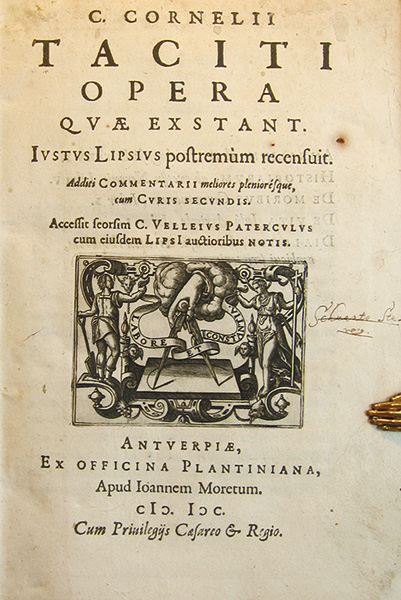
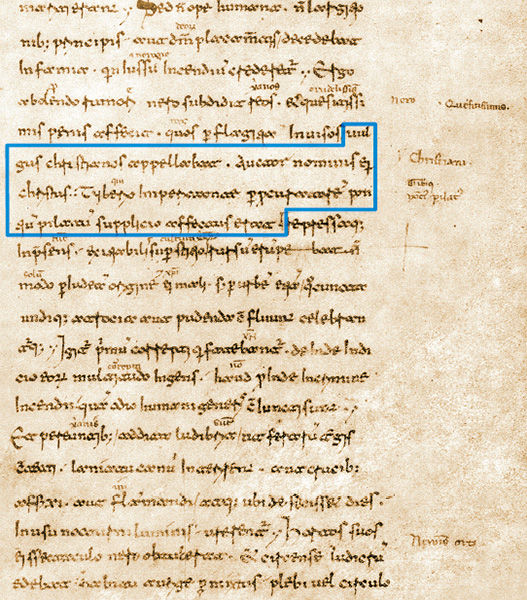


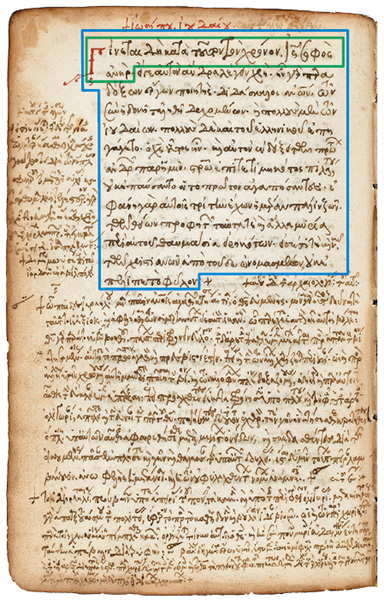


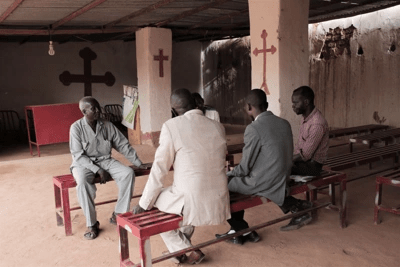

 Psalm 119: 38