Reading the Bible brings about human flourishing

During trying times like these, with many storms upon us (literally and figuratively), no book provides greater comfort than the Bible.

Yet how many actually read it? Although there are studies noting a drop of Bible-reading among Americans in recent times, nonetheless, 47 million are reported to be “Scripture engaged.” No other book would come close to that kind of readership.

As of this writing, the education department of the state of Oklahoma is planning to purchase 55,000 Bibles for the public schools. I’m sure the left is gnashing their teeth over such a plan.

But historically the Bible was the reason that education for the masses was developed in America in the first place. The Puritan forefathers created schools for the masses (a forerunner to the public schools), so that children could learn to read, so they could read the Bible for themselves.

Someone might argue, “Well, that was the Puritans. But surely the founding fathers didn’t agree with that.”

But actually, they did argue for that in 1787 and in 1789 when the founders adopted the Northwest Ordinance. As new territories became states in the newly formed United States, they were to follow the same basic template.

Here’s what Article III of the Northwest Ordinance had to say about schools, which were voluntary at that time and often run by churches: “Religion, morality, and knowledge, being necessary for good government and the happiness of mankind, schools and the means of education shall forever be encouraged.”

The Bible was the chief textbook in one way or another for the first 200-300 years of America — and that’s when the children could read, because of it. It was the Bible that gave birth to Harvard, William and Mary, Yale, Princeton, Dartmouth, Brown, and so on.

It was only when the schools explicitly went against the Scriptures that American education went off the rails. Now there are major portions of society who can’t read, despite years of schooling.

Meanwhile, is there a correlation between reading the Scriptures and human flourishing?

Many social science studies have shown that church is good for society, that attending church on a regular basis lengthens your life (on average), and that attending church often improves the quality of your life as well.  Dr. Byron Johnson of Baylor’s Institute for Studies of Religion has spent years assessing studies on the impact of applied religion (generally, Christianity) leading to positive personal and societal improvement. Dr. Johnson even wrote a book showing how Christian belief and practice help lower criminal behavior. The book is appropriately titled, More God, Less Crime.

But what about Bible reading? A recent study that Dr. Johnson wrote, along with M. Bradshaw and S. J. Jang, is entitled, “Assessing the Link Between Bible Reading and Flourishing among Military Families.”

Before exploring their results (which were positive), the study mentions earlier related findings: “Previous research shows salutary associations between multiple dimensions of religiosity (including reading sacred texts) and different aspects of flourishing (e.g., physical health, psychological well-being, character and virtue, social connections and support).”

The abstract of the study noted: “Bible reading may promote overall mental, physical, and social well-being.”

They list at three of their findings on how the Bible fosters human flourishing: “First, Bible reading is likely to promote psychological well-being by helping individuals develop a close relationship with a loving and caring God who engages in the lives of individuals.”

They continue: “Second, Bible reading may facilitate feelings of divine control that help cope with stress. Third, positive and encouraging messages in the Bible may also promote purpose in life and guidance seeking, which may also enhance flourishing.”

I have found personally that when I started reading the Bible myself as a young man, it was such a great source of knowledge, for wisdom, for direction, for personal relations, etc.

The Bible was important to great Americans like George Washington, whose writings and speeches are filled with Biblical phrases, such as “And every man shall rest under his own vine and fig tree, and there shall be none to make them afraid.” This was Washington’s vision for America.

Even Jefferson collected many of the teachings of Jesus (including a few miracles) in a document for Native Americans, so they could benefit from them, just as we have. People mistakenly call this unpublished work “The Jefferson Bible.” But as Jefferson noted once, the morality of Jesus is the most sublime and greatest moral teaching of all time.

President Lincoln called the Scriptures “the best gift God has ever given men,” through which we learn about the Savior.  Millions of Americans have revered the Bible.

As Ronald Reagan once said of the holy book, “Inside its pages lie all the answers to all the problems that man has ever known.”

To promote human flourishing, spread the message of the Scriptures.

Jerry Newcombe, D.Min., is the executive director of the Providence Forum, an outreach of D. James Kennedy Ministries, where Jerry also serves as senior producer and an on-air host. He has written/co-written 33 books, including George Washington’s Sacred Fire (with Providence Forum founder Peter Lillback, Ph.D.) and What If Jesus Had Never Been Born? (with D. James Kennedy, Ph.D.). http://www.djkm.org?    @newcombejerry      www.jerrynewcombe.com

Source: Christian Post

Who are the ‘least of these’ and why does it matter?

By John Doane, Op-ed contributor Sunday, October 20, 2024

Lutheran reverend Yousef Zamgila (L) speaks to members of his congregation at the small improvised church they helped set up in a neighbours yard in Omdurman, Khartoums twin city, on August 22, 2019. Sudan’s Christians suffered decades of persecution under the regime of Islamist general Omar al-Bashir. | JEAN MARC MOJON/AFP via Getty Images

Several years ago Tony Campolo wrote, “I place my highest priority on the words of Jesus, emphasizing the 25th chapter of Matthew, where Jesus makes clear that on Judgment Day the defining question will be how each of us responded to those he calls ‘the least of these.’”

President Obama, speaking to the Pope at the occasion of his visit to the White House in 2015, stated “You call on all of us, Catholic and non-Catholic alike, to put the ‘least of these’ at the center of our concerns.” And then the President went on to identify “the poor and the marginalized” as the “least of these.”

Others identify those needing adoption or the homeless as “the least of these.” Former NIH director Francis Collins in his recent book The Road to Wisdom identified “the poor, the sick, the orphans, the prisoners, [as] the least of these that Jesus said we are most called to help.”

Since Jesus makes this such an important issue, it would behoove us to identify those whom the Bible itself would call the “least of these.”

Notice that in Matthew 25:40 Jesus said, “… inasmuch as you did it to one of the least of these my brethren, you did it to Me.” So the “least of these” are His brethren. Who are Jesus’ brethren? Hebrews 2:11 answers, “For both He who sanctifies and those who are being sanctified are all one, for which reason He is not ashamed to call them brethren.” Romans 8:29 calls Jesus “the firstborn among many brethren.” 1 John 3:13-14 counsels us “Do not marvel, my brethren, if the world hates you,” but “We know that we have passed from death to life because we love the brethren.”

So, love for the brethren (Christians) is a sign that we have eternal life, just as in Matthew 25 Jesus indicates that those who care for the least of His brethren are welcomed into His eternal Kingdom.

Some Christian writers have identified the brethren of Jesus in Matthew 25 as disciples called to preach the Gospel, such as those sent out by Jesus in Matthew 10. Those may indeed risk hunger, loneliness, nakedness and imprisonment, but the ones mentioned in Matthew 25 evidently refer to those who actually suffer such things.

Now we know from the rest of the Bible (e.g. Romans 4:3-8 and Romans 10:9) that our righteousness is based on our faith in the finished work of Jesus for the forgiveness of sins and belief in His resurrection. So, the works on behalf of the least of Jesus’ brethren mentioned in Matthew 25 do not earn us salvation. Rather, they are a sign that we are already saved, as James said, “I will show you my faith by my works” (James 2:18).

Why is this important? First of all, this passage from Matthew should not be used for virtue signaling, to drum up support for one’s favorite charity, or to promote a government program. Our salvation is never based on our works, however good they may seem. Secondly, notice that the passage in Matthew 25 is part of the so-called Olivet Discourse starting in Matthew 24 where Jesus spoke to his disciples in private. In that context, Matthew 25: 31-46 gives His brethren, His disciples, a way to distinguish between others “blessed of My Father” (v. 34) and those deserving of “everlasting fire prepared for the devil and his angels” (v. 41).

As in other places, Jesus was sorting out appearances from reality. For example, before the breakup of the Soviet Union, many leaders in the World Council of Churches and major Christian denominations refused to believe that Christians were in prison for their faith in communist countries, even when presented with exhaustive evidence. Such leaders preferred to associate with leaders of state-controlled churches in those countries. Other nominal Christians either deny that Christians were suffering persecution in communist countries, or they were indifferent about helping them. The ones suffering persecution were indeed in prison. Their families were naked and hungry, because they had no income, and the governments forbade others from helping them. Like St. Paul, they were made “the filth of the world, the offscouring of all things” (1 Corinthians 4:13), surely the “least” ones.

Meanwhile, laymen supported efforts to bring relief to families of Christian martyrs and those in prison. When the communist governments of Eastern Europe collapsed, more Christians understood the magnitude of the persecution that had occurred. More Christians also became involved in helping our persecuted brethren elsewhere.

Nevertheless, one can still discern differences in how Christians and the world respond to the persecution of Jesus’ brethren. Believers still suffer severe persecution in communist China, North Korea, and Cuba. Recently it has also become fashionable to discourage criticism of Islam. However, it’s not fashionable to help Christians persecuted by Muslims in Nigeria or Iran, by Hindus in India or by Buddhists in Myanmar.

The worldly media generally ignores or downplays such persecution, and so it takes effort by Christians to identify it. Christians suffering this persecution are the “least” of Jesus’ brethren, hated by the world (1 John 3:13). But while they are persecuted, practical help provides encouragement that they are not forsaken (2 Corinthians 4:9). One can “visit” them also through prayer and letter writing.

Our priority is always our own household (1 Timothy 5:8) and our brothers and sisters in the household of faith (Galatians 6:10). When we help our persecuted brothers and sisters we exhibit our love for Christ, since Christ dwells within each believer (Colossians 1:2 and 1:27). Unbelievers do not have that love, because suffering for the name of Christ is foolishness to them. It is God Himself who puts that love into our hearts, so it is no cause for boasting.

John Doane received a bachelor’s degree from Yale, a PhD from MIT, and worked in microwave technology for Bell Laboratories, Princeton University and General Atomics. He served on the Board of Directors of Jesus to the Communist World  (which later became Voice of the Martyrs). His recent articles have been published in the Creation Research Society Quarterly and The Christian Post.

Source: Christian Post

Two Different Preachers with Two Different Goals

Two different preachers came once to my country of Nigeria to preach two radically different sermons.

The first preacher gave his sermon to a large crowd that gathered for the crusade, many of whom dropped huge amounts of money on the altar. Many who were excited about the sermon removed their expensive gold bracelets, necklaces, and wristwatches and dropped them on the altar. A woman whose husband lives abroad brought the car key that her husband bought for her and gave it to the preacher.

The second preacher preached a sermon to the same people, and all the attendees fell on their knees and cried out to God for mercy. Many of them who had money in their pockets removed them and dropped it on the altar. Even criminals and robbers went back home, collected their ill-gotten money, and brought it back as an offering.

What could be responsible for these different reactions from the same people? It is important to note that both preachers preached from the same Bible, but the spirits behind the messages were not the same, and the goals of the two preachers were completely different. The first preacher wanted to unlock the wallets of his listeners while the second preacher wanted the hearts of his listeners to provoke repentance.

“For many walk, of whom I have told you often, and now tell you even weeping, that they are the enemies of the cross of Christ: whose end is destruction, whose God is their belly and whose glory is in their shame, who mind earthly things” (Philippians 3:18-19). The first preacher belongs to the category of pastors who focus on earthly things and teach their followers to give so that they can be healed and become rich. Their god is not the God of the Bible but their belly. They do not have a passion for soul-winning, rather they concentrate all their energy on working to get more money from their listeners.  

The second preacher sacrificially hazarded his life and worked tirelessly to bring souls to the Kingdom of God. Men like him preach Christ and Him crucified. Men like him want to ensure that sinners come to the saving knowledge of Christ. Every one of their sermons is geared towards provoking repentance. Their messages prick the hearts of the hearers for total surrender to the saving power of Christ. The more people hear the messages of this category of preachers, the more they grow in grace and knowledge of our Savior Jesus Christ.

“Now when they heard this, they were pricked in their heart, and said unto Peter and to the rest of the apostles, Men and brethren, what shall we do? Peter replied, ‘Repent and be baptized, every one of you, in the name of Jesus Christ for the forgiveness of your sins. And you will receive the gift of the Holy Spirit’” (Acts 2:37-38). The sermon that pricks the heart is biblical and saves and spiritually transforms lives — but the sermon that unlocks the wallet is unbiblical, destructive, and feeds the flesh.

Every Christian should soberly examine the messages which he or she listens to. Do the messages unlock your wallet, or do they prick your heart? Honest answers to this question will help you guard your soul from wolves in sheep’s clothing. Sermons that do not edify, correct and rebuke you will inevitably take you far away from God.

God has given to every minister of the Gospel the ministry of reconciliation (2 Corinthians 5:18). Any contrary ideology is either from man or the devil. All preachers should be focused on preaching Christ not Mammon. We cannot serve two masters at the same time (Mathew 6:24). Remember these truths, friends.

There is no repentance in the grave.

Oscar Amaechina is the president of Afri-Mission and Evangelism Network, Abuja, Nigeria. His calling is to take the gospel to where no one has neither preached nor heard about Jesus. He is the author of the book Mystery Of The Cross Revealed.  

Source: The Christian Post

Enduring Friendship: Sticking Together in an Age of Unfriending

Bryan Loritts provides a great challenge to build relationships that last in his new book Enduring Friendships: Sticking Together in an Age of Unfriending. The book uses Paul’s New Testament letter to Philemon as a backdrop for thinking deeply about friendship. And it does challenge us to think deeply about our relationships. Onesimus, the slave to Philemon, who likely stole and then ran away from his servitude, making him deserving of severe consequences if not death. Philemon, the enslaver, and partner in the gospel with Paul. Paul, the missionary, who led both of these men to Christ and now pleads with them to do hard things for their relationship and for the glory of God.

  • He wants Onesimus to repent and go back and face his offended enslaver.
  • He wants Philemon to repent and receive Onesimus, not as a slave who stole from him, but as a brother who merits his embrace and partnership.
  • Paul himself wants to pay whatever is owed to Philemon. “Put it on my account.”

We don’t know “the rest of the story”, but can imagine that repentance was had, forgiveness was extended, and God was glorified, because Onesimus is later counted as a Bishop in the early church.

This book reminds us that relationships are hard but worth fighting for. And enduring relationships are costly and take courage to pursue through the messiness of life. What a mess the book of Philemon offers up. But what a beautiful picture of grace and forgiveness if Paul’s formula is lived out. The offender repents, the offended forgives, and the beauty of reconciliation is witnessed by all.

I wish I could say I didn’t have any tangled messes of relationships in my 49 years, but I can’t. I wish I could say that I’ve always done the right and hard thing for the sake of reconciliation. In ministry, the slights received often make us callous toward deep relationships and make it easier just to let people walk away or not make the journey back to the one we offended. People come and go. Sometimes close relationships are resisted because we begin to expect slights, disrespect, betrayal, and eventual departure. Enduring Friendships reminds us that relationships are worth it.

The key to it all of course is Jesus. He empowers us to forgive, to receive grace, and to repent. And he did the hardest thing of all so that we could experience reconciliation by offering up his own body on the cross.

Some great thinking and maturing to be stirred up by Bryan Loritts’ new book. Grab a copy.

Here’s a few of my favorite quotes:

  1. Soul-level friendship often feels like a full-time job with periods of bad compensation.
  2. The problem is relationships are drama, and I don’t mean that in a negative way. Whose life is not made up of mountaintops and deep valleys? If we’re not up for drama, we are not ready for relationships.
  3. A Christian who does not forgive is a contradiction in terms.
  4. There is no lasting friendship without grace.
  5. If you want to have sustained friendships over the course of your life, you must accept that you will at various points be Onesimus and Philemon – offender and offended.
  6. When we fail to allow for nuance and complication, we set the table for short-lived friendships that never resurrect from the graveyard of offense and betrayal.
  7. The journey of friendship is fraught with unavoidable hurt because those involved are marred by sin.
  8. Gossip is saying something behind a person’s back we would never say to a person’s face. Flattery is saying something to a person’s face we would never say behind their back.
  9. Pride is the #1 killer of friendship. Humility is the prime nourisher of healthy relationships.
  10. When we are at death’s door and inevitably stare into the rearview mirror of our lives, we will not take joy in our acts of retribution.
  11. An ungracious Christian is an oxymoron.
  12. Nothing illumines our witness and stands more in contradistinction to our world than when we fight to remain at the table of friendship with people who we have wronged and who have wronged us.

About Lane Corley

I am – Follower of Jesus Christ – Husband to the beautiful and patient Heather Corley – Father of three. – Church Planter/Church Planting Catalyst for Send Network – When I can, I’m reading, raised bed gardening, and on mission with my church. – Hoping to be helpful.

View all posts by Lane Corley

British University Offers A Master’s Degree in Witchcraft

With Halloween behind us, the witch and warlock costumes can be put away for another year. But the real witches are still very much with us.

News comes to us that a British university is scheduled to offer a master’s degree in witchcraft, magic, and occult science in the 2024 school year. Professor Emily Selove is the director of the new program at Exeter University.

She justifies the degree’s development to:

“A recent surge in interest…. Magic and the occult inside and outside academia lies at the heart of the most urgent questions of our society.”

The university website says that the classes will take place in the Institute of Arab and Islamic studies. Selove goes on to explain that the classes will:

“Allow people to reexamine the assumption that the West is the place of rationalism and science while the rest of the world is a place of magic and superstition.”

Actually, this university class is an interesting accumulation of viewpoints, all of which have Satan’s fingerprints all over them.

There is no doubt that there is “a recent surge in interest” in witchcraft and the occult. The Pew Research Center reported in 2014 that there were about 730,000 adult pagans and wiccans in the United States.

This desperate search for meaning has led to the creation of:

“…sea witches, city witches, cottage witches, kitchen witches, and influencer witches, who share recipes for moon water or dreamy photos of altars bathed in candlelight. There are witches living all over the world, hosting moon rituals in public parks and selling hangover cures that ‘adjust the vibration of alcohol so that it doesn’t add extra density and energetic ‘weight’ to your aura,’” according to The Atlantic magazine.

However, one church in Florida has demonstrated a highly effective biblical approach to the solution of these people’s problems.

Bill Losasso, senior pastor of Pathways Community Church in Largo, Florida observed that his state was “one of the three hotbeds of witchcraft, along with Texas and California.” because witches have actually come in and attempted to disrupt his worship service.

Apparently, the pastor had trained his people well because when the witches came in expecting a fight, they were, instead, welcomed by a loving concern for their spiritual welfare.

Over time, some were converted and baptized. It became sort of a contest with other witches coming for revenge and meeting the same joyous fate. Losasso says that:

“There have been no more physical attacks by the witches, but, of course, a ton of spiritual warfare. But everyone involved learned the power of the scripture: ‘…greater is He that is in you than he that is in the world.’” (1 John 4: 4.)

Everyone witnessing to a real witch needs to understand that they are generally more afraid of us than we are of them. Bill Gordon, an associate of the Southern Baptist North American Mission Board, says that:

“It has been my experience that witches are normally more afraid of us than we are them.”

Just as an individual has that God-shaped vacuum in their heart, there is also that vacuum in a culture such as ours.

We have spent many decades systematically eliminating God from our culture and now we are watching His evil replacement. Man is essentially a spiritual being who cannot long tolerate a secular-based worldview.

But to the Bible believer, spiritual darkness is only a challenge. The longer that people are lost, the deeper their despair and the more ready they are to respond to the gospel. And salting a community with gospel tracts that people love to read will ferret out those who are ready to respond. Any effort you make will be worth it because Chick tracts get read and God promises that:

“…So shall my word be that goeth forth out of my mouth: it shall not return unto me void, but it shall accomplish that which I please, and it shall prosper in the thing whereto I sent it.” (Isaiah 55:11)

Source: Chick.com

How the Bible Created the Soul of Western Civilization: An Interview with Vishal Mangalwadi – Part 2

PART TWO

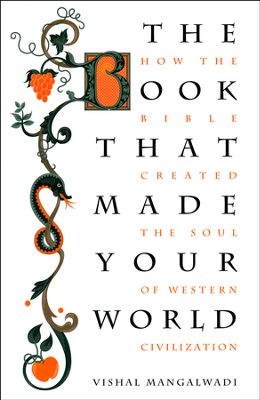
Bible Gateway interviewed Vishal Mangalwadi about his book, The Book That Made Your World: How the Bible Created the Soul of Western Civilization (Thomas Nelson, 2012).

How did the Bible trigger the West’s passion for medical advancement?

Vishal Mangalwadi: Mainstream Hinduism taught that matter (including the human body) was evil—illusion or maya. In contrast, the first chapter of the Bible declared the material realm, including the human body, to be very good. Genesis 3 taught that sickness and death came as a curse upon human sin. The Lord Jesus came to give us abundant and eternal life. His soul did not reincarnate. His crucified body was resurrected and glorified. The Bible teaches that God will resurrect our perishable bodies as immortal and glorified bodies.

Because of God’s high view of the human person, including his body, the Lord Jesus healed the sick and commissioned his disciples to a ministry of healing. Therefore, medieval Roman Catholic monasteries did not simply pray, preach, and practice piety. Many of them took care of the sick. They studied, and taught medicine. The Schola Medica Salernitana became the world’s first medical school in the South Italian city of Salerno. It grew out of a 9th century dispensary in a monastery. This monastic tradition blossomed into modern medicine after the 16th century biblical Reformation.

What is the biblical ideal of human dignity and how did it inform the West’s social structure?

Vishal Mangalwadi: Gautam Buddha, the founder of Buddhism, saw human life as suffering. Thomas Hobbes, the only atheist in English Enlightenment, viewed life as “nasty, brutish, and short.” Pope Innocent III detailed “The Misery of Man.” Secular intellectuals have no option but to see man as nothing more than an evolved animal.

Species, races, and individuals do not evolve equal. Evolution does not bestow any rights upon any animal. Western notions of human dignity, equality, and inalienable rights are the Bible’s unique contribution to the modern world. Pico della Mirandela (1463-94) articulated the Bible’s case for human dignity in An Oration on the Dignity of Man. His case rested upon (a) creation of man in God’s own image and (b) God’s incarnation in the Jesus of Nazareth.

God became man in order to save man, because man was made in God’s image – precious and immortal. Full implications of these doctrines are still being worked out. Yet, much of our future will be shaped by the question: Is man merely another animal (organic intelligence) or is he uniquely God’s image—so precious to God that He would come to this earth to save him?

How did the Bible equip the West to cultivate compassion?

Vishal Mangalwadi: Through parables such as that of the Good Samaritan, the Lord Jesus explained the command ‘Love your neighbor as yourself.’ He exemplified it by blessing those who cursed and killed him. Jesus courted the wrath of religious establishment by caring for the sick even on Sabbath. He reinforced prophets such as IsaiahJeremiah, and Amos, by teaching that God’s holy law was made for man’s good. Therefore, a religiosity that did not care for individuals was worse than worthless. It was obnoxious. What we do for the littlest of his brothers, we do for him.

What is your response to people who say the Bible subjugates women?

Vishal Mangalwadi: The women’s lib movement started in America because social inequality between men and women was obvious. Many women got paid less then men for the same work. They were allowed to serve coffee after worship, but not communion during the worship. They could play piano in a church but not pray. Yet, crucial questions are: who told America that men and women were created equal; that sin brought subjugation as a curse; that the curse was nailed upon the cross of Calvary? The question that triggered my reflections was: Why didn’t the Saudi women burn their burqas and their bras? What empowered American women to launch the women’s lib movement? Was it because American women were more oppressed than the Muslim of Hindu women? Or was it because something had already made American women stronger than other women around the world? My counter-intuitive discovery was that it was the Bible that empowered women.

No culture has ever required a husband to love his wife. Every culture, including Jewish and post-Christian Western cultures, have permitted husbands to divorce their wives and/or take other women. In 1831-32, French magistrate Alexis de Tocqueville observed that American women had become much stronger than European women because the biblical ideal of marriage had had the biggest impact in America. No country in the world will even try to impeach a president who lies about his private sex life.

The Bible emancipated Western women because it alone asserted theological equality of male and female and also because it defined God’s idea of marriage as a one-man one-woman lifelong and exclusive relationship. A woman is liberated to develop herself and to strive for her dignity when she knows that her fallen husband is not permitted to despise her, divorce her, covet his neighbor’s wife or to take another woman as a girlfriend, concubine, or wife. He has to love her, irrespective of the level of her intelligence, charm, abilities, and fallenness.

Roman wives were the victims of Rome’s playboy culture. Many of them followed and financed the Apostle Paul and (over time) won the Roman empire for Christ, because they understood better than modern feminists that Paul was emancipating them.

Men and women are equal, but husbands and wives (like parents and children and all other formal relations) have to live in a hierarchical relationship. No institution can function on the basis of equality-without-hierarchy. Christian marriages are being destroyed because the Western church has surrendered to the world’s folly that equality precludes authority. The Christian idea of marriage is unique. It can be sustained only if we take seriously the Bible’s idea of the fallenness of men and women and the necessity of wives submitting to fallen husbands, and husbands loving fallen wives.

How is human equality a biblical principle?

Vishal Mangalwadi: Sociologically, the modern idea of human equality was born when Martin Luther discovered the New Testament doctrine of the “priesthood of all believers.” Gradually, this truth began to challenge the West’s social/racial injustices.

George Whitfield was the first white revivalist in America, who began preaching to the blacks. His preaching evoked protests: “Do you really want us to kneel with our slaves and drink communion from the same cup?”

In order to counter deep rooted prejudices, in 1740, Whitfield began writing a series of articles. These explained how and why the Bible teaches human equality. Whitfield’s writings created the consensus which Thomas Jefferson articulated in the original draft of the Declaration of Independence as, “We hold these truths to be sacred and undeniable that all men are created equal.” By “sacred” Jefferson meant derived from sacred Scriptures. Under pressure from Benjamin Franklin, the Declaration was changed to read, “We hold these truths to be self-evident that all men are created equal.”

To Indian sages, inequality was self-evident. That is why they invented the caste-system which still survives. Equality was “self-evident” even to American Deists because their worldview was shaped by the Bible. Now that evolution is shaping everyone’s intellectual lenses, only a fool will be able to assert that all men have evolved equal.

What role did the Bible play in the establishment of the university?

Vishal Mangalwadi: No Hindu ashram ever grew into a university. No Orthodox Christian monastery developed into a university in Eastern Europe, Greece, or Russia. Augustinian monasteries and Cathedral schools blossomed into West European universities such as Oxford, Cambridge, Paris, Prague, Heidelberg, and Wittenberg because St. Augustine taught that the human mind was God’s supreme gift to mankind. The mind was made in God’s image, therefore, in order to be godly, one had to cultivate the mind as well as piety.

These monasteries were different than every other center of religious education. Young boys came to a monastery to learn to pray and become a priest. But in these monasteries they had to study logic, literature, philosophy, mathematics, and rhetoric as well. This is what created the West’s uniquely rational religious leader, who prayed as well as studied birds and the solar system.

Following the Reformation, Christian thinkers realized that God wants all men to be saved and come to the knowledge of the truth (1 Timothy 2:4-7). In order to know truth, man has to study three books: The book of God’s words (the Bible), the book of God’s works (in nature and culture), and the book of God’s reason (logic and mathematics that run the human mind and physical universe.) This insight was captured in Harvard Crest in 1643. VERITAS is written on these three books. Today, the university has degenerated into a factory producing laborers for the market and the state because, without God’s word, the university has been forced to shy away from the very concept of truth.

Since the Bible is not a “fax from Heaven,” explain how sentences written by humans can be considered the Word of God?

Vishal Mangalwadi: Prophet Elijah said to king Ahab, “As the Lord, the God of Israel, lives, before whom I stand, there shall be neither dew nor rain these years, except by my word” (1 Kings 17:1). By the end of the chapter, the Sidonian widow of Zarephath exclaimed, “Now I know that you are a man of God, and the word of the Lord in your mouth is truth.” (vs. 24). Eventually Ahab was forced to acknowledge that Elijah’s words—a man’s words—were, in fact, the word of God.

God said to Jeremiah, “Behold, I have put my words in your mouth…I am watching over my word to perform it.” (Jeremiah 1:8-11). God’s word includes the words He gives His men and also men’s words which He watches to perform, fulfill, and honor. Daniel and his friends were willing to go into the lions’ den and fiery furnace because 70 years of Jewish history had confirmed to them that Jeremiah’s words, disregarded by their fathers, were in fact God’s word.

The gospel is that Jesus Christ died “according to the Scriptures,” was buried and rose again the third day, “according to the Scriptures” (1 Corinthians 15:3-4). That means that Jesus didn’t have to die. In the Garden of Gethsemane Peter gave him the opportunity to evade arrest. During his trial, Pilate gave to Jesus plenty of room to escape crucifixion. The Lord Jesus sacrificed his life because he believed that the words of Scripture, written by fallen and fallible men, were in fact God’s words.

As you observe the West’s treatment of the Bible, where do you see western society headed?

Vishal Mangalwadi: Germany, the birthplace of biblical Reformation, became the arch villain of the 20th century, because during the 19th century, German theology undermined the Bible’s authority. I see post-biblical America as the greatest terror to the 21st century. I think the future of greed-driven American capitalism is best captured by James Cameron in his terrible, pagan, and commercially hit movie, Avatar.

Muslim nations cannot be the world’s biggest threats because while Islam can build a strong Caliphate, it does not and cannot build nations. Protestantism has built history’s greatest nations; therefore, the world has the most to fear from Protestant nations that destroy the very foundations of their morality and civility.

What are your thoughts about Bible Gateway as a way to reinvigorate civilization’s soul?

Vishal Mangalwadi: Bible Gateway is the only site I use to get into the Bible. (Though I am yet to cultivate the discipline to use everything that it offers.) I appreciate this interview because the new generation needs to learn why the Bible must be studied, trusted, obeyed, and applied.

Is there anything else you’d like to say?

Vishal Mangalwadi: Christianity has lost America because the church forgot that “God wants all men to be saved and come to the knowledge of the truth…” for this reason Paul the apostle was appointed a “preacher” and a “teacher of the gentiles in faith and truth” (1 Timothy 2:4-7). The American church has the capacity to disciple the nation, but for over a century it has lacked the theology for discipling nations. It has been preoccupied with saving souls, not with discipling nations.

The good news is that the state of Minnesota just started an education revolution that can disciple America. Students will enroll in an accredited college, but go to the local church to study online as a cohort in a face-to-face mentorship with a credentialed Academic Pastor. A student will get a college degree for under $10,000 a year. Check out www.VirtuesCampus.com.

Bio: Vishal Mangalwadi, LLD, was born and raised in India. He studied eastern religion and philosophy in India, Hindu ashrams, and at L’Abri Fellowship in Switzerland. He is a dynamic and engaging speaker who has lectured in 35 countries. He is a social reformer, political columnist, and author of 14 books. Christianity Today calls him ‘India’s foremost Christian intellectual.’

SOURCE: The Bible Gateway Blog – Jonathan Petersen

How the Bible Created the Soul of Western Civilization: An Interview with Vishal Mangalwadi

(Blog note: every Christian needs to read this article. Please share it with someone you know. Carl)

Part 1

What triggered the West’s passion for scientific, medical, and technological advancement? How did the biblical notion of human dignity inform the West’s social structure and how it intersects with other worldviews? How did the Bible create a fertile ground for women to find social and economic empowerment? How has the Bible uniquely equipped the West to cultivate compassion, human rights, prosperity, and strong families? What is the role of the Bible in the transformation of education? How has the modern literary notion of a hero been shaped by the Bible’s archetypal protagonist?

Bible Gateway interviewed Vishal Mangalwadi about his book, The Book That Made Your World: How the Bible Created the Soul of Western Civilization (Thomas Nelson, 2012).

Click to buy your copy of The Book That Made Your World in the Bible Gateway Store

Why did you dedicate The Book That Made Your World to Arun Shourie, a Hindu who is critical of the Bible?

Vishal Mangalwadi: In 1994, Arun Shourie, at that time one of India’s foremost public intellectuals, attacked Western missions and the Bible. He powerfully rehashed some of Thomas Paine’s arguments from The Age of Reason (1793-94). Mr. Shourie studied in the best Christian college in India before getting a PhD from an American university that had been founded by Methodists. I realized that this good and learned gentleman was clueless about what the Bible is and what it has done because his Christian professors in India and in America had no idea.

Therefore, moved by the Holy Spirit, I began responding to him with books such as Missionary Conspiracy: Letters to a Postmodern Hindu (1995), Fascism: Modern & Postmodern (1998—my intro to a book by Gene Edward Veith), and then The Book That Made Your World: How the Bible Created the Soul of Western Civilization (2012).

In spite of Western skepticism, many Chinese intellectuals sense that the Bible was the foundation of the West’s amazing development. In contrast, Hindus such as Mr. Shourie follow ill-informed, in fact, arrogant and foolish, Western repudiation of the Bible. They think that India can be made a great nation by returning to Hindu worldview, which destroyed India in the first place.

One book will not convince skeptics, but it can become a seed that multiplies into many PhD theses, popular books, TV shows, and films. I dedicated the book to Arun Shourie to help intelligent Indians discover the rock upon which India can realize its potential to be a great civilization—a blessing to all the nations.

You write that your book is not so much about the Bible as it is about great literature, art, science, technology, heroism, and virtues. Explain what you mean.

Vishal Mangalwadi: My book is not “Bible study.” It is a study of the global impact of the Bible and it’s worldview. The Bible was the book of the last millennium. No other book was translated, published, distributed, studied, or debated like it. What impact did it have on the world? That is the question my book explores.

Why do you call the Bible the soul of Western civilization?

Vishal Mangalwadi: Although the West has amputated its soul, I call the Bible the soul of Western Civilization because it propelled the development of everything good in the West: its notion of human dignity, human rights, human equality, justice, optimism, heroism, rationality, family, education, universities, technology, science, culture of compassion, great literature, heroism, economic progress, political freedom. Take, for example, democracy.

The myth that modern democracy came from Greece was invented only in the 20th century by John Herman Randall of Columbia College (New York) and Mortimer Adler and Robert Maynard Hutchins of the University of Chicago. The reality is that in his classic, Republic, Plato, the greatest of Greek philosophers, had already condemned democracy as Mobocracy—the worst of all political systems. Plato proposed that the ideal republic should be ruled by philosopher-kings. His disciple, Aristotle, trained Alexander-the-Great to be a philosopher-king, who turned out to be one of the most ruthless conquerors in history. In turn, Alexander inspired India’s first empire builder, Chandragupta Maurya.

Later Alexander inspired Machiavelli’s The Prince—which examines how a successful prince acquires and retains power. Machiavelli was the flowering of European Renaissance that produced tyrants such as Napoleon. The biblical Reformation led to the birth of modern democracy. Without the Bible, western democracy will become obnoxious as did the Greek democracies.

To give another example, the West’s confidence in human reason came not from Greece, but from the Bible via Augustine. Hinduism, Buddhism, and their products such as Greek gnosticism knew that unaided intellect cannot know truth. The Enlightenment corrupted western confidence in reason by (over time) separating it from revelation. After Nietzsche and Freud, everyone knows that here is no reason to trust human reason, unless it is made in the image of Logos and strives to conform to it.

Why do you begin your book recounting the suicide of rock musician Kurt Cobain and then contrasting him with Johann Sebastian Bach?

Vishal Mangalwadi: The first chapter uses music as an entry point into the West’s soul. It contrasts Christian West with (post-Christian) West without its soul. The chapter inquires: What made the West a uniquely optimistic and musical civilization, able to sing “Joy to the world (fallen, miserable and full of suffering)?”

Bach and Cobain were musical geniuses. Both lost their parents at nine. Bach’s parents died and Cobain’s separated. Bach’s faith in resurrection enabled him to celebrate “The Passion” (Suffering) of St. Matthew and St. John. Cobain inherited Bach’s musical tradition without its philosophy. Therefore, his music could only scream at suffering, making him an icon of a generation lost without a map of reality. Buddhism offered no hope to Cobain. Therefore, he cursed life and committed suicide.

Buddhism originated in India. Its pessimistic philosophy gave us great art and literature, but no hope, music, or musical instruments. Islam (and Orthodox Christianity) also ruled out music; therefore, it too pre-empted development of technology.

The German publisher published 10,000 copies of the first chapter as a stand-alone booklet. It is proving to be an excellent work of worldview evangelism. I hope someone will print it in Japanese, since Bach is Japan’s fifth evangelist.

How was the Bible “the force that created modern India”?

Vishal Mangalwadi: Why are “native” Americans Indians? Why are “native” Australians Indians? Why is Indonesia, Indian-Asia? Why were Columbus and Vasco de Gama looking for sea-routes to India (and not to “Spice-land”)?

The European mind was fascinated with India, because India, not Japan, Korea, or China, is the Eastern-most land mentioned in the Bible (Esther 1:1). By “India” the Persians meant “Sindustan,” the land around the river Sind (now in Pakistan). Up until the 1850s, no one living in Bengal or Kerala ever thought that he was living in “India.” That is why Michael Madhusudan Dutt (1824-1873), the pioneer of ‘Indian’ nationalism, actually wrote only about ‘Bengali nationalism.’

The pre-Columbus European concept of geographic India came from the Roman Catholic reading of the Bible. That is why Vasco de Gama’s coming to Kerala and Goa was the sea-route to “India.” Protestant reading of the Bible coined the ‘abstract’ concept of India as a geo-political nation state, half-a-century before England actually made India a nation in 1858. Prior to William Carey, no “Indian” had ever existed who started a paper (or organization) such as Friend of India (1818).

Lord Thomas Babington Macaulay, persuaded British Parliament in 1833, that Britain must govern Indians in such a way as to train them to govern themselves as an independent nation. Macaulay grew up in the company of the evangelical member of Parliament, William Wilberforce, in the Calpham community. He followed up his rhetoric by coming to India to give us the ‘Indian Penal Code’ along with the Jewish-biblical idea of rule of law. He helped transform our education and civil services. He played a critical role in the establishment of our first universities in Calcutta, Bombay, and Madras in 1858. These began as examination-conducting institutions to fulfil the vision of Macaulay’s brother-in-law, Charles Travelyan. The latter had defined the mission of Christian education in 1838 in his classic On the Education of the People of India. The objective of that herculean mission, he said, was to prepare Indians to govern themselves as a free nation.

After Macaulay and Travelyan, it took five more decades before an Englishman could inspire a few graduates of Calcutta’s Christian education to create the “Indian National Congress” (1885). Then it took 70 more years to prepare leaders such as Gandhi, Ambedkar, and Nehru, who could, in fact, lead and govern a free India.

India became a free nation in 1947. It could have attained that status if it had even one Indian, who thought of India as a nation during the “Mutiny” of 1857. When Indian soldiers started killing Englishmen and liberated Delhi, educated Brahmins and Hindu merchants organized prayer meetings around the country to pray for British victory over Indian mutineers. This was partly because the rebels who succeeded in defeating the British in Meerut and Delhi decided to revive the Mogul Empire by declaring Bahadur Shah as their emperor.

Most Hindu, Muslim, and Sikh soldiers and rulers disapproved of the revival of that exploitative and useless empire. Many decided to fight against fellow Indians to defend the British Raj. This was because, contrary to current, ill-informed (or deceptive?) debaters such as Shahi Tharoor, most of the Indians who actually lived under the British, perceived it as better than all other options available to “India”.

Mogul Empire had been so corrupt and inept that in 1738-39, the Persian invader Nadir Shah, met hardly any resistance as he travelled 1000 KMs. within the Mogul’s (Indian) empire, from Ghazani to Delhi to plunder the Mogul capital. The Empire’s rottenness had encouraged the Marathas to conquer and plunder Hindu and Muslim kingdoms. This threat of the Marathas and/or invaders from the Khyber Pass had forced Hindu/Muslim kings to take refuge under the Company Raj. Most Indians opposed the 1857 Mutiny, now called the First War of National Independence, because they could not trust Indians to rule India with justice and equity.

While the Hindu and Muslim rulers, intelligentsia, and merchants preferred the Company Raj over Indian rajas, it was the Bible-shaped conscience that saw the Company as a “gang of public robbers” (Macaulay) and its rule as the “rule of evil genii.” Yet, Independent India chose to remain a member of British Commonwealth and import its political, economic, and social ideals and institutions, because the Bible succeeded in (a) transforming India’s governance under the British, and (b) training enough Indians to govern India as a modern, democratic, nation-state.

Dr. Babu Verghese’s massive study, Let There Be India: The Bible’s Impact on Nation-Building, details how the Bible translators created modern India by turning our dialects into literary languages, bringing modern education, printing, literature, and modern press, and the modern ideas of human equality, dignity, and rights (his book is available from ManagerGoodBooks@gmail.com).

Part 2 will follow Part 1 on Psalm 119:38 Blog. Thank you, Carl

Source: Bible Gateway Blog -Jonathan Petersen

Faux term ‘Christian nationalist’ used in political warfare

By Jorge Gomez, Op-ed contributor, Christian Post (November 10, 2022), originally published at First Liberty

The label “Christian nationalist” is appearing more frequently and is being used to silence people of faith, according to experts.

Dr. Mark David Hall, an author and professor at George Fox University, recently discussed the history behind the term. He argues that the political Left started using it well over a decade ago “to label Christians who bring their faith into the public square for ends they don’t like.”

National security and intelligence expert Dr. Stephen Coughlin similarly argues the label is part of a politically driven effort to suppress religious opinions that defy modern orthodoxy and Leftist ideology:

“What they did was they created a faux term ‘Christian nationalism,’ and they gave it all these negative attributes and then used that to attack Christians. It’s part of what you call an ‘intersectional line of attack’ in a political warfare model, which is the Maoist insurgency model, which we believe is the premier principal form of Marxism.”

Former congresswoman and current dean of the Regent University School of Government, Michele Bachmann, contends the surge in use is no coincidence, especially so close to a midterm election. She explains:

“It’s all about holding on to power. That’s what it’s about. There’s only one party in power now in the United States, in Washington, D.C. They don’t want to let it go … And what they have seen is the power of the Church, the epicenter of power in the United States. Opposing their agenda is the Church and the principles of the Bible. They don’t like pastors preaching on issues. They don’t like congregants being inspired from the Bible. And so that’s why we’re the target. They want to silence us.”

What exactly does “Christian nationalism” mean? There is no settled definition, but broadly speaking, radicals use “Christian nationalism” to conflate racism, white supremacy and identity, religion, and patriotism. They often add in fascism, theocracy, and authoritarianism.

An attack on religious liberty and America’s founding values

The use of the “Christian nationalist” label contradicts the principles and values of our country. Its perpetual misuse is especially harmful to religious liberty.

Among the many problems is how it demonizes public prayer and virtually any other commonplace religious activity. Whether a political leader or an everyday person, anytime there is a public expression of faith, the term is leveled against them as wanting to establish a Christian theocracy.

In other words, if a citizen exercises their constitutionally protected and inalienable right to religious freedom, that person runs the risk of being labeled a “Christian nationalist.” And once you carry that label, it essentially means you’re a pariah, someone who should be vilified and not allowed to participate in the marketplace or society.

This, of course, is nothing new. As Dr. Coughlin explained, this is a tactic straight out of the Marxist playbook. Whenever a political force wants to wield power and authority, religious people and religious liberty are the first ones on the target list.

Radicals and dictators know fully well that houses of worship and people of faith are the ultimate check on authoritarian power. Their allegiance is not to the government. A free people know their loyalty is to God above all, the true provider and source of our freedoms. If a tyrant succeeds at destroying religious freedom and religious institutions, they can remove the most effective challenge to their rule.

Vilifying the faithful is a timeless tool of authoritarians. Liberally tossing around the “Christian nationalist” label and slapping it on anyone who lives out their faith is a direct attack on religious freedom. Make no mistake. Radicals want to normalize the use of this loaded term to chip away and destroy one of the building blocks of our republic.

Loving God and country

The political Left regularly screams “Christian nationalism” when a person of faith shows patriotism and pride in their country. If you say America was founded on Judeo-Christian principles, you’ll quickly be accused of trying to establish a theocracy. But that’s simply not true and is based on a wildly distorted view of our nation’s history.

This use of “Christian nationalism” typically relies on a misguided understanding of the “separation of Church and State,” which radicals interpret to mean that there can be no intersection between religion and government. They claim that any religious expression or influence in the public square cannot be tolerated, because it would violate this strict wall of separation.

Understood in context, however, the “separation of Church and state” does not mean religious exercise or prayer is banned on government property. This phrase doesn’t even appear in the text of the Constitution. The original intent was never to keep religion locked inside the walls of a church or synagogue. Instead, it was to protect houses of worship and religious people from state intrusion and harassment. It’s misleading to argue that government and religion should never, under any circumstances, be mixed together.

Additionally, no matter how much secularists or the political Left deny it, the United States was, in fact, founded by people who valued biblical principles. From George Washington to Thomas Jefferson, James Madison, and other Founders, an overwhelming majority of them expressed belief in the Divine, a Creator who is the ultimate grantor of our rights and freedoms, as is clearly referenced in the Declaration of Independence. One of the foremost constitutional theorists of the founding generation, John Adams, observed, “Our Constitution was made only for a moral and religious People. It is wholly inadequate to the government of any other.”

America’s Founders were a prime example that faith and patriotism are not mutually exclusive. They demonstrated that it’s possible to serve God and be committed to the American constitutional experience — to the cause of liberty, human rights, representative democracy, and the rule of law.

More than two centuries later, a strong majority of Americans still believe in this truth. Pew Research recently found 60% of Americans think the Founders originally intended the U.S. to be a “Christian nation.” However, 52% said the federal government should never declare an official religion. This shows that most people believe in the core principles of the First Amendment. That is, we can freely worship God while also cherishing our system of government.

Being a religious person who also loves their nation does not make one a “Christian nationalist.” Quite the opposite. Someone who serves God and country is embodying the best of America’s traditions. We’re a nation built on religious freedom, which means Christians — and people of any faith — do not have to be forced to choose between loving our republic and loving the One True God.

From Demon Worshippers to Children of God

Following are testimonies from the Wa people of northern Myanmar concerning being animists and their conversion to evangelical Christianity. Reading on the internet about animists, some writers would lead you to believe that being an animist is a positive thing. The Christian Wa people would beg to differ as the following testimonies reveal:

“My name is Khuat, and I am a 53-year-old pastor.
My parents were animists who offered sacrifices
to the spirits every month, and our family was
plunged into poverty and bondage to cruel demons.
In 2001 I heard of God’s love and forgiveness, and I
committed my life to Jesus. We smashed all our
idols and the Lord blessed us in every way. I was
eager to read the Bible, but for years I could not
find even one for sale. Now you have brought many
Bibles to us, and we are overwhelmed with joy.
Thank you! You have done the greatest thing possible.

“My name is Nyi. Everyone in my family lived in fear
of the spirits for generations. We did all we could to
appease them, but in return we got death and suffering. My mother died when I was a baby, and my
father died when I was 8. Then when I was 13 my
brother died and there was no one to take care of
me. I started using drugs, and at my lowest point a
Christian told me about Jesus, and He changed my
life! I even graduated from Bible school, and now I
serve my Wa people, getting as many saved as I can.
The Word of God you gave us is so precious!“

“My name is Moe, and I am 19 years old. My family were animists, so we served the spirits and
had never heard about Jesus. My friend told me
the Good News, and I went to church with her.
The pastor gave me a Bible and I brought it home,
but my father was the village shaman so he didn’t
let me read the Bible. One day my mother fell ill,
and my father spent all our money to try to make
her well. He heard that Jesus could heal the sick,
so he let her go to the church with me. She was
healed that day, and now my whole family are
Christians! Thank you for the wonderful Bibles
you freely gave us.”

The anthropologist who say that these tribes should be left alone and not evangelized are deceived themselves by the powers of darkness and do not have the spiritual discernment to understand the great spiritual and physical deception that these people suffer under.

Lord Jesus understood it, that is why He said to go into all the earth and preach the gospel and set the captives (of the demons) free!

Has He set you free from the sins or idols that bind you up?

Carl

(The Bibles they refer to were printed and donated by the supporters of Asia Harvest.)

Check please!

“Any doctrine claiming to be based on the Bible must be carefully checked against the Bible — an option open to anyone who knows God’s Word. Relying upon one supposed biblical expert for an evaluation of the opinions of another would be going in circles. No matter whose opinion one accepted, the end result would be the same; one would still be held hostage to human opinion. Each individual must personally check out all opinions directly from the Bible.” Dave Hunt – What Love Is This? p.25

Is The Great Reset a “Great Thing” or A Satanic Thing?

If you cut off the tails of cats, will they give birth to tail-less kittens? Of course not! Yet, more than 3,000 mainstream biologists were dismissed, imprisoned or even killed for disagreeing that a similar idea might work when applied to plants.

Soviet genetics research was effectively destroyed in the 1930s and ‘40s because the scientist at the head of the Soviet Academy of Agriculture Sciences squashed all dissent from his own view. And he had the power of the communist state behind him!

His name was Trofim Lysenko, and he believed the Soviets could transform Siberia into “a land of orchards and gardens” by “training” seeds to handle cold weather and harsh conditions. He believed that plants could be engrafted to permanently change the heritable characteristics of the stock. Such ideas were based on Darwin’s predecessor – the early evolutionist Jean-Baptiste Lamarck (1744-1829). Lamarck argued for evolution through inheritance of acquired characteristics. In other words, build up your muscles so you can then pass bigger muscles on to your kids.

Charles Darwin wrote his book On the Origin of Species in 1859 to make Lysenko’s ideas seem more scientific by appealing to “deep time” to allow for the imperceptible changes we cannot observe, and appealing also to “natural selection” to try to make the heritable changes more plausible.

But Lamarck was the first to suggest the famous evolutionary scenario of giraffes acquiring a long neck. Giraffe parents supposedly stretched above other animals to reach the leaves of tall trees. And thus they passed on their increasingly stretched necks to their offspring through succeeding generations.

Lysenko was an evolutionist too impatient for Darwin, so he put Lamarckism into practice. For example, he believed he could transform a spring-wheat species into an autumn-wheat species via 2 to 4 years of autumn planting. It would supposedly condition them to “a revolutionary change”. But genetically this was impossible since the spring wheat species had 28 chromosomes in 4 sets of 7, and the autumn species had 42 chromosomes in 6 sets of 7. Change and adaptation is always limited to within the original species or “kind” by virtue of the genes needing to be there in the first place – put in place by our Great Designer and Maker. Lysenko’s plantings on the collectivist farms never took hold or simply rotted away. Geneticists in free market countries knew Lysenko to be a fool.

But Lysenko and the Soviets under Joseph Stalin were true believers in the ideology that mankind needed to “reset” the old and traditional (“bourgeoise”) ways. And that this could be made to happen as society “toughed it out”. In other words, they believed in Marxism. “Tear down the old order to build a new one.”  Build it back better! Sound familiar?

Great famines took place in the Soviet Union under this ideologically driven pseudo-science and the false hope it raised. The famines were made worse, of course, as private farms were stolen and put into collectives, and successful farmers were persecuted. Lysenkoism was kept in place throughout Stalin’s life, and it ruined agriculture in other communist countries, too. These included Eastern Europe and Communist China, where horrible famines took place in the 1950s under Mao Tse Tung.

As I’ve pointed out in previous letters, we are bombarded today with much pseudo-science, not only Evolutionism but also Climate Change Alarmism. We are fed fear and false hopes which are driving a “great reset” of world culture, education, government and economics. Many are on board with it – just as they were in the days of Lysenko, Stalin and Mao.

Every storm or series of storms now gets blamed on Climate Change – which is, of course, ridiculous. What little science there is in an agenda-driven pseudo-science becomes tainted by whatever assumptions about earth history enter the narratives or computer models. And much scientific research is funded by government grants. The research grants are written with a desired outcome in mind, and those applying for the grants know in advance whether to assume Evolution or to assume man-made Climate Change.

An interesting development is the new awareness of how much Communist Chinese money is funding elite American University research. Since the Department of Education recently began enforcing Section 117 of the Higher Education Act of 1965 for disclosure of university funding, it has come to light that most of the $6.5 billion of undeclared university research funding has come from Communist China. And much of it is to promote climate alarmism – considered a weapon for distracting and weakening the U.S. economy.

We need to keep going back to the Bible. That’s where the truth is. The desire for a “great reset” goes all the way back to the Serpent in the Garden with Adam and Eve. Adam and Eve believed Satan’s lies, and they wanted their “eyes to be opened”, “to be as gods”, knowing (a perfected knowing of) good and evil” (Genesis 3:5). They wanted to be “enlightened” (as they were in a way, vs. 7) and, therefore, they went along with the temptation to tear down the original order.

This Satanic philosophy of tearing down God’s order is what Karl Marx promoted (The Devil and Karl Marx, P. Kengor; Marx and Satan, Rev. R. Wurmbrand). It also manifested at the Tower of Babel, as Nimrod (whose name means “to rebel”) argued against God and for the “enlightenment” of making themselves “as gods”. Nimrod is the classic type of anti-Christ. It should be no surprise to see in our day a great push for a Great Reset to One World Economy, One World Government and One World Religion under a controlling system apart from God.

But we know from the Bible who wins in the end. And we know that those who follow Christ will win with Him! Thank you, dear friend, for helping us reach others from “all nations” with the message of truth! The Bible is true, and it is to be believed and proclaimed so that more can believe!

Yours in Christ,

Mark Cadwallader, Board Chairman – Creation Moments

Only One Book Left

When David Livingston started his trek across Africa, he had 73 books in three packs, weighing 180 pounds. After the party had gone 300 miles, Livingston was obliged to throw away some of the books because of the fatigue of those carrying his baggage. As he continued on his journey his library grew less and less, until he had but one book left— his Bible.

Today in the Word, April, 1989. p.28

Where Should We Start Our Search For Truth

There is a simple shortcut to truth: start with the Bible first and investigate it thoroughly. Why start there? Not just because the Bible claims to be the only inspired Word of the one true God who created us. It also claims that all of the world’s religions and their scriptures are false and actually in the service of Satan. The Bible calls Satan “the god of this world” (2 Corinthians 4:4) and thus the author of its religions. So if the Bible is true, we have saved ourselves a lifetime of vain searching through false systems. 


In fact, we can prove beyond the shadow of a doubt that every word in the Bible is true. The Bible has several unique features not found in the scriptures of the world’s religions, making it possible to substantiate its claims. Christianity is not a philosophy, mystical experience, or esoteric practice [but] is based upon undeniable and historical facts. The Bible stands on a four-fold foundation, every part of which can be examined and verified: 1) prophecy foretelling events and doctrines in advance, 2) fulfillment of those prophecies in detail, 3) secular history testifying to the fulfillment of prophecies and events, and 4) factual data corroborated by archaeology and science. None of this is the case with the teachings or scriptures of any of the world’s religions. —Dave Hunt[Excerpt taken from Seeking and Finding God (Bend, OR: TBC, 2007), pp 66-67) – Berean Call

What Drew Me Out of Islam To Follow Christ

By Hedieh Mirahmadi, Exclusive Columnist FOLLOW

Courtesy of Hedieh Mirahmadi

As a relatively new believer in Christ, who spent over two decades as a devout Muslim, I am often asked for the best way to introduce the Gospel to Muslims. There are many opinions on this topic, ranging from using apologetics to just being a “good Christian.” Though most Christian’s natural inclination in approaching Muslims is apologetics, it often turns into arguments about doctrine and hurling insults about Islam that alienate the listener.  I believe the real power lies in the reality of the Trinity– God the Loving Father, His only begotten Son Jesus Christ, and the indwelling of the Holy Spirit.

God is Love. In over 20 years of being a devout Muslim, I never heard God referred to as being love or commanding us to love others. Islam teaches that God is merciful and kind, but the word love is never mentioned. A Muslim must worship and sacrifice for a God that does not ever tell you he loves you. You cannot rely on him to console you in times of trouble, and he was mainly there to judge you.  Quite frankly, it was incredibly depressing since I could never maintain the countless set of rules and laws that demanded strict obedience. 

Compare that to the Bible, God’s infallible, living Word where God describes Himself as love. 

And so we know and rely on the love God has for us. God is love. Whoever lives in love, lives in God, and God in them. 1 John 4:16

In a life filled with disappointment from people who claim to love you and a God that doesn’t consider love significant enough to mention, the simplicity of this Truth was very appealing. Our Heavenly Father is the originator and fulfiller of everything we know and experience of love. He so loved humanity that He sacrificed His only Son to rescue us. Not only does God extend His love to His children, but love for Him and those around us is the foundation of our faith.

Love the Lord your God with all your heart and with all your soul and with all your mind and with all your strength.’ The second is this: ‘Love your neighbor as yourself.’ There is no commandment greater than these. Mark 12:30-31

Being loved unconditionally and learning to love others the same way has brought me extraordinary joy. Never underestimate the power of explaining to a Muslim how significant love is to the Gospel of Jesus Christ.   

Jesus is God incarnate.  In Islam, you never really know if your good deeds are enough to enter God’s Heaven. On the Day of Judgement, God will decide if you were “good enough” and that terrified me. What if there was one big sin He could not forgive despite my hundred acts of obedience? It was very unsettling to live every day, wondering whether I would spend eternity in hellfire. Then I learned that God would guarantee a place in His eternal Heaven if I put my trust in Christ as God incarnate. I needed to accept that Jesus was God wrapped in flesh, who came to Earth and died on the cross, then rose again from the grave to pay for my sins.

The Divinity of Jesus is the most significant point of contention between Islam and Christianity. However, if you know all the miraculous qualities Christ has in Islam, unpacking what they think happened on the cross may be the key to their salvation. All Muslims believe Jesus was born of a virgin birth resulting from God’s Divine Spirit impregnating Mary. They know Jesus healed the sick, raised the dead, and performed countless miracles during his life. They also believe Jesus ascended to Heaven and will descend from Heaven in the End Times to defeat the Anti-Christ. However, Islam claims Jesus did not die on the cross. Instead, they claim Judas Iscariot’s soul was placed inside Jesus’ body so people would think it was Jesus, but God took him to Heaven. So, Muslims attribute many Divine abilities and manifestations to Christ but only deny the crucifixion because His death and resurrection would prove the integrity of the Bible. When you state these facts to most Muslims, it immediately leads them to question their understanding of Jesus. How can they believe that he had so many God-like abilities, but He is not God incarnate based on some illogical explanation for who died on the cross? Therefore, planting the seeds of doubt about how Islam portrays the crucifixion is essential.

Receiving the Holy Spirit. In Islam, it says God is closer to you than the veins on your neck, but he will not speak directly to you. In fact, it claims it is not befitting of God to do so. There is no intermediary between the Muslim and God, but prayer is a one-way communication. As a Muslim, I had no way of knowing whether he ever heard me or even accepted my prayers and pleas of repentance. There was no conversation between us. Conversely, when we accept Christ as our Lord and Savior, God dwells within the believer in the form of the Holy Spirit who speaks directly to us, continually. 

…He will give you another Helper, that He may abide with you forever—the Spirit of truth, whom the world cannot receive because it neither sees Him nor knows Him; but you know Him, for He dwells with you and will be in you. I will not leave you orphans; I will come to you. John 14:16-18

Once I was saved and baptized, I was excited for what would happen next. I kept asking my mentor, “so now what?” She would lovingly but persistently keep saying, “wait to hear from the Lord.” I had no idea what she meant by this. I did not know how to talk with God, and I surely did not expect Him to talk back! It was not until I studied what it meant to receive the Holy Spirit that it made sense. Learning and experiencing the Holy Spirit’s guidance within me is how I know that I am in a relationship with the one TRUE God.  Many Muslims have no idea that accepting Christ as their Lord and Savior leads to God’s indwelling through the Holy Spirit. It definitely piques their curiosity to think they would be able to hear from God directly.

Be sure it is clear the Trinity is three manifestations of the one true God and not three separate gods. We have God the Father who loves us; He came down in His Son to save us and leaves us His Holy Spirit to guide us. Muslims accuse Christians of being polytheists because they do not understand this, and unfortunately, many Christians cannot properly articulate it.

Having left Islam, it saddens me to hear even Christians make the false claim that we all worship the same God and each religious path can lead to the “truth.” Do not be content to give false or comfortable versions of a “truth” that leaves the individual without salvation and the love of God that comes through faith in Christ. The listener may not readily accept it, but that is not our concern. There is only one God, and no one will reach His presence except through faith in Christ. I understand and believe that now but I did not think that as a Muslim. I wish someone would have had the courage to say it to me earlier in my life.  

Finally, I always end the discussion, challenging a Muslim to pray for God to reveal Himself and the reality of Jesus Christ. Their mind may fight the Truth of what you have told them but if it is His will, trust in the power of our God to lead them.

Hedieh Mirahmadi was a devout Muslim for two decades working in the field of national security before she experienced the redemptive power of Jesus Christ and has a new passion for sharing the Gospel.  She dedicates herself full-time to Resurrect Ministry, an online resource that harnesses the power of the Internet to make salvation through Christ available to people of all nations, and her daily podcast LivingFearlessDevotional.com.

Source: Christian Post

Six Centuries of Carnage

They will fight against you but will not overcome you. Jeremiah 1:19

1878: If there were a prize for Christian Group That Has Been Persecuted The Longest, the Waldensians would win it. Their story begins in 1173 when Peter Waldo, a wealthy merchant in Lyons, France, began to take his faith seriously. He sold his estate and gave the money to the poor then had two priests translate the Bible from Latin into French and began to memorize passages. He began to attract followers who wanted to know the Bible, preach it, and put it into practice. His followers called themselves the Poor in Spirit, and they went about in pairs, preaching in the marketplaces. Their lives of poverty and service were an obvious contrast with the wealth and immorality of the [Catholic] church’s officials. Despite the fact that they were doing nothing wrong, they were branded as heretics and excommunicated. In the Middle Ages, thinking outside the box was dangerous.

The Poor in Spirit —- or, to use the more familiar name, the Waldensians —- were active in the Piedmont, the region where France, Italy, and Switzerland meet. In this isolated, mountainous area they found shelter from persecution —- but never for long because now and then, a ruler, with the approval of the [Catholic] pope, would launch a crusade against these Bible-centered people. In 1487 the [Catholic] pope decreed that anyone killing a Waldensian could receive pardon for all sins and confiscate the dead man’s property.

In the 1500s the Waldensians joined forces with the Protestants —- after all, Waldo and followers had been ahead of the curve in emphasizing the Bible as a guide to life. But since they lived in a area that was technically Catholic, persecution continued. King Louis XIV of France detested the Waldensians and in 1685 ordered his cousin who ruled the region to exterminate them.

(A side note on King Louis XIV: from another book on the Waldensians, I learned that toward the end of the Kings life, he asked his priest what he could do to atone for the horrible acts he had done in his life. The priest’s answer was: exterminate the Protestants. )

Finally, on February 17, 1848, came the Edict of Toleration, issued by Charles Albert, king of Piedmont. The Waldensians could finally live and worship in peace

The Christian History Devotional — J. Stephen Lang

Reader, Revelation 6: 9-11 says “And when He broke the fifth seal, I saw underneath the altar the souls of those who had been slain because of the word of God, and because of the testimony which they had maintained; and they cried out with a loud voice, saying, “How long, O Lord, holy and true, wilt thou refrain from judging and avenging our blood on those who dwell on the earth? And there was given to each of them a white robe; and they were told that they should rest for a little while longer, until the number of their fellow servants and their brethren who were to be killed even as they had been, should be completed also.”

A terrible day of Judgement is coming when the Lord Jesus moves off the throne of grace onto His throne of Judgement. Those who have slaughtered God’s children will be Judged for eternity and placed in the lake of fire, which is the second death.

Is Jesus Christ, and Jesus Christ alone, your Shelter from this horrible day? I pray so. Thank you for your time. Carl

Reformation Day 2019

“It was on October 31, 1517 that Martin Luther, a Roman Catholic priest and professor of theology, nailed his thesis protesting the Catholic Churches sale of indulgences. It was a single day and single act of bravery that forever changed the history of the world. The celebration of Reformation Day has been the yearly practice of Bible Christians starting as early as 1567. Today this great Christian celebration has been completely overshadowed by the overtly pagan Roman Catholic practice of All Saints Day or better known as Halloween.”

From Berean Beacon – a ministry of former Catholic priests “whose sole purpose is the promotion of biblical Christianity.”

When Martin Luther nailed his thesis to the Wittenberg church door, he had no idea what these questions would precipitate. The resultant Reformation changed the western world for the better. As Luther and the other Reformation leaders read the Bible in the original languages in which it was written and put aside the traditions of men, the Light of the true gospel enlightened their understanding of God and His ways. As they communicated what they learned from the Bible, multitudes of people were set free from the bondage of the dominant church of their day.

May the Reformation continue for another 501 years or until Christ returns.

May the Light of the Bible continue to light your path!

God bless,

Carl

Our Priceless Treasure

“The Bible is the most priceless possession of the human race.”

Halley’s Bible Handbook (1965)

For the most part, prior to the time of the Reformation, lay people were not allowed to read the Bible and, in most cases, were not even allowed to have a Bible. The Popes of the Roman Catholic Church of that day decided who could read and have the Bible.

For example:

Pope “Hildebrand ordered Bohemians not to read the Bible. Innocent III forbade the people reading the Bible in their own language. Gregory IX forbade laymen possessing the Bible and suppressed translations. Paul IV prohibited the possession of translations without permission of the Inquisition. The Jesuits induced Clement XI to condemn the reading of the Bible by the laity. Leo XII, Pius VIII, Gregory XVI, and Pius IX all condemned Bible Societies.” Halley’s Bible Handbook

Some groups, such as the Albigenses (1208 AD) and Waldenses, who were fortunate enough to have the Bible, believed it, lived it, and preached it. For this, the Albigenses people group was murdered by the order of Pope Innocent III and the Waldenses were murdered and severely persecuted by the Catholic Inquisition, surviving only in the alpine valleys southwest of Turin, Italy. The authorities burned their Bibles and the people who had them.

With the advent of the printing press, it was impossible for the Popes and civil authorities to suppress the Bible. Men read it and their eyes were opened.

“There was study of the Scriptures in their original languages. Renewed knowledge of the sources of Christian doctrine revealed the vast difference between the native simplicity of the Gospel and the ecclesiastical fabric that professed to be founded on it. The Reformation owed its being to the direct contact of the mind with the Scriptures, and it resulted in the emancipation of the human mind from priestly and Papal authority. ” (Halley’s Bible Handbook)

Out of this revelation of Biblical Truth, men like Luther, a Catholic priest, and millions more threw off the traditions and commandments of men that had kept them enslaved and, for the first time in probably 1100 years, a multitude of people begin to walk in biblical truth as the Savior intended. As a result, the Western nations were changed forever.

Some may say “Why are you writing about something that happened 500 years ago?” It is because I find among the Protestant Church today, especially among the young, an almost total ignorance about the Reformation. If the Protestant Church is to remain free, it must understand the issues that brought about the Reformation. Issues that made millions of people endure being tortured and burned at the stake or drowned instead of expressing loyalty to the Pope and his church.

May you find your Priceless Possession today and begin to let its Light overcome any darkness in your life. May its Truth set you free from the enslaving teachings and commandments of men.

May God richly bless you,

Carl