The Fear of The Lord & The Church

Our survey of wisdom in the NT sees significant continuity with the OT. Jesus is the epitome of God’s wisdom, or, perhaps better, the very incarnation of God’s wisdom. He is the one on whom the Spirit of the Lord rests. His delight is in the fear of the Lord.*

Thus, the church is called to relationship with him and to inculcate** and demonstrate the same fear that is the beginning of wisdom. Christians are God-fears who submit to the instruction of Christ. The book of James urges Christians to seek wisdom from above (from God) and to demonstrate that wisdom in their speech, their relationships with others, their planning, their handling of money –indeed, in all of life.

Tremper Longman III, The Fear Of The Lord Is Wisdom (Baker Academic, 2017), p.256

* The Scripture reference is Isaiah 11: 1-3 and is a prophecy about Jesus Christ:

Then a shoot will spring from the stem of Jesse, And a branch from his roots will bear fruit. And the Spirit of the Lord will rest on Him, The spirit of wisdom and understanding, The spirit of counsel and strength, The spirit of knowledge and the fear of the Lord. And He will delight in the fear of the Lord… (NASB)

**inculcate: to teach and impress by frequent repetitions or admonitions

Are You on a Spiritual Journey?

Progressives love to portray the Christian religion (and all religion, for that matter) as fundamentally a matter of being on a spiritual “journey”. Religion is primarily about “exploring” for ourselves what we think about spiritual matters.

The problem is that hidden within this approach is an enormous (and unspoken) assumption, namely that God has not clearly revealed himself. Nor has he clearly revealed a message about salvation. Indeed, the assumption underlying this entire progressive narrative is that religion is about humans finding God, rather than about a God who has revealed himself to humans.

If someone thinks such a thing, you could see why he or she would be irritated with biblical Christianity. According to progressives, religion (by definition!) is always in flux. It’s a process of seeking God. How arrogant would it be to claim he’s been found. In contrast, biblical Christianity argues that God has clearly revealed a message of salvation in Christ Jesus, and that all people everywhere are called to believe in that good news.

Even more fundamentally, the progressive position misses the core Christian message. Christianity is not about mankind’s never-ending “journey” to God, but about God’s completed journey to us, to save us from our sins. As John reminds us, ” In this is love, not that we have loved God, but that he loved us and sent his Son to be the propitiation for our sins” (I John 4:10).

Michael J. Kruger, The Ten Commandments of Progressive Christianity (Cruciform Press, 2010), pp. 30, 32-33.

Unexpected Wisdom

A pastor asked an older farmer, decked out in bib overalls, to say grace for the morning breakfast.

“Lord, I hate buttermilk”, the farmer began.

The visiting pastor opened one eye to glance at the farmer and wonder where this is going.

The farmer loudly proclaimed, “Lord, I hate lard.”

Now the pastor was growing concerned. Without missing a beat, the farmer continued, “And Lord, you know I don’t much care for raw white flour”.

The pastor once again opened an eye to glance around the room and saw that he wasn’t the only one to feel uncomfortable.

But then the farmer added, “But Lord, when you mix them all together and bake them, I do love warm fresh biscuits. So, Lord, when things come up that we don’t like, when life gets hard, when we don’t understand what you’re saying to us, help us to just relax and wait until you are done mixing. It will probably be even better than biscuits. Amen”

Within that prayer there is great wisdom for us all, when it comes to complicated situations like we are experiencing in the world today.

Stay strong, and ENDURE, my friends!

While what WE see is our Lord mixing things we don’t really care for, the reality is that something even better is coming when HE is done with it! AMEN!

Source: Unknown

Does Mary command Catholic mystics and angels to obey her?

Maria of Agreda was a 17th-century Franciscan nun and spiritual writer. She claimed that private messages were dictated to her by Mary, the humble and “highly favored” (Luke 1:28) mother of our Lord. As a noted mystic of her era, Maria’s best known single work is The Mystical City of God, consisting of eight books.

Endorsed by many renowned Popes, including Pius IX and Pius X, “no other Catholic work has received as much analysis and approval by Church authorities.” The Vatican Secretary of State issued a statement in 1999 assuring Catholics that The Mystical City of God contains no errors of faith or morals.  

Maria was initially reluctant to transcribe the transcendental messages she was receiving. She felt “most unworthy,” and yet somehow, she “resolved and attempted to write of divine and supernatural things” (Introduction, #1). Maria even sought Mary’s assistance:

“I fled in this affliction to our Queen and Lady as to my only refuge in all troubles, and after I had manifested to her my way of life and my desires, she deigned to answer me in these sweetest of words:

‘My daughter, console thyself and do not be disturbed in thy heart on account of this labor; prepare thyself for it and I will be thy Mother and Superior, whom thou shalt obey; and the same I will be to thy subjects. In all thy temptations and troubles, thou shalt take refuge with me, confer about them with me, and take the advice, which I will give thee in all things. Obey me, and I will favor thee and will continue to be attentive to thy affliction.’” (Introduction, #7).

The Apostle Paul wrote much of the New Testament, and yet never once instructed believers to converse with Mary, pray to her, or obey her. Nevertheless, Maria was convinced that she was in regular dialogue with Mary and with various angels. In her passionate zeal to obey Mary, Maria sought greater revelations. She prayed, “Speak therefore, O Lady, that thy servant may hear with an ardent desire to obey thee” (Introduction, #13).

Maria described a time “the Queen stood near by … and said to me: ‘My daughter; I desire that thou be my disciple and my companion, and I will be thy Teacher; but remember that thou must obey me courageously.’” (The Conception, Chapter 1, #7).

Maria’s response was emphatic. “I prostrated myself before the throne of the King and Queen of the universe and I offered to obey her in all things” (The Conception, Chapter 1, #7).

Does God want Catholics to become Mary’s disciples? According to Maria, even angels must obey Mary. “The holy angels obeyed their Queen and, visible only to her, stood in attendance” (Chapter 22, #762). 

The 17th-century French Roman Catholic priest, Saint Louis-Marie de Montfort, explained: “Mary has the authority over the angels and the blessed in Heaven … God has made her Queen of Heaven and Earth, leader of his armies, keeper of his treasure, dispenser of his graces, mediatrix on behalf of men, destroyer of his enemies …”  

Scripture knows nothing of such fanciful superstitions.

In reality, it was extremely unwise for Maria to pursue conversations with angels. She described “consulting about my doubts with the holy princes and angels, whom the Most High had appointed to direct this work of writing the history of our Queen” (Introduction, #8). “On many other occasions the prince Saint Michael informed me …” (#9). 

Consulting with angels, including one claiming to be Michael the archangel, invites spiritual deception. New Agers often consult with angels. The problem is that fallen angels are skilled at pretending to be someone else, while insisting they have nothing but good intentions. Once they gain a person’s trust, these deceptive angels direct people to place their full confidence in anyone but Christ and his sacrificial death on the cross.

After much dialogue with her invisible spirit guides, Maria expressed her supreme confidence in Mary. She wrote, “In thy hands do I place my salvation, O Mistress and Queen! Do thou take charge of it to the end; for thy desires are holy and powerful on account of the merits of thy most holy Son” (Chapter 19, #311).

The Holy Spirit has never led anyone to place their salvation in the hands of Mary. Such misplaced confidence can stem from conversations with entities who pretend to be holy angels or saints in Heaven. The Apostle John wrote, “Dear friends, do not believe every spirit, but test the spirits to see whether they are from God” (1 John 4:1). 

Maria dearly wanted her fellow Spaniards to become fully devoted to Mary. She wrote, “would that all thy inhabitants unite in a burning devotion to the most holy Mary! How greatly would thy glory then shine forth! How much wouldst thou be enlightened! How valiantly wouldst thou then be protected and defended by this Queen” (Chapter 19, #306).

Matthew, Mark, Luke and John recorded many words of the Savior. Jesus never once directed his followers to rely upon Mary for assistance or protection. And in Jesus’ seven letters to seven churches in the Book of Revelation, there is not a single reference to Mary. Instead, Jesus addressed matters pertaining to salvation and genuine discipleship, as I explained in my 2014 CP op-ed, “What Would Jesus Say to Churches Today?” 

In comparing The Mystical City of God to Scripture, one points to Mary, and the other to Jesus. 

Did Mary dictate private messages to Maria, or was it a fallen angel claiming to be Mary who convinced Maria to willingly become a medium? It is not uncommon for a medium to go into a trance, “varying from light to deep, permitting spirits to control their mind.” “Throughout the 1620s Maria would repeatedly lapse into deep trances.” “The young Franciscan remained motionless and insensible for two or three hours. The ecstasy came along with levitation. She was elevated from the floor …”

Anthony William is known as the “Medical Medium.” He said, “Give the angels your true consent, and they will intervene.” As one psychic and metaphysical teacher stated: “You need to come from a place of open-heartedness, you need to be willing to ask…you need to be willing to receive the energies that will begin flowing to you.”

If a fallen angel deceived Maria of Agreda, how many other dictated messages or apparitions of Mary have also come from fallen angels? And what about devout Catholics who love Jesus, yet remain enthralled and enchanted by superstitions about Mary, even though such tales are found nowhere in Holy Scripture? Spiritual discernment is needed to see through the fog.

(I addressed a related topic 10 years ago in a CP op-ed titled, “Praying to the Departed Conjures Up Fallen Angels.”)

Dan Delzell is the pastor of Redeemer Lutheran Church in Papillion, Nebraska. 

Your Choice

“Be a blessing or be a lesson to someone.

Source: church sign

The King Above King Charles III

While it costs us nothing to pray today to Christ our Savior, it costs us everything to coronate him our King. C. S. Lewis observed, “Christianity, if false, is of no importance, and if true, of infinite importance. The only thing it cannot be is moderately important.”

God’s word emphatically and consistently calls us to the complete commitment of our lives to our King:

  • “Consecrate yourselves, therefore, and be holy, for I am the Lᴏʀᴅ your God. . . . You shall be holy to me, for I the Lᴏʀᴅ am holy and have separated you from the peoples, that you should be mine” (Leviticus 20:7, 26).
  • “Let us cleanse ourselves from every defilement of body and spirit, bringing holiness to completion in the fear of God” (2 Corinthians 7:1).
  • God is “training us to renounce ungodliness and worldly passions, and to live self-controlled, upright, and godly lives in the present age” (Titus 2:12).
  • “Be diligent to be found by him without spot or blemish” (2 Peter 3:14).

Such holiness in service to a holy King begins with our minds. As we noted yesterday, epigeneticists report that our thoughts and attitudes can lead to changes in gene expression that lead to tangible changes in our brains and, thus, our lives. As a result, we should say with Job: “I have made a covenant with my eyes” (Job 31:1). When we refuse to look upon or think about what is sinful, we will be less sinful.

To do this, pray every day: “Turn my eyes from looking at worthless things” (Psalm 119:37). Then join God in answering your prayer: “Do not be conformed to this world, but be transformed by the renewal of your mind” (Romans 12:2) through Bible study, prayer, worship, and communion with Christ.

Seek the “mind of Christ” (1 Corinthians 2:16) through the discipline of your mind: “Whatever is true, whatever is honorable, whatever is just, whatever is pure, whatever is lovely, whatever is commendable, if there is any excellence, if there is anything worthy of praise, think about these things” (Philippians 4:8, my emphasis). Then turn your mind into an altar upon which you pray today and every day for our nation and her leaders (1 Timothy 2:1–4).

Source: Dr. Jim Denison

Spinning at 1,040 Miles Per Hour

Our planet is spinning on its axis at 1,040 miles per hour. The earth is spinning around the sun at 66,600 mph. Our solar system is moving around the Milky Way galaxy at a rate of 558,000 mph. And the Milky Way is moving through the universe at 660,000 mph.

The King of the universe holds all of that in the same palm of his hand (cf. Isaiah 40:12) where he is holding onto you (John 10:28).

Are you holding onto him today?

Source: Dr. Jim Denison

Prayer Advice

“The men who have done the most for God in this world have been early on their knees. He who fritters away the early morning, its opportunity and freshness, in other pursuits than seeking God will make poor headway seeking Him the rest of the day. If God is not first in your thoughts and efforts in the morning, He will be in the last place the remainder of the day.”

E.M. Bounds

Romans 5:2b – An Explaining

“…and we exult in hope of the glory of God.” (NASB)

The Explaining:

“…we are extremely joyful, leaping for joy, in the favorable and confident expectation of the future revealing of the glory of God that we eagerly await; that is, when the Lord Jesus Christ will transform the outward appearance of our natural, earthly body of our humble state, one of weakness and dishonor, into conformity with the spiritual, eternal body of His glory. No longer will the soul rule our bodies but our Holy Spirit-perfected human spirit will influence and enliven our resurrected bodies.

He is going to do this to you, struggling Christian.

At that time the mortal will be replaced by immortality, weakness will be replaced by power, dishonor by glory, the image of the earthly will be replaced by the image of the heavenly, beautiful in form and appearance, a fallen mind replaced by a perfect mind, the sinful nature replaced by a sinless principle of life, sickness replaced by perfect health with limitless energy and blindness will turn into perfect sight.

He is going to do this to you, suffering child of God.

Jesus will restore the enswathement of glory to you that originally issued forth from the First Adam’s innermost being before the Fall. Our precious God and Savior Jesus will wrap us in His glory fashioned like His eternal body of glory. White and gleaming shall you be. No need for clothes.

Then we shall inherit the Kingdom of God.

Patiently and eagerly wait for it, persecuted child of God.

As Daniel said: “Those who have insight will shine brightly like the brightness of the expanse of heaven, and those who lead the many to righteousness like the stars forever and ever.”

The Blessed Hope shall appear, the glory of our great God and Savior, Jesus Christ. The hope of righteousness shall be fulfilled as we conform to His will. The hope of the Gospel shall be manifested as we experience the fulfillment of all the promises God has made to His adopted children.

Amen. Come Lord Jesus!

(Luke 9:29, Rom 5:2b, Col. 1: 23 & 27, Phil 3: 20-21, Titus 2:12-13, I Peter 5:1 & 10, Rom 8:18, 21, 24-25, Daniel 12:3, I Cor. 15: 35-50)

How A NASA Astronaut Found Jesus: ‘Christ Completely Turned My Life Upside Down’

Jeff Williams’ fascination with science began at a young age growing up in Winter, Wisconsin, where he avidly consumed books on the subject.

Encouraged by a teacher, he pursued his passion. Little did he know that it would lead him to a remarkable career in the military, and he would eventually break a record by spending 534 days in space as an astronaut with NASA.

In an interview with The Christian Post, the 65-year-old revealed how his lifelong love of science and his faith in Christ intersect. Although he didn’t spend much time in church during his childhood, he detailed how he and his wife came to Christ during a tumultuous time in their marriage.

Growing up, Williams said he “was always pretty good at school” and especially enjoyed studying “math and science and engineering.”

“And eventually, [those were] areas in which I decided I wanted to study and grow into, and that’s what ended up happening once I got to the [U.S.] Military Academy,” Williams shared. 

“I did well in school. It was a very small school. There were only 34 people in my graduating class, but I graduated high school as the valedictorian class president and as president of the student council.”  

While in eighth grade, Williams explored what faith in God should look like. His family considered themselves Christian, but they never attended church.  

“On my own, I went and joined a confirmation class with a local Lutheran pastor. At that phase in my life, I had a lot of questions about faith and the Bible. And I remember that was a very profound year for me,” Williams said.  

“Joining the confirmation class was something I did on my own. It was not in the context of my family. And following the class, my faith kind of went on pause once I got into high school. So I always had very little participation in a church, even in that year I did the confirmation class.” 

Williams graduated from the U.S. Military Academy in 1980, and six months later, he married his wife, Anna-Marie, who was raised as a non-religious Catholic. According to Williams, they did not become active in their faith until about seven years later when they faced “some pretty significant difficulties” in their marriage.

During this time, Williams said, “God put Christians around us.” The couple moved to Texas because of his military status. It was in Texas that his wife came “to faith after hearing the Gospel.”

“And then, I spent the next several months trying to understand what happened to her by studying the scriptures. I studied the Gospel of John and the letter to the Romans, primarily,” said Williams.  

Following their move to Texas, Williams was stationed in Alabama, where he continued to read the Bible to better understand his wife’s newfound faith.  

“One day, I asked her to come to Alabama for a long weekend in January of 1988. And I asked her to help me pray to commit my life to Christ on that weekend,” Williams detailed. 

“And that’s when we began to rebuild our marriage and how we raised our children and how we approached life altogether.”

From there, Williams said, he and his family started attending church together whenever he was home.

“Christ completely turned my life upside down,” he shared.

“Instead of living for myself and without a greater purpose, now I had a purpose for myself and my family,” Williams said.  

“I became aware through a growing awareness and understanding of calling in life that we’ve been created for a purpose, and that purpose is to serve God and our fellow man. So that was a profound change in my approach to life.” 

After graduating from the U.S. Naval Test Pilot School class 103 in 1993, Williams was selected as an astronaut in 1996.

By then, he already had a firmly established belief in Jesus and believed science and Christianity were not in conflict.

“By the time I was selected to be an astronaut, I knew that questions would come up a lot,” said Williams. “So, I spent a lot of time and effort studying the material to address those questions and, for example, the apparent conflict between the theory of evolution and all of the associated philosophies.” 

“Since the early ’90s, I’ve been studying this area because of the questions I knew I would get, the questions that I continue to get, and the requests that I get to come speak on the topic.”

In 2016, Williams broke the record for most cumulative days spent in space, which was later broken by Peggy Whitson. During his career, he was the commander of Expedition 47/48 in 2016, a flight engineer and lead spacewalker for STS-101 in 2000, a flight engineer for Expedition 13 in 2005, a flight engineer for Expedition 21 in 2009, and commander of Expedition 22 in 2009. 

In 2010, after returning from Expedition 21, Williams released his book The Work of His Hands: A View Of God’s Creation From Space, which recounts his observations as he orbited the Earth more than 2,800 times and took more photographs of the Earth than any astronaut in history. Every shot contains lessons about God’s creation, according to the book’s description. 

Williams said the often-promoted idea that “science is the reason we progress” while “the Bible draws us back and regresses us” is false.

“Even the term of the so-called ‘dark ages,’ which were, in fact, not so dark, is a derogatory term that supports that thesis that ‘religion, in general, Christianity specifically, is regressive. It wants to take us back. It wants to draw us back,'” said Williams. “So that’s the biggest challenge.” 

According to Williams, failing to engage with the Bible and understand how science and Christianity can coexist poses a significant risk.

“I regard the ultimate authority to be the Word of God. The Word of God is true. It is the Word of God, the Creator of all things, and the One who we know is our Redeemer. So it is authoritative,” Williams said.  

“I just have to do the work to understand it, to draw the truth out of it, and to apply that truth to the world around us. If you don’t regard the Bible as authoritative, then you’re going to replace it with something else.”

The Williamses have two adults sons and four grandchildren. They reside in Battle Ground, Washington, where they serve at Word of Grace Bible Church. In addition to his degrees in aeronautical engineering and national security, Williams has a doctor of ministry from The Master’s Seminary. 

Nicole Alcindor is a reporter for The Christian Post. She can be reached at: nicole.alcindor@christianpost.com.

From a Christian Antagonist to an Orthodox Christian Advocate

Last week, a remarkable email was forwarded to me by my staff. It was from Sarahbeth Caplin, someone I had previously interacted with when she was a hostile, “progressive” Christian writing for an atheist website. Why was she contacting me now?

I share all this with you here with her full permission and blessing.

Sarahbeth wrote in her email, “Dear Michael, This article recently came up in a Google search when I was trying to find something else I wrote: [The article was written by me on May 23, 2019, titled, “Misrepresent and Demonize: The Weapon of ‘Progressive’ Christians.”]

She continued: “It’s so funny to read this now, because I no longer recognize the person you’re talking about. At the time, I was going through a period of deconstruction. All the downtime in 2020 forced me to reevaluate everything I believe and why, and I’m happy to say I’ve returned to biblical orthodoxy — including in matters of sexuality. I just thought you would be interested to know that.”

What great news! You can be sure I was quite interested to receive this report, especially in light of the article that she linked which I began with these words: “Last week, I encouraged Christian parents in California who had children in public schools to defy the law and pull their kids from the state’s extreme sex-ed curriculum. How did the Friendly Atheist’s resident Episcopalian blogger respond?

“According to Sarahbeth Caplin, I want these parents to teach ‘their kids that transgender people don’t exist.’ (Yes, she actually wrote this.)”

She added (back in 2019), “This is just faith-based, hate-fueled fear-mongering. It’s the only subject in which Michael Brown is an expert.”

In response, I wrote, “What a sad commentary on the nature of liberal illogic. And what a misrepresentation of the facts.”

And I ended the article with this appeal, to which I received no response: “If the state wants to force trash like this on their children, then the righteous, moral, and responsible thing to do is pull their kids out of those classes.

“The only thing hateful is the response of ‘progressives’ like Caplin.

“That being said, Sarahbeth, if you read this, let’s talk. Join me on the air one day, and we can discuss the differences plainly but without vitriol.

“I’m willing if you are.”

That was then, with the old Sarahbeth. What happened to change her views so dramatically? What led to such a wonderful transformation?

When I inquired as to what happened in her life, she shared this with me (which, again, I’m sharing with her full permission):

“I’m not sure how the transformation started exactly, except that at some point I started praying for God to reveal the truth to me — no matter how uncomfortable it made me. And then I started noticing some inconsistencies within the LGBT movement: like how you’re apparently ‘born this way,’ but at the same time, sexuality is also fluid? And for a same-sex attracted person to reject a trans person for a date is apparently transphobic (because the ‘parts’ don’t match the gender identity), even though, according to a sex-positive philosophy, no one is supposed to be shamed for what they are into? That means the logic of gender ideology is actually homophobic! And it sort of spiraled on from there.

“I realized much of my objections to Christian theology in this area were reactionary rather than based on Scripture, so I started studying ‘the clobber verses’ again with a more open mind. And once I finally understood them, I couldn’t go back. Progressive Christianity is entirely built on doubts and questions with little to no foundation of certainty and truth. It was a temporary dwelling place for me to figure some things out, but ultimately not a healthy place to stay. And many of the ‘friends’ I made in that circle dropped me once I started to regain my spiritual footing. They liked me when I questioned things and my faith was struggling, but not when I found it again.

“At that time, I stopped writing for Patheos [and the Friendly Atheist website] … I have since joined the Anglican church (affiliated with ACNA, not the Episcopal branch), and have built a healthy spiritual community there.” (For more on her story, see here.)

In our subsequent interaction, she also wrote this to me: “I reached out to you specifically because I probably sparred with you more than most, and definitely went out of my way to misrepresent your views. I was wrong to do that. I apologize for the version of me you had to deal with!”

How many of us have the maturity to realize that we are reacting rather than processing, responding emotionally rather than based on truth? And how many have the humility — and integrity — to change course so dramatically after we have become known for espousing a particular position or being a particular person? God truly does give grace to the humble!

And what a great summary of “progressive Christianity.” As she wrote, it “is entirely built on doubts and questions with little to no foundation of certainty and truth. It was a temporary dwelling place for me to figure some things out, but ultimately not a healthy place to stay.”

This is the exact opposite of the real Gospel faith, which is built on eternal foundations, filled with certainty and truth, foundations that have stood the test of time.

My interaction with Sarabeth also reminds us of the importance of being gracious to those we differ with, even if our differences are sharp and require strong and clear articulation. As Paul exhorted, “Let your conversation be always full of grace, seasoned with salt, so that you may know how to answer everyone” (Colossians 4:6).

We can be unashamed of our faith without being nasty, meanspirited, demeaning, insulting, or self-righteous. And while we may impress our online echo chambers with our so-called boldness (our spiritual justification for acting like jerks), in the end, we will only discredit the Lord and drive away those for whom He died.

In my new book, Why So Many Christians Have Left the Faith: Responding to the Deconstructionist Movement With Unshakable, Timeless Truth, I have a whole chapter devoted to the question, “Can Deconstruction Be Healthy?”

My answer is that if we have honest questions and the right attitude, our faith will be strengthened rather than weakened in the pursuit of truth. But if our attitudes are not right — meaning, if we are looking for an excuse to ditch the Bible or have already become proud in our thoughts about God —  we will likely end up in a spiritual ditch.

Sarahbeth is a great example of a public, “progressive” Christian having a change of heart because of a change of mind. In the days to come, may she be just one among many!

Dr. Michael Brown(www.askdrbrown.org) is the host of the nationally syndicated Line of Fire radio program. His latest book is Revival Or We Die: A Great Awakening Is Our Only Hope. Connect with him on FacebookTwitter, or YouTube.

Not An Invention of Either Bad or Good Men

The Bible must be the invention either of good men or angels, bad men or devils, or of God. However, it was not written by good men, because good men would not tell lies by saying ‘Thus saith the Lord;’ it was not written by bad men because they would not write about doing good duty, while condemning sin, and themselves to hell; thus, it must be written by divine inspiration.

—Charles Wesley (18 December 1707 – 29 March 1788), Brother of John Wesley, English leader of the Methodist movement, a prolific hymnwriter who wrote over 6,500 hymns during his lifetime

Source: Berean Beacon

A Christian Turned Atheist vs An Atheist Turned Christian

Could two highly intelligent men with two entirely different perspectives possibly help you come to your own personal conclusion concerning the central figure of history? Perhaps. Let’s find out. 

History’s central figure, of course, is Jesus Christ. And the two men I have in mind are American New Testament scholar Bart Ehrman and Canadian astrophysicist Hugh Ross. 

Ehrman professed faith in Christ as a teenager but is now an atheist; whereas Ross grew up in a non-religious home but is now a Christian. One man abandoned Christianity, while the other embraced it.

Ross said, “I didn’t know any Christians or serious followers of any religion while growing up.” Ehrman, on the other hand, said, “For most of my life I was a devout and committed Christian.” 

At age 17, Hugh Ross became the youngest person yet to serve as director of observations for Vancouver’s Royal Astronomical Society. And Bart Ehrman is the James A. Gray Distinguished Professor of Religious Studies at the University of North Carolina at Chapel Hill.

Ross came to faith in Christ after first investigating the world’s major religions. Ross said, “I reasoned that if man invented a religion, it would reflect human error. But, if God communicated, His message would be error free and as consistent as the facts of nature. So, I used the facts of history and science to test each of the ‘holy’ books.”

He stated, “One by one each book failed the factuality test, and I gained confidence that my initial skepticism would be affirmed — until I picked up a Bible.” He found that the Bible “described the 4 fundamental features of big bang cosmology.” 

  1. The beginning of space and time coincident with the beginning of matter and energy.
  2. Continual expansion of the universe from the cosmic beginning.
  3. The constancy of physical laws, and
  4. The pervasiveness of entropy (decay).

After much personal Bible study, Ross said, “I clearly understood that Jesus Christ was the Creator of the universe, that He paid the price only a sinless person could pay for all of my offenses against God, and that eternal life would be mine if I received his pardon and gave Him His rightful place of authority over my life.”

Bart Ehrman, on the other hand, reversed course from his earlier profession of faith. Ehrman said, “I had solid Christian credentials and knew about the Christian faith from the inside out … but then … I started to lose my faith. I now have lost it altogether. I no longer go to church, no longer believe, no longer consider myself a Christian.”

In my recent CP op-ed titled, “When Textual Variants are a Convenient Excuse,” I quoted Bart Ehrman in explaining what led him to walk away from Christ: “It wasn’t problems in the Bible I was wrestling with. It was why is there so much suffering in the world? That’s why I left the faith.”

Ehrman’s attitude toward Jesus became darkened, separating him from the One who said: “I am the light of the world. Whoever follows me will never walk in darkness, but will have the light of life” (John 8:12).

Ehrman thinks the Bible misquoted Jesus. Hugh Ross disagrees, and says, “The fact that there is no historical record of called-out mistakes or corrections to the four Gospels by contemporaries of the gospel writers testifies to the accuracy of Jesus’ quotes within them.”

Bart Ehrman no longer believes Christ rose from the dead. Hugh Ross said, “Ehrman is also wrong about the evidence for the bodily resurrection of Jesus being based on visions alone. There is the empty tomb. The powerful enemies of the emergent Christian faith, the Jewish religious leaders and the Romans, were unable to produce the body of Jesus. Also, it would take more than visions to persuade the 10,000+ Jews living in Jerusalem at that time — more than a third of the total population — to become Christians in the few days that followed Jesus’ death on the cross.”

Bart Ehrman’s unanswered questions about suffering in the world spawned his atheism, whereas Hugh Ross discovered that God’s book of nature is in alignment with God’s revelation in Scripture. This remarkable realization led Ross straight into the arms of our Creator.

Dr. John Lennox is a Northern Irish mathematician, bioethicist, and Christian apologist. Lennox said, “Faith is not a leap in the dark; it’s the exact opposite. It’s a commitment based on evidence … It is irrational to reduce all faith to blind faith and then subject it to ridicule. That provides a very anti-intellectual and convenient way of avoiding intelligent discussion.” 

English theoretical physicist and cosmologist Stephen Hawking said, “Heaven is a fairy tale for people who are afraid of the dark.” John Lennox responded, “Atheism is a fairy story for those who are afraid of the light.” 

Hugh Ross has witnessed time and time again how the evidence in nature is fully consistent with the message of the Bible. Dr. Ross established Reasons to Believe in 1986. This ministry helps people “discover how scientific research and clear thinking consistently affirm the truth of the Bible and of the Good News it reveals.”

Bart Ehrman and Hugh Ross are heading in opposite directions. Jesus identified the wide road to Hell and the narrow road to Heaven in Matthew 7:14,13. You can either believe what Jesus said about these eternal destinations, or what Bart Ehrman says about them. 

But know this: Your personal beliefs will not change God’s book of nature, Scripture, the good news of the Gospel, reality, truth, Heaven, Hell, etc. Your beliefs will only change your heart and your eternal destiny. 

Bart Ehrman and Hugh Ross provide some context as you investigate the book of nature, the message of Scripture, and the historical facts of Christianity. Thankfully, there is still time for you to base your faith upon the breathtaking evidence God has graciously provided. 

(In addition to Dr. Ross’s website, you could explore even more reasons to believe in Evidence that Demands a Verdict by Josh McDowell.)

Dan Delzell is the pastor of Redeemer Lutheran Church in Papillion, Nebraska. 

Source: Christian Post

World’s bestselling New Age author left it all behind for Christ: ‘I was being used by the devil’

Source: Christian Post – February 8, 2023

Once upon a time, Doreen Virtue was one of the most well-known figures in the New Age movement. She was a successful author and purveyor of “angel cards,” an occultic tool, until she had a stunning awakening in 2017 that imploded her worldview and led her to embrace Christ.

Now, Virtue is warning people not to buy her old oracle cards and products, to flee the New Age, not to pray to angels, and to cling to Jesus.

It’s a remarkable turnaround that came after Virtue studied the Bible and, after decades in the New Age movement, saw the true evils of the occult. She’s now trying to undo the impact of her past work.

“I’m devastated that some people may be in Hell now because they were following my work,” Virtue said on the “Ex-Psychic Saved” podcast. “It’s heartbreaking every day to realize my old work’s out there and what I did.”

But Virtue relies on the Lord, telling host Jenn Nizza she’s grateful God opened her eyes and heart to the Gospel and saved her “while there was still time.”

“It’s a miracle,” she said.

Virtue also discussed the roots of her foray into the occult, revealing some of the lies she believed as a child. She recalled thinking she didn’t need to read or trust the Bible, that Jesus was simply a man, and that Christ was essentially a wish-granter.

As Virtue grew up in the shadow of these sentiments, she took a dark path into the New Age and soon found herself doing readings and using angel cards to try and channel spirits to convey information.

Eventually, these activities intensified, and she moved into creating her own angel card decks, finding massive success selling them to others in the New Age movement. At the time, she assumed God was on her side, and she was doing His work; now, she believes otherwise.

“It just became this phenomenon really quickly, and I thought it was God’s blessing on me,” Virtue said. “I didn’t realize that the devil will use people … to further his deception.”

She continued, “And so I was being used by the devil, thinking that I was getting rewarded.”

And by all worldly standards, Virtue did seem to have all the dividends one could ever want: an ocean-front house, nice furniture, and a family. Yet the cracks eventually started to show through.

“I really thought I was a Christian doing God’s work,” she said. “I had no idea that I was an abomination to God by doing and teaching divination until 2017 when I read Deuteronomy 18:10-12, and I was floored when it says there that anyone who does these things … is detestable [and an] abomination to God, and the veil was lifted. I just … fell to my knees.”

The sudden realization her life had been lived contrary to God’s will left Virtue “dumbstruck,” as she began apologizing to the Lord and crying out to Him.

“I … gave my life to Jesus,” she said. “That was the autumn of 2017, and ever since then, I’ve just been telling people, ‘I’m sorry I made these cards. Please don’t use them.'”

Virtue said she’s faced quite a bit of pushback for speaking out against her former angel cards, yet she continues to do so, knowing she previously helped lead many astray.

The former psychic also addressed the accuracy of angel cards and other such tools.

“The trouble is that these angel cards and other divination methods, they do work to a degree, and they …. can predict the future to a degree,” Virtue said. “But it’s a future that’s dangerous and … very often I would follow it, and I would get divorced, or I would be away from my children doing things that were sinful.”

She continued, “God would never give us a message that would be against his commandments.”

Listen to the full episode of the “Ex-Psychic Saved.”

This article originally appeared on CBN’s Faithwire.

www.christianpost.com/news/worlds-bestselling-new-age-author-left-it-all-behind-for-christ.html

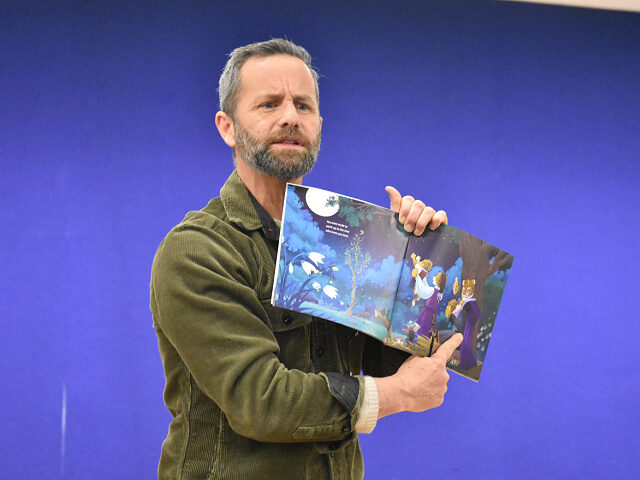
Kirk Cameron: The Republic Depends on Us Recapturing the Hearts, Minds of Our Children

Source: Breitbart

The future of the republic depends on those who are willing to recapture the hearts and minds of our children, said actor, director, and author Kirk Cameron during an interview Monday on SiriusXM’s Breitbart News Daily with host Alex Marlow.

“I believe parents are realizing the most sacred job in the world and the most powerful force for good belongs — wait for it — to parents,” Cameron explained:

That’s why God gives children to moms and dads, not the government. Whoever succeeds in telling children the stories gets to control the future. Dictators know that, patriots know that, liberty loving people understand that. And we can’t outsource parenting to public libraries and public schools. That’s why I’m doing this. That’s why I’m hitting the road and I’m joining forces with grandparents, with parents, with patriots, concerned Americans, to prayerfully and purposefully take back the hearts and minds of our children. The Republic depends upon it.

His comments come after a massive crowd filled the Indianapolis Public Library’s main branch on December 29 to hear him read his recently published children’s book, As You Grow, Breitbart News reported.

“The library organization initially denied Cameron the opportunity to read the book for its story hour but later caved and allowed the event to happen,” the Breitbart News reported, adding Cameron has criticized libraries that barred him from doing a public reading of his book but offered “drag queen story hours” for children.

As You Grow, teaches young readers about love, joy, and gentleness, according to the BRAVE Books website.

When asked what drove him to use different forms of media to promote positive values about America and his faith, Cameron said, “I’ve got great parents, I’ve got a Bible and a newspaper, and a little bit of history tells me that if good people don’t commit to doing the right thing over the long haul, we lose.”

“History is replete with examples of that and what we have in America is rare and precious, it’s called liberty. It’s called freedom, and that’s what I want to fight for for my kids,” he added.

“If we don’t want to have blood on our hands and be filled with guilty consciouses in our sunset years, we’ve got to do everything we can to plant the seeds of liberty, of faith, and morality, so that our children can have a bright and hopeful future. That’s why I’m doing this,” Cameron concluded.

Epaphras: Faithful Friend + Disciple Maker + Prayer Warrior

By Lane Corley

Epaphras is an unsung hero in the New Testament. He’s mentioned only a few times. He started and led churches in three significant cities. He made Paul’s list of faithful companions in Colossians 4. That’s where we learn the most about him. His character has stuck out to me this past year as a model for life and leadership. Who was Epaphras?

A Faithful Friend

As Paul wrote to the Colossians, he called Epaphras “one of you.” Making him a hometown hero of sorts. Paul also calls him “dearly loved” signaling that his reputation was thorough as a friend to all.  

How faithful was Epaphras? Well, Paul calls him a “fellow prisoner.” So he was faithful even to the point of voluntarily going to jail with Paul. Tracing his story, we see that Epaphras was one of several companions who traveled to Rome to be with Paul during his imprisonment. This speaks of his love for Paul and his willingness to sacrifice his own life for his friend and the gospel, as his alliance with Paul would have made him a conspirator in Paul’s supposed crimes. So he was a Faithful Friend through thick and thin. 

Faithful friendship modeled by Epaphras can be as simple as following the One Another’s in the New Testament. And Epaphras’ friendship included the hard ones: Carry One Another’s Burdens, Suffering with One Another, etc.

Who has known my faithful friendship through thick and thin?

Disciple Maker 

Paul calls Epaphras a “faithful minister” and a “faithful servant.” And he reminds the Colossian believers that they “learned it (the gospel) from Epaphras” Col 1:7. This tells us that Epaphras likely started the church in Colossae. Later in chapter 4, Paul says that Epaphras also “works hard” for churches in Laodicea and Hierapolis, two neighboring cities to Colossae.

So, Epaphras was faithful to Jesus’ Great Commission. He made disciples as he went and where he lived. People heard the gospel first from him. As a Disciple of Christ, He leveraged his relational network along with the word of God and the Spirit’s work in the world, and people were saved, groups and churches were started, and eternal destinies were changed. That’s what disciple-makers do.

If you are a Christian, Jesus wants you to be a Disciple Maker. Who has learned the gospel from me? is a question we should ask as we think about Epaphras. It should be a personal ministry. And not just for the super spiritual or classically trained. Beginning a disciple-making ministry can be as simple as this:

  • Make a list of friends who are far from God. 
  • Pray for them every day. 
  • Initiate Gospel conversations with those who express spiritual interest. 
  • Gather them around God’s word to learn the Gospel.
  • Teach them to reach their friends too. 
  • Simple churches may be formed as obedience to the Great Commission happens. 

Epaphras did this in Colossae, then possibly in Laodicea – about 9 miles away, and Hierapolis – about 25 miles away. Imagine the three cities closest to yours having a new witness to the gospel, born out of your disciple-making efforts.

Prayer Warrior

Probably what Epaphras, if known, is most known for, is his life of prayer. His life could be the subject of a book called How to Be a Prayer Warrior. That’s really what the verses in Colossians 4 emphasize for us about his life.

Four words in Colossians 4:12 summarize for us the Epaphras model for prayer that we should all seek to emulate – He was “always wrestling for you.” And Paul tells us what he prayed for: 1) so they will stand, 2) so they will grow, 3) so they will know God’s will. Epaphras prayed for strong, mature, knowledgeable disciples.

In verse 13, Paul continues to describe Epaphras’ life and prayer acknowledging that he “works hard” for the believers and has “deep concern” for their well-being.

Could these descriptions be used to label my life as a prayer partner? Always, Wrestles, For You, Works Hard, Deep Concern. Who have I wrestled/struggled for in prayer? Honestly, compared to Epaphras, my prayer life has been inconsistent, weak, selfish, and apathetic.

How to Be A Prayer Warrior: 

Looking at Epaphras as a model for prayer, how can we become prayer warriors?

1. Commit to Pray Everyday, All Day – “ALWAYS”

Research has shown that only 15% of Christians pray every day. Maturing Christians have a daily time to meet with God. Do you have time set aside to meet with God, to pray, to listen? If not, make that time today.

2. Devote Energy and Attention to Prayer – “WRESTLING”   

To describe prayer as wrestling is to say that this is the kind of prayer that is focused and attentive. This is not praying on the way to work in the car. Or just a rote prayer before meals. Or a quick prayer before an important meeting. 

Wrestling, struggling, and fighting in prayer is to set aside everything else and focus the energy of your heart and mind on a need and beg God for a solution, an answer, a breakthrough. 

Jesus said to go into your private room and shut the door. Jesus went up on a mountain to pray. He was talking about wrestling and struggling in prayer. 

Prayer warriors don’t do drive-by praying. They devote time, energy, and attention to prayer. 

3. Take Prayer and the Needs of Others Personally – “DEEP CONCERN” – “WORKS HARD”

To be a prayer warrior, you need to prioritize your deep concerns. There are so many things lobbying for our deep concern. Politics, Pleasure, People. The disciple-making, prayer warrior is deeply concerned about the souls of people around them, about the glory of God, about obedience to the Great Commission. Deep concern is where your prayer life is defined. If we’re not prioritizing our deep concerns around the deep concerns of God then we’ll never become prayer warriors. Epaphras was deeply concerned for the needs of his fellow believers and it drove him to pray.

I long to be the kind of friend and disciple-maker that prays like Epaphras. Don’t you?

Reflection:

  1. Faithful Friendship – Who has known my faithful friendship through thick and thin?
  2. Disciple Maker – Who has learned the Gospel from me? 
  3. Prayer Warrior – Who have I wrestled/struggled for in prayer? 

Why Everything Is The Way It Is

The prevailing view in today’s media, public schools, and surrounding society is that the Bible isn’t true, no educated person believes in God, and science is the key to life’s mysteries. The lie of evolution becomes so deeply implanted that deliverance is increasingly difficult.

The world rejects “God says” and accepts “science says” as the ultimate truth. Few realize that science cannot answer the important questions: why the universe and life exist, and why every child knows the difference between right and wrong and believes that God exists until taught “better.”

Few know what leading scientists admit. Max Planck, father of Quantum Theory, declared: “Science cannot solve the ultimate mystery of nature.”1 We don’t know what time, space, matter, or energy are—much less the soul and spirit.

Why? cannot be addressed to the universe but only to its Creator. One cannot reason with an earthquake or a hurricane. There is no sympathy in “Nature.” Nobel laureate Erwin Schrödinger, one of the architects of quantum mechanics, wrote:

The scientific picture of the real world around me is…ghastly silent about all that…really matters to us….It knows nothing of beautiful and ugly, good or bad, God and eternity….
Whence came I and whither go I? That is the great unfathomable question…for every one of us. Science has no answer to it.2

Science knows nothing of truth—only physical facts. Lee Smolin, founding member of the Perimeter Institute for Theoretical Physics in Waterloo, Canada, has said: “When a child asks, ‘What is the world?’ we literally have nothing to tell….”3

The question why? irritates atheists because the maker decides the purpose for whatever is made. Without a Creator, neither the universe nor life has any meaning. Without God, there is no reason for a rose bud or for the dew that makes it shimmer in the morning sun —or for anything else that we hold dear and enjoy, including human existence itself.

Why is everything the way it is? Because God is the way He is. But who is this God? Is he Zeus of the Greeks, Brahman of the Hindus, Allah of Islam? Does it matter? Can’t we just acknowledge a “higher power”? Higher than what? Power? No impersonal “power” could create personal beings. Nor could any “force” conceive and write in words on DNA the directions for constructing and operating all living things.

Atheism leads to numerous absurdities promoted by otherwise intelligent people. Sir Francis Crick, Nobel laureate as co-discoverer of the DNA language, begins his book, The Astonishing Hypothesis:

You, your joys and your sorrows, your memories and your ambitions, your sense of personal identity and free will, are in fact no more than the behavior of a vast assembly of nerve cells and their associated molecules.4

If this is the way the universe made us, why does Crick call it Astonishing? He knows it is contrary to common sense. Yet to cling to his atheism he must persist in such madness. However, most people would firmly object to Crick’s description. Any thinking person knows he weighs choices carefully, experiences joys, sorrows, hopes, ambitions, fears, remorse, and regrets that are very real. But “science says” is a holy mantra that causes every knee to bow—except those who will not worship Baal (1 Ki:19:18
). Biologist Richard Lewontin defiantly boasts:

We take the side of science in spite of the patent absurdity of some of its constructs…for we cannot allow a Divine Foot in the door.5

Arch atheist and outspoken enemy of God, Richard Dawkins, claims that we are merely vehicles through which “selfish genes” perpetuate themselves. Yet he says genes have no foresight. They do not plan ahead. Genes just are. He also states, “Much as we might wish to believe otherwise, universal love and the welfare of the species…are concepts that simply do not make evolutionary sense.”6 What an admission!

If evolution makes us incapable of true love, morals, or ethics, why do we admire these qualities? How can we be so unnatural, if we are the offspring of nature? Crick and Dawkins seem embarrassed that many of the human qualities that everyone possesses could not have been produced by evolution. We do not think and act like we should if we were evolved from lower creatures.

The language component in the human gene “is identical in every particular to [that in] a snail. [Only] the sequence of building blocks is…different….”7 The organizational genius behind DNA is breathtaking. Using the same four letters for plants, animals, and man, distinction is maintained not only between all kinds of living things but between individuals of each kind. This ingenious arrangement sets bounds which make it impossible for DNA of one kind of life to change into DNA of another kind.

Unquestionably, the DNA language, which is the basis of all life, did not and cannot evolve. The similarity between man’s DNA and that of all animals is no more evidence that man evolved from animals than is the similarity in human and plant DNA evidence that we evolved from plants.

Evolution did not make us. God made us. But atheists cling to evolution as an escape from accountability to God. Darwin’s theory was his revenge against the god he could no longer believe in, the “god” that had allowed his daughter, Annie, to die. Darwinism’s atheism prevents science from knowing why things are as they are. Without God there is no answer to the why for anything. Yet here we are in a vast and awesome universe and common sense cries out for a reason for its existence and ours.

Why is everything the way it is? Only because God, who created it all, is the way He is. And why is God the way He is? Because, unlike the capricious gods of non-Christian religions, God revealed Himself to Moses thus: “I AM THAT I AM” (Ex 3:14). Consistently the Bible’s God declares, “I am the LORD, I change not (Mal:3:6).” God is outside of, and untouched by, the time and change so evident in our world.

Dawkins says, “Genes just are.” No, genes are not self-existent and eternal. They had to have a Maker. God alone has no maker but is the Maker of all: self-existent, uncreated, unchanging, perfect, eternal, omniscient, omnipresent, and omnipotent. For God to be God, this is who He must be.

Why is everything the way it is? Because God, who made all, is the way He is. Of the newly created universe, we read: “God saw everything that he had made, and, behold, it was very good” (Gn 1:31). Why was everything “good”? Because God who made everything is good: “There is none good but one, that is God” (Mt 19:17).

Even in its present corrupt state, much in the universe is still so beautiful that it thrills and moves us deeply because the God who made it is beautiful. David wrote: “I seek [to] dwell in the house of the LORD all the days of my life, to behold the beauty of the Lord…” (Ps:27:4). We need greater appreciation of God’s beauty!

Why is there some apparent “good” even in a Hitler or a Stalin? Nazi extermination camp guards who had presided over the murder of Jews all day could come home at night, kiss their wives, play with their children, and enjoy listening to Wagner. This is because God, who is good, made man in His image (Gn 1:26,27). Although sin separated all mankind from a holy God, a remnant of the image of God in which we were created remains. Yet everything man touches, even love, is corrupted.

The man who persuades a woman to live with him without marriage tells her, “I love you.” But what he may mean (perhaps unknown even to him) could be, “I love myself, and I want you.” Only too late they may discover that this is what both of them mean by “love.”

Why the blight, rot, and death that taunts us everywhere? This, too, is because God is the way He is. Without God, whose character reveals and condemns it, there would be no sin; and without God’s law written in man’s conscience, there would be no knowledge of sin: “I form the light, and create darkness: I make peace, and create evil: I the LORD do all these things” (Is 45:7).

How could a good God create evil? The same way the God who is light creates darkness. A person who was born and died in a cave in total darkness would not know he was in the dark until someone shined a light. The light suddenly reveals the darkness for what it is; and God’s holy perfection reveals evil for what it is. The haunting memory of paradise lost lingers elusively in man’s heart. Why must it be this way? Because the God who is good is also holy and just—and man, made in His image, rebelled.

What about eternal torment in the Lake of Fire? That, too, is because God is love and God is just. He created man to live forever in the joy of His love—not as an “extra” but as man’s very life. Those who reject God’s love consign themselves to the eternal torment of a burning thirst for the One who made them for Himself. Heaven will be the eternal satisfaction of the living water flowing “out of the throne of God and of the Lamb” (Rv 22:1). Hell will be eternally dying from burning thirst for God, the horror of fully knowing one’s sin and rebellion, and the realization that one is there only because of rejecting Christ.

“God is love” (1 Jn:4:8,16). Love is the essence of His being. He loves us and wants to forgive us; but He is also holy and just. For God to forgive sinners without the full penalty being paid would contradict His justice and make Him our partner in evil. Christ fully paid that penalty for our sins—but the pardon must be willingly and gladly received. God will not force anyone into heaven.

Atheists scoff, “How could a good God create this evil world? If God can’t stop suffering and death, He is too weak to be God; and if He could but doesn’t, He is a monster unworthy of our trust.” In fact, this is not the world God made but the one we made in rebellion against Him. Don’t blame God for what we have done to His once-perfect world!


Why did God allow man to rebel? That fact, too, is true because “God is love.” We can neither receive and enjoy His love nor love Him in return (or love one another) without the power of choice. Love is from the heart. The ability to say “yes” means nothing without the equal ability to say “no.” Tragically, Adam and Eve, chose to say “no” to God and to follow Satan. The entire universe suffers as a result: “The whole creation groaneth and travaileth in pain together until now…waiting…” (Rom:8:20-23).

Those who reject the truth reject God. Sir David Attenborough, producer of decades of TV programs promoting evolution, argued:

The God you believe in…an all-merciful God created…a parasitic worm…that can live in no other way than in an innocent child’s eyeball [in West Africa]?8

No, that is not the way the universe was at the beginning. And during the millennial reign of Christ, the world will be restored to its original condition, without animals devouring one another, without microbes and parasites preying on other living things: “The wolf also shall dwell with the lamb…the leopard shall lie down with the kid…the calf and the young lion…together; and a little child shall lead them….The lion shall eat straw like the ox…the sucking child shall play on the hole of the asp, and the weaned child shall put his hand on the cockatrice’ den…for the earth shall be full of the knowledge of the LORD…” (Is 11:6-9).

In Christ alone, and His payment of the penalty for our sins upon the Cross, we find reconciliation to God and ultimate meaning and purpose. “All things were made by him…” (Jn:1:2). O mystery! The babe born in Bethlehem was and forever is “the mighty God, the everlasting Father” (Is 9:6). Jesus said, “I and my Father are one” (Jn:10:30).

How can we understand and better know this infinite God? He made us for Himself, and we naturally thirst for Him: “My soul thirsteth for God, for the living God…” (Ps:42:2). Yet those in rebellion foolishly attempt to quench that thirst in earthly possessions, pleasures, and pride. It was to reveal God to man as the only One who could fulfill that inner longing that Jesus, God’s “only begotten” Son (Jn:1:14; 3:16, etc.) was born into this world.

The suffering that Christ endured at men’s hands revealed the evil in all of our hearts. That suffering, which we inflicted upon Him, could not save us. It was the punishment for our sins that Jesus suffered on the Cross under God’s wrath against sin that made it possible for all to be forgiven who believe on Him. It is because He fully paid that penalty in our place that He can say, “If any man thirst, let him come unto me, and drink” (Jn:7:37).

He who was born of a virgin and fully man is also fully God: “For in him dwelleth all the fullness of the Godhead bodily (Col:2:9); who being the brightness of his [God the Father’s] glory, and the express image of his person, and upholding all things by the word of his power…by himself purged our sins…” (Heb:1:3).

Paul declared, “Without controversy, great is the mystery of godliness: God was manifest in the flesh, justified in the Spirit, seen of angels, preached unto the Gentiles, believed on in the world, received up into glory” (1 Tm 3:16). Though now we only dimly understand (“we see through a glass darkly [and] know in part”–1 Cor:13:12), we have the glorious promise that the more we by faith look upon, meditate upon, and understand our Lord Jesus Christ, the more clearly we see Him and become like Him: “But we all, with open [unveiled] face beholding as in a glass [mirror] the glory of the Lord, are changed into the same image from glory to glory, even as by the Spirit of the Lord” (2 Cor:3:18).


The revelation of Christ, for which our souls thirst, thrills us increasingly as we more clearly understand who He is in all His fullness and what He accomplished to reconcile us to Himself. Something of His glorious person is beautifully expressed in Graham Kendrick’s hymn:

Meekness and majesty, manhood and deity,
In perfect harmony—the man who is God;
Lord of eternity, dwells in humanity,
Kneels in humility, and washes our feet.

Father’s pure radiance, perfect in innocence,
Yet learns obedience to death on a cross;
Suffering to give us life,
Conquering through sacrifice—
And as they crucify, prays, “Father, forgive.”

Wisdom unsearchable, God the invisible,
Love indestructible in frailty appears;
Lord of infinity, stooping so tenderly
Lifts our humanity
To the heights of his throne.

Oh, what a mystery—Meekness and majesty;
Bow down and worship,
For this is your God,
This is your God!

Dave Hunt, The Berean Call (April 1, 2007)

Endnotes

  1. Max Planck, “The Mystery of Our Being,” in Quantum Questions, ed. Ken Wilbur (Boston: New Science Library, 1984), 153.
  2. Erwin Schrödinger, quoted in Quantum, 81.
  3. Dennis Overbye, “Physics awaits new options as Standard Model idles,” Symmetry, vol 03, issue 06, August 06.
  4. Francis Crick, The Astonishing Hypothesis: The Scientific Search for the Soul (New York: Touchstone/Simon & Schuster, 1994), 3.
  5. Richard Lewontin, “Billions and Billions of Demons, The New York Review, January 9, 1997, 31.
  6. Richard Dawkins, The Selfish Gene (Oxford University Press, 30th anniversary edition, 2006), 2.
  7. Dawkins, Selfish, 22.
  8. M. Buchanan, “Wild, Wild Life,” Sydney Morning HeraldThe Guide, March 24, 2003, 6.

Beguiling With Enticing Words

“And this I say, lest any man should beguile you with enticing words.” (Colossians 2:4)

This Scripture is a perfect representation of those who would try to deceive people into accepting the false paradigm of Darwinian evolution, in which nature serves as an imposter diety magically crafting and molding creatures over millions of years.

The verse contains two very interesting Greek words that occur rarely in the New Testament. The first word of note is only used twice and is the verb paralogizomai, translated here as “beguile.” It was used by the ancient Greeks to denote persuasiveness of speech or the putting forth of a seemingly plausible argument undergirded by dangerously false information. The second time it’s used is in James 1:22 concerning self-deception: “But be ye doers of the word, and not hearers only, deceiving [paralogizomai] your own selves.”

The second Greek word of note is the highly descriptive noun pithanologia, translated as “enticing words,” and is only used in this one place in the New Testament. It’s a combination of the word pithanos, meaning convincing, persuasive, or plausible, with logos, meaning word or account. The Greeks used it to describe arguments made by sophists, who were noted for affirming false scenarios, trying to make them appear true. In modern English we would say “to talk someone into something false.”
 

Paul indicated he had to make this warning concerning deception because he’d just previously declared “the acknowledgement of the mystery of God, and of the Father, and of Christ; In whom are hid all the treasures of wisdom and knowledge” (Colossian 2:2-3). Indeed, all evolutionary deception ultimately steals the glory of Jesus Christ the Creator, “for in him dwelleth all the fulness of the Godhead bodily” (v. 9).

Source: The Berean Call

Christian Joy

The abiding message of Philippians concerns the nature and grounds of Christian joy. For Paul, true joy is not a surface emotion that depends on favorable circumstances of the moment. Christian joy is independent of outward conditions, and is possible even in the midst of adverse circumstances, such as suffering and persecution.

Joy ultimately arises from fellowship with the risen, glorified Christ. Throughout the letter, Paul speaks of joy in the Lord, emphasizing that through Christ alone is Christian joy realized, as are other Christian graces. Essential to this joy is the confident conviction of the lordship of Christ, based on experience of the power of His resurrection. Because of this conviction, life for Paul attained meaning. Even death became a friend, because it would bring him into a fuller experience of the presence of Christ (1:21-23).

The joy presented in Philippians involves eager expectation of the near return of the Lord. That this expectation was dominant in Paul’s thinking is seen in his five references to Christ’s return. In the context of each reference is a note of joy (1:6, 10; 2:16; 3:20; 4:5).

Paul further describes a joy that springs from fellowship in the spreading of the gospel. He begins the letter by thanking the Philippians for their partnership in spreading the gospel through their monetary gifts. The gifts, however, are only an expression of their spirit of fellowship, or as he puts it in 4:17, “the fruit that abounds to your account.” So Christian joy is an outgrowth of being in the active fellowship of the body of Christ.

This letter reveals the timeless message that true joy is to be found only in a dynamic personal relationship with Jesus Christ and in the assurance that God is able to turn adverse circumstances to our good and His glory. Because he was united to Christ by a living faith, Paul could claim contentment in all circumstances. His unadorned testimony was “I rejoice … and will rejoice” (1:18), and his unqualified command was, “Rejoice . . . again I will say, rejoice! (4:4).

Introduction to The Epistle of Paul the Apostle to the Philippians, Spirit Filled Life Bible, General Editor Jack W. Hayford, Litt.D. (Thomas Nelson Publishers, 1991), pp. 1800-1801

Rationalism vs Revelation: The Mind vs The Heart

“A different form of attack upon the Scriptures, which may be described as Rationalism, was developed in the 19th century. Rationalism set aside Revelation, assuming the sufficiency of the mind, or Reason, to enable man to find out truth and to attain to the highest good.

The unprecedented progress made in scientific knowledge not only gave valuable insight into the works of God in Creation, but also stirred in some minds a desire to explain creation apart from God. This made it necessary to prove that the account of the Creation given in the book of Genesis did not spring from Divine inspiration, but from the ignorance of men, who, living before us, were presumed to have known less than we do. As fresh discoveries were made in the illimitable field of Nature, theories were founded upon them which were said to be incompatible with the Genesis history and therefore to prove it incorrect. As further facts came to light new theories had to be formed, each displacing its predecessor, yet each in turn accepted on the authority of the learning of the men of science who promulgated it. The “Origin of Species” published by Charles Darwin in 1859 is an important landmark in this development of thought.

Those who accepted the view that there had been no creation, of necessity lost the knowledge of the Creator. This involved the loss of all revealed knowledge, for the revelation of God through the Scriptures begins with Creation as the work of God, without which there could have been no Fall of His creature, Man; and neither need nor possibility of man’s Redemption. Consequently, the new theories evolved from the minds of men who discarded the Scripture teaching of the Fall, replacing it by constantly changing theories of the development of man from a lower form of life. The experience of Salvation and the hope of Redemption became incredible on the basis of these teachings, and whatever vague promises might be held out to the race, the individual was left without hope.

Although in the minds of the multitude evolution has replaced God the Creator, so that many trace their ancestry from beasts rather than from God, and are ignorant of God as their Redeemer, yet not all, even among those recognized as the most eminent men of science, have followed this teaching. It would not be correct to say that increase of knowledge of the facts of Nature necessarily leads to disbelief in God or in the Scriptures. Many have found that the more they have learned of the works of God in Creation the more they have appreciated the consonance of this revelation with that contained in the Scriptures. Indeed, the assertion so often and so eagerly made that no modern, intelligent, educated man can believe the Scriptures, is without foundation. It is not a fact that the more people know the less they believe, nor yet that the more ignorant they are the more faith they possess.

Rationalism is largely due to the failure to recognize that man is not only mind, but mind and heart, and that the mind always serves the heart. The heart, which is the character, will and affections, and is the seat of experience, uses in its service the mind, with its intelligence and reasoning powers. The heart of the natural man uses his mind in order to justify his unbelief in God and in Scripture by finding countless reasons for complaint against God, and contradictions and errors in the Scriptures, but if this same man has an experience which brings him to see his sinful state, his need of salvation, and Christ is revealed to him, then his heart — that is his will and affections —are captured; they go out to Christ in faith as Saviour and Lord, and the Divine and Eternal Life is communicated to him, as it is written: “that whosoever believeth in Him should not perish, but have eternal life” (John 3:16). With that his mind, though neither more or less capable, intelligent and instructed than before, enters into the service of a changed heart, finding truth and beauty and revelation in the very Scriptures which it formerly despised, and discovering in the ways of God constant reason for thanksgiving and worship. Saul the persecutor, changed to Paul the apostle is a striking illustration of this.

Excerpt from The Pilgrim Church by E.H. Broadbent, pp. 493-495