Christianity, Islam and the double standards of leftist media

During a city council meeting last week, Dearborn Heights, Michigan Mayor Abdullah Hammoud uttered remarks that, in any other context, would have incited a nationwide media firestorm.

When a Christian resident objected to renaming a local road after a news publisher who glorified Hamas and Hezbollah, the mayor responded that he was simply “not welcome here.” The leftist media responded to this inflammatory comment by ignoring it.

During public comment, local resident Ted Barham registered his objection to the county renaming a section of Warren Avenue after Osama Siblani, the publisher of Arab American News, due to his support for terrorism in statements like, “The blood of the martyrs irrigates the land of Palestine.”

“The best suggestion I have for you is to not drive on Warren Avenue or to close your eyes while you’re doing it. His name is up there, and I spoke at a ceremony celebrating it because he’s done a lot for this community,” retorted Mayor Hammoud. He reviled Barham as “a bigot,” “racist,” and “an Islamophobe” before concluding, “Although you live here, I want you to know as mayor, you are not welcome here. And the day you move out of the city will be the day that I launch a parade celebrating the fact that you moved out of this city.” So much for inclusion.

“Dearborn is one of … a couple of cities now … that has a Muslim mayor. It has a … majority Muslim community,” responded former Brown University researcher Dr. Andrew Bostom. “From the mindset of a leader of really what’s a Muslim community, he did nothing wrong. He’s protecting the mores of this Muslim community … The problem is the non-Muslim political and religious leaders that are afraid to call out these behaviors and just label them as unacceptable.”

It would be simple to condemn Hammoud’s comments, if the media or Michigan Governor Gretchen Whitmer (D) cared to. Hammoud made these comments in an official meeting, on video, for the whole world to see. “He said this from the city council in his role as the mayor. So it wasn’t like he posted this somewhere on social media. He said it from his official post and capacity!” exclaimed FRC President Tony Perkins on “Washington Watch.”

But the only tune being played by the leftist media is crickets.

Perkins anticipated a critic’s response, “There are going to be people who say, ‘Well, you believe in religious freedom. What if a Christian was the mayor?’”

Consider the hypothetical scenario: a predominantly Christian community decides to name a street after the late James Dobson, to honor his labor for American families; a local LGBT activist stands up at a city council meeting to protest Dobson’s affirmation of a biblical view of marriage and sexuality; and the (openly Christian) mayor calls the activist a string of unpleasant names and invites him to pack his bags.

Of course, local Christian churches should be the first to rebuke such an un-Christian response. Christians want to see everyone come to know Jesus; they don’t want people to move away simply because they don’t yet know him. But equally certain is the ensuing denunciation across the leftist media landscape. Politico reporter Heidi Przybyla would write another breathless prediction about the imminent takeover of Christian nationalism. “60 Minutes” would sympathetically film an in-depth portrait of LGBT rights in the town. The New Yorker would run a snooty essay implying that they expected nothing less from a pack of rabid Bible-thumpers.

In other words, if the roles were reversed, the current media silence would swell into the roar of Niagara Falls!

So, why is the media silent now? Why does it show no interest in the exclusionary discrimination directed by a Muslim government official toward a Christian? Where are the condemnations of Islamic nationalism, or the pleas for non-sectarian neutrality?

To ask these questions is not to equate Christianity and Islam. “Christianity allows freedom,” Perkins pointed out, while Islam requires submission. The Muslims in Dearborn Heights want to honor a man who praised terrorism. If a Christian town did honor Dr. Dobson, they would honor a man who praised God’s design for the family. It’s also telling that the case of Muslim exclusion is real, while the case of Christian exclusion is hypothetical.

Such exclusion “is not considered negative from an Islamic perspective,” Bostom stated. “This is the way Christians are supposed to behave in a Muslim community. They are supposed to bend to the will of the Muslim majority and not do anything that offends the sensibilities of Muslims.”

In fact, “there’s not a single Muslim country or region where Christians are free and safe,” he continued. “Countries such as Nigeria, Congo, Burkina Faso, Cameroon, Niger, the Central African Republic have massacred or forcibly displaced millions of African Christians [as] jihadists [have been] allowed to roam free in these countries within the past 10 years.”

“Christians in many Muslim countries can be detained without trial, arrested, sentenced, and imprisoned,” Bostom added. “They’re incarcerated for their faith in Bangladesh and Iran. They’re being driven underground in places like Yemen and Algeria.”

In fact, it’s worth asking why the media says so little about the extensive persecution Christians face across the Muslim world. Sixteen million Christians have been driven from their homes across Africa, said Bostom, compared to two million residents of the Gaza Strip. But who gets all the media sympathy?

Notably, Muslims in Western nations do not suffer the same sort of religious discrimination that Muslims experience in Islamic nations. “Muslims … have a protected status in this country,” said Bostom. “There’s all kinds of public opprobrium cast upon anyone … who says something that’s deemed negative about Muslims.”

The difference is that Western nations have been influenced by the liberalizing values of Christianity (in the classical sense where “liberal” is simply a synonym for “free”). Thus, Western nations — at least before they became post-Christian nations — have long recognized inalienable human rights, based in a person’s inherent dignity, which ultimately comes from God. Christianity teaches that a man cannot be forced to believe anything against his will, so Western nations allow that man should not be forced to say anything against his will. Christianity extols the value of work, so Western nations protect the right of property.

These human rights are nowhere more secure than in America, where constitutional amendments have codified the right to free speech, free religion, free assembly, and more. “That’s why, in America, you have a Muslim mayor in a Muslim community,” said Perkins. “Not that I endorse it, but because of the freedom that’s allowed under the Christian ethic. You don’t see that in a Muslim-majority country.”

Islam, by contrast, is illiberal. In many nations conquered by Islam, the native population was forced to convert or die. To this day, many Islamic nations still have laws discriminating against non-Muslims, prohibiting any Muslim from changing his or her religion, and punishing anyone seeking to convert a Muslim. Where Muslim countries have moderated these laws, it has usually been due to diplomatic pressure from Western powers like the United States.

Countries are not guaranteed to maintain their character if their people and customs change theirs. For America, this means that our traditions of freedom will not survive an Islamic takeover. “What you’re seeing play out [in Dearborn is] what a lot of us have feared,” said Bostom. “In a predominantly Muslim enclave, city, town, etc., you will see application of Islamic law.”

“But is that the American way,” asked Perkins, “that we have to surrender our First Amendment freedoms, because we’re living in an enclave of Muslims?” Not according to the model of ordered liberty that prevailed in previous eras of U.S. history, he concluded. When President John Adams said the U.S. Constitution would only work for a “moral and religious people,” he said, “I would bet my life … that he was not referring to the Quran. He was referring to the Bible.”

“The problem is that we don’t have … the political strength, the religious strength, the social strength to just say, ‘This is intolerable,’” Bostom responded. That weakness is due to American culture unmooring itself from its “common religious ethic” in the word of God, said Perkins. For decades, an anti-Christian ideology has crept through the institutions, sowing division, mistrust, and the spirit of lawlessness (2 Thessalonians 2:7).

This refers, of course, to the Marxist ideology of the Left, which rejects the very notion of “good authority” in order to establish its own totalitarian rule. It offers a profane facsimile of freedom, which is merely a rejection of all norms. In practice, Marxism is every bit as illiberal as Islam, demanding submission and persecuting those who refuse.

Perhaps this ideological fraternity is the more fundamental reason why the leftist media has failed to criticize Islam’s persecution of Christianity.

Such conditions should surprise no Christian, because sinful nations — allied only because their common master is Satan — have joined forces to conspire against God’s people for at least 3,000 years. “Why do the nations rage and the peoples plot in vain? The kings of the earth set themselves, and the rulers take counsel together, against the Lord and against his Anointed,” wrote David (Psalm 2:1-2). The goal of sinful people and sinful rulers is to throw off God’s authority (Psalm 2:3), but God’s triumph is already sure (Psalm 2:4-9). It was true in David’s day, it was true in Jesus’s day (Acts 4:25-28), and it remains true today.

For this reason, Christians need not stoop to the censorious tactics of our enemies. God’s kingdom advances by open profession of the truth. “We persuade others” (2 Corinthians 5:11); we don’t silence them. Let evil men do what they will, but Christians rely on free and open debate, “We implore you on behalf of Christ, be reconciled to God” (2 Corinthians 5:20).


Originally published at The Washington Stand. 

Joshua Arnold is a senior writer at The Washington Stand, contributing both news and commentary from a biblical worldview.

Source: Christian Post

Are You About To Slip?

Their foot shall slide in due time. (KJV) Deuteronomy 32:35

“As he that walks in slippery places is every moment liable to fall, he cannot foresee one moment whether he shall stand or fall the next; and when he does fall, he falls at once without warning: Which is also expressed in Psalm 73:18,19. “Surely thou didst set them in slippery places: thou castedst them down into destruction: How are they brought into desolation in a moment!”…

“The bow of God’s wrath is bent, and the arrow made ready on the string, and JUSTICE bends the arrow at your heart, and strains the bow, and it is nothing but the mere pleasure of God, and that of an angry God, without any promise or obligation at all, that keeps the arrow one moment from being made drunk with your blood. Thus all you that have never passed under a great change of heart, by the mighty power of the Spirit of God upon your souls, all you that were never born again and made new creatures, raised from being dead in sin, to a state of new, and before altogether unexperienced light and life, are in the hands of an angry God…

“…And now you have an extraordinary opportunity, a day wherein Christ has thrown the door of mercy wide open, and stands calling, and crying with a loud voice to poor sinners; a day wherein many are flocking to him, and pressing into the kingdom of God. Many are daily coming from the east, west, north and south; many that were very lately in the same miserable condition that you are in, are now in a happy state, with thier hearts filled with love to him who has loved them, and washed them from their sins in his own blood, and rejoicing in the hope of the glory of God.”

The preacher Jonathan Edwards spoke these words on July 8, 1741 while preaching his famous sermon “Sinners in the Hands of an Angry God” in Enfield, Connecticut. As he preached some people called out for him to stop. At one point there was so much noise, he had to ask them to be quiet so he could be heard.

He concluded the sermon by saying, “Let everyone that is out of Christ now awake and fly from the wrath to come. The wrath of Almighty God is now undoubtedly hanging over a great part of this congregation. Let everyone fly out of Sodom: ‘Haste and escape for your lives, look not behind you, escape to the mountain, lest you be consumed.’ “

The people of Enfield were never the same.

Have you fled to Christ, the Lamb of God, to be cleansed by his shed blood on Calvary? We all need to flee to Jesus to escape the coming wrath of God. If you have not, why not today?

“They cried to the mountains and the rocks, “Fall on us and hide us from the face of the one who sits on the throne and from the wrath of the Lamb. For the great day of their wrath has come, and who will be able to survive? “ Revelation 6:16

Source: E. Michael and Sharon Rusten, The One Year Christian History. A great daily devotional based on historical events.

70 Christians beheaded in DRC church attack [by Islamic Terrorists] ‘Grim tapestry of violence’

By Anugrah Kumar, Christian Post Contributor Thursday, February 20, 2025

Seventy Christians were discovered beheaded inside a Protestant church in the Democratic Republic of Congo’s North Kivu Province, according to reports, which say the victims had been kidnapped by suspected Allied Democratic Forces terrorists.

The terrorists arrived in Mayba, a village in the territory of Lubero, at around 4 a.m. last Thursday and ordered residents to quietly get out, said Open Doors, adding that at least 20 Christian men and women had to leave their homes, leading to their capture.

Later, concerned residents gathered to plan a rescue, but the armed group is said to have surrounded the village and managed to seize 50 more believers. The abducted residents were then taken to a Protestant church in Kasanga, where they were found beheaded, said the ministry.

Families in the area could not immediately bury their relatives because of persistent security threats.

The U.S.-based persecution watchdog International Christian Concern called the attack “a brutal massacre,” and said the ADF held the hostages for days before executing them.

“This recent massacre, where 70 Christians lost their lives, is not an isolated incident but part of a grim tapestry of violence that has claimed over 6 million lives in the DRC over two decades of on-and-off war,” said ICC President Jeff King in a statement provided to The Christian Post. “The vast majority of the DRC’s residents are Christian, so this is a religious genocide carried out by radical Islamic terrorists (the ADF).”

He continued, “It’s time for more than prayers; we must demand an all-African military force to intervene in this failed state, to restore order and save countless more people from becoming victims of this endless cycle of bloodshed.”

Open Doors quoted a local primary school director, speaking from Kombo school, as saying that churches and health centers in the region had already halted operations due to widespread violence. They had to relocate all their activities.

Many Christians have reportedly fled Lubero for safety. One community elder from the local CECA20 church commented, “We don’t know what to do or how to pray; we’ve had enough of massacres. May God’s will alone be done.”

The ADF, which is associated with the Islamic State terror group, has intensified assaults in northeastern Congo for several years. In 2014, the group escalated attacks in Beni territory of North Kivu province, later expanding into Irumu and Mambasa in Ituri province.

A local news outlet reported that more than 200 individuals were killed in Baswagha chiefdom last month.

DRC moved six places higher on the World Watch List, ranking 35th in the most recent evaluation. Recorded deaths for faith-related reasons rose from 261 to 355 last year, and thousands of people were internally displaced.

Houses in affected regions have been looted, churches closed and some Christian villages left abandoned. In the midst of this turmoil, the presence of M23 rebels, reportedly supported by Rwanda, has contributed to the insecurity.

Rwanda has been accused of supporting M23 in the hope of annexing some of its mineral rich territory. Rwanda, in turn, has accused DRC of supporting anti-government militias in its territory and of harboring those responsible for the 1994 Rwandan genocide.

Amid the exchange of blame between Rwanda and the DRC, M23 recently claimed control of the eastern Congolese city of Goma. Local Christian leaders have pledged to work toward peace and harmony among neighbors.

Meanwhile, John Samuel, Open Doors’ legal expert for sub-Saharan Africa, described the violence as taking place “in a context of impunity, where almost no one is held accountable.”

Samuel urged the international Christian community to “remain in prayer for Christians and vulnerable communities in eastern DRC” and to seek “an end to violence” while advocating “impartial” and “transparent” efforts by the government.

A previous report by the U.S. State Department noted, “The Islamic State of Iraq and Syria-Democratic Republic of the Congo (ISIS-DRC), known locally as the Allied Democratic Forces (ADF), a U.S.-designated terrorist organization, continued to attack civilians indiscriminately in North Kivu and Ituri Provinces, on occasion targeting churches and religious leaders. The violence targeted all communities, but most victims were Christian, the religious majority.”

It is believed that there are around 7 million internally displaced people in the DRC, more than any other country in the world. Christian charity World Vision has called on the international community to do more to help child refugees in the country. Since 1998, it is believed that over 6 million people have been killed in the conflict.

Who are the ‘least of these’ and why does it matter?

By John Doane, Op-ed contributor Sunday, October 20, 2024

Lutheran reverend Yousef Zamgila (L) speaks to members of his congregation at the small improvised church they helped set up in a neighbours yard in Omdurman, Khartoums twin city, on August 22, 2019. Sudan’s Christians suffered decades of persecution under the regime of Islamist general Omar al-Bashir. | JEAN MARC MOJON/AFP via Getty Images

Several years ago Tony Campolo wrote, “I place my highest priority on the words of Jesus, emphasizing the 25th chapter of Matthew, where Jesus makes clear that on Judgment Day the defining question will be how each of us responded to those he calls ‘the least of these.’”

President Obama, speaking to the Pope at the occasion of his visit to the White House in 2015, stated “You call on all of us, Catholic and non-Catholic alike, to put the ‘least of these’ at the center of our concerns.” And then the President went on to identify “the poor and the marginalized” as the “least of these.”

Others identify those needing adoption or the homeless as “the least of these.” Former NIH director Francis Collins in his recent book The Road to Wisdom identified “the poor, the sick, the orphans, the prisoners, [as] the least of these that Jesus said we are most called to help.”

Since Jesus makes this such an important issue, it would behoove us to identify those whom the Bible itself would call the “least of these.”

Notice that in Matthew 25:40 Jesus said, “… inasmuch as you did it to one of the least of these my brethren, you did it to Me.” So the “least of these” are His brethren. Who are Jesus’ brethren? Hebrews 2:11 answers, “For both He who sanctifies and those who are being sanctified are all one, for which reason He is not ashamed to call them brethren.” Romans 8:29 calls Jesus “the firstborn among many brethren.” 1 John 3:13-14 counsels us “Do not marvel, my brethren, if the world hates you,” but “We know that we have passed from death to life because we love the brethren.”

So, love for the brethren (Christians) is a sign that we have eternal life, just as in Matthew 25 Jesus indicates that those who care for the least of His brethren are welcomed into His eternal Kingdom.

Some Christian writers have identified the brethren of Jesus in Matthew 25 as disciples called to preach the Gospel, such as those sent out by Jesus in Matthew 10. Those may indeed risk hunger, loneliness, nakedness and imprisonment, but the ones mentioned in Matthew 25 evidently refer to those who actually suffer such things.

Now we know from the rest of the Bible (e.g. Romans 4:3-8 and Romans 10:9) that our righteousness is based on our faith in the finished work of Jesus for the forgiveness of sins and belief in His resurrection. So, the works on behalf of the least of Jesus’ brethren mentioned in Matthew 25 do not earn us salvation. Rather, they are a sign that we are already saved, as James said, “I will show you my faith by my works” (James 2:18).

Why is this important? First of all, this passage from Matthew should not be used for virtue signaling, to drum up support for one’s favorite charity, or to promote a government program. Our salvation is never based on our works, however good they may seem. Secondly, notice that the passage in Matthew 25 is part of the so-called Olivet Discourse starting in Matthew 24 where Jesus spoke to his disciples in private. In that context, Matthew 25: 31-46 gives His brethren, His disciples, a way to distinguish between others “blessed of My Father” (v. 34) and those deserving of “everlasting fire prepared for the devil and his angels” (v. 41).

As in other places, Jesus was sorting out appearances from reality. For example, before the breakup of the Soviet Union, many leaders in the World Council of Churches and major Christian denominations refused to believe that Christians were in prison for their faith in communist countries, even when presented with exhaustive evidence. Such leaders preferred to associate with leaders of state-controlled churches in those countries. Other nominal Christians either deny that Christians were suffering persecution in communist countries, or they were indifferent about helping them. The ones suffering persecution were indeed in prison. Their families were naked and hungry, because they had no income, and the governments forbade others from helping them. Like St. Paul, they were made “the filth of the world, the offscouring of all things” (1 Corinthians 4:13), surely the “least” ones.

Meanwhile, laymen supported efforts to bring relief to families of Christian martyrs and those in prison. When the communist governments of Eastern Europe collapsed, more Christians understood the magnitude of the persecution that had occurred. More Christians also became involved in helping our persecuted brethren elsewhere.

Nevertheless, one can still discern differences in how Christians and the world respond to the persecution of Jesus’ brethren. Believers still suffer severe persecution in communist China, North Korea, and Cuba. Recently it has also become fashionable to discourage criticism of Islam. However, it’s not fashionable to help Christians persecuted by Muslims in Nigeria or Iran, by Hindus in India or by Buddhists in Myanmar.

The worldly media generally ignores or downplays such persecution, and so it takes effort by Christians to identify it. Christians suffering this persecution are the “least” of Jesus’ brethren, hated by the world (1 John 3:13). But while they are persecuted, practical help provides encouragement that they are not forsaken (2 Corinthians 4:9). One can “visit” them also through prayer and letter writing.

Our priority is always our own household (1 Timothy 5:8) and our brothers and sisters in the household of faith (Galatians 6:10). When we help our persecuted brothers and sisters we exhibit our love for Christ, since Christ dwells within each believer (Colossians 1:2 and 1:27). Unbelievers do not have that love, because suffering for the name of Christ is foolishness to them. It is God Himself who puts that love into our hearts, so it is no cause for boasting.

John Doane received a bachelor’s degree from Yale, a PhD from MIT, and worked in microwave technology for Bell Laboratories, Princeton University and General Atomics. He served on the Board of Directors of Jesus to the Communist World  (which later became Voice of the Martyrs). His recent articles have been published in the Creation Research Society Quarterly and The Christian Post.

Source: Christian Post

Worldview may have more impact on mental health than chemical imbalances: study

A new study suggests that the mental health crisis in the United States may be more closely related to a lack of a biblical worldview than to commonly cited causes like chemical imbalances.

The Cultural Research Center at Arizona Christian University released the study Tuesday, attributing the rise in mental health issues, such as anxiety, depression and fear, to what researcher George Barna calls “worldview deficiencies” rather than “psychological or chemical imbalances.”

The findings are based on interviews conducted in January with 2,000 U.S. adults aged 18 or older, with a sampling error of plus or minus 2 percentage points at the 95% confidence level.

The report highlighted mental health struggles among younger generations, noting that 56% of Generation Z and 49% of millennials regularly experience anxiety, fear or depression. Generation Z refers to the youngest group of American adults, while millennials are defined as those born between 1984 and 2002. In total, one in three adults from these generations has at least one diagnosable mental disorder.

Barna sees a direct correlation between mental health challenges and the lack of a biblical worldview, which the Cultural Research Center defines as “a means of experiencing, interpreting, and responding to reality in light of biblical perspectives.” The CRC evaluates an individual’s biblical worldview based on their answers to a series of belief-related questions.

Only 1% of Generation Z and 2% of millennials possess a biblical worldview, according to Barna. He commented that it is “not uncommon to find a young adult who trusts feelings more than facts, sees no inherent value to life, believes in Karma, and rejects the existence of the biblical God.”

“Add to this a lack of any sense of purpose or meaning, and the idea that truth is subjective,” Barna explained. “This common set of components results in a lifestyle that is inconsistent, chaotic, frustrating, and lacking hope. Anxiety, depression, and fear are virtually inescapable in such a life.”

Barna highlighted several beliefs he considers contributors to mental unrest among young people. Seven out of ten individuals under 40 said their life lacks a clear purpose, while four out of five who reject God reported frequent experiences of fear and anxiety.

“The lifestyle that results from these common worldview components is one of chaos and fear,” Barna said. “However, embracing a biblical worldview offers a sense of purpose, security, and peace that can alleviate many of these mental health challenges.”

Barna also pointed to syncretism — described as a “blend of conflicting beliefs drawn from various worldviews” — as the dominant worldview among young Americans, adding that it’s “not surprising that anxiety, depression and fear are rampant among young adults who adopt syncretism.”

“Without a solid foundation of truth, their lives become inconsistent and chaotic,” he said, emphasizing that “the biblical worldview, by contrast, provides a framework that fosters emotional stability.”

Barna acknowledged that some situations do require conventional mental health treatments, such as counseling, prescription drugs or physical therapy, but he said that other mental health struggles may stem from “worldview components that trigger and sustain the condition.”

“If people instead embraced the core tenets of the biblical worldview, their lives would not be perfect,” Barna concluded, “but they would avoid many of the emotional and psychological pitfalls we’re seeing today.”

The report also examined the mental health of individuals whose beliefs directly conflict with the biblical worldview. Among those disengaged from both political involvement and Christian faith, 82% reported frequent experiences of anxiety, depression and fear, compared to 67% of respondents who were more engaged.

Incidents of fear, anxiety and depression were higher (46%) among those who believe gifted mediums can communicate with the spirits of the dead, compared to 34% of those who do not share this belief.

Similarly, 40% of respondents who consider “Mother Earth or the Universe” as an important guide reported mental health challenges, compared to 25% who did not. Among individuals classified as “consistently liberal” on social and political issues, 38% experienced frequent anxiety, depression or fear, while only 22% of those who did not identify as consistently liberal reported the same challenges.

Ryan Foley is a reporter for The Christian Post. He can be reached at: ryan.foley@christianpost.com

The Choice

You either come to God for forgiveness and salvation based on what the Savior Jesus did on the Cross, or you’re going to come under divine judgment and come to Jesus as your Judge. Which will it be? Carl

Unconventional But It Worked

The following is a true story as told to me by my son-in-law who is a North American Mission Board missionary. Only the names have been changed.

While talking with a pastor friend, the pastor related how Young Man had just asked Jesus Christ into his heart, been born again, and joined the church. The pastor was concerned because Young Man had a lot of zeal but lacked knowledge on how to be a witness to his friends. He was afraid he would turn people away from Christ instead of drawing them to Him.

Meanwhile, Young Man was out witnessing to his friends about their need for a Saviour to escape Hell. He carried a cigarette lighter in his pocket. He witnessed to his friend Tim by grabbing Tim’s arm and putting the cigarette lighter underneath his forearm and apply the flame to the skin. You can imagine Tim’s surprise as he jerked his arm away from the flame.

The next Sunday, the pastor runs into Young Man before church and Young Man tells him how he had witnessed to Tim, his friend, with the cigarette lighter. The pastor realizing that he was right about the Young Man, says to the Young Man, ” I have to talk to Tim right after the service. Where can I find him?”

The Young Man says, “Oh, Tim is seated in the church, he wants to be baptized.”

Tim had received his friend’s unconventional witness concerning his need to have his sin washed away by the blood of Jesus Christ so he could escape the justly deserved flames of Hell. In other words, Tim was born again and wanted to follow the Lord in believer’s baptism to testify to the world that he had been born again.

Do you need the flame of a cigarette lighter applied to your arm to get your attention?

The New Testament warns us there is coming a day “when the Lord Jesus will be revealed from heaven with His mighty angels in flaming fire, dealing out retribution to those who do not obey the gospel of our Lord Jesus. These will pay the penalty of eternal destruction, away from the presence of the Lord and from the glory of His power, when He comes to be glorified in His saints on that day, and to be marveled at among all who have believed –for our testimony to you was believed.” II Thessalonians 1:7-10

Today is the day to believe on the Lord Jesus and what He has done for you at the Cross by shedding His precious blood so your sins could be covered. Do not put it off.

Carl

Why We Should Prepare to Meet God

“The greatest reason why you should prepare to meet your God is because you MUST meet your God.”

It is not optional.

No excuse slips will be accepted. Your physical death nor your grave will keep you from it. There will be no back door to escape. No escape anywhere. No escape.

Unless your case is settled out of court through a meeting with the Savior, the Lord Jesus Christ, you MUST appear before the judgment bar of God and you are going to meet with yourself in the presence of God.

What a terrifying thought to meet with yourself! All your evil thoughts, evil words and sinful actions revealed in the presence of a pure, sinless Holy God who hates sin. A Holy God whose Son you have rejected as your Savior and whose precious blood that was shed for the forgiveness of your sins, you have trampled under your feet. A Holy God who is described as a consuming fire.

But we are sure that the judgment of God is according to truth against them which commit such things. And thinkest thou this, O man, that judges them which do such things, and doest the same, that thou shall escape the judgement of God.”

Romans 2: 2 tells us that man’s judgement will be according to truth. Every individual sees himself in the distorted mirror of his own imagination. We have seen mirrors in amusement parks which make a tall man look short and a thin man look fat. The human imagination makes the individual see himself in some sort of comparison with others, and always in a light more favorable than is justified by the truth. The coming of God’s judgment will destroy that distortion; a “hail shall sweep away the refuge of lies” (Isa. 28:17).

You will be forced to look upon yourself as you truly are, in the sight of a Holy God, who hates sin.

And Romans 2:3 says that there will be no escape. No escape. Don’t forget that –no escape.

No, there is no escape. But wait! There is a way of having your case settled out of court. You must move fast. You must come to Christ now. For now is the accepted time. Now is the day of salvation. The Bible teaches us that the issues of eternity are settled in this life. There is no second chance. The Lord said, If you “die in your sins; where I am going, you cannot come….for if you believe not that I am He, you shall die in your sins” (John 8:21, 24).

Today His mercy calls. You are guilty, but you can yet escape God’s wrath, through Christ. If you refuse God’s mercy, you must face Him.

There is no escape.

Come Today To Christ!

Carl

Excerpts from Donald Grey Barnhouse, Romans 1, pp. 12-14, 22

Iranians secretly translating the Bible into their heart languages to share Christ with their People

Iranian Christians attend the New Year mass at the Saint Targmanchats Armenian Church in Tehran on Jan. 1, 2023. | Atta Kenare/AFP via Getty Images

(Dear Reader please pray for our brother and sisters in Iran. Carl)

As the underground Church continues to grow in Muslim-majority Iran, Bible translators are putting their lives on the line to bring the Gospel into the local dialects so that their friends and neighbors can have access to the written word of God for the first time. 

Through the work of the translation agency unfoldingWord, Christians in Iran and across the globe have been able to translate the Gospel themselves into more native languages.

The Christian Post interviewed a representative from unfoldingWord, Evan Thompson, who preferred to use a fake name or pseudonym for his safety.

“There are 1.45 billion people in the world who speak about 5,500 languages that do not have the whole Bible in their heart languages. … The Church has expanded exponentially in the last 20 years. And what these folks have learned is that you can lead someone to Christ, but if they don’t have a church, they don’t survive on their own,” Thompson said. 

“You can start a church, but if that church doesn’t have the Bible in its heart language, it will typically only last one generation. Iran, for example, has churches operating underground. And there are thousands of underground churches in many other parts of the world,” he added. 

UnfoldingWord, a nonprofit organization that has been around for roughly seven years, “works with Church leaders around the world who are seeking to establish their churches in sound doctrine, but lack access to Bible translations in the languages their people speak.”

A day in the life of Iranian Bible translators 

The Christian Post heard from two Iranian women risking their lives to help translate unfoldingWord’s Open Bible story resources from Farsi into other Iranian dialects for evangelizing.

Both women Bible translators have chosen not to give their real names for this article to protect their identities and maintain their safety. 

The first woman, using the name Miriam, said she gave her heart to Christ after coming to the realization that she is “God’s child and daughter.”

Miriam is part of a people group in Iran that is made up of millions of natives. She says she is often treated as a second-class citizen because of how those from other people groups view her status in her people group.

Miriam’s life could be in danger if the Iranian government finds out that she follows Jesus in the Islamic Republic, which Open Doors ranks as the eighth-most hostile country for Christians.

“God is my Father. I feel deeply honored to be part of this work of bringing God’s Word to my people,” Miriam said. 

Despite having children and knowing that her life is at risk for believing in Jesus, Miriam said she will not stop working to translate the Gospel into her heart language. 

“I cannot even imagine leaving this work unfinished. I must complete this work and see the result. I want to see my beloved ones experience salvation in Christ. This is my dream; that my people can talk about God and speak His name freely without any hesitation; without any fear they can talk about God,” she said. 

Miriam was introduced to Christianity through a friend in college who gave her a Farsi New Testament. She had to read the Bible alone and in secret, an act that left her without much of a clear understanding of the Christian faith. 

After college, Miriam married into a strict Muslim family. But, no matter how hard she tried to adapt to the strict religious practices of Islam, she could not find God as a Muslim.  

Miriam said she didn’t give her life entirely to Jesus until after she heard about Transform, an online class offered in Iran that covered the basic teachings of Christianity. 

She watched the classes secretly through various digital platforms. And during one of the class sessions, she gave her life to Christ. 

Following her conversion, Miriam’s husband caught her one day watching the Transform Iran pastor on television.

Miriam could no longer hold back the truth about her faith from her husband. 

“By the grace of God, he did not get angry. He said, ‘I know you are a serious-minded woman, and if this is important to you, it’s OK,'” Miriam recalled. 

Miriam’s husband began watching the class with her, and several months later, he also gave his life to Christ. 

Before her husband’s conversion, the Transform Iran pastor asked her if she would get involved in Bible translation because of her expertise in her heart language. 

Miriam accepted the offer even if that meant risking her life to help translate the Bible into more Iranian tongues. 

“We are not allowed to study our heart languages in Iranian public schools. This is a limitation for our people. I have this language specialty and experience, this expertise so that I can help my own people. People like my mother can read this book,” Miriam said. 

“I have a Bible in Farsi, and I can read it. But I cannot understand the more complicated concepts in it because Farsi is not my heart language. I couldn’t establish a relationship with the Bible in Farsi. I’m very fluent in Farsi. I studied hard and had great teachers. Still, I cannot establish a relationship with the Bible in Farsi,” she continued. 

“How about other people who don’t have my educational advantages? My family and friends? Having the Gospel in my heart language makes it much easier to talk to my family about Jesus. They can understand and accept Him easily.”

‘Jesus fed me’

Another Iranian Bible translator who is using the pseudonym Stella accepted Jesus into her heart after her husband died of cancer.

Following her husband’s death, Stella was left alone to care for her young son. During that time, she relied on the peace of God as her only hope. 

“God has helped me. The Name of Jesus Christ was in my life. I didn’t need anybody. Jesus fed me, put clothes on me and gave me peace,” she said. 

​​Stella learned more about God through a Bible translated into Farsi. At first, she thought Christianity was a religion. But, now she understands that Christianity is a relationship. 

“When I was a new believer, I was thinking that, ‘OK, I’m going to just switch religions.’ But, when I got to know the Holy Spirit, I understood that this is a relationship, not religion,” Stella said. 

Stella is currently working on a Bible translation in her heart language. Her sister-in-law became a Christian thanks to her work translating the Bible. Stella worked for five years alongside her family as they helped her review the translation of the Bible, and now she works as part of a larger Bible translating group.

“I love my mother language. I’m telling the poetry; I write the context. I write the sentence. I record it. … I know all of this is God’s work for us. God wants us to do this. … I am thinking about my mom, my father, my childhood. And everyone that doesn’t have it right now. I really want to bring God to my town and my people,” she said.

A dire need for Bible translations

Before unfoldingWord was launched, traditional Bible translation agencies across the globe have done “marvelous work” and continue to do so, Thompson noted. 

However, he said the number of Western Bible translators that Bible translation agencies can send overseas is dropping, and the demand for Bible translation is increasing rapidly. 

“The group that founded unfoldingWord developed a way to address this problem. We call it church-centric Bible translation. … It’s Bible translation incorporated into the life of the Church as part of its discipleship,” Thompson noted.  

“Most of those unreached people have neighbors who know Christ, and they’re taking the Gospel to them. And what unfoldingWord does is we equip the Church in every people group with a goal of translating the Bible in every language.” 

To help local churches translate the Bible, unfoldingWord provides people groups with open-source software and open-licensed biblical content that’s breaking the copyright barriers to source texts.

The organization also has comprehensive translation guides to answer difficult Bible translation questions. The organization offers essential doctrinal education to protect the theological integrity of the translations.

“unfoldingWord provides training for indigenous Bible translation teams over Zoom and sometimes in neutral locations,” Thompson said.

The training locations are kept secret to protect participants in certain countries where practicing Christianity is not accepted.  

“Our training allows for indigenous Bible translation teams to be able to use best practices when they are translating the Bible for themselves. One of the ways that I like to say it is: ‘We don’t make Bible translations. We help develop Bible translators.’ Because that’s what the Church really needs all over the world.”

Issues bringing translations to Iran  

Thompson said unfoldingWord has aided Iranian natives who have translated the Bible into dozens of native languages.

However, he said there are some unfortunate limitations to the organization’s ability to aid translators in Iran. He cited strict government policies prohibiting Iranians from studying their heart languages or their native tongues in public schools. 

“All of these oppressive countries, like Sudan, like Iran, and some others we could name, are trying to Islamasize their whole population. And one of the ways that they do that is by forcing them to speak this one national language, and it’s causing their heart languages to die out,” Thompson said. 

In Iran, the government recognizes Farsi as the national language. However, many natives speak other Iranian dialects more fluently.  

“It’s very much like anybody that comes to America from someplace else, and we put them in American schools to learn English. Unless their family makes it a point to keep their native languages … alive in their families, by the second or third generation, the kids can’t speak their native language anymore,” Thompson said. 

The few responsible for the many

Miriam believes God has blessed her with a huge responsibility to help translate the Bible into more Iranian languages.  

“This is not just a scientific book. This is God’s Word. I felt some tension. I was scared that I would not do the work well enough, but I’m very happy to make it available so that my people can establish a relationship with the Bible. That’s why I got involved with this Bible translation project,” she said. 

When asked if she can imagine the day when the Bible is completed in even more  Iranian languages, Miriam said it will take many years, and she doesn’t know if she’ll live long enough to see the project’s conclusion. 

“I want my children to experience the result of my work so that they can know Jesus through their heart language. I never thought this project would grow like this. But I’ve learned that it’s not just about me,” Miriam said.  

“I need this team that has been pulled together. For safety, we have many people working on this project secretly. There may be several Christians in one Iranian family, but they cannot share their faith with each other openly,” she continued.  

“We need more people who can speak my heart language to continue working on this project. … I want to ask for prayer … to recruit people into the project who know our language well.”

By: Christian Post staff

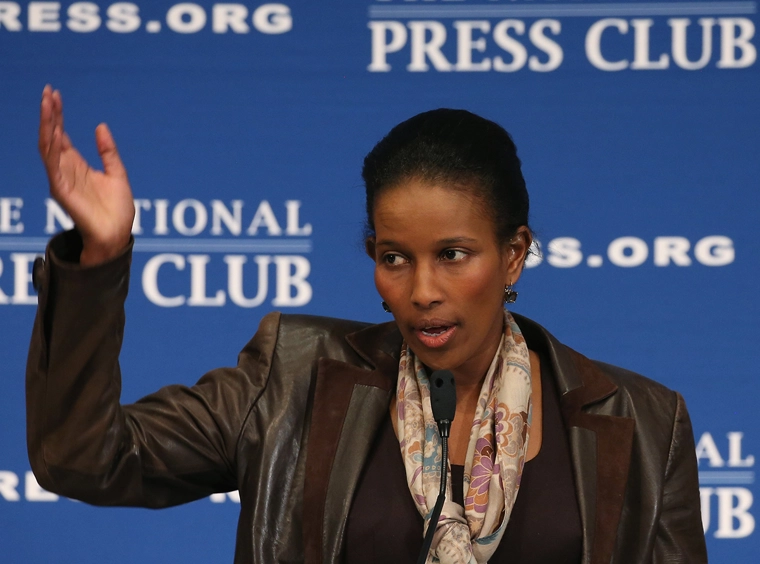
Muslim-turned-atheist rights activist Ayaan Hirsi Ali says she is now a Christian

By Anugrah Kumar, Christian Post Contributor

Ayaan Hirsi Ali, a former Muslim and renowned critic of Islam, has revealed her conversion to Christianity, describing her journey from Islam to atheism and ultimately to Christianity.

In a Weekend Essay published on UnHerd, Hirsi Ali, who is known for her bestselling books and outspoken views, says her encounter with Bertrand Russell’s 1927 lecture “Why I am Not a Christian” led her to atheism, offering solace and escape from the fear instilled by religious doctrine. She found Russell’s views on religion, rooted in fear, resonant with her own experiences.

“It did not cross my mind, as I read it, that one day, nearly a century after he delivered it to the South London branch of the National Secular Society, I would be compelled to write an essay with precisely the opposite title,” adds Hirsi Ali, who is originally from Somalia and is a survivor of genital mutilation.

Hirsi Ali traces her initial disillusionment with Islam following the 9/11 terrorist attacks when she questioned the justifications for the attacks in the name of Islam.

During her teenage years in Nairobi, Hirsi Ali says she was influenced by the Muslim Brotherhood, which instilled in her a strict interpretation of Islam.

This period was characterized by a strict adherence to religious practices and a deep-seated disdain for non-Muslims, particularly Jews. However, her later exposure to atheism through figures like Christopher Hitchens and Richard Dawkins provided a stark contrast to her previous beliefs.

Hirsi Ali attributes her turn to Christianity to a broader concern for the challenges facing Western civilization. She cites threats from authoritarian regimes, global Islamism, and “woke” ideology as catalysts for seeking a unifying force. Christianity, in her view, offers a foundation of values and traditions that uphold human life, freedom, and dignity, and counters the divisiveness she associates with atheism.

Responding to her embrace of the Christian faith, conservative Christian philosopher Dr. Robert George wrote on Facebook: “Two decades ago, under the influence of the writings of Bertrand Russell, she became an atheist. Her thought was that atheism was smart and sophisticated — it was allegedly what really intelligent people believed (the ‘brights,’ as Daniel Dennett embarrassingly labeled himself and his fellow unbelievers). It was the way to a world of rationality and civil liberty. Hirsi Ali is not the first to have gone down that misguided path. She now sees that it is indeed misguided and that there is, if I may quote scripture, ‘a more excellent way.’”

Hirsi Ali’s embrace of Christianity also stems from a personal quest for spiritual solace and meaning in life.

Hirsi Ali critiques atheism for leaving a “God hole,” which she believes has led to the rise of irrational ideologies and the erosion of Western values. She argues that Christianity provides a unifying story and foundational texts, similar to those in Islam, that can engage and mobilize people.

Speaking at the National Press Club in 2015, Hirsi Ali offered five amendments to the religion of Islam that Muslims should take seriously if they really want to bring about a peaceful reformation to their religion.

She suggested Muslims should view the Quran and the hadith as creations of human effort, potentially divinely inspired but ultimately human in origin. This perspective challenges the traditional view of Muhammad as a moral guide post-Mecca, which Hirsi Ali finds problematic.

As the second amendment, Hirsi Ali advocated for a change in how Muslims prioritize life after death over life before death. She called for a reorientation toward valuing earthly life more.

She also argued that Shariah law is responsible for widespread violence and oppression in Muslim cultures, exemplified by regimes like Saudi Arabia, Iran and the Islamic State terrorist group.

As her fourth amendment, she called for the elimination of the principle of “Commanding Right and Forbidding Wrong.” This principle, according to Hirsi Ali, leads to vigilantism and mob justice, as seen in cases where citizens punish individuals for alleged violations of Shariah law or disrespect toward Muhammad.

Hirsi Ali also called for an end to the concept of Jihad as Holy war, advocating instead for a focus on peace.

Source: Christian Post

World’s Greatest Problem

THE WORLD’S GREATEST PROBLEM IS LOSTNESS.

Today, over 3,000 people groups have no missionary presence and likely have no access to the Good News of Jesus Christ.

The lack of accurate knowledge about God’s saving grace is not limited to just these distant groups. You and I are surrounded by THE LOST every day regardless of what nation we live in.

Fellow Christian, what are you doing to fulfill the Lord’s commandment to:

“Go therefore and make disciples of all the nations, baptizing them in the name of the Father and the Son and the Holy Spirit, teaching them to observe all that I commanded you…” (Matthew 28: 18-20)

Do Something. Please!

Carl

How the Bible Created the Soul of Western Civilization: An Interview with Vishal Mangalwadi – Part 2

PART TWO

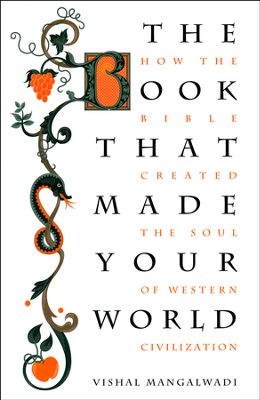
Bible Gateway interviewed Vishal Mangalwadi about his book, The Book That Made Your World: How the Bible Created the Soul of Western Civilization (Thomas Nelson, 2012).

How did the Bible trigger the West’s passion for medical advancement?

Vishal Mangalwadi: Mainstream Hinduism taught that matter (including the human body) was evil—illusion or maya. In contrast, the first chapter of the Bible declared the material realm, including the human body, to be very good. Genesis 3 taught that sickness and death came as a curse upon human sin. The Lord Jesus came to give us abundant and eternal life. His soul did not reincarnate. His crucified body was resurrected and glorified. The Bible teaches that God will resurrect our perishable bodies as immortal and glorified bodies.

Because of God’s high view of the human person, including his body, the Lord Jesus healed the sick and commissioned his disciples to a ministry of healing. Therefore, medieval Roman Catholic monasteries did not simply pray, preach, and practice piety. Many of them took care of the sick. They studied, and taught medicine. The Schola Medica Salernitana became the world’s first medical school in the South Italian city of Salerno. It grew out of a 9th century dispensary in a monastery. This monastic tradition blossomed into modern medicine after the 16th century biblical Reformation.

What is the biblical ideal of human dignity and how did it inform the West’s social structure?

Vishal Mangalwadi: Gautam Buddha, the founder of Buddhism, saw human life as suffering. Thomas Hobbes, the only atheist in English Enlightenment, viewed life as “nasty, brutish, and short.” Pope Innocent III detailed “The Misery of Man.” Secular intellectuals have no option but to see man as nothing more than an evolved animal.

Species, races, and individuals do not evolve equal. Evolution does not bestow any rights upon any animal. Western notions of human dignity, equality, and inalienable rights are the Bible’s unique contribution to the modern world. Pico della Mirandela (1463-94) articulated the Bible’s case for human dignity in An Oration on the Dignity of Man. His case rested upon (a) creation of man in God’s own image and (b) God’s incarnation in the Jesus of Nazareth.

God became man in order to save man, because man was made in God’s image – precious and immortal. Full implications of these doctrines are still being worked out. Yet, much of our future will be shaped by the question: Is man merely another animal (organic intelligence) or is he uniquely God’s image—so precious to God that He would come to this earth to save him?

How did the Bible equip the West to cultivate compassion?

Vishal Mangalwadi: Through parables such as that of the Good Samaritan, the Lord Jesus explained the command ‘Love your neighbor as yourself.’ He exemplified it by blessing those who cursed and killed him. Jesus courted the wrath of religious establishment by caring for the sick even on Sabbath. He reinforced prophets such as IsaiahJeremiah, and Amos, by teaching that God’s holy law was made for man’s good. Therefore, a religiosity that did not care for individuals was worse than worthless. It was obnoxious. What we do for the littlest of his brothers, we do for him.

What is your response to people who say the Bible subjugates women?

Vishal Mangalwadi: The women’s lib movement started in America because social inequality between men and women was obvious. Many women got paid less then men for the same work. They were allowed to serve coffee after worship, but not communion during the worship. They could play piano in a church but not pray. Yet, crucial questions are: who told America that men and women were created equal; that sin brought subjugation as a curse; that the curse was nailed upon the cross of Calvary? The question that triggered my reflections was: Why didn’t the Saudi women burn their burqas and their bras? What empowered American women to launch the women’s lib movement? Was it because American women were more oppressed than the Muslim of Hindu women? Or was it because something had already made American women stronger than other women around the world? My counter-intuitive discovery was that it was the Bible that empowered women.

No culture has ever required a husband to love his wife. Every culture, including Jewish and post-Christian Western cultures, have permitted husbands to divorce their wives and/or take other women. In 1831-32, French magistrate Alexis de Tocqueville observed that American women had become much stronger than European women because the biblical ideal of marriage had had the biggest impact in America. No country in the world will even try to impeach a president who lies about his private sex life.

The Bible emancipated Western women because it alone asserted theological equality of male and female and also because it defined God’s idea of marriage as a one-man one-woman lifelong and exclusive relationship. A woman is liberated to develop herself and to strive for her dignity when she knows that her fallen husband is not permitted to despise her, divorce her, covet his neighbor’s wife or to take another woman as a girlfriend, concubine, or wife. He has to love her, irrespective of the level of her intelligence, charm, abilities, and fallenness.

Roman wives were the victims of Rome’s playboy culture. Many of them followed and financed the Apostle Paul and (over time) won the Roman empire for Christ, because they understood better than modern feminists that Paul was emancipating them.

Men and women are equal, but husbands and wives (like parents and children and all other formal relations) have to live in a hierarchical relationship. No institution can function on the basis of equality-without-hierarchy. Christian marriages are being destroyed because the Western church has surrendered to the world’s folly that equality precludes authority. The Christian idea of marriage is unique. It can be sustained only if we take seriously the Bible’s idea of the fallenness of men and women and the necessity of wives submitting to fallen husbands, and husbands loving fallen wives.

How is human equality a biblical principle?

Vishal Mangalwadi: Sociologically, the modern idea of human equality was born when Martin Luther discovered the New Testament doctrine of the “priesthood of all believers.” Gradually, this truth began to challenge the West’s social/racial injustices.

George Whitfield was the first white revivalist in America, who began preaching to the blacks. His preaching evoked protests: “Do you really want us to kneel with our slaves and drink communion from the same cup?”

In order to counter deep rooted prejudices, in 1740, Whitfield began writing a series of articles. These explained how and why the Bible teaches human equality. Whitfield’s writings created the consensus which Thomas Jefferson articulated in the original draft of the Declaration of Independence as, “We hold these truths to be sacred and undeniable that all men are created equal.” By “sacred” Jefferson meant derived from sacred Scriptures. Under pressure from Benjamin Franklin, the Declaration was changed to read, “We hold these truths to be self-evident that all men are created equal.”

To Indian sages, inequality was self-evident. That is why they invented the caste-system which still survives. Equality was “self-evident” even to American Deists because their worldview was shaped by the Bible. Now that evolution is shaping everyone’s intellectual lenses, only a fool will be able to assert that all men have evolved equal.

What role did the Bible play in the establishment of the university?

Vishal Mangalwadi: No Hindu ashram ever grew into a university. No Orthodox Christian monastery developed into a university in Eastern Europe, Greece, or Russia. Augustinian monasteries and Cathedral schools blossomed into West European universities such as Oxford, Cambridge, Paris, Prague, Heidelberg, and Wittenberg because St. Augustine taught that the human mind was God’s supreme gift to mankind. The mind was made in God’s image, therefore, in order to be godly, one had to cultivate the mind as well as piety.

These monasteries were different than every other center of religious education. Young boys came to a monastery to learn to pray and become a priest. But in these monasteries they had to study logic, literature, philosophy, mathematics, and rhetoric as well. This is what created the West’s uniquely rational religious leader, who prayed as well as studied birds and the solar system.

Following the Reformation, Christian thinkers realized that God wants all men to be saved and come to the knowledge of the truth (1 Timothy 2:4-7). In order to know truth, man has to study three books: The book of God’s words (the Bible), the book of God’s works (in nature and culture), and the book of God’s reason (logic and mathematics that run the human mind and physical universe.) This insight was captured in Harvard Crest in 1643. VERITAS is written on these three books. Today, the university has degenerated into a factory producing laborers for the market and the state because, without God’s word, the university has been forced to shy away from the very concept of truth.

Since the Bible is not a “fax from Heaven,” explain how sentences written by humans can be considered the Word of God?

Vishal Mangalwadi: Prophet Elijah said to king Ahab, “As the Lord, the God of Israel, lives, before whom I stand, there shall be neither dew nor rain these years, except by my word” (1 Kings 17:1). By the end of the chapter, the Sidonian widow of Zarephath exclaimed, “Now I know that you are a man of God, and the word of the Lord in your mouth is truth.” (vs. 24). Eventually Ahab was forced to acknowledge that Elijah’s words—a man’s words—were, in fact, the word of God.

God said to Jeremiah, “Behold, I have put my words in your mouth…I am watching over my word to perform it.” (Jeremiah 1:8-11). God’s word includes the words He gives His men and also men’s words which He watches to perform, fulfill, and honor. Daniel and his friends were willing to go into the lions’ den and fiery furnace because 70 years of Jewish history had confirmed to them that Jeremiah’s words, disregarded by their fathers, were in fact God’s word.

The gospel is that Jesus Christ died “according to the Scriptures,” was buried and rose again the third day, “according to the Scriptures” (1 Corinthians 15:3-4). That means that Jesus didn’t have to die. In the Garden of Gethsemane Peter gave him the opportunity to evade arrest. During his trial, Pilate gave to Jesus plenty of room to escape crucifixion. The Lord Jesus sacrificed his life because he believed that the words of Scripture, written by fallen and fallible men, were in fact God’s words.

As you observe the West’s treatment of the Bible, where do you see western society headed?

Vishal Mangalwadi: Germany, the birthplace of biblical Reformation, became the arch villain of the 20th century, because during the 19th century, German theology undermined the Bible’s authority. I see post-biblical America as the greatest terror to the 21st century. I think the future of greed-driven American capitalism is best captured by James Cameron in his terrible, pagan, and commercially hit movie, Avatar.

Muslim nations cannot be the world’s biggest threats because while Islam can build a strong Caliphate, it does not and cannot build nations. Protestantism has built history’s greatest nations; therefore, the world has the most to fear from Protestant nations that destroy the very foundations of their morality and civility.

What are your thoughts about Bible Gateway as a way to reinvigorate civilization’s soul?

Vishal Mangalwadi: Bible Gateway is the only site I use to get into the Bible. (Though I am yet to cultivate the discipline to use everything that it offers.) I appreciate this interview because the new generation needs to learn why the Bible must be studied, trusted, obeyed, and applied.

Is there anything else you’d like to say?

Vishal Mangalwadi: Christianity has lost America because the church forgot that “God wants all men to be saved and come to the knowledge of the truth…” for this reason Paul the apostle was appointed a “preacher” and a “teacher of the gentiles in faith and truth” (1 Timothy 2:4-7). The American church has the capacity to disciple the nation, but for over a century it has lacked the theology for discipling nations. It has been preoccupied with saving souls, not with discipling nations.

The good news is that the state of Minnesota just started an education revolution that can disciple America. Students will enroll in an accredited college, but go to the local church to study online as a cohort in a face-to-face mentorship with a credentialed Academic Pastor. A student will get a college degree for under $10,000 a year. Check out www.VirtuesCampus.com.

Bio: Vishal Mangalwadi, LLD, was born and raised in India. He studied eastern religion and philosophy in India, Hindu ashrams, and at L’Abri Fellowship in Switzerland. He is a dynamic and engaging speaker who has lectured in 35 countries. He is a social reformer, political columnist, and author of 14 books. Christianity Today calls him ‘India’s foremost Christian intellectual.’

SOURCE: The Bible Gateway Blog – Jonathan Petersen

How the Bible Created the Soul of Western Civilization: An Interview with Vishal Mangalwadi

(Blog note: every Christian needs to read this article. Please share it with someone you know. Carl)

Part 1

What triggered the West’s passion for scientific, medical, and technological advancement? How did the biblical notion of human dignity inform the West’s social structure and how it intersects with other worldviews? How did the Bible create a fertile ground for women to find social and economic empowerment? How has the Bible uniquely equipped the West to cultivate compassion, human rights, prosperity, and strong families? What is the role of the Bible in the transformation of education? How has the modern literary notion of a hero been shaped by the Bible’s archetypal protagonist?

Bible Gateway interviewed Vishal Mangalwadi about his book, The Book That Made Your World: How the Bible Created the Soul of Western Civilization (Thomas Nelson, 2012).

Click to buy your copy of The Book That Made Your World in the Bible Gateway Store

Why did you dedicate The Book That Made Your World to Arun Shourie, a Hindu who is critical of the Bible?

Vishal Mangalwadi: In 1994, Arun Shourie, at that time one of India’s foremost public intellectuals, attacked Western missions and the Bible. He powerfully rehashed some of Thomas Paine’s arguments from The Age of Reason (1793-94). Mr. Shourie studied in the best Christian college in India before getting a PhD from an American university that had been founded by Methodists. I realized that this good and learned gentleman was clueless about what the Bible is and what it has done because his Christian professors in India and in America had no idea.

Therefore, moved by the Holy Spirit, I began responding to him with books such as Missionary Conspiracy: Letters to a Postmodern Hindu (1995), Fascism: Modern & Postmodern (1998—my intro to a book by Gene Edward Veith), and then The Book That Made Your World: How the Bible Created the Soul of Western Civilization (2012).

In spite of Western skepticism, many Chinese intellectuals sense that the Bible was the foundation of the West’s amazing development. In contrast, Hindus such as Mr. Shourie follow ill-informed, in fact, arrogant and foolish, Western repudiation of the Bible. They think that India can be made a great nation by returning to Hindu worldview, which destroyed India in the first place.

One book will not convince skeptics, but it can become a seed that multiplies into many PhD theses, popular books, TV shows, and films. I dedicated the book to Arun Shourie to help intelligent Indians discover the rock upon which India can realize its potential to be a great civilization—a blessing to all the nations.

You write that your book is not so much about the Bible as it is about great literature, art, science, technology, heroism, and virtues. Explain what you mean.

Vishal Mangalwadi: My book is not “Bible study.” It is a study of the global impact of the Bible and it’s worldview. The Bible was the book of the last millennium. No other book was translated, published, distributed, studied, or debated like it. What impact did it have on the world? That is the question my book explores.

Why do you call the Bible the soul of Western civilization?

Vishal Mangalwadi: Although the West has amputated its soul, I call the Bible the soul of Western Civilization because it propelled the development of everything good in the West: its notion of human dignity, human rights, human equality, justice, optimism, heroism, rationality, family, education, universities, technology, science, culture of compassion, great literature, heroism, economic progress, political freedom. Take, for example, democracy.

The myth that modern democracy came from Greece was invented only in the 20th century by John Herman Randall of Columbia College (New York) and Mortimer Adler and Robert Maynard Hutchins of the University of Chicago. The reality is that in his classic, Republic, Plato, the greatest of Greek philosophers, had already condemned democracy as Mobocracy—the worst of all political systems. Plato proposed that the ideal republic should be ruled by philosopher-kings. His disciple, Aristotle, trained Alexander-the-Great to be a philosopher-king, who turned out to be one of the most ruthless conquerors in history. In turn, Alexander inspired India’s first empire builder, Chandragupta Maurya.

Later Alexander inspired Machiavelli’s The Prince—which examines how a successful prince acquires and retains power. Machiavelli was the flowering of European Renaissance that produced tyrants such as Napoleon. The biblical Reformation led to the birth of modern democracy. Without the Bible, western democracy will become obnoxious as did the Greek democracies.

To give another example, the West’s confidence in human reason came not from Greece, but from the Bible via Augustine. Hinduism, Buddhism, and their products such as Greek gnosticism knew that unaided intellect cannot know truth. The Enlightenment corrupted western confidence in reason by (over time) separating it from revelation. After Nietzsche and Freud, everyone knows that here is no reason to trust human reason, unless it is made in the image of Logos and strives to conform to it.

Why do you begin your book recounting the suicide of rock musician Kurt Cobain and then contrasting him with Johann Sebastian Bach?

Vishal Mangalwadi: The first chapter uses music as an entry point into the West’s soul. It contrasts Christian West with (post-Christian) West without its soul. The chapter inquires: What made the West a uniquely optimistic and musical civilization, able to sing “Joy to the world (fallen, miserable and full of suffering)?”

Bach and Cobain were musical geniuses. Both lost their parents at nine. Bach’s parents died and Cobain’s separated. Bach’s faith in resurrection enabled him to celebrate “The Passion” (Suffering) of St. Matthew and St. John. Cobain inherited Bach’s musical tradition without its philosophy. Therefore, his music could only scream at suffering, making him an icon of a generation lost without a map of reality. Buddhism offered no hope to Cobain. Therefore, he cursed life and committed suicide.

Buddhism originated in India. Its pessimistic philosophy gave us great art and literature, but no hope, music, or musical instruments. Islam (and Orthodox Christianity) also ruled out music; therefore, it too pre-empted development of technology.

The German publisher published 10,000 copies of the first chapter as a stand-alone booklet. It is proving to be an excellent work of worldview evangelism. I hope someone will print it in Japanese, since Bach is Japan’s fifth evangelist.

How was the Bible “the force that created modern India”?

Vishal Mangalwadi: Why are “native” Americans Indians? Why are “native” Australians Indians? Why is Indonesia, Indian-Asia? Why were Columbus and Vasco de Gama looking for sea-routes to India (and not to “Spice-land”)?

The European mind was fascinated with India, because India, not Japan, Korea, or China, is the Eastern-most land mentioned in the Bible (Esther 1:1). By “India” the Persians meant “Sindustan,” the land around the river Sind (now in Pakistan). Up until the 1850s, no one living in Bengal or Kerala ever thought that he was living in “India.” That is why Michael Madhusudan Dutt (1824-1873), the pioneer of ‘Indian’ nationalism, actually wrote only about ‘Bengali nationalism.’

The pre-Columbus European concept of geographic India came from the Roman Catholic reading of the Bible. That is why Vasco de Gama’s coming to Kerala and Goa was the sea-route to “India.” Protestant reading of the Bible coined the ‘abstract’ concept of India as a geo-political nation state, half-a-century before England actually made India a nation in 1858. Prior to William Carey, no “Indian” had ever existed who started a paper (or organization) such as Friend of India (1818).

Lord Thomas Babington Macaulay, persuaded British Parliament in 1833, that Britain must govern Indians in such a way as to train them to govern themselves as an independent nation. Macaulay grew up in the company of the evangelical member of Parliament, William Wilberforce, in the Calpham community. He followed up his rhetoric by coming to India to give us the ‘Indian Penal Code’ along with the Jewish-biblical idea of rule of law. He helped transform our education and civil services. He played a critical role in the establishment of our first universities in Calcutta, Bombay, and Madras in 1858. These began as examination-conducting institutions to fulfil the vision of Macaulay’s brother-in-law, Charles Travelyan. The latter had defined the mission of Christian education in 1838 in his classic On the Education of the People of India. The objective of that herculean mission, he said, was to prepare Indians to govern themselves as a free nation.

After Macaulay and Travelyan, it took five more decades before an Englishman could inspire a few graduates of Calcutta’s Christian education to create the “Indian National Congress” (1885). Then it took 70 more years to prepare leaders such as Gandhi, Ambedkar, and Nehru, who could, in fact, lead and govern a free India.

India became a free nation in 1947. It could have attained that status if it had even one Indian, who thought of India as a nation during the “Mutiny” of 1857. When Indian soldiers started killing Englishmen and liberated Delhi, educated Brahmins and Hindu merchants organized prayer meetings around the country to pray for British victory over Indian mutineers. This was partly because the rebels who succeeded in defeating the British in Meerut and Delhi decided to revive the Mogul Empire by declaring Bahadur Shah as their emperor.

Most Hindu, Muslim, and Sikh soldiers and rulers disapproved of the revival of that exploitative and useless empire. Many decided to fight against fellow Indians to defend the British Raj. This was because, contrary to current, ill-informed (or deceptive?) debaters such as Shahi Tharoor, most of the Indians who actually lived under the British, perceived it as better than all other options available to “India”.

Mogul Empire had been so corrupt and inept that in 1738-39, the Persian invader Nadir Shah, met hardly any resistance as he travelled 1000 KMs. within the Mogul’s (Indian) empire, from Ghazani to Delhi to plunder the Mogul capital. The Empire’s rottenness had encouraged the Marathas to conquer and plunder Hindu and Muslim kingdoms. This threat of the Marathas and/or invaders from the Khyber Pass had forced Hindu/Muslim kings to take refuge under the Company Raj. Most Indians opposed the 1857 Mutiny, now called the First War of National Independence, because they could not trust Indians to rule India with justice and equity.

While the Hindu and Muslim rulers, intelligentsia, and merchants preferred the Company Raj over Indian rajas, it was the Bible-shaped conscience that saw the Company as a “gang of public robbers” (Macaulay) and its rule as the “rule of evil genii.” Yet, Independent India chose to remain a member of British Commonwealth and import its political, economic, and social ideals and institutions, because the Bible succeeded in (a) transforming India’s governance under the British, and (b) training enough Indians to govern India as a modern, democratic, nation-state.

Dr. Babu Verghese’s massive study, Let There Be India: The Bible’s Impact on Nation-Building, details how the Bible translators created modern India by turning our dialects into literary languages, bringing modern education, printing, literature, and modern press, and the modern ideas of human equality, dignity, and rights (his book is available from ManagerGoodBooks@gmail.com).

Part 2 will follow Part 1 on Psalm 119:38 Blog. Thank you, Carl

Source: Bible Gateway Blog -Jonathan Petersen

The Second Coming of Jesus to The Earth

Part Two – The Second Advent of Jesus, The Messiah

Lord Jesus’ SECOND ADVENT is when He physically returns to the Earth again. In light of the turmoil in the Middle East today, I thought we should republish this post.

In the larger scheme of end time prophecy, His return is at the end of the seven years of tribulations when the Antichrist will be defeated and destroyed.

JESUS IN HIS HOME SYNAGOGUE

When Lord Jesus read part of Isaiah 61 to announce that that He was the Messiah, He stopped halfway through verse 2 where it says “to proclaim the favorable year of the Lord” and did not read the second half of the verse which says,

“And the day of vengeance of our God…” Isaiah 61:2b

If He had read the second part He could not have said, “Today this Scripture has been fulfilled in your hearing.” Because the second part has to do with His return to Earth as a Warrior King-Priest to reveal Himself to Israel, purify Israel and save Israel from the armies of all the nations of the Earth who will try to destroy her.

In God the Father’s plan, this day of vengeance had not arrived when Jesus was speaking in His hometown synagogue around 30 AD. By reading verse 2 and 3 we see what His Second Advent involves:

“The SPIRIT OF THE LORD IS UPON ME, FOR HE ANOINTED ME…TO PROCLAIM..

“…the day of vengeance of our God; To comfort all who mourn,

To grant those who mourn in Zion, Giving them a garland instead of ashes, The oil of gladness instead of mourning, The mantle of praise instead of a spirit of fainting. So they will be called oaks of righteousness, The planting of the LORD, that He may be glorified.” Isaiah 61:2b-3

This section of Scripture reveals a SECOND ADVENT and reveals the specialized task the Messiah, Jesus, will perform as Warrior King-Priest:

  • …to proclaim…the day of vengeance of our God
  • to comfort all who mourn… in Zion
  • …giving a garland instead of ashes
  • …giving the oil of gladness instead of mourning
  • …giving a mantle of praise instead of a spirit of fainting
  • He will make the people of Israel into oaks of righteousness
  • He will cause glory to rebound unto God, by the changes in the people of Israel.

The specialized task deal with two things: the day of vengeance and the salvation of Israel physically and spiritually. This is after the church has been raptured and at the end of Antichrist’s rule.

FIRST TASK – MINISTER TO THOSE WHO ARE MOURNING

The setting is the end of the seven years of tribulation and the Battle of Armageddon is ongoing. Armies from all the nations of the earth are besieging and close to overwhelming the defenders of Jerusalem. Some of Israel has fled to the wilderness (Petra), some have been killed by the invading armies and some are besieged in Jerusalem. Zechariah 13: 9 tell us that two-thirds of the people in Israel will die during this time but much of the Jewish population will have already fled to the safety of the wilderness. The one-third remaining in Israel will be refined or purified by the Lord.

It is my understanding that at that point in the battle, Jesus will physically set His feet on the Mount of Olives coming to help Israel and will reveal Himself to Israel. They will understand that He was their Messiah all along. This is why the Messiah’s specialized tasks mention mourning, ashes, and fainting. Listen:

Zechariah 12:9-14 NASBS

[9] And in that day I will set about to destroy all the nations that come against Jerusalem. [10] “I will pour out on the house of David and on the inhabitants of Jerusalem, the Spirit of grace and of supplication, so that they will look on Me whom they have pierced; and they will mourn for Him, as one mourns for an only son, and they will weep bitterly over Him like the bitter weeping over a firstborn. [11] In that day there will be great mourning in Jerusalem, like the mourning of Hadadrimmon in the plain of Megiddo. [12] The land will mourn, every family by itself; the family of the house of David by itself and their wives by themselves; the family of the house of Nathan by itself and their wives by themselves; [13] the family of the house of Levi by itself and their wives by themselves; the family of the Shimeites by itself and their wives by themselves; [14] all the families that remain, every family by itself and their wives by themselves.

And again:

Ezekiel 20:43-44 NASBS

[43] There you will remember your ways and all your deeds with which you have defiled yourselves; and you will loathe yourselves in your own sight for all the evil things that you have done. [44] Then you will know that I am the LORD when I have dealt with you for My name’s sake, not according to your evil ways or according to your corrupt deeds, O house of Israel,” declares the Lord GOD.'”

Concerning those who have fled to the wilderness:

Ezekiel 20:33-38 NASBS

[33] “As I live,” declares the Lord GOD, “surely with a mighty hand and with an outstretched arm and with wrath poured out, I shall be king over you. [34] I will bring you out from the peoples and gather you from the lands where you are scattered, with a mighty hand and with an outstretched arm and with wrath poured out; [35] and I will bring you into the wilderness of the peoples, and there I will enter into judgment with you face to face. [36] As I entered into judgment with your fathers in the wilderness of the land of Egypt, so I will enter into judgment with you,” declares the Lord GOD. [37] “I will make you pass under the rod, and I will bring you into the bond of the covenant; [38] and I will purge from you the rebels and those who transgress against Me; I will bring them out of the land where they sojourn, but they will not enter the land of Israel. Thus you will know that I am the LORD.

Can you imagine what it will be like for the Jewish people to realize that Jesus of Nazareth was their Messiah all along? To realize that all the judgements that they as a people had endured over 2000 years could have been avoided. Is it any wonder that Ezekiel 20:43 says speaking about the Jewish people who realize this, “you will loathe yourselves in your own sight for all the evil things that you have done.” The shock of the realization and then the remembering of all they had done individually and nationally. It will be a time of “being stunned” by what is being revealed to each individual.

But…now we see the reason that the Messiah will comfort all who mourn in Zion, giving a garland instead of ashes and a mantle of praise for the spirit of fainting! Though this realization that Jesus is the Messiah will happen to the remaining nation, it is through personal repentance and faith in Jesus the Messiah that the Jewish remnant will be born again. That is what “…by themselves…” in Zechariah 12:12-14 means.

It will be a glorious transformation of Israel that will rebound to God’s glory.

Ezekiel 39:25-29 describes this time:

[25] Therefore thus says the Lord GOD, “Now I will restore the fortunes of Jacob and have mercy on the whole house of Israel; and I will be jealous for My holy name. [26] They will forget their disgrace and all their treachery which they perpetrated against Me, when they live securely on their own land with no one to make them afraid. [27] When I bring them back from the peoples and gather them from the lands of their enemies, then I shall be sanctified through them in the sight of the many nations. [28] Then they will know that I am the LORD their God because I made them go into exile among the nations, and then gathered them again to their own land; and I will leave none of them there any longer. [29] I will not hide My face from them any longer, for I will have poured out My Spirit on the house of Israel,” declares the Lord GOD.

Isaiah 61: 4-9 describes what the Lord will do for Israel after they acknowledge Him and repent of their sins:

[4] Then they will rebuild the ancient ruins, They will raise up the former devastations; And they will repair the ruined cities, The desolations of many generations. [5] Strangers will stand and pasture your flocks, And foreigners will be your farmers and your vinedressers. [6] But you will be called the priests of the LORD; You will be spoken of as ministers of our God. You will eat the wealth of nations, And in their riches you will boast. [7] Instead of your shame you will have a double portion, And instead of humiliation they will shout for joy over their portion. Therefore they will possess a double portion in their land, Everlasting joy will be theirs. [8] For I, the LORD, love justice, I hate robbery in the burnt offering; And I will faithfully give them their recompense And make an everlasting covenant with them. [9] Then their offspring will be known among the nations, And their descendants in the midst of the peoples. All who see them will recognize them Because they are the offspring whom the LORD has blessed.

PROCLAIMING THE DAY OF VENGEANCE – THE SECOND TASK

The second task of Jesus during His second advent is to proclaim the day of vengeance. To understand this let us begin with Isaiah 63: 1-6 which is a picture of Lord Jesus on this day. Note what Lord Jesus says in verse 4.

Isaiah 63:1-6

[1] Who is this who comes from Edom (modern day Jordan)

With garments of glowing colors from Bozrah (Petra),

This One who is majestic in His apparel,

Marching in the greatness of His strength?

“It is I who speak in righteousness, mighty to save.”

[2] Why is Your apparel red, And Your garments like the one who treads in the wine press?

[3] “I have trodden the wine trough alone,

And from the peoples there was no man with Me.

I also trod them in My anger And trampled them in My wrath;

And their lifeblood is sprinkled on My garments,

And I stained all My raiment.

[4] “For the day of vengeance was in My heart,

And My year of redemption has come.

[5] “I looked, and there was no one to help,

And I was astonished and there was no one to uphold;

So My own arm brought salvation to Me,

And My wrath upheld Me.

[6] “I trod down the peoples in My anger

And made them drunk in My wrath,

And I poured out their lifeblood on the earth.”

(Clarification added)

Did you notice in verse 4 that Jesus said the day of vengeance was in My heart? Remember in Isaiah 61:2b the Messiah would proclaim the day of vengeance? Here we have Jesus The Messiah proclaiming this when He physically comes to Earth to destroy all the armies intent on wiping out Israel and the Jewish people.

After the day of vengeance is finished, Lord Jesus will establish His earthly kingdom in Jerusalem for a thousand years. The new temple described in Zechariah will be built and from there He will rule all nations. Isaiah 61: 10-11 describes the Lord Jesus at this time:

Isaiah 61:10-11

[10] I will rejoice greatly in the LORD, My soul will exult in my God; For He has clothed me with garments of salvation, He has wrapped me with a robe of righteousness, As a bridegroom decks himself with a garland, And as a bride adorns herself with her jewels. [11] For as the earth brings forth its sprouts, And as a garden causes the things sown in it to spring up, So the Lord GOD will cause righteousness and praise to spring up before all the nations.

JUDGE – THE FINAL TASK OF THE MESSIAH

After the thousand years, the Great White Throne judgment will occur. Read Revelation 20: 11-15.

All the dead who rejected Jesus Christ as Lord and Savior will appear before the One whom God the Father appointed Judge of all mankind, Jesus Christ Himself (Acts 17:31). The book of life will be opened and the books containing the deeds of each individual will be opened. The people will be judged according to their deeds written in the books. Those who have rejected Lord Jesus as Lord and Savior causing their name NOT to be written in the book of life will be thrown into the place prepared for the devil and his angels forever (Matthew 25:41), the lake of fire.

The followers of Jesus Christ will inherit a new heaven and earth where they will dwell forever. Read Revelation 21: 9-22:7.

Dear Reader, where will you go? Will you be thrown in the lake of fire or enjoy eternity in the presence of Jesus in the new heaven and earth? You must decide this side of death. Follow Jesus…you will not regret it!!

In two different post we have discussed the two appearances of the Lord Jesus on Earth and the difference of each. We are in the first advent and the second advent is steadily approaching.

Even so, Amen. Come, Lord Jesus (Revelation 22:20)

Carl

Mysticism and The Coming World Religion – Part 2 (Revised)

May 1, 2023

T. A. McMahon

Originally published November 1, 2016

As noted in Part 1 of this series, there is a coming world religion (CWR), and it is advancing rapidly. One of the significant elements that expedites its growth is mysticism, which is a belief system that ultimately rejects teachings that involve objective laws, rules, requirements, obligations, dogmas, doctrines, and the like, in favor of subjective experiences and intuitive feelings.

The goal of the CWR (also known as the religion of the Antichrist) is to bring all religions under its patronage and control. Since all religions have doctrines that separate them from one another, even to the point of hostility in some cases, their doctrines must be compromised or altered in order to be acceptable to all—or they must be removed altogether. Mysticism facilitates doctrinal compromise because of its subjective nature. In other words, the objective meaning of a doctrine must give way to one’s subjective interpretation, i.e., how one feels about it. When such a belief system is in place, there can be no absolute truth; so-called truth is whatever an individual feels it is. It’s in the mind of the beholder.

Religions that are heavily legalistic in their theology must change in order to fit in with the ecumenical CWR. Two such religions are Roman Catholicism and Islam. In part one of this series we documented how the Church of Rome is well along the way of shifting from its highly legalistic system of rules and obligations toward a more mystical process. The Catholic Church has more than a billion followers, and they also must be included in the religion of the AntichristIslam, too, has greater than a billion adherents, so it also must become a part of the CWR. However, it is legalistic—and aggressively so—in its doctrine and practices, far more so than any other religion in the world. Consequently, many doubt that it could ever change.

Some have suggested, therefore, that the religion of the Antichrist will be Islam itself. For that to happen, the conversion of the world to Islamic beliefs would follow its historical method, which is at the point of a sword. Although that worked to a large degree in the past, it falls far short of what is necessary to spiritually transform the entire world. Additionally, there are obvious problems for this belief system regarding the coming religion of the Antichrist. The fact that the entire world will worship the Antichrist as God is inconsistent with and opposed by the Muslim worship of Allah. Sharia law, which is the Islamic code of law, is derived from the Qur’an and the Sunnah (Muhammad’s teachings and examples). Consequences for disobeying Sharia laws are the harshest among religions. Its rules are overtly abusive regarding women. Furthermore, Islam’s collectively intense hatred of Jews and Christians, as well as “all infidels,” is diametrically opposed to the CWR’s necessary ecumenism. These doctrines of Islam work against its efforts to attract followers to the coming world religion. What then, if anything, is there within Islam that might reconcile the billion-plus Muslims to the religion of the Antichrist, with its mystical underpinnings? The answer is Sufism.

Sufism is the mystical Islamic belief and practice through which Muslims seek to find the truth of divine love and knowledge by way of a direct personal experience with Allah. This is Islam in the throes of experiential and subjective beliefs and practices. Being functionally at odds with Sharia laws and practices, many Sufi practitioners reject the rules of Sharia outright, regarding mysticism as the most direct way to achieve union with Allah. Moreover, where it has been historically practiced throughout the world, Sufism has had no problem coexisting with other religions. This is not the case, as we’re well aware, for Islamic Sharia Law.

One mystical aspect of Sufism is for its practitioners to put themselves into an ecstatic trance or altered state of consciousness through whirling. These individuals are known as Whirling Dervishes. According to one source, “The hundreds of the Dervish twirling rotations (20-30 per minute) coincide with the theta rhythm in the brain, and the chanting (they repeat the word ‘God’ [more likely ‘Allah,’] about 99 times) makes the dancers dissociate from reality and enter a different state of mind. When the ceremony is over, the dervishes return, side by side, in front of the sheikh [master and guide] and then move to another room to meditate. The physiological goal of the whirling is for the dervish to ‘empty’ himself of all distractions” (https://bit.ly/3ZgY9sm). It should be obvious that this is just another form of Eastern mystical meditation along with the contemplative forms practiced by more and more professing Christians in the West.

The various exercises of mysticism are similar throughout the world, even where there has been no connection between the cultures or people groups. For example, Sufi meditation and yoga employ the same lotus sitting position and a hasta mudra (with the thumb curled and touching the tip of the forefinger). Sufi whirling has the same effect as the uncontrollable shaking in the Dynamic Meditation practiced by the followers of Bhagwan Shree Rajneesh. The Sufi Shaykh is similar to the guru in yoga in terms of the practitioner’s absolute submission to him and obedience to the guidance given. In some practices, the Shaykh is a transcended spiritual entity channeled by the meditator. 

The Encyclopedia of Islam lists a number of manifestations found within the meditation practices of Sufism, e.g., “barking and howling” (MacDonald, D. B. “Darwish [Darwesh],” Encyclopedia of Islam, Second Edition, edited by: P. B. Bearman, Th. Bianquis, C. E. Bosworth, E. van Donzel and W. P. Heinrichs, Brill Online, Augustana, 21 Sept 2009), behavior that was also exhibited through the so-called impartation of the Holy Spirit in places such as the Toronto Airport Vineyard, Pensacola and Lakeland, Florida, International House of Prayer (IHOP), and Bethel Church in Redding, California, among numerous others. 

These experiences taking place throughout the world should offer more than a hint that spirit entities, contacted through altered states of consciousness and meditation, as well as some people’s faith in the false signs-and-wonders methods, have been facilitating Satan’s goal of seducing and controlling the consciousness and beliefs of mankind. “Now the Spirit speaketh expressly, that in the latter times some shall depart from the faith, giving heed to seducing spirits, and doctrines of devils” (1 Timothy:4:1).

Mehmet Oz, better known as Dr. Oz, is someone whom I would describe as the poster boy for everything that I’ve been noting in this article, which is the acceptance of all religions in the formation of a one-world religion. He is a Muslim—a Sufi Muslim. He is also a New Ager and a national spokesman for Transcendental Meditation or TM (https://bit.ly/3GjqXKc). TM is the pseudo-scientific title conjured up by Hindu guru Maharishi Mahesh Yogi. The Maharishi, who came to fame as the spiritual advisor and guru to the Beatles, began teaching meditation in US schools as the Spiritual Regeneration Movement, but it was shut down because the courts realized that it was clearly a religion. The Maharishi simply renamed it The Science of Transcendental Meditation (emphasis added). This incredibly important alteration was not only successful in promoting his Hinduism in schools, but it also opened the door for other pseudoscientific forms of meditation such as Mindfulness and MindUP, which have been overwhelmingly accepted by our school systems here in the US.

To continue reading click here:

Pray For Israel

Pray for the peace of Jerusalem: “May they prosper who love you. May peace be within your walls, and prosperity within your palaces.” For the sake of my brothers and my friends, I will now say, “May peace be within you.” For the sake of the house of the Lord our God I will seek your good. Psalm 122: 6-9

Please present special prayers before God’s throne of mercy and grace for Israel as they fight for their very existence against Hamas and the other terrorist organizations. That Israel’s leaders will know what to do and how to respond to this barbaric attack.

Also pray for the civilian Jewish and American hostages and the Jewish soldiers taken into Gaza. I understand that one of the hostages was an elderly woman who had survived the Holocaust in Germany during World War II. May they all be returned safely.

Also remember the suffering innocent people of on both sides that have and will lose loved ones and have and will be displaced from their homes.

Thank you,

Carl

“The Bible Is a Dirty Book”: Unbelief and Hatred for the God of the Bible

KASPARS OZOLINS

This month, Loren Seibold, editor of Adventist Today, wrote a provocatively titled piece: “The Bible Is a Dirty Book: …which also contains the words of eternal life.” This title, while clearly intended to grab attention, in no way exaggerates the author’s true feelings toward Scripture. For as I read it, I was taken aback by the content no less than I was shocked by the title. Thus it is that the formerly feigned reverence for the Word of God by progressive Adventists gives way to unveiled contempt.

Seibold’s article gives some initial examples of explicit wording and sexually graphic content from Scripture, before moving on to his real objection to the Bible (what he calls “the worst pornography”): its graphic violence. Particularly objectionable to the author is the fact that God is portrayed as commanding the Israelites to slaughter their enemies, seemingly indiscriminately. Seibold cites Deuteronomy 20:16–18 as an example (in the outdated KJV for maximum effect): 

But of the cities of these people, which the Lord thy God doth give thee for an inheritance, thou shalt save alive nothing that breatheth: But thou shalt utterly destroy them; namely, the Hittites, and the Amorites, the Canaanites, and the Perizzites, the Hivites, and the Jebusites; as the Lord thy God hath commanded thee…

The three dots at the end of the quotation conceal the entirety of verse 18. This was probably done by Seibold in order to make God’s command appear as unreasonable and offensive to modern ears as possible. The inhabitants of these cities were decreed by God for destruction “that they may not teach you to do according to all their abominable practices that they have done for their gods, and so you sin against the LORD your God” (v. 18). Sin is deadly, and a deadly serious matter, at that. But that’s not at all how a modern religious person would view these things.

Seibold is equally incensed at another passage, Numbers 31:17–18: 

Now therefore, kill every male among the little ones, and kill every woman who has known man by lying with him. But all the young girls who have not known man by lying with him keep alive for yourselves.

His response is incredulous, outraged, and mocking: “Seriously? God said you should ‘keep the little girls alive for yourselves’? Since their virginity is particularly noted—uh, what exactly did God intend you to do with them?” Seibold completely leaves out the entire context of Numbers 31, namely that it was commanded as a response to the Midianites’ incitement to sexual sin and spiritual adultery at Baal Peor (Numbers 25).

God did not command the Israelites to keep alive little girls for the perverse satisfaction of Israelite men.

God did not command the Israelites to keep alive little girls for the perverse satisfaction of Israelite men. Instead, this passage protects the innocent Midianite women who had not participated in this horrific sin against the Israelites. However, it seems that Seibold does not care about these details, but is instead trying to drive home his point: The Bible is a dirty book.  

A Christian attitude toward Scripture

I routinely tell my students in class that it is right for believers to wrestle with challenging issues in Scripture, such as the highly controversial “Canaanite genocide” issue. When we read the text faithfully and contextually, good solutions often present themselves, as shown above. But even when we may not get the full picture, or when the solution is not as satisfactory as we might wish, the Bible’s inner theological coherence keeps us grounded. 

I routinely tell my students in class that it is right for believers to wrestle with challenging issues in Scripture, such as the highly controversial “Canaanite genocide” issue.

God is the author of all life. God gives life, and takes life. God has the right and prerogative, as Creator, to take human life (especially in a context of human sin and rebellion). Furthermore, God has the right to use human instruments as a chosen vehicle of divine justice. Governments are charged with carrying out God’s judgment, for example (Rom 13:4). So the difference between vigilante vengeance and legitimate justice is partly due to whether or not God has authorized a particular agent (such as the Israelites) to carry out his judgment. 

Noted Old Testament scholar Tremper Longman helpfully describes some of what is going on in these difficult narratives: “We should not be amazed that God ordered the death of the Canaanites, but rather we should stand in amazement that he lets anyone live. The Conquest [of Canaan] involves the intrusion of the ethics of the end times, the consummation, into the period of common grace. In a sense, the destruction of the Canaanites is a preview of the final judgment.” Notice that the Israelite conquest represents something out of the ordinary. But sooner or later, judgment will come to all sinners, hence our dire need for the gospel. Listen to the sobering words of the Lord Jesus, in response to the crowds who told him about a horrible thing that Pilate had done to some Galileans (Luke 13:2–5):

Do you think that these Galileans were worse sinners than all the other Galileans, because they suffered in this way? No, I tell you; but unless you repent, you will all likewise perish. Or those eighteen on whom the tower in Siloam fell and killed them: do you think that they were worse offenders than all the others who lived in Jerusalem? No, I tell you; but unless you repent, you will all likewise perish.

One day God will set to right every injustice. But that includes the injustice of every sinner, both great and small. That is why these stories about God’s righteous judgment being executed in this life ought to fill us with wonder at the gospel. They ought to make us love the Savior who bore our own judgment in his body so that not one drop of condemnation would fall upon those who believe.

This is what I mean by a Christian attitude toward Scripture. It is fine to have unresolved questions, to seek answers from the text, to wrestle with Scripture. But it is never right for a Christian to question Scripture’s trustworthiness or its goodness, because to do so is to question the trustworthiness and goodness of its Author. There is a very particular attitude toward Scripture which God has promised to honor: “But this is the one to whom I will look: he who is humble and contrite in spirit and trembles at my Word” (Isa 66:2).

An unbelieving attitude toward Scripture

If you dig down deep enough (though it is perhaps surprising to some), one key aspect of false religion and unbiblical worldviews is an unmistakable hatred for the God of the Bible and for what the God of the Bible has said in his Word. I said “dig down” because sometimes this reality is hard to uncover, though it truly is there. Some individuals, after reading Seibold’s article, might counter that he doesn’t really hate God, only that he has misunderstood what the Bible actually claims about God and his interactions with human beings. 

While I do think Seibold has twisted the sense of some of the passages he cites in his article, he seems to have a much bigger and fundamental issue with the Bible than merely the odd verse. Listen to his fairly clear evaluation of Scripture:

Someone is going to say here, “You’re trashing the Bible.” No, I’m trashing one very bad way of reading it. The Bible contains the words of eternal life, but not every word in the Bible is a word of eternal life. Much of it is terribly hard to understand—but even when understood, there’s a surfeit of really bad theology, a horrible lack of respect for human life, and much that is utterly irrelevant to spiritual growth. In its pages some great “holy men of God” did convey to us the astonishing love of God and God’s desire to save us. But it appears some of the words in the Old Testament and Revelation were written by angry, vengeful men—or, in Ezekiel’s case, possibly even mentally ill men.

Things are even further clarified when one pays careful attention to the author’s use of pronouns throughout the article: 

  • “[this] surely isn’t inspired by my God”
  • “a God worthy of our worship has to be better than the god [sic] pictured in Numbers 31:17-18.”
  • our God isn’t always accurately depicted in the book that was written about him.”

Those are fairly shocking admissions. Sometimes Seibold seems to even move past the idea of the God of the Bible merely being a literary invention of its authors: “Undoubtedly some angry person thought God felt that way, but I’d want nothing to do with a God who actually thought that was a good idea [emphasis added].” And again: “It is impossible for me to believe that God insisted on so much violence—and if God did, that’s not a God I can worship or regard as holy in any way [emphasis added].” 

If Seibold hates the God of Scripture, just what sort of God does he profess to worship? What are his criteria for sorting through those parts of this “dirty book” he can accept?

If Seibold hates the God of Scripture, just what sort of God does he profess to worship? What are his criteria for sorting through those parts of this “dirty book” he can accept? His instructions at the end begin with a summary statement: “[T]o be a holy and godly person takes more than just following the Bible.” Ultimately, he claims “we Christians must read it through the lens of Jesus.” In fact, Seibold explicitly sets up a sharp contrast between Jesus and the God of the Old Testament:

When Jesus said, “If you’ve seen me, you’ve seen the Father,” he was correcting the Old Testament. He was illustrating, by his life, that that picture of God was erroneous. That’s why he didn’t say, “If you’ve seen what the Father did in the Old Testament, well, that’s what I’m like.” Because he wasn’t.

Nevertheless, even Jesus can be a fallible guide to what Seibold’s God is like. For among his illustrations of the Bible as a “dirty book” is even a passage from the New Testament (Revelation 19:19–21). This prompts him to lament: “The New Testament, which introduces us to the wonderful figure of Jesus, is not entirely free of taint in this regard either.”

Ultimately, the only fully reliable guide to what Loren Seibold’s God is like is Seibold himself (along with his like-minded Adventist friends). The technical term for this mode of thinking is idolatry

The Doctrine of Scripture and the Doctrine of God

The rejection of the trustworthiness of Scripture is not peculiar to progressive Adventism, but lies at the very heart of the entire movement, as its prophetess acknowledges:

The Bible is written by inspired men, but it is not God’s mode of thought and expression. It is that of humanity. God, as a writer, is not represented. Men will often say such an expression is not like God. But God has not put Himself in words, in logic, in rhetoric, on trial in the Bible. The writers of the Bible were God’s penmen, not His pen. Look at the different writers (Ye Shall Receive Power, p. 225).

Adventists can (and do) make adamant claims about Ellen G. White’s high view of Scripture, as did GC President Arthur Daniells, at her funeral in 1915: “No Christian teacher in this generation, no religious reformer in any preceding age, has placed a higher value upon the Bible.” But White’s teaching of “thought inspiration” is not an isolated phenomenon. It is fundamentally linked to her vast universe of writings that present an alternative worldview (the Great Controversy), an alternative god (“the three great worthies”), and an alternative salvation (the Three Angels’ messages). 

The more fundamental reality of false religious systems is not their faulty doctrine of Scripture. It is their faulty doctrine of God.

The more fundamental reality of false religious systems is not their faulty doctrine of Scripture. It is their faulty doctrine of God. And at the very heart of a faulty doctrine of God is a rejection and hatred of the God of the Bible. As Calvin famously stated: “When the Bible speaks, God speaks.” 

To reject the words of the Bible is not merely to claim to have a different hermeneutic; it is to reject the God of the Bible Himself. †

Kaspars Ozolins

Kaspars Ozolins

Kaspars Ozolins was born in Latvia to an Adventist family. They moved to Los Angeles where Kaspars attended Adventist elementary and high schools in Glendale, California, and his father was an Adventist pastor. He met Ieva, his wife, while studying in Latvia before pursuing a doctorate at UCLA in historical linguistics. After Kaspars completed an M. Div. at The Master’s Seminary in Sun Valley, California, he served as a research associate at Tyndale House in Old Testament and the Ancient Near East. He is now on the faculty at The Southern Baptist Theological Seminary as Assistant Professor of Old Testament Interpretation.

Conversation With a Truth Seeker

As a result we are no longer to be children tossed here and there by waves, and carried about by every wind of doctrine, by the trickery of men, by the craftiness in deceitful scheming; but speaking the truth in love, we are to grow up in all aspects into Him, who is the head, even Christ…..  (Ephesians 4: 14-15)

It is a blessed thing to see Christians who are builded up by the spirit of God and accordance with the truth. But so many always seemed to be running after some new thing, never seeming to have any discrimination. Let me give you an absurd case.

 Years ago as I sat in my office in Oakland there came in through the book room a man whose very appearance betokened a heretic. He was tall and gaunt, had long flowing hair coming down over his shoulders, and a long unkept beard. He came up to where I sat writing. I did not like to be interrupted, for I felt that he was going to waste my time with some religious oddity. He said, “I gather, sir, from the books I have seen in the window that you are a truth seeker, and I thought I would come in and have a chat with you.”

“You are mistaken,” I said; “I am not a truth seeker at all.”

“Oh, you are not; may I ask why you are not?”

“Why, because, sir, I have found him who is the Way, the Truth and the Life, and therefore my seeking is at an end. Once I was a truth seeker, but now I am a truth finder, for I know Christ.”

“Well, but are there not many things that you still need to know?”

“Oh, yes; there are a great many things that I need to know, but I have found the great Teacher, and I am not going around seeking truth any longer. He instructs me through his Word.”

 “Well, as for me, I am always seeking; I go anywhere and everywhere that I think I can learn more.”

 “Yes,” I said, “I was reading of you in my Bible the other day.”

“Of me?”

 “Yes.”

 “What did it say about me?”

“It said, ‘Ever learning, but never able to come to the knowledge of the truth.’”

“Why, that has no reference to me,” he said.

“Pardon me, but you said that you are always seeking and if a man is always seeking he is never finding. But, you see, those of us who know Christ have found him and have been found of him.”

Then he began to impart some of his weird gospel to me and said, “But you don’t know who I am.”

“No,” I said; “beyond what is written here I do not know who you are.”

“I am one of the 144,000 of whom you read in Revelation.”

“What tribe, please?” I asked.

“Well, the Lord knows; I don’t,” he said.

“Then you will have to excuse me for not taking your word for it and really believing that you are one of the 144,000.”

“But have you not heard that the first resurrection has already taken place?” he asked. “I am in my resurrection body.”

“Oh, I am dreadfully disappointed,” I said. “I never thought it would look like that. I thought it was to be something beautiful.”

Maybe I was a little discourteous to the poor old gentleman, but he was so indignant he turned and cursed me in the name of the Lord and tramped out knocking his shoes against the floor to shake off the dust as a witness against me.

“Ever learning, and never able to come to the knowledge of the truth.” (II Timothy 3:7)

Source: H. A. Ironside, LITT.D, In The Heavenlies [Ephesians] (Loizeaux Brothers, 1937) pp. 197-199

If you are a truth seeker seeking to know the truth of the universe, let me point you to Jesus Christ who made the universe. He is, as revealed in the Holy Bible, The Truth. Once you meet Him, your journey will be at an end.

Speaking of Jesus, it is written:

And He is the image of the invisible God, the first born of all creation. For by Him all things were created, visible and invisible, whether thrones or dominions or rulers or authorities –all things have been created by Him and for Him. And He is before all things, and in Him all things hold together.

And He is also head of the body, the church; and He is the beginning, the first born from the dead; so that He Himself might come to have first place in everything. (Colossians 1: 15-18)

Following The Teacher,

Carl

Isn’t It Narrow-Minded To Claim That Jesus Is The Only Pathway To God?

It certainly would be narrow minded if Christians were saying “Jesus is the only way because he’s my way”, or if they were just trying to edge out the competition from other religions. But this idea did not originate with some pastor or theologian. It goes back to Jesus himself. He’s the one who said, “I am the way and the truth and the life. No one comes to the Father except through me” (John 14:6).

People who bristle at this idea are ultimately arguing with Jesus — not with the Christians who are simply trying to be faithful to his teachings.

But was Jesus narrow minded? Well, in a sense he was. In fact, in the Sermon on the Mount he said, “Enter through the narrow gate. For wide is the gate and broad is the road that leads to destruction, and many enter through it. But small is the gate and narrow the road that leads to life, and only a few find it” (Matthew 7: 13-14).

If Jesus was right about this, then he was being appropriately narrow minded. He was being like parents who are narrow enough to insist that their children walk on the sidewalk and not in the street, or a doctor who limits his prescriptions to medicine that will actually help people rather than poison them, or the airline pilot who restricts his landing options to that narrow path to life called a runway, rather than trying to put the airplane down on a cornfield or a beach.

You see, we really want narrow approaches — as long as they are based on truth and point us in the direction that’s best for us.

Jesus gave us every reason to believe he was telling the truth and that he loves us enough to lead us towards forgiveness, life, and an eternity with him.

“I am the gate; whoever enters through me will be saved. They will come in and go out, and find pasture. The thief comes only to steal and kill and destroy; I have come that they may have life, and have it to the full.” JESUS in John 10:9-10

Source: Lee Strobel, The Case For Christ Answer Booklet (Zondervan, 2017), p. 35

Chinese province’s new ‘Smart Religion’ app makes Christians register to attend worship services

By Anugrah Kumar, Christian Post Contributor

Christians in China’s populous Henan province are now reportedly required to register on a government app to attend worship services and must make online reservations before taking part in worship, according to a report from a U.S.-based human rights group.

The app, called “Smart Religion” and developed by the Ethnic and Religious Affairs Commission of Henan Province, asks believers to give personal information, including their name, phone number, government ID number, permanent residence, occupation and date of birth to receive approval to attend a service, ChinaAid reported this week.

It’s a requirement not only for churches but also mosques and Buddhist temples, states the group, which documents religious persecution in China and supports Chinese prisoners of conscience.

Henan has one of the largest Christian populations in China. Local Christians say the cumbersome application procedures have reduced the number of believers attending churches. According to the Texas-based nongovernmental organization, many elderly people and those less tech-savvy may find it challenging to access the app. However, officials say such people will be assisted.

Once allowed into a place of worship, believers must also have their temperature taken, the group said, commenting that the app may be related in some way to COVID-19 restrictions.

ChinaAid contends these management measures were not implemented to protect people’s religious rights but rather as a means to achieve political purposes.

“This so-called ‘Smart Religion’ online application has been officially launched in some parts of Henan. In August 2022, the Ethnic and Religious Affairs Bureau of Puyang County in Henan and the Henan Billion Second Electronic Technology Co., Ltd. signed a project contract for the ‘Construction of an Independent Command Platform for the Management of Smart Religion,'” China Aid Special Correspondent Gao Zhensaithe wrote.

To continue reading click here