
By Leah MarieAnn Klett, Assistant Editor
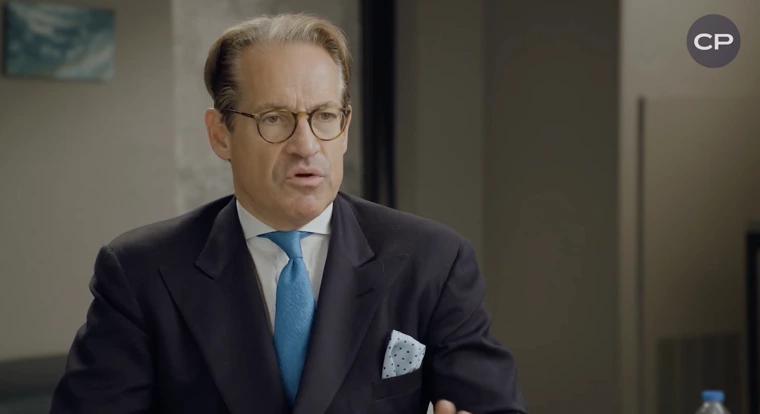
ORLANDO — Eric Metaxas isn’t afraid to speak difficult truths into an increasingly secularized culture, and he’s issuing a clarion call to the American Church to do likewise, warning that neglecting this call will lead to disastrous consequences.
“There are many pastors and Christian leaders being silent in the face of evil today,” the bestselling author and radio host told The Christian Post. “They are not all consciously working for the devil, they are, nonetheless, effectively working for the devil because they are unaware that what they’re doing is not what God calls His Church to do.”
Metaxas penned his latest book, Letter to the American Church, out of a conviction that the Church must “wake up” to the realities of evil and stand for biblical truth. In it, he draws from both history and the Bible to highlight the need for the church to speak out against societal evils.
“There are all kinds of figures from history and in the Scripture who understand that, ‘My duty is to God, and if that makes me unpopular, if that makes me attacked, who cares?’” he said.UnmuteAdvanced SettingsFullscreenPauseUp Next
According to Metaxas, the Church’s silence on critical issues effectively aids the forces of evil.
In his book, he draws sobering parallels between the modern church and the German Church of the 1930s, in which “pastors were somehow fooled into buying the idea that … we’re not supposed to go against the governing authorities.”
“What the German church did in the ’30s, they had no idea that they were getting this stuff wrong. They had all kinds of theological reasons why they thought it was good not to comment on politics,” he said. “We now see what the results were; it was a nightmare out of the pit of Hell. The evil that was unleashed because of the silence of the German Church is part of the ugliest history imaginable.”
“We look at Germany, and it’s very easy for us to say, ‘Oh, they should have spoken out against the Nazis,’” he added. “But we have pastors today who are effectively not speaking out against the Nazis. The Chinese Communist Party is as wicked as the Nazis ever were, with infinitely greater technology. They are doing satanic things. The Uighur Muslims in China are being murdered for their organs, which can be sold for a lot of money that accrues to the Communist Party. Where is the Church on that issue? How can you not be outraged?”
The Bonhoeffer: Pastor, Martyr, Prophet, Spy author added that many Americans have been sheltered from the harsh realities faced by others in the world and thus fail to recognize the value of their freedoms and the need to defend them. Just like the German Church, he said, the American Church has grown “complacent.”
“The German Church woke up when it was too late, and evil overtook that nation in Europe,” he said. “The blame lies at the foot of the German Church. And I think the same can be said of the American Church today if we don’t wake up.”
“What we have is a blessing from God, entrusted to us to protect, to keep and to give to our children and grandchildren,” he stressed. “If you don’t get that, it just sort of drifts away. We are at a moment where it’s drifting away very quickly.”
Metaxas contended that the cultural zeitgeist and misguided interpretations of biblical principles have led to the belief that the Church should remain apolitical — an idea he dismisses as nonsensical. The Church, Metaxas said, must understand its duty to God and not prioritize personal comfort or congregational numbers over speaking the truth.
“Imagine if a pastor got up and said, ‘I have no position on slavery. I have no position on legalized racism and apartheid. I have no political position on Jim Crow laws.’ You wouldn’t go to that church. You’d say, ‘What an idiot, what a moral pygmy that he thinks that he can be a pastor and not have an opinion on those issues,’” Metaxas said.
Pastors are called to speak out on all issues that affect human lives and dignity, he stressed: “You have an obligation to speak truth on these issues,” he said. “So any pastor that has his head in the sand on these issues, God will hold him responsible.”
While avoiding controversial or divisive topics might seem appealing, the author emphasizes that it ultimately “devalues the Gospel” and hinders evangelism.
“For every person that’s going to get ticked off that you said something, there’s another person that’s going to say, ’Thank goodness somebody is saying this; I didn’t know where to look anymore.’”
People are “looking for leadership from Christians,” Metaxas said. He pointed out that pastors who have been boldly speaking out against the “lunacy” of transgender ideology, cultural Marxism, critical race theory, open borders and defunding the police have seen their congregations surge in attendance.
“Things have gotten so bad that a lot of people finally are understanding, ‘OK, maybe I missed something. Maybe we had it so good that we forgot that evil is still alive, that we haven’t defeated evil, and we have to do what God calls us to do in the midst of it, and we haven’t been doing it,’” he said.
Historically, when the Church has drifted along with culture,” it has gone “dramatically badly,” Metaxas said.
“The issues are always different issues, but the results are always the same, and the guilt is always the same. God wants us to be alive to what is happening,” he said.
“Everything’s at stake. God has always looked to His Church, and we have dramatically disappointed Him in the past. I don’t believe it’s His will that we disappoint him this time, but it really is up to individual Christians.”
Letter to the American Church is available everywhere books are sold.
Leah M. Klett is a reporter for The Christian Post. She can be reached at: leah.klett@christianpost.com


