
How God Reached the Wa Headhunters in Myanmar

“He has made everything beautiful in its time. He has also set eternity in their hearts” (Ecclesiastes 3:9).

“From one man he made all the nations, that they should inhabit the whole earth; and he marked out their appointed times in history and the boundaries of their lands. God did this so that they would seek him and perhaps reach out for him and find him, though he is not far from any one of us. ‘For in him we live and move and have our being” (Acts 17:26-28).

“The Wa were headhunters. Just once a year, in the planting season, Wa tribesmen felt compelled by bloodthirsty spirits to plant human heads in their fields along with their seeds—just to ensure a good crop. Neighboring tribes always wanted to leave for vacation when the Wa were planting their crops, but unfortunately that was when they had to plant their crops too.

A benign influence, however, was at work within the folk religion of the Wa people. From time-to-time prophets of the true God, whom the Wa called Siyeh, arose to condemn headhunting and spirit-appeasement! One such prophet, Pu Chan, appeared during the 1880s. He persuaded several thousand Wa tribesmen to abandon headhunting and spirit worship on the grounds that the true God was about to send a long-awaited white brother with a copy of the lost book. If he came to the Wa territory and heard that the Wa were practicing evil things, he might think them unworthy of the true God’s book and turn away again! If that happened, Pu Chan warned, surely the Wa would never get another chance to have the lost book restored to them.

One morning Pu Chan saddled a pony. ‘Follow this pony,’ he said to some of his disciples. ‘Siyeh told me last night that the white brother has finally come near! Siyeh will cause this pony to lead you to him. While Pu Chan’s disciples gaped in astonishment, the pony started walking. Expecting the pony to stop at the nearest stream, they followed it.”

Two hundred miles away, an American missionary from Nebraska, William Young, had recently set up base in the town of Kengtung. One day Young went to the marketplace to preach among the people, and he noticed strangely garbed men gravitating toward him out of the throng in the market.

They were not Wa, but were men from the neighboring Lahu tribe, who God chose to receive the Gospel first. The Lahu had also been waiting for a white man to come with a lost book that would reconnect them to the true God, whom they called Gwi’sha in their language. Richardson continues the story:

“They stared incredulously at the missionary’s white face, the interior of the book in his hand, and listened to his description of the laws of God contained in that book. Then, in an outburst of powerful emotion, the Lahu pleaded with Young to follow them up into the mountains. ‘We as a people have been waiting for you for centuries,’ they explained. ‘We even have meeting houses built in some of our villages in readiness for your coming.’
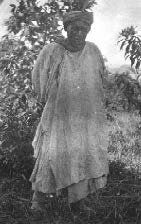
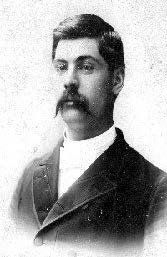
[Pu Chan above and William Young below. Our thanks to Marcus Young, the grandson of William, for providing these two precious photos.]

Some of the men showed him bracelets of coarse rope hanging like manacles from their wrists. ‘We have worn ropes like these since time immemorial. They symbolize our bondage to evil spirits. You alone, as the messenger of Gwi’sha, may cut these manacles from our wrists—but only after you have brought the lost book of Gwi’sha to our very hearths!’

Nearly speechless with awe, Young went with them. Tens of thousands of Lahu became Christians, and it was at that stage that Pu Chan saddled his pony (200 miles away in Wa territory) and told his Wa disciples to follow it to the missing book and the messenger of the True God. When the pony finally arrived at the home of William Young, the Wa asked him: ‘Have you brought the book of God?’ Young nodded. The men, overcome with emotion, fell at his feet and blurted out, ‘This pony is saddled especially for you. Our people are all waiting. Fetch the book! We must be on our way!”

Thousands of Wa heard the Gospel from both the Young family and the new Lahu Christians. They repented of their sins and gave their lives to Jesus Christ. Young’s son, Vincent, later translated the New Testament into Wa.

During much of the 20th century, many Wa people continued to outwardly follow Christ, but their faith generally slipped into dead formalism. A vibrant, life-giving revival was greatly needed among the Wa, lest the amazing breakthroughs of the past would go to waste.

One reason for the spiritual decline among the Wa was the problem with their Bible. Because of their widespread locations and multiple dialects, only a fraction of Wa were able to understand the dialect the Bible was available in.

Some years ago, a Wa Bible committee was set up to address this problem, and a new translation was launched in a common vernacular that many more Wa people could understand.

Asia Harvest has been greatly blessed to provide more than 80,000 new Wa Bibles, free of charge, through our Asian Bible Fund. There are many requests for more, and we invite you to prayerfully consider supporting this strategic endeavor.

If you would like to read the complete Asia Harvest article on the Wa, please click here.

Please pray for the Wa and the other tribes in Myanmar and give if you can to this worthwhile project. Carl


The Very Same Power

The very same power which raised Christ is waiting to raise the drunkard from his drunkenness, to raise the thief from his dishonesty, to raise the Pharisee from his self-righteousness, to raise the Sadducee from his unbelief.

– C.H. Spurgeon

From the Berean Call

Pliny the Younger

Pliny the Younger (61-113 AD) was a Roman Magistrate appointed by the emperor Trajan over Bithynia, now in modern Turkey. In 112 AD he wrote the emperor requesting direction on how to handle the many Christians that were brought before him. The English translation of Pliny’s letter and Trajan’s response was published by William Harris, Prof. Em. Middlebury College.

Harris said the Christians were brought daily before Pliny for refusing military service, refusing to worship the Roman emperors and for being members of a strange new and secret religion which although harmless, seemed dangerous to the established Roman way of life. I would add “revenge” to this list because of the change in temple economics due to Christians forsaking the idols.

This is the first documented evidence of the “Christian Problem” in the Roman world.

Oh, in case you’re wondering, Pliny the Elder was his uncle who died trying to rescue people from the Pompeii disaster. Here is the translation from Latin:

Gaius Plinius to the Emperor Trajan

It is for me an important point of responsibility to refer to you as Head of State, things about which I have questions, since you are the person best able to set straight my hesitations and correct my lack of information.

Actually I have never been present at a Examination (cognitio) of Christians, so I do not know what punishment is required or how far it is to be carried out. Nor do I understand the legal grounds for a prosecution, or how stringently it is to be prosecuted. I am not clear about prosecutions in respect to the age of the persons, whether no distinction should be made between the young and the old, and furthermore whether a pardon should be granted in cases of recanting, or if there is no advantage for a person completely ceasing to be a Christian. Or is it the name “Christian” which is prosecutable, even if not involved in criminal actions, or is that “criminality” is automatically attached to the name?

In the meantime, I now handle it this way with those who are turned over to me as Christians. I ask them directly, in person, if they are Christian, I ask a second and third time to be sure, and indicate to them the danger of their situation. If they persist, I order them led dispatched (= executed). I have had no trouble with this, since whatever it was they admitted or professed, I decided that their obstinacy and unyielding inflexibility should be sufficient reason for punishment. Some others who were virtually insane with this cult, but Roman citizens, I sent back to Rome for trial.

As I continue with this handling of the situation, as often happens, the numbers and kinds of incriminations are becoming more widespread. An anonymous List has been brought out which contains the names of a great many persons. I decided to dismiss charges again any on this list who stated that they were now not, nor had ever been Christians, if they repeated after me a prayer of invocation to the Gods, and made an offering of wine and incense to your statue, which I had brought in to the court along with the statues of the Gods, for this purpose. And in addition they were to formally curse Christ, which I understand true Christians will never do.

Other named by the anonymous List said they were Christians, and later changed their statement. Some said that they had been and then stopped, some three years before, some longer, some even twenty years before. All these reverenced your statue and those of the Gods, and cursed Christ. They stated that the sum total of their error or misjudgment, had been coming to a meeting on a given day before dawn, and singing responsively a hymn to Christ as to God, swearing with a holy oath not to commit any crime, never to steal or commit robbery, commit adultery, fail a sworn agreement or refuse to return a sum left in trust. When all this was finished, it was their custom to go their separate ways, and later re-assemble to take food of an ordinary and simple kind. But after my edict which forbids all political Societies, they did in fact give this up.I thought at this point that it was necessary to get information from two slave women, whom they call Deaconesses (ministrae) about the actual truth, by means of torture. I found nothing worthy of blame other than the blind and over-wrought nature of their cult-superstition.

I have therefore postponed further Examinations (cognitiones) and made haste to come to you immediately for consultation. This situation seem to demand serious consultation, especially in view of the large number of people falling into this danger. A great many persons of every age, of every social class, men and women alike, are being brought in to trial, and this seems likely to continue. It is not only the cities, but also the towns and even the country villages which are being infected with this cult-contagion.

It seems possible to check and reverse this direction at this point, for it is quite clear that the Temples of the Gods which have been empty for so long, now begin to be filled again, the sacred rites which had lapsed are now being performed and flesh for sacrificial rites is now sold again at the shops, although for a while nobody would buy it. So it seems reasonable to think that a great many people could be persuaded to reform, IF there were a legal procedure for Repentance.

Emperor Trajan to Pliny:

You have done the right thing, my dear Pliny, in handling the cases of those who were brought to you under the charge of being Christians. But it is not possible to make hard and fast rule with one specific formula. These people must not be searched out, if they are brought before your court and the case against them is proved, they must be punished, but in the case of anyone who states that he is not a Christian and makes it perfectly clear that he is not, by offering prayers to out Gods, such a one is to be pardoned on the grounds of his present repentance, however suspect he may have been in the past. But anonymous lists must not have any place in the court proceedings. They are a terrible example and not at all in keeping with our times.


William Harris
Prof. Em. Middlebury College


Go to the Chronological List of all Early Christian Writings

The Christian Church

“The Christian church with all its faults is the greatest serving institution on earth. It has many critics, but no rivals in the work of human redemption… No other institution has done anything like it—none whatever. The fact that the church has been able to survive the dead weight of a large proportion of its membership unconverted is a proof of its essential soundness and vitality. A minority of converted people keep its soul alive.”

E. Stanley Jones, Conversion: From Lane Corley blog – Church Planting, Mission Strategy and Life in SE Louisiana

Beneath the Surface: Going to Church vs. Getting Involved in the Life of a Church

“every individual Christian will find in the communion of a local church the most perfect atmosphere for the fullest development of his spiritual life.” ~ A.W. Tozer

My observation is that most people never experience “the fullest development of his spiritual life” through the church or see the great value, because they may GO TO CHURCH, but they don’t get involved in the LIFE OF A CHURCH. There’s a big difference. Going to church makes you a CONSUMER of its services. Getting involved in the life of a church puts you in “COMMUNION” with a life source fed by God himself. The Apostle Paul said it like this

“From Him the whole body, joined and held together by every supporting ligament, grows and builds itself up in love, as each part does its work.” ~ Ephesians 4:16

It’s consuming vs. serving, sharing life, supporting, being supported, building up, being built up, etc.

Forest

The enduring image of church for me is that of a forest. A forest stays strong, even in dry seasons, because BENEATH THE SURFACE, the roots of the trees are feeding off of one another for growth & strength. Roots can’t share their life with a tree that just lays itself upon the surface. It has to take root & do life with the others.

“I tried church, but it didn’t help.” Probably not, if you just showed up every now & then with little commitment, little humbling of yourself, little sharing of your life, little getting involved in relationships, little investment in ministries, little digging deep to support & be supported.

I love the Tozer quote, because I’ve experience it. Now, don’t read it wrong. The church is NOT a “perfect atmosphere.” Far from it. It is the perfect atmosphere for spiritual development BECAUSE of its imperfections. Relationships with people that are struggling through life together, growing as individuals, utilizing unique gifts no matter how imperfectly. And seeing God in Christ feed & nourish & heal & empower each other. It’s a beautiful thing! But you won’t see it on the surface by just GOING TO CHURCH.

Source: Pastor Lane Corley @ lanecorley.com (his blog)

View From India Church Leader

You feel sorry for us in India because of our great poverty in material things. We who know the Lord in India feel sorry for you in America because of your spiritual poverty. We are praying that you also might come to church with a hunger for God and not merely a hunger to see some form of amusement.

Bakht Singh, Indian Church Leader Quoted in An Asian Harvest – Paul Hattaway – Asia Harvest – Monarch Books, Oxford, England

The Blessing of the Bible in Your Mother Tongue

“The Bible in another language is like a leaf floating on a river; it takes a very long time before it absorbs enough water to sink to the bottom. …The Bible in my own language is like a stone that is thrown into the river; it plunges in and sinks straight to the bottom — it falls right into my heart!    Bible Translator in Asia

“To have the Word of God in our language is the greatest richness we could have.”  Rafael Ahuanari, director of the Federation of Evangelical Churches of the Peruvian Amazon

“Reading the Scripture in another language is like eating a banana with the skin on. Now the Scripture in my language is satisfying —like a sweet banana. I can’t get enough of it!”  woman from Asia

“I never understood the Word to this level, nor been as moved by it. It penetrated me right to my bones and touched my inner being.”    Pastor in Benin

“Many families have been waiting for the Quechua Bible as if it was very delicious bread.”          A Quechua pastor

“The greatest missionary is the Bible in the mother tongue. It never needs a furlough and is never considered a foreigner.”  William Cameron Townsend, Wycliffe Bible Translators

“It is impossible to enslave, mentally or socially, a Bible-reading people. The principles of the Bible are the groundwork of human freedom. “     Horace Greeley –

Source: wycliffe.org

Going The Extra Mile

“Throughout the years of brutal suppression, the Christians in Henan often asked the Lord to give them an attitude that would enable them to embrace suffering as a gift from God. With that outlook, they were willing to go the extra mile, and there was little that evil human beings or the world could do to destroy them.”

Henan – Inside the Greatest Christian Revival in History – Paul Hattaway – describing the Chinese Church during the 1960s and 70s

There is much the Christian Church can learn from the suffering Chinese Church. They have endured much and not only survived but multiplied. So much so, that the Communist Chinese consider them a great threat to their goals and aspirations. But the truth is that righteous people are a blessing to any nation and the truths of Christianity should be encouraged, not hindered.

We need to be listening and learning and praying for our Chinese brothers and sisters.

Why don’t you say a prayer for them right now. Thanks and God bless you.

Carl

Wise Advice

“Stick close to the exercise of Repentance, till the end of thy life, and never think of obtaining pardon “ab humano die”(from the human), because he who has made thee make this Promise, has deceived thee.  As thou hast properly sinned against the Lord, so seek thy Remedy only at his hand.”

Ambrose, Bishop of Milan 374 AD – quoted in Bishop Nicea of Aquileia (420-485 AD) Book “ab Virginem lap-sam” – quoted in Some Remarks Upon Ecclesiastical History of the Ancient Churches of Piedmont by P. Allix D.D. – London, 1690

A Historical Perspective On Church Growth

The rise of monasticism did much to pull the Western Roman church back to spiritual purity, personal holiness, and devotion to Christ. On the other hand, monasticism had many questionable practices and perspectives that border on the extreme of fanatical asceticism for asceticism’s sake. The drive for things like isolation, silence, and mystical experiences are a curious contrasts to Jesus’ call to go and make disciples and engage with sinners in a fallen world.

The laity’s esteem and veneration of a monk’s lifestyle only cemented the perception that true spirituality is reserved for a special class of believers. One has to wonder: If the church had maintained its early and fierce devotion to Christ’s commands to love God and neighbor and to make disciples of all nations -instead of becoming secularized – would monasticism ever had come about as it did? In The Way – Church As We Know It – Damian Gerke

Dear Saint: Cooperate with the Spirit of Almighty God that indwells you. Be all you can be in Christ for your sake and the sake of the lost. Bring your salvation to its ultimate conclusion, Christ-likeness, so you can be light in the midst of this crooked and perverse generation which desperately needs the Savior’s message of redemption. (Phil. 2:12-16)

We should not lock our light away. He intends for it to be on a stand for all to see.

May grace and peace from God the Father and Christ Jesus be upon each one.

Carl

Real Evidence That You Love Lord Jesus

“…, that one is he who is loving me…”

If you ask people if they love Jesus and what is the evidence of their love, you would get a variety of answers.  Some would say that they go to church frequently or are church members.  Others would say that they love their fellow man and do no harm to others; maybe some would say they fast certain things during the year or that they pray.  Some would say they go on pilgrimages to holy sites, give of their money or keep their denominational traditions.

In the Gospel of John, the Lord Jesus told us how He determines if we really love Him or we are just honoring Him with our words, but our hearts (who we really are) are far from Him.  Listen to what He said in John 14: 21 (Wuest Expanded Translation):

“He who has my commandments and habitually keeps them, that one is he who is loving me with a divine and self-sacrificial love.”

On this blog we have quoted the Apostle John in I John numerous times writing about habitually practicing righteousness.  John was at the last supper when Jesus said this. That is where he received this truth.

Lord Jesus goes on to describe what happens when we habitually keep His commandments:

“And he who is loving me thus, shall be loved with this same kind of love by my Father, and I shall love him with a divine and self-sacrifical love, and I shall disclose myself to him.” (22)

God the Father poured out this kind of love on the world (John 3:16) when He sent His Son to the cross to bear the guilt and penalty of our sins.  And He continues to do so when we are obedient to the gospel and are born again.

But there is more. His disciples thought that Jesus was about to “disclose” Himself as the conquering Messiah to the nation of Israel.  The mother of James and John had already approached Jesus about her two sons being seated in places of honor in His messianic court. So one of the disciples asked Him why He was going to disclose Himself to them and not the whole world. Here is His reply:

“Answered Jesus and said to him, If anyone as a habit of life loves me with a divine and self-sacrificial love, my word he will keep, and my Father will love him, and to him we shall come, and an abiding place with him we shall make for ourselves. He who is not habitually loving me with a divine and self-sacrificial love, my words he is not keeping.  And the word which you are hearing is not mine but belongs to Him who sent me, the Father.” (23-24)

Now this is very amazing! The God of the universe is going to come and abide in us. How does this happen?

“This things I have spoken to you while abiding with you. And the Counsellor, the Holy Spirit, whom the Father will send in my Name, that One will teach you all things and recall to your mind all things which I spoke to you.” (25-26)

In Acts 2: 38 the people cried out , “What shall we do”, after hearing the first gospel message.  Peter told the Passover crowd to repent and be baptized for the forgiveness of your sins and you shall receive the gift of the Holy Spirit.  These people were obedient to the gospel message and the Holy Spirit set them apart (i.e. sanctified them) to the Lord Jesus and they were sealed by the Holy Spirit until the day of redemption (Ephesians 1).  In other words, the Lord Jesus and The Father came and made their abode with these converts through the Holy Spirit.  And God does the same for us when we are obedient to the gospel message.

This is what the Apostle John is telling us in I John 1: 3-4 when he writes:

“…what we have seen and heard we proclaim to you also, that you also may have fellowship with us; and indeed our fellowship is with the Father, and with His Son Jesus Christ. (NASB)

Amazing! We born again believers in Jesus Christ have the privilege of fellowshipping  with God Almighty today and everyday.   John goes on to tell us how our behavior affects this fellowship.  I John 1: 5-10 says the following:

“And it is the message which we have heard from Him and at present is ringing in our ears and we are bringing back tidings to you, that God as to His nature is light, and darkness in Him does not exist, not even one particle. If we say that things in common we are having with Him, and thus fellowship, and in the sphere of the aforementioned darkness are habitually ordering our behavior, we are lying, and we are not doing the truth.  But if within the sphere of the light we are habitually ordering our behavior as Himself is in the light, things in common  and thus fellowship we [the believer and God] are having with one another, and the blood of Jesus His Son keeps continually cleansing us from every sin.”

“If we say that [indwelling ] sin we are not having, ourselves we are leading astray [nobody else], and the truth is not in us. If we continue to confess our sins, faithful is He and just to forgive us our sins and to cleanse us from every unrighteousness.  If we say that we have not sinned and are now in a state where we do not sin, a liar we are making Him, and His word is not in us.”  (Wuest Expanded Translation)

The reason John is telling us this he states next in I John 2: 1:

“My little children … these things I am writing to you in order that you may not commit an act of sin.  And if anyone commits an act of sin, One who pleads our cause we constantly have facing the Father, Jesus Christ the righteous One. ” (Wuest Expanded Translation)

In closing, two things.

First, is there enough evidence in my life to convict me of really being in love with Jesus, per His definition, or am I a hypocrite like the people in Mark 7:6 to which the Lord said:

“And He said to them, “Rightly did Isaiah prophesy of you hypocrites, as it is written, ‘THIS PEOPLE HONORS ME WITH THEIR LIPS, BUT THEIR HEART IS FAR AWAY FROM ME.

In Luke 6:46 Jesus asked the question “And why do you call Me, ‘Lord, Lord’ and do not do what I say?

Secondly, the Apostle John is telling the born again believer that our indwelling sinful nature, though we are dead to it, has not been eradicated from our being.  Therefore, we will occasionally sin and, when we do, we need to confess that sin to maintain fellowship with our Father. (Notice I said fellowship and not relationship. Because of our faith in the work of Christ on the Cross, our relationship is secure with the Father.)

He not only immediately forgives us but the blood of Jesus cleanses us from all unrighteousness, i.e. habitual sins of ignorance that we are walking in but are not aware of yet.  What a merciful God!!!

My friends, it all boils down to a simple question for everyone: Is Christ Lord of your life?

I hope you enjoy the fellowship with your heavenly Father and His Holy Son today.  Walk in the light as He is in the light.

Carl