Melanie Rivas’ joy for Jesus is contagious. In fact, a recent video about how God changed her life has gone viral on social media, garnering nearly 400,000 views.
Yet, just nine months ago, the 22-year-old was homeless, broke, and fleeing from an abusive same-sex relationship.
“My ex-wife stole all my money and locked me out of all of my accounts. So I had nothing,” she told CBN News.
Rivas says she was despondent and on the brink of suicide. However, a strange email notification led her to randomly purchase a Bible at a local Walmart. Rivas said that as she began to read the New Testament, the Spirit of God filled her car and her life was “completely transformed” in that moment.
Early Years
The Chicago native grew up in a Catholic home familiar with the traditions of the faith, such as baptism and communion. She shared, “It almost felt like a routine for me.” Rivas admits her relationship with Jesus was “like (a) procedure,” and devoid of any connection to Him.
She told CBN News that because she didn’t have a solid relationship with Christ, she was led by the wrong influences.
“I was just following the world, and I was super (impressionable), because I didn’t have Jesus,” she said. “When you don’t have Jesus as your anchor, like you’re just looking at what’s around and you want to be a part of it.”
“I go into this high school where they’re telling me that it’s actually weird that I’m not homosexual,” she shared, explaining that was when she began “entertaining homosexual relationships.”
With little guidance and direction, Rivas also began to experiment with drugs.
“I was in a rebellious state too,” she recalled. “I started doing a bunch of drugs. That’s when I got into weed, and then weed turned into acid and then acid turned into shrooms, and then it turned into cocaine. And I’m doing this as a high-schooler!”
Rivas said she also struggled with depression, anxiety, and suicidal thoughts. All of that was exacerbated during the COVID-19 pandemic. At the height of lockdowns, social distancing, and isolation, she turned to TikTok.
As CBN News reported, the popular social media platform known for quick videos, one-minute dance challenges, and viral trends, became a big hub for witches and warlocks around the pandemic.
Videos with the hashtag #WitchTok had amassed more than 30 billion views and made it easier for would-be witches or those interested in the occult to learn more about it, according to a 2022 BBC report.
Rivas was one of its viewers. “Like I said, for a teenager who doesn’t have Jesus, the culture impacts you so much. So it’s almost like being a witch was cool,” she recalled. “I didn’t think of it as like a witch, like a warlock or something like that. I just thought it was cute.”
The young woman explained that she began to go deeper into witchcraft after she met a girl who worshipped the “idol of death.”
“We’re all created to worship God,” she pointed out. “That’s literally why we’re created to have a personal relationship with Him. But when you don’t have that relationship with (Jesus), you look to worship other things. Like you’re so open to it. I was searching for that missing aspect of my life.”
“I’m sitting there worshiping death. And it’s borderline Satanism,” she added.
The 22-year-old said she eventually married that girl, but the relationship was “very controlling and very toxic.”
Rivas said that the woman convinced her to join OnlyFans. The subscription-based platform is widely recognized for its explicit content. Rivas said she joined just before the platform became popular, but she quickly found herself “deep in the rabbit hole.”
Finding Jesus
Rivas shared that things in her life went from bad to worse overnight.
“(My former relationship) got to the point where we had a really bad fight. It ended with the marriage certificate being ripped in my face, my clothes were in trash bags outside, and I was getting kicked out,” she recalled. “In a single day, I lost my home, I lost the person I thought I was going to be with for the rest of my life and I lost my way of getting income…I ended up sleeping in my car.”
Rivas recounts that she spiraled into a depression. “I even tried therapy, and the therapy didn’t work, but the therapist did give me antidepressants.”
The artist said she began to be tormented by thoughts of committing suicide.
“I remember getting to a point where I thought I had tried everything. I tried drugs. I tried spiritual spells… like all this stuff. Nothing worked. I even tried therapy, and the therapy didn’t work. And so I was like, you know what? Like, I am so done with life. I don’t want to be here anymore. And so I ended up planning (to take) my life.”
Rivas remembers sitting in her car with a bottle of pills in her hand. She then made a decision that would change the trajectory of her life – she checked her email.
“I got this weird email from like a horoscope email, and it said, ‘You need to go get a book right now,'” she recalled, adding that she felt deep in her heart to go to the nearest store.
“I had a Walmart two minutes away from me, and I was like, okay, I’ll go,” Rivas said. With five dollars to her name, she perused the book aisle.
“My ex-wife stole all my money and locked me out of all of my accounts. So I had, I had nothing. And so I went to the book section, and there were all these (expensive) books,” she told CBN News. “They’re (books) that are $50, $60. I thought this was pointless.”
“And then I keep looking, and there’s one book, and it’s one dollar, not a $1.50, just a plain dollar,” she said. “It’s the New Testament Bible. And I remember looking at it and was like, ‘You can’t even get a candy bar for a dollar.'”
Rivas says she was shocked and intrigued by her find. She purchased the book, went back to her car, and sobbed as she read the Bible.
“As soon as I opened it…I don’t even know how to explain it. It was like I got this warm feeling in my body,” she said. “I genuinely felt the Holy Spirit.”
Rivas describes feeling God’s love for her, His compassion for her, but also a sense of sadness for how she was living.
“I felt His mourning for me…like He has seen me try and live this life alone…like He’s just been missing me.”
A Voice to Her Generation
It was an encounter with God that has impacted her. Rivas says she has fully surrendered her life to Him and now spends her time proclaiming the Gospel message on social media.
“I got baptized, and that was nine months ago,” she said, adding that God has called her to make an Instagram account to share what He has done for her.
“He’s grown it in like seven months from zero to 78,000 followers. And that’s all Him,” Rivas expressed. “I just proclaim Jesus everywhere I go.”
Her message has been getting out to the masses. Recently, Lila Rose, the president of Live Action, shared one of Rivas’ videos to her social media page, and it has gotten nearly 400,000 views.
Rivas says she will continue to share her story because it reveals “how merciful and how abundant our Father is.”
She is encouraging GenZ to turn to God because a world that promises answers in drugs, sex, and alcohol can only give you destruction in return. Rivas says true peace comes from Jesus alone. She says she hopes her story will help someone open their heart to Him.
Please visit the following link for a true fascinating journey of an atheistic filmmaker who finally finds salvation in Jesus Christ. God bless you and yours. Carl
In one village in southeastern Fujian near the Guangdong border, Chinese believers told a remarkable story of God’s provision and power. An elderly brother had believed in the Lord for many years when the Communists took control of the area in 1949. The Blessed Old Man, as other believers affectionately dubbed him, came from an impoverished family and had never learned to read or write properly. Despite these simple impediments, after he received the Lord Jesus he proved to be a powerful evangelist, leading hundreds of people to faith in Christ throughout the district.
Hatching a plan to give Christianity a black eye and to show the supremacy of Marxism, the government decided to make an example of the old preacher by giving him the best house in the village and a generous supply of food. They also appointed him chairman of the village’s Communist committee, thinking that when he abandoned his religion they would display him as a shining example of the goodness of Communism and the futility of Christianity.
The Blessed Old Man, however, belonged to Jesus Christ. Instead of being seduced by the Communists,
…he used the large house he had been provided to hold house church meetings and distributed the food he was given to those believers in need. After some time, the government saw that their plan was badly backfiring, so they issued an ultimatum to the “chairman”. He had to choose between his faith and the new lifestyle and status he had been afforded by the authorities. Although he knew that he would return to a life of extreme poverty and hardship, the old brother did not hesitate for a moment. “ I choose Jesus!” he boldly declared.
The enraged officials threw him out of the house. He had nowhere to go, but another believer provided him with a small room on the side of a shack. China at the time was suffering terribly from Mao’s disastrous economic experiments, and millions of people were starving to death. Although the old man now had somewhere to stay, there was no food available to eat. All the meager crops were taken by the government, and the other Christians were too poor to help him.
For some days the old man wasted away in his tiny room, with no food passing his lips. He grew weak and ill and knew that his life would soon be snuffed out. Then one morning he awoke to find a hole in the bottom of the wall. He didn’t know what had caused it and repaired the damage. A few hours later he found another hole and started to wonder if these strange occurrences were from the Lord. While he was still pondering it, a large rat came through the hole with some food in its mouth. After entering the room, the rat dropped the food on the floor and then left. A short time later it returned and did the same again. A small collection of nuts and vegetables lay on the dirt floor!
Each morning the rat paid a visit to the elderly brother. In response to his commitment, God had saved the old man from starvation by instructing a rat to feed him! The miraculous provisions continued for several months. On some days the rat brought more food than usual. Those were the days when the old man was expecting a visitor!
Excerpt from Fujian – The Blessed Province – The China Chronicles, Paul Hattaway, Asia Harvest (Langham Global Library), p. 245-246
God says “I will not, I will not cease to uphold or sustain thee; I will not, I will not, I will not forsake someone in a state of defeat or helplessness in the midst of hostile circumstances.” (Expanded Greek Translation of Hebrew 13:5 by Dr. Kenneth Wuest.)
Be encouraged Saints… regardless of your circumstances. God sees you, is in you, and has not forsaken you.
Their foot shall slide in due time. (KJV) Deuteronomy 32:35
“As he that walks in slippery places is every moment liable to fall, he cannot foresee one moment whether he shall stand or fall the next; and when he does fall, he falls at once without warning: Which is also expressed in Psalm 73:18,19. “Surely thou didst set them in slippery places: thou castedst them down into destruction: How are they brought into desolation in a moment!”…
“The bow of God’s wrath is bent, and the arrow made ready on the string, and JUSTICE bends the arrow at your heart, and strains the bow, and it is nothing but the mere pleasure of God, and that of an angry God, without any promise or obligation at all, that keeps the arrow one moment from being made drunk with your blood. Thus all you that have never passed under a great change of heart, by the mighty power of the Spirit of God upon your souls, all you that were never born again and made new creatures, raised from being dead in sin, to a state of new, and before altogether unexperienced light and life, are in the hands of an angry God…
“…And now you have an extraordinary opportunity, a day wherein Christ has thrown the door of mercy wide open, and stands calling, and crying with a loud voice to poor sinners; a day wherein many are flocking to him, and pressing into the kingdom of God. Many are daily coming from the east, west, north and south; many that were very lately in the same miserable condition that you are in, are now in a happy state, with thier hearts filled with love to him who has loved them, and washed them from their sins in his own blood, and rejoicing in the hope of the glory of God.”
The preacher Jonathan Edwards spoke these words on July 8, 1741 while preaching his famous sermon “Sinners in the Hands of an Angry God” in Enfield, Connecticut. As he preached some people called out for him to stop. At one point there was so much noise, he had to ask them to be quiet so he could be heard.
He concluded the sermon by saying, “Let everyone that is out of Christ now awake and fly from the wrath to come. The wrath of Almighty God is now undoubtedly hanging over a great part of this congregation. Let everyone fly out of Sodom: ‘Haste and escape for your lives, look not behind you, escape to the mountain, lest you be consumed.’ “
The people of Enfield were never the same.
Have you fled to Christ, the Lamb of God, to be cleansed by his shed blood on Calvary? We all need to flee to Jesus to escape the coming wrath of God. If you have not, why not today?
“They cried to the mountains and the rocks, “Fall on us and hide us from the face of the one who sits on the throne and from the wrath of the Lamb. For the great day of their wrath has come, and who will be able to survive? “ Revelation 6:16
Source: E. Michael and Sharon Rusten, The One Year Christian History. A great daily devotional based on historical events.
(The following is an article from Biblical Archaeology Society by Lawrence Mykytiuk (bio at end of article). If you are interested in archaeology and its relationship to the Bible, we recommend looking at this organization.)
After two decades toiling in the quiet groves of academe, I published an article in BAR titled “Archaeology Confirms 50 Real People in the Bible.”a The enormous interest this article generated was a complete surprise to me. Nearly 40 websites in six languages, reflecting a wide spectrum of secular and religious orientations, linked to BAR’s supplementary web page.b Some even posted translations.
I thought about following up with a similar article on people in the New Testament, but I soon realized that this would be so dominated by the question of Jesus’ existence that I needed to consider this question separately. This is that article:
Did Jesus of Nazareth, who was called Christ, exist as a real human being, “the man Christ Jesus” according to 1 Timothy 2:5?
The sources normally discussed fall into three main categories: (1) classical (that is, Greco-Roman), (2) Jewish and (3) Christian. But when people ask whether it is possible to prove that Jesus of Nazareth actually existed, as John P. Meier pointed out decades ago, “The implication is that the Biblical evidence for Jesus is biased because it is encased in a theological text written by committed believers. What they really want to know is: Is there extra-Biblical evidence … for Jesus’ existence?”c
Therefore, this article will cover classical and Jewish writings almost exclusively.
Tacitus—or more formally, Caius/Gaius (or Publius) Cornelius Tacitus (55/56–c. 118 C.E.)—was a Roman senator, orator and ethnographer, and arguably the best of Roman historians. His name is based on the Latin word tacitus, “silent,” from which we get the English word tacit. Interestingly, his compact prose uses silence and implications in a masterful way. One argument for the authenticity of the quotation below is that it is written in true Tacitean Latin. But first a short introduction.
Tacitus’s last major work, titled Annals, written c. 116–117 C.E., includes a biography of Nero. In 64 C.E., during a fire in Rome, Nero was suspected of secretly ordering the burning of a part of town where he wanted to carry out a building project, so he tried to shift the blame to Christians. This was the occasion for Tacitus to mention Christians, whom he despised. This is what he wrote—the following excerpt is translated from Latin by Robert Van Voorst:
[N]either human effort nor the emperor’s generosity nor the placating of the gods ended the scandalous belief that the fire had been ordered [by Nero]. Therefore, to put down the rumor, Nero substituted as culprits and punished in the most unusual ways those hated for their shameful acts … whom the crowd called “Chrestians.” The founder of this name, Christ [Christus in Latin], had been executed in the reign of Tiberius by the procurator Pontius Pilate … Suppressed for a time, the deadly superstition erupted again not only in Judea, the origin of this evil, but also in the city [Rome], where all things horrible and shameful from everywhere come together and become popular.
Tacitus’s terse statement about “Christus” clearly corroborates the New Testament on certain historical details of Jesus’ death. Tacitus presents four pieces of accurate knowledge about Jesus: (1) Christus, used by Tacitus to refer to Jesus, was one distinctive way by which some referred to him, even though Tacitus mistakenly took it for a personal name rather than an epithet or title; (2) this Christus was associated with the beginning of the movement of Christians, whose name originated from his; (3) he was executed by the Roman governor of Judea; and (4) the time of his death was during Pontius Pilate’s governorship of Judea, during the reign of Tiberius. (Many New Testament scholars date Jesus’ death to c. 29 C.E.; Pilate governed Judea in 26–36 C.E., while Tiberius was emperor 14–37 C.E.)
Tacitus, like classical authors in general, does not reveal the source(s) he used. But this should not detract from our confidence in Tacitus’s assertions. Scholars generally disagree about what his sources were. Tacitus was certainly among Rome’s best historians—arguably the best of all—at the top of his game as a historian and never given to careless writing.
Earlier in his career, when Tacitus was Proconsul of Asia, he likely supervised trials, questioned people accused of being Christians and judged and punished those whom he found guilty, as his friend Pliny the Younger had done when he too was a provincial governor. Thus Tacitus stood a very good chance of becoming aware of information that he characteristically would have wanted to verify before accepting it as true.
The other strong evidence that speaks directly about Jesus as a real person comes from Josephus, a Jewish priest who grew up as an aristocrat in first-century Palestine and ended up living in Rome, supported by the patronage of three successive emperors. In the early days of the first Jewish Revolt against Rome (66–70 C.E.), Josephus was a commander in Galilee but soon surrendered and became a prisoner of war. He then prophesied that his conqueror, the Roman commander Vespasian, would become emperor, and when this actually happened, Vespasian freed him. “From then on Josephus lived in Rome under the protection of the Flavians and there composed his historical and apologetic writings” (Gerd Theissen and Annette Merz). He even took the name Flavius, after the family name of his patron, the emperor Vespasian, and set it before his birth name, becoming, in true Roman style, Flavius Josephus. Most Jews viewed him as a despicable traitor. It was by command of Vespasian’s son Titus that a Roman army in 70 C.E. destroyed Jerusalem and burned the Temple, stealing its contents as spoils of war, which are partly portrayed in the imagery of their gloating triumph on the Arch of Titus in Rome. After Titus succeeded his father as emperor, Josephus accepted the son’s imperial patronage, as he did of Titus’s brother and successor, Domitian.
Yet in his own mind, Josephus remained a Jew both in his outlook and in his writings that extol Judaism. At the same time, by aligning himself with Roman emperors who were at that time the worst enemies of the Jewish people, he chose to ignore Jewish popular opinion.
Josephus stood in a unique position as a Jew who was secure in Roman imperial patronage and protection, eager to express pride in his Jewish heritage and yet personally independent of the Jewish community at large. Thus, in introducing Romans to Judaism, he felt free to write historical views for Roman consumption that were strongly at variance with rabbinic views.
In his two great works, The Jewish War and Jewish Antiquities, both written in Greek for educated people, Josephus tried to appeal to aristocrats in the Roman world, presenting Judaism as a religion to be admired for its moral and philosophical depth. The Jewish War doesn’t mention Jesus except in some versions in likely later additions by others, but Jewish Antiquities does mention Jesus—twice.
The shorter of these two references to Jesus (in Book 20) is incidental to identifying Jesus’ brother James, the leader of the church in Jerusalem. In the temporary absence of a Roman governor between Festus’s death and governor Albinus’s arrival in 62 C.E., the high priest Ananus instigated James’s execution. Josephus described it:
Being therefore this kind of person [i.e., a heartless Sadducee], Ananus, thinking that he had a favorable opportunity because Festus had died and Albinus was still on his way, called a meeting [literally, “sanhedrin”] of judges and brought into it the brother of Jesus-who-is-called-Messiah … James by name, and some others. He made the accusation that they had transgressed the law, and he handed them over to be stoned.
James is otherwise a barely noticed, minor figure in Josephus’s lengthy tome. The sole reason for referring to James at all was that his death resulted in Ananus losing his position as high priest. James (Jacob) was a common Jewish name at this time. Many men named James are mentioned in Josephus’s works, so Josephus needed to specify which one he meant. The common custom of simply giving the father’s name (James, son of Joseph) would not work here, because James’s father’s name was also very common. Therefore Josephus identified this James by reference to his famous brother Jesus. But James’s brother Jesus (Yehoshua) also had a very common name. Josephus mentions at least 12 other men named Jesus. Therefore Josephus specified which Jesus he was referring to by adding the phrase “who is called Messiah,” or, since he was writing in Greek, Christos. This phrase was necessary to identify clearly first Jesus and, via Jesus, James, the subject of the discussion. This extraneous reference to Jesus would have made no sense if Jesus had not been a real person.
Few scholars have ever doubted the authenticity of this short account. On the contrary, the huge majority accepts it as genuine. The phrase intended to specify which Jesus, translated “who is called Christ,” signifies either that he was mentioned earlier in the book or that readers knew him well enough to grasp the reference to him in identifying James. The latter is unlikely. First-century Romans generally had little or no idea who Christus was. It is much more likely that he was mentioned earlier in Jewish Antiquities. Also, the fact that the term “Messiah”/“Christ” is not defined here suggests that an earlier passage in Jewish Antiquities has already mentioned something of its significance. This phrase is also appropriate for a Jewish historian like Josephus because the reference to Jesus is a noncommittal, neutral statement about what some people called Jesus and not a confession of faith that actually asserts that he was Christ.
This phrase—“who is called Christ”—is very unlikely to have been added by a Christian for two reasons. First, in the New Testament and in the early Church Fathers of the first two centuries C.E., Christians consistently refer to James as “the brother of the Lord” or “of the Savior” and similar terms, not “the brother of Jesus,” presumably because the name Jesus was very common and did not necessarily refer to their Lord. Second, Josephus’s description in Jewish Antiquities of how and when James was executed disagrees with Christian tradition, likewise implying a non-Christian author.
This short identification of James by the title that some people used in order to specify his brother gains credibility as an affirmation of Jesus’ existence because the passage is not about Jesus. Rather, his name appears in a functional phrase that is called for by the sense of the passage. It can only be useful for the identification of James if it is a reference to a real person, namely, “Jesus who is called Christ.”
This clear reference to Jesus is sometimes overlooked in debates about Josephus’s other, longer reference to Jesus (to be treated next). Quite a few people are aware of the questions and doubts regarding the longer mention of Jesus, but often this other clear, simple reference and its strength as evidence for Jesus’ existence does not receive due attention.
The longer passage in Josephus’s Jewish Antiquities (Book 18) that refers to Jesus is known as the Testimonium Flavianum.
If it has any value in relation to the question of Jesus’ existence, it counts as additional evidence for Jesus’ existence. The Testimonium Flavianum reads as follows; the parts that are especially suspicious because they sound Christian are in italics:
Around this time there lived Jesus, a wise man, if indeed one ought to call him a man. For he was one who did surprising deeds, and a teacher of such people as accept the truth gladly. He won over many Jews and many of the Greeks. He was the Messiah. When Pilate, upon hearing him accused by men of the highest standing among us, had condemned him to be crucified, those who in the first place came to love him did not give up their affection for him, for on the third day, he appeared to them restored to life. The prophets of God had prophesied this and countless other marvelous things about him. And the tribe of Christians, so called after him, have still to this day not died out.
All surviving manuscripts of the Testimonium Flavianum that are in Greek, like the original, contain the same version of this passage, with no significant differences.
The main question is: Did Flavius Josephus write this entire report about Jesus and his followers, or did a forger or forgers alter it or possibly insert the whole report? There are three ways to answer this question:
Alternative 1: The whole passage is authentic, written by Josephus.
Alternative 2: The whole passage is a forgery, inserted into Jewish Antiquities.
Alternative 3: It is only partly authentic, containing some material from Josephus, but also some later additions by another hand(s).
Regarding Alternative 1, today almost no scholar accepts the authenticity of the entire standard Greek Testimonium Flavianum. In contrast to the obviously Christian statement “He was the Messiah” in the Testimonium, Josephus elsewhere “writes as a passionate advocate of Judaism,” says Josephus expert Steve Mason. “Everywhere Josephus praises the excellent constitution of the Jews, codified by Moses, and declares its peerless, comprehensive qualities … Josephus rejoices over converts to Judaism. In all this, there is not the slightest hint of any belief in Jesus” as seems to be reflected in the Testimonium.
The bold affirmation of Jesus as Messiah reads as a resounding Christian confession that echoes St. Peter himself! It cannot be Josephus. Alternative 1 is clearly out.
Regarding Alternative 2—the whole Testimonium Flavianum is a forgery—this is very unlikely. What is said, and the expressions in Greek that are used to say it, despite a few words that don’t seem characteristic of Josephus, generally fit much better with Josephus’s writings than with Christian writings. It is hypothetically possible that a forger could have learned to imitate Josephus’s style or that a reviser adjusted the passage to that style, but such a deep level of attention, based on an extensive, detailed reading of Josephus’s works and such a meticulous adoption of his vocabulary and style, goes far beyond what a forger or a reviser would need to do.
Even more important, the short passage (treated above) that mentions Jesus in order to identify James appears in a later section of the book (Book 20) and implies that Jesus was mentioned previously.
The best-informed among the Romans understood Christus to be nothing more than a man’s personal name, on the level of Publius and Marcus. First-century Romans generally had no idea that calling someone “Christus” was an exalted reference, implying belief that he was the chosen one, God’s anointed. The Testimonium, in Book 18, appropriately found in the section that deals with Pilate’s time as governor of Judea, is apparently one of Josephus’s characteristic digressions, this time occasioned by mention of Pilate. It provides background for Josephus’s only other written mention of Jesus (in Book 20), and it connects the name Jesus with his Christian followers. The short reference to Jesus in the later book depends on the longer one in the earlier (Book 18). If the longer one is not genuine, this passage lacks its essential background. Alternative 2 should be rejected.
Alternative 3—that the Testimonium Flavianum is based on an original report by Josephus that has been modified by others, probably Christian scribes, seems most likely. After extracting what appear to be Christian additions, the remaining text appears to be pure Josephus. As a Romanized Jew, Josephus would not have presented these beliefs as his own. Interestingly, in three openly Christian, non-Greek versions of the Testimonium Flavianum analyzed by Steve Mason, variations indicate changes were made by others besides Josephus. The Latin version says Jesus “was believed to be the Messiah.” The Syriac version is best translated, “He was thought to be the Messiah.” And the Arabic version with open coyness suggests, “He was perhaps the Messiah concerning whom the prophets have recounted wonders.” Alternative 3 has the support of the overwhelming majority of scholars.
We can learn quite a bit about Jesus from Tacitus and Josephus, two famous historians who were not Christian. Almost all the following statements about Jesus, which are asserted in the New Testament, are corroborated or confirmed by the relevant passages in Tacitus and Josephus. These independent historical sources—one a non-Christian Roman and the other Jewish—confirm what we are told in the Gospels:
1. He existed as a man. The historian Josephus grew up in a priestly family in first-century Palestine and wrote only decades after Jesus’ death. Jesus’ known associates, such as Jesus’ brother James, were his contemporaries. The historical and cultural context was second nature to Josephus. “If any Jewish writer were ever in a position to know about the non-existence of Jesus, it would have been Josephus. His implicit affirmation of the existence of Jesus has been, and still is, the most significant obstacle for those who argue that the extra-Biblical evidence is not probative on this point,” Robert Van Voorst observes. And Tacitus was careful enough not to report real executions of nonexistent people.
2. His personal name was Jesus, as Josephus informs us.
3. He was called Christos in Greek, which is a translation of the Hebrew word Messiah, both of which mean “anointed” or “(the) anointed one,” as Josephus states and Tacitus implies, unaware, by reporting, as Romans thought, that his name was Christus.
4. He had a brother named James (Jacob), as Josephus reports.
5. He won over both Jews and “Greeks” (i.e., Gentiles of Hellenistic culture), according to Josephus, although it is anachronistic to say that they were “many” at the end of his life. Large growth in the number of Jesus’ actual followers came only after his death.
6. Jewish leaders of the day expressed unfavorable opinions about him, at least according to some versions of the Testimonium Flavianum.
7. Pilate rendered the decision that he should be executed, as both Tacitus and Josephus state.
8. His execution was specifically by crucifixion, according to Josephus.
9. He was executed during Pontius Pilate’s governorship over Judea (26–36 C.E.), as Josephus implies and Tacitus states, adding that it was during Tiberius’s reign.
Some of Jesus’ followers did not abandon their personal loyalty to him even after his crucifixion but submitted to his teaching. They believed that Jesus later appeared to them alive in accordance with prophecies, most likely those found in the Hebrew Bible. A well-attested link between Jesus and Christians is that Christ, as a term used to identify Jesus, became the basis of the term used to identify his followers: Christians. The Christian movement began in Judea, according to Tacitus. Josephus observes that it continued during the first century. Tacitus deplores the fact that during the second century it had spread as far as Rome.
As far as we know, no ancient person ever seriously argued that Jesus did not exist. Referring to the first several centuries C.E., even a scholar as cautious and thorough as Robert Van Voorst freely observes, “… [N]o pagans and Jews who opposed Christianity denied Jesus’ historicity or even questioned it.”
Nondenial of Jesus’ existence is particularly notable in rabbinic writings of those first several centuries C.E.: “… [I]f anyone in the ancient world had a reason to dislike the Christian faith, it was the rabbis. To argue successfully that Jesus never existed but was a creation of early Christians would have been the most effective polemic against Christianity … [Yet] all Jewish sources treated Jesus as a fully historical person … [T]he rabbis … used the real events of Jesus’ life against him” (Van Voorst).
Thus his birth, ministry and death occasioned claims that his birth was illegitimate and that he performed miracles by evil magic, encouraged apostasy and was justly executed for his own sins. But they do not deny his existence.
Lucian of Samosata (c. 115–200 C.E.) was a Greek satirist who wrote The Passing of Peregrinus, about a former Christian who later became a famous Cynic and revolutionary and died in 165 C.E. In two sections of Peregrinus—here translated by Craig A. Evans—Lucian, while discussing Peregrinus’s career, without naming Jesus, clearly refers to him, albeit with contempt in the midst of satire:
It was then that he learned the marvelous wisdom of the Christians, by associating with their priests and scribes in Palestine. And—what else?—in short order he made them look like children, for he was a prophet, cult leader, head of the congregation and everything, all by himself. He interpreted and explained some of their books, and wrote many himself. They revered him as a god, used him as a lawgiver, and set him down as a protector—to be sure, after that other whom they still worship, the man who was crucified in Palestine because he introduced this new cult into the world.
For having convinced themselves that they are going to be immortal and live forever, the poor wretches despise death and most even willingly give themselves up. Furthermore, their first lawgiver persuaded them that they are all brothers of one another after they have transgressed once for all by denying the Greek gods and by worshiping that crucified sophist himself and living according to his laws.
Although Lucian was aware of the Christians’ “books” (some of which might have been parts of the New Testament), his many bits of misinformation make it seem very likely that he did not read them. The compound term “priests and scribes,” for example, seems to have been borrowed from Judaism, and indeed, Christianity and Judaism were sometimes confused among classical authors.
Lucian seems to have gathered all of his information from sources independent of the New Testament and other Christian writings. For this reason, this writing of his is usually valued as independent evidence for the existence of Jesus.
This is true despite his ridicule and contempt for Christians and their “crucified sophist.” “Sophist” was a derisive term used for cheats or for teachers who only taught for money. Lucian despised Christians for worshiping someone thought to be a criminal worthy of death and especially despised “the man who was crucified.”
Other testimony that has some value, but much less, as evidence regarding the existence of Jesus appears in the writings of the following people:
Celsus, the Platonist philosopher, considered Jesus to be a magician who made exorbitant claims.
Pliny the Younger, a Roman governor and friend of Tacitus, wrote about early Christian worship of Christ “as to a god.”
Suetonius, a Roman writer, lawyer and historian, wrote of riots in 49 C.E. among Jews in Rome which might have been about Christus but which he thought were incited by “the instigator Chrestus,” whose identification with Jesus is not completely certain.
Mara bar Serapion, a prisoner of war held by the Romans, wrote a letter to his son that described “the wise Jewish king” in a way that seems to indicate Jesus but does not specify his identity.
Other documentary sources are doubt-ful or irrelevant.
One can label the evidence treated above as documentary (sometimes called literary) or as archaeological. Almost all sources covered above exist in the form of documents that have been copied and preserved over the course of many centuries, rather than excavated in archaeological digs. Therefore, although some writers call them archaeological evidence, I prefer to say that these truly ancient texts are ancient documentary sources, rather than archaeological discoveries.
Some ossuaries (bone boxes) have come to light that are inscribed simply with the name Jesus (Yeshu or Yeshua‘ in Hebrew), but no one suggests that this was Jesus of Nazareth. The name Jesus was very common at this time, as was Joseph. So as far as we know, these ordinary ossuaries have nothing to do with the New Testament Jesus. Even the ossuary from the East Talpiot district of Jerusalem, whose inscription is translated “Yeshua‘, son of Joseph,” does not refer to him.
As for the famous James ossuary first published in 2002,d whose inscription is translated “Jacob, son of Joseph, brother of Yeshua‘,” more smoothly rendered, “James, son of Joseph, brother of Jesus,” it is unprovenanced, and it will likely take decades to settle the matter of whether it is authentic. Following well-established, sound methodology, I do not base conclusions on materials whose authenticity is uncertain, because they might be forged. Therefore the James ossuary, which is treated in many other publications, is not included here.
As a final observation: In New Testament scholarship generally, a number of specialists consider the question of whether Jesus existed to have been finally and conclusively settled in the affirmative. A few vocal scholars, however, still deny that he ever lived.
Lawrence Mykytiuk is Emeritus Professor of Library Science and former Associate Professor of History (courtesy) at Purdue University. He holds a Ph.D. in Hebrew and Semitic Studies and is the author of Identifying Biblical Persons in Northwest Semitic Inscriptions of 1200–539 B.C.E. (2004).
Sir Isaac Newton had a friend who, like himself, was a great scientist; but he was an infidel, while Newton was a devout believer, and they often locked horns over this question, though their mutual interest in science drew them much together. Newton had a skillful mechanic make him a replica of our solar system in miniature. In the center was a large gilded ball representing the sun, and revolving around this were smaller balls fixed on the ends of arms of varying lengths, representing Mercury, Venus, Earth, Mars, Jupiter, Saturn, in their proper order. These balls were so geared together by cogs and bells as to move in perfect harmony by turning the crank.
One day as Newton sat reading in his study with his mechanism on a large table near him, his infidel friend stepped in. He was scientist enough to recognize at a glance what was before him. Stepping up to it he slowly turned the crank, and with undisguised admiration watched the heavenly bodies all move in their relative speed in their orbits. Standing off a few feet, he exclaimed, “My! What an exquisite thing this is! Who made it?”
Without looking up from his book, Newton answered, “Nobody!” Quickly turning to Newton, the infidel said, “Evidently you did not understand my question. I asked who made this thing?” Looking up now, Newton solemnly assured him that nobody made it, but that the aggregation of matter so much admired had just happened to assume the form it was in. But the astonished infidel replied with some heat, “You must think I’m a fool! Of course somebody made it, and he is a genius, and I’d like to know who he is.”
Laying his book aside, Newton arose and laid a hand on his friend’s shoulder and said: “This thing is but a puny imitation of a much grander system whose laws you know, and I am not able to convince you that this mere toy is without a designer and maker; yet you profess to believe that the great original from which the design is taken has come into being without either designer or maker! Now tell me by what sort of reasoning do you reach such incongruous conclusion?”
The infidel was at once convinced and became a firm believer that Jehovah, “He is the God” (1Kings 18:39.)
Author unknown
Issac Newton’s infidel friend became a believer and found out the following:
In the beginning was the Word, and the Word was with God, and the Word was God. He was in the beginning with God. All things came into being by Him, and apart from Him nothing came into being that has come into being. In Him was life, and the life was the light of men. (John 1:1-4)
(The Word is Jesus Christ.)
In the beginning God created the heavens and the earth. Genesis 1:1
And God made the two great lights, the greater light;…. He made the stars also. Genesis 1:16
The sea is His, and He made it: and His hand formed the dry land. Psalm 95:5
Happy is he…whose hope is in the Lord his God, which made heaven, and earth, the sea, and all that therein is: which keepth truth forever. Psalm 146:5-6
And Jonah said…”I fear the Lord, the God of heaven, which hath made the sea and the dry land.” Jonah 1:9
The God who made the world and all things in it, since he is Lord of heaven and earth, does not dwell in temples made with hands;… Therefore having overlooked the times of ignorance, God is now declaring to men that all everywhere should repent, because he has fixed the day in which he will judge the world in righteousness through a Man whom he has appointed, having furnished proved to all men by the raising him from the dead. Acts 17:24,30-31
STEPS TO SALVATION
First, acknowledge your sinfulness and need:
For all have sinned, and come short of the glory of God. Romans 3:23
Second, exercise faith in Christ:
Believe on the Lord Jesus Christ and thou shalt be saved. Acts 16:31
Third, confess your sins to God:
If we confess our sins, he is faithful and just to forgive us of our sins, and to cleanse us from all unrighteousness. 1 John 1: 9
Fourth, forsake your evil way:
Let the wicked forsake his way, and the unrighteous man his thoughts: and let him return unto the Lord, and he will have mercy upon him; and to our God, for he will abundantly pardon. Isaiah 55: 7
Fifth, confess your faith:
If thou shalt confess with thy mouth the Lord Jesus, and shall believe in thine heart that God has raised him from the dead, thou shalt be saved. For with the heart man believeth unto righteousness; And with the mouth confession is made unto salvation. Romans 10: 9
CLOSING
If you are like Newton’s friend, an unbeliever in Jesus Christ, and you realize that God is the maker of all things (including you and me), I encourage you to believe on the Lord Jesus Christ, If you do these five steps from your heart (not just your mind), I assure you, you will have the greatest Christmas you ever had. The reason for the season, Jesus Christ, will come into your being and begin to make all things new in your life and forgive you of all your sins. He will give you purpose and hope in this unraveling world.
Do it now, today! Please do not put it off.
Merry Christmas to all,
Carl
Source: the bulk of this blog comes from a gospel tract by the same title. Pilgrim Tract Society, Inc. is the publisher.
A new study suggests that the mental health crisis in the United States may be more closely related to a lack of a biblical worldview than to commonly cited causes like chemical imbalances.
The Cultural Research Center at Arizona Christian University released the study Tuesday, attributing the rise in mental health issues, such as anxiety, depression and fear, to what researcher George Barna calls “worldview deficiencies” rather than “psychological or chemical imbalances.”
The findings are based on interviews conducted in January with 2,000 U.S. adults aged 18 or older, with a sampling error of plus or minus 2 percentage points at the 95% confidence level.
The report highlighted mental health struggles among younger generations, noting that 56% of Generation Z and 49% of millennials regularly experience anxiety, fear or depression. Generation Z refers to the youngest group of American adults, while millennials are defined as those born between 1984 and 2002. In total, one in three adults from these generations has at least one diagnosable mental disorder.
Barna sees a direct correlation between mental health challenges and the lack of a biblical worldview, which the Cultural Research Center defines as “a means of experiencing, interpreting, and responding to reality in light of biblical perspectives.” The CRC evaluates an individual’s biblical worldview based on their answers to a series of belief-related questions.
Only 1% of Generation Z and 2% of millennials possess a biblical worldview, according to Barna. He commented that it is “not uncommon to find a young adult who trusts feelings more than facts, sees no inherent value to life, believes in Karma, and rejects the existence of the biblical God.”
“Add to this a lack of any sense of purpose or meaning, and the idea that truth is subjective,” Barna explained. “This common set of components results in a lifestyle that is inconsistent, chaotic, frustrating, and lacking hope. Anxiety, depression, and fear are virtually inescapable in such a life.”
Barna highlighted several beliefs he considers contributors to mental unrest among young people. Seven out of ten individuals under 40 said their life lacks a clear purpose, while four out of five who reject God reported frequent experiences of fear and anxiety.
“The lifestyle that results from these common worldview components is one of chaos and fear,” Barna said. “However, embracing a biblical worldview offers a sense of purpose, security, and peace that can alleviate many of these mental health challenges.”
Barna also pointed to syncretism — described as a “blend of conflicting beliefs drawn from various worldviews” — as the dominant worldview among young Americans, adding that it’s “not surprising that anxiety, depression and fear are rampant among young adults who adopt syncretism.”
“Without a solid foundation of truth, their lives become inconsistent and chaotic,” he said, emphasizing that “the biblical worldview, by contrast, provides a framework that fosters emotional stability.”
Barna acknowledged that some situations do require conventional mental health treatments, such as counseling, prescription drugs or physical therapy, but he said that other mental health struggles may stem from “worldview components that trigger and sustain the condition.”
“If people instead embraced the core tenets of the biblical worldview, their lives would not be perfect,” Barna concluded, “but they would avoid many of the emotional and psychological pitfalls we’re seeing today.”
The report also examined the mental health of individuals whose beliefs directly conflict with the biblical worldview. Among those disengaged from both political involvement and Christian faith, 82% reported frequent experiences of anxiety, depression and fear, compared to 67% of respondents who were more engaged.
Incidents of fear, anxiety and depression were higher (46%) among those who believe gifted mediums can communicate with the spirits of the dead, compared to 34% of those who do not share this belief.
Similarly, 40% of respondents who consider “Mother Earth or the Universe” as an important guide reported mental health challenges, compared to 25% who did not. Among individuals classified as “consistently liberal” on social and political issues, 38% experienced frequent anxiety, depression or fear, while only 22% of those who did not identify as consistently liberal reported the same challenges.
Is the Pope Catholic? This humorous rhetorical device has long been used to answer a question with an emphatic “yes!” But after comments made by Pope Francis during a recent 60 Minutes interview, a lot of people are now asking the question for real.
“We are all fundamentally good,” Pope Francis told Norah O’Donnell during their exchange. “Yes, there are some rogues and sinners, but the heart itself is good.”
A snippet of the interview captioned with the pontiff’s controversial claim went viral on X earlier this month, though additional context was later added by users to indicate a slight mistranslation by 60 Minutes. The community note explained: “Pope Francis said ‘somos un poco pícaros y pecadores’, meaning literally ‘we are a little bit rogue and sinners,’ speaking to some sinfulness within each of us. This is not the same as saying ‘there are some rogues and sinners’.”
So, are all humans “fundamentally good”? Is the heart itself good? Are we just a “little bit” rogue and sinful?
Not according to the prophet Jeremiah, who said: “The heart is deceitful above all things and beyond cure. Who can understand it?” (Jeremiah 17:9).
Or King Solomon, who mourned, “The hearts of people, moreover, are full of evil and there is madness in their hearts while they live” (Ecclesiastes 9:3).
Or Jesus, who explained that “it is from within, out of a person’s heart, that evil thoughts come—sexual immorality, theft, murder, adultery, greed, malice, deceit, lewdness, envy, slander, arrogance and folly” (Mark 7:21–22).
Or the apostle Paul, who quoted the Psalms to emphasize his point: “As it is written: ‘There is no one righteous, not even one; there is no one who understands; there is no one who seeks God. All have turned away, they have together become worthless; there is no one who does good, not even one’ ” (Romans 3:10–12).
[Scripture teaches that], all humans have inherited a sin nature as a result of Adam and Eve’s rebellion against God in the Garden of Eden. As a result, we are born with a propensity towards sin, are estranged from God, and are in desperate need of salvation.
As early as the fifth century…a British monk called Pelagius denied original sin. He taught that the fall of Adam did not cause all humanity to inherit a sin nature, and he stressed that humans were fundamentally free to live good lives without the intervention of divine grace.
But a secular argument can also be made that the Pope erred on the fundamental nature of humanity. We need look no further than the collectivist political projects of last century—communism especially.
The belief that humans are inherently good allowed men like Marx, Lenin, Stalin, Mao, and Pol Pot to put forth—and put into action—their ideas that a harmonious society could be achieved if only the right social conditions were created. But eliminating existing class structures did just the opposite, creating a vacuum that was quickly filled by tyranny, oppression, and mass atrocities.
Ironically, the old systems these leaders did away with, while not perfect, had been honed over the centuries to take into account the fallenness of man. Still today, the safest and most prosperous nations on earth are those that properly account for deep human fallibility through their provision of robust checks and balances.
Thus, while the idea of original sin might sound jarring today, it remains one of the most important political insights in history. Its logic is counterintuitive. When humans assume we are fundamentally good, we end up unleashing the most unspeakable evil. But when we are humble enough to admit our fallenness and sin, prudence urges us to create the social conditions fit for human flourishing.
After all, the Christian gospel message is not that we are good, but that despite our sin, Jesus Christ is good, and that he has come to save us.
You either come to God for forgiveness and salvation based on what the Savior Jesus did on the Cross, or you’re going to come under divine judgment and come to Jesus as your Judge. Which will it be? Carl
The following is a true story as told to me by my son-in-law who is a North American Mission Board missionary. Only the names have been changed.
While talking with a pastor friend, the pastor related how Young Man had just asked Jesus Christ into his heart, been born again, and joined the church. The pastor was concerned because Young Man had a lot of zeal but lacked knowledge on how to be a witness to his friends. He was afraid he would turn people away from Christ instead of drawing them to Him.
Meanwhile, Young Man was out witnessing to his friends about their need for a Saviour to escape Hell. He carried a cigarette lighter in his pocket. He witnessed to his friend Tim by grabbing Tim’s arm and putting the cigarette lighter underneath his forearm and apply the flame to the skin. You can imagine Tim’s surprise as he jerked his arm away from the flame.
The next Sunday, the pastor runs into Young Man before church and Young Man tells him how he had witnessed to Tim, his friend, with the cigarette lighter. The pastor realizing that he was right about the Young Man, says to the Young Man, ” I have to talk to Tim right after the service. Where can I find him?”
The Young Man says, “Oh, Tim is seated in the church, he wants to be baptized.”
Tim had received his friend’s unconventional witness concerning his need to have his sin washed away by the blood of Jesus Christ so he could escape the justly deserved flames of Hell. In other words, Tim was born again and wanted to follow the Lord in believer’s baptism to testify to the world that he had been born again.
Do you need the flame of a cigarette lighter applied to your arm to get your attention?
The New Testament warns us there is coming a day “when the Lord Jesus will be revealed from heaven with His mighty angels in flaming fire, dealing out retribution to those who do not obey the gospel of our Lord Jesus. These will pay the penalty of eternal destruction, away from the presence of the Lord and from the glory of His power, when He comes to be glorified in His saints on that day, and to be marveled at among all who have believed –for our testimony to you was believed.” II Thessalonians 1:7-10
Today is the day to believe on the Lord Jesus and what He has done for you at the Cross by shedding His precious blood so your sins could be covered. Do not put it off.
“The greatest reason why you should prepare to meet your God is because you MUST meet your God.”
It is not optional.
No excuse slips will be accepted. Your physical death nor your grave will keep you from it. There will be no back door to escape. No escape anywhere. No escape.
Unless your case is settled out of court through a meeting with the Savior, the Lord Jesus Christ, you MUST appear before the judgment bar of God and you are going to meet with yourself in the presence of God.
What a terrifying thought to meet with yourself! All your evil thoughts, evil words and sinful actions revealed in the presence of a pure, sinless Holy God who hates sin. A Holy God whose Son you have rejected as your Savior and whose precious blood that was shed for the forgiveness of your sins, you have trampled under your feet. A Holy God who is described as a consuming fire.
“But we are sure that the judgment of God is according to truth against them which commit such things. And thinkest thou this, O man, that judges them which do such things, and doest the same, that thou shall escape the judgement of God.”
Romans 2: 2 tells us that man’s judgement will be according to truth. Every individual sees himself in the distorted mirror of his own imagination. We have seen mirrors in amusement parks which make a tall man look short and a thin man look fat. The human imagination makes the individual see himself in some sort of comparison with others, and always in a light more favorable than is justified by the truth. The coming of God’s judgment will destroy that distortion; a “hail shall sweep away the refuge of lies” (Isa. 28:17).
You will be forced to look upon yourself as you truly are, in the sight of a Holy God, who hates sin.
And Romans 2:3 says that there will be no escape. No escape. Don’t forget that –no escape.
No, there is no escape. But wait! There is a way of having your case settled out of court. You must move fast. You must come to Christ now. For now is the accepted time. Now is the day of salvation. The Bible teaches us that the issues of eternity are settled in this life. There is no second chance. The Lord said, If you “die in your sins; where I am going, you cannot come….for if you believe not that I am He, you shall die in your sins” (John 8:21, 24).
Today His mercy calls. You are guilty, but you can yet escape God’s wrath, through Christ. If you refuse God’s mercy, you must face Him.
There is no escape.
Come Today To Christ!
Carl
Excerpts from Donald Grey Barnhouse, Romans 1, pp. 12-14, 22
Dear Reader: this post is an Christian Post article. I John 5:19 warns us that “… the whole world lies in the power of the evil one.” This pernicious one is intensifying his attack on humanity in our days to deceive as many as he can because he hates mankind. Do not be deceived. Let us flee to Jesus Christ who took the wrath of God for us because of our sins, was raised from the dead, lives forever more and defeated satan and all his demons. Yes, take shelter in Him. Carl
A former psychic who repented of occultism to become a Christian blasted Fox News for inviting an astrologer on “Fox & Friends” last week to read the horoscopes of the anchors, marking the second divination segment on the channel in recent months.
Jenn Nizza, an author and podcaster who runs Ex-PsychicSaved.com, told The Christian Post that she believes Fox News is driven solely by ratings and money, but that the network potentially poses a spiritual danger to its viewers by airing light-hearted interviews with occult practitioners.
Astrologer Susan Miller joined “Fox & Friends” hosts Steve Doocy, Brian Kilmeade, Ainsley Earhardt and Lawrence Jones last Thursday to explain how the moon and Monday’s solar eclipse could affect not just someone’s mood, but their entire life for at least six months.
“It’s not just your mood,” she said. “It’s everything if it touches a planet in your chart, and on AstrologyZone.com — which is my website — I delineate how specifically a solar eclipse is actually a new moon. I know it sounds [like] it should be a full moon, but it’s not. It’s the new moon, always. And it will affect you for six months or more.”
Miller went on to offer vague, broad predictions for each of the “Fox & Friends” anchors based on their astrological charts.
Earhardt, who offers a streaming Bible study on Fox Nation, replied to her horoscope reading by noting that she leans on God during hard times, and also pressed Miller to explain how she reconciles her astrological practices with her supposed Roman Catholic faith.
“God talks to me, actually,” Miller replied with a laugh before the segment wrapped up because of time.
Despite its breezy tone, Nizza is concerned that segments like the one with Miller could be used by dark spiritual forces “as a way to reach people that otherwise wouldn’t be aware as much of divination.”
“It makes it seem like it’s a big old joke, it’s just entertainment,” Nizza told CP. “If Satan masquerades as an angel of light, if he can make this seem like something that it’s not, if he can make it seem like this is light-hearted and just entertainment, he’s desensitizing people to it.”
Nizza emphasized the “extra deception” posed by Fox News effectively promoting divination with the aid of hosts who portray themselves as Christians.
“Fox is deceived, but they’re promoting themselves at times to be Christian, to care about God,” she said. “And then you have [the hosts] talking about God and talking about their Zodiac signs as if it’s just OK; as if you can comingle Christianity and the New Age, which is in direct rebellion to God. You can’t have both.”
“If the enemy can make you think that something is either holy or godly, then you would feel safer doing it; you would feel more comfortable doing it,” she continued. “But did you go to the Word and check? A lot of people aren’t going to. They’re relying on these people claiming to be Christian.”
“So unfortunately, the responsibility still lies on us to go to the Word and check and see what God says — to ‘test the spirits,’ of course,” she added, referencing 1 John 4:1.
Nizza, who said she is increasingly “fed up” with Fox News for broadcasting occult practices and drifting further into sensationalism, also accused the network in January of pushing a “demonic agenda” when opinion host Jesse Watters invited the so-called “English Psychic” Paula Roberts on his primetime show to divine the country’s political future with tarot cards.
Citing her own experience as a former medium, Nizza told CP at the time that the cardboard and pictures of the tarot do not offer any insight by themselves, but that the purported information psychics obtain from them is “channeled” from demonic sources.
“A tool of divination is one that’s actually accessing the demonic realm, the spirit realm, and you’re going against God’s will of boundaries; God says not to,” she said, citing Deuteronomy 18:10-12, which prohibits witchcraft and divination as “detestable” practices that incur divine judgment.
As with tarot cards and any other form of divination, Nizza said astrology taps into demonic sources of knowledge, which she said threatens to rope in practitioners even if the predictions are not always accurate. She has written about how dabbling with tarot cards at age 13 dragged her into a life of demonic oppression for years.
“They can get 100 things wrong and one thing right, and you can hang on to that one thing that’s right, because you’re going to be so intrigued,” she said. “And that’s the hook. That’s the proverbial carrot being dangled in front of your face.”
“Where planets were when you were born is meaningless,” she continued. “A planet doesn’t know if you’re wise with money, if you are personable, if you’re going to have a new love in your life. They just know nothing about you. There’s no wisdom in planets.”
“It bothers me,” she added regarding Fox’s occult content. “It’s a news channel. Why are you even reporting on divination? Why are you getting into the supernatural?”
Nizza also posted a TikTok video on Monday exhorting Fox News to stop promoting divination.
“Fox News, do me a favor: please stop putting diviners on your channel, I’m begging you,” she said, adding that “the devil is using you guys” to put divination in the minds of people who are simply trying to watch the news.
“This is what the devil does, this is his agenda,” she said. “I understand the desire for ratings and for money, but you’re not going to take that with you when you go. I would really think about that: serving God and pleasing God, not man.”
Last July, an investigation by The Blaze revealed that Fox Corporation was willing to match Fox News employee donations of up to $1,000 to a number of far-left organizations, including The Satanic Temple.
Fox News never publicly addressed the revelation that emerged from multiple sources within the company, though it reportedly removed The Satanic Temple from its giving portal days after Blaze Media founder Glenn Beck broadcast the story.
“The word that is used in the original language for salvation covers the entire work of God on behalf of the human soul. I am sure that not one of us, not even the one who has spent the most time in the study of the word of God, can fully comprehend the height and the depth of the vast subject of salvation. The depth is our need, the height is the provision that God has made. Salvation begins when the sinner recognizes the fact that he is less perfect than God and therefore under condemnation.
In order to make this very practical, I shall appeal to you directly concerning your own salvation. God comes to you today, just as you are. There is nothing that you have to do in order to draw his attention to you. You do not have to make yourself better in order for him to start his work. There is an old hymn that puts it well:
Let not conscience make you linger,
Nor of fitness fondly dream.
All the fitness He requireth
Is to feel your need of Him.
God comes to you whatever your background of education or the lack of it. He comes to you with your prejudices, however they may have been formed. He comes to you with the declaration that you are in a position that is desperate without His help, but he tells you that He is ready to furnish the help you need. Unfortunately, there are those who turn away from Him because they live in a world where illusions are so plentiful. A man is in vigorous health, making good money, and relatively happy. It is easy to think that since you are getting along so well in your progress through the world that you are also getting along well in your progress towards God. The fact is that you are lying in the embrace of death and do not realize your need.
A Chinese evangelist was once preaching on the street in a town in China. He spoke of the weight of sin and a heckler called out to ask how much that weight was. Fifty pounds? One hundred pounds? The evangelist answered: if you have a corpse lying in his coffin, will he feel a one hundred pound weight on his chest any more than a fifty pound weight? So the weight of sin is upon the human soul, and it is only when the Holy Spirit makes us conscious of need that we can feel the weight of sin and turn to the Saviour who is able to lift it.
If you fancy that you have an ability that can help you, you have never understood your own inability or the magnitude of the task which is demanded of you. A man might be the world’s champion Olympic swimmer, but if he were suddenly thrown overboard in the midst of the ocean, the distance to the shore would be totally beyond his powers. And God declares that you are overboard in the sea of sin and that estranges you from him. No breast-stroke of emotion can bring you to the shore. You must recognize your lost position and submit yourself to his sovereign grace. God commands men everywhere to repent. And repentance does not mean an emotional state of being sorry for your sins. It is derived from a Greek expression for the military command of “right about face”. You have been facing yourself, trusting in your own ability while Christ has been behind you, despised and rejected by you. You must about face. You must despise and reject your own efforts for salvation and realize that God has done all the work through the Saviour and that He requires you to put your trust in him.”
For God so love the world, that He gave His only begotten Son, that whoever believes in Him should not perish but have eternal life.
Quote from Donald Grey Barnhouse, Man’s Ruin (Eerdmans Publishing, Grand Rapids), pp. 169-171
Pray you and your family are having a great Christmas and New Year Season.
God has a sense of humor.
When the 19th century university elites of Germany began to say the Holy Bible was just a collection of old tales compiled from stories told around the campfire for generations and not reliable, God just sent some men with shovels and spades to the Middle East and had them dig in the ground to show these university elites who professed to be wise that they were fools.
I was recently reminded of this fact when I discovered a new YouTube Channel entitled “Expedition Bible” (link to website) that shows how archeology and ancient history confirms the Bible.
The videos take one archeological discovery in the Middle East (Iraq, Jordan, Israel, etc.) and shows how what was discovered confirms the places, people, and events mentioned in the Bible. The author adds certain tools (arrows, lines, camera angles, graphics, context, etc.) to the videos to help you understand what you are looking at, from what viewpoint and how it fits into the Bible narrative. The explanations and subject matter are the most comprehensive I have viewed.
An example would be the YouTube video concerning Nineveh. I understand if you’re afraid to click on published links, so in that case just go to YouTube and search for Expedition Bible.
Another bonus of the videos is that the author, Joel Kramer, a born-again archeologist, refers to some of the earliest published writings of archeologists who were early or the first to excavate places like Ur, the homeplace of Abraham; Babylon, where the Jews spent seventy years in exile and the birthplace of worldwide idolatry, and Nineveh, where Jonah preached and contains the palace of Sennacherib, who conquered parts of Israel. I have been able to find these out-of-print old titles online for free and in downloadable formats. If you are interested in ancient history, these books are a must have.
An example is the title Ur of Chaldees – A Record of Seven Years of Excavation by Leonard Woolley and published in 1929. Woolley was the archeologist in charge. Ur was where the biblical Abraham lived at one time and today is in modern Iraq.
Following is a link to the About page where you can learn about the author and his goals and, by scrolling down, you can see his statement of faith.
I hope you will check out the content and see how archeology confirms the Bible. Then share the information with your friends who still believe the lies of those old foolish university professors.
With Halloween behind us, the witch and warlock costumes can be put away for another year. But the real witches are still very much with us.
News comes to us that a British university is scheduled to offer a master’s degree in witchcraft, magic, and occult science in the 2024 school year. Professor Emily Selove is the director of the new program at Exeter University.
She justifies the degree’s development to:
“A recent surge in interest…. Magic and the occult inside and outside academia lies at the heart of the most urgent questions of our society.”
The university website says that the classes will take place in the Institute of Arab and Islamic studies. Selove goes on to explain that the classes will:
“Allow people to reexamine the assumption that the West is the place of rationalism and science while the rest of the world is a place of magic and superstition.”
Actually, this university class is an interesting accumulation of viewpoints, all of which have Satan’s fingerprints all over them.
There is no doubt that there is “a recent surge in interest” in witchcraft and the occult. The Pew Research Center reported in 2014 that there were about 730,000 adult pagans and wiccans in the United States.
This desperate search for meaning has led to the creation of:
“…sea witches, city witches, cottage witches, kitchen witches, and influencer witches, who share recipes for moon water or dreamy photos of altars bathed in candlelight. There are witches living all over the world, hosting moon rituals in public parks and selling hangover cures that ‘adjust the vibration of alcohol so that it doesn’t add extra density and energetic ‘weight’ to your aura,’” according to The Atlantic magazine.
However, one church in Florida has demonstrated a highly effective biblical approach to the solution of these people’s problems.
Bill Losasso, senior pastor of Pathways Community Church in Largo, Florida observed that his state was “one of the three hotbeds of witchcraft, along with Texas and California.” because witches have actually come in and attempted to disrupt his worship service.
Apparently, the pastor had trained his people well because when the witches came in expecting a fight, they were, instead, welcomed by a loving concern for their spiritual welfare.
Over time, some were converted and baptized. It became sort of a contest with other witches coming for revenge and meeting the same joyous fate. Losasso says that:
“There have been no more physical attacks by the witches, but, of course, a ton of spiritual warfare. But everyone involved learned the power of the scripture: ‘…greater is He that is in you than he that is in the world.’” (1 John 4: 4.)
Everyone witnessing to a real witch needs to understand that they are generally more afraid of us than we are of them. Bill Gordon, an associate of the Southern Baptist North American Mission Board, says that:
“It has been my experience that witches are normally more afraid of us than we are them.”
Just as an individual has that God-shaped vacuum in their heart, there is also that vacuum in a culture such as ours.
We have spent many decades systematically eliminating God from our culture and now we are watching His evil replacement. Man is essentially a spiritual being who cannot long tolerate a secular-based worldview.
But to the Bible believer, spiritual darkness is only a challenge. The longer that people are lost, the deeper their despair and the more ready they are to respond to the gospel. And salting a community with gospel tracts that people love to read will ferret out those who are ready to respond. Any effort you make will be worth it because Chick tracts get read and God promises that:
“…So shall my word be that goeth forth out of my mouth: it shall not return unto me void, but it shall accomplish that which I please, and it shall prosper in the thing whereto I sent it.” (Isaiah 55:11)
Ayaan Hirsi Ali, a former Muslim and renowned critic of Islam, has revealed her conversion to Christianity, describing her journey from Islam to atheism and ultimately to Christianity.
In a Weekend Essay published on UnHerd, Hirsi Ali, who is known for her bestselling books and outspoken views, says her encounter with Bertrand Russell’s 1927 lecture “Why I am Not a Christian” led her to atheism, offering solace and escape from the fear instilled by religious doctrine. She found Russell’s views on religion, rooted in fear, resonant with her own experiences.
“It did not cross my mind, as I read it, that one day, nearly a century after he delivered it to the South London branch of the National Secular Society, I would be compelled to write an essay with precisely the opposite title,” adds Hirsi Ali, who is originally from Somalia and is a survivor of genital mutilation.
Hirsi Ali traces her initial disillusionment with Islam following the 9/11 terrorist attacks when she questioned the justifications for the attacks in the name of Islam.
During her teenage years in Nairobi, Hirsi Ali says she was influenced by the Muslim Brotherhood, which instilled in her a strict interpretation of Islam.
This period was characterized by a strict adherence to religious practices and a deep-seated disdain for non-Muslims, particularly Jews. However, her later exposure to atheism through figures like Christopher Hitchens and Richard Dawkins provided a stark contrast to her previous beliefs.
Hirsi Ali attributes her turn to Christianity to a broader concern for the challenges facing Western civilization. She cites threats from authoritarian regimes, global Islamism, and “woke” ideology as catalysts for seeking a unifying force. Christianity, in her view, offers a foundation of values and traditions that uphold human life, freedom, and dignity, and counters the divisiveness she associates with atheism.
Responding to her embrace of the Christian faith, conservative Christian philosopher Dr. Robert George wrote on Facebook: “Two decades ago, under the influence of the writings of Bertrand Russell, she became an atheist. Her thought was that atheism was smart and sophisticated — it was allegedly what really intelligent people believed (the ‘brights,’ as Daniel Dennett embarrassingly labeled himself and his fellow unbelievers). It was the way to a world of rationality and civil liberty. Hirsi Ali is not the first to have gone down that misguided path. She now sees that it is indeed misguided and that there is, if I may quote scripture, ‘a more excellent way.’”
Hirsi Ali’s embrace of Christianity also stems from a personal quest for spiritual solace and meaning in life.
Hirsi Ali critiques atheism for leaving a “God hole,” which she believes has led to the rise of irrational ideologies and the erosion of Western values. She argues that Christianity provides a unifying story and foundational texts, similar to those in Islam, that can engage and mobilize people.
Speaking at the National Press Club in 2015, Hirsi Ali offered five amendments to the religion of Islam that Muslims should take seriously if they really want to bring about a peaceful reformation to their religion.
She suggested Muslims should view the Quran and the hadith as creations of human effort, potentially divinely inspired but ultimately human in origin. This perspective challenges the traditional view of Muhammad as a moral guide post-Mecca, which Hirsi Ali finds problematic.
As the second amendment, Hirsi Ali advocated for a change in how Muslims prioritize life after death over life before death. She called for a reorientation toward valuing earthly life more.
She also argued that Shariah law is responsible for widespread violence and oppression in Muslim cultures, exemplified by regimes like Saudi Arabia, Iran and the Islamic State terrorist group.
As her fourth amendment, she called for the elimination of the principle of “Commanding Right and Forbidding Wrong.” This principle, according to Hirsi Ali, leads to vigilantism and mob justice, as seen in cases where citizens punish individuals for alleged violations of Shariah law or disrespect toward Muhammad.
Hirsi Ali also called for an end to the concept of Jihad as Holy war, advocating instead for a focus on peace.
Today, over 3,000 people groups have no missionary presence and likely have no access to the Good News of Jesus Christ.
The lack of accurate knowledge about God’s saving grace is not limited to just these distant groups. You and I are surrounded by THE LOST every day regardless of what nation we live in.
Fellow Christian, what are you doing to fulfill the Lord’s commandment to:
“Go therefore and make disciples of all the nations, baptizing them in the name of the Father and the Son and the Holy Spirit, teaching them to observe all that I commanded you…” (Matthew 28: 18-20)
(Dear Reader: This ministry was recommended to us by a friend who served in Communist China for years and it is worthy of your support. May God bless you and the church in China. Carl)
This newsletter shares insights into the current situation in China, both politically and for the Body of Christ. In addition to our standard newsletter, we want to share links to articles and videos that give further context into some of the claims we have made.
For those who are serious about learning more of the situation in China today, please click on this link to go to a page with a list of links to extra resources on the situation in China.
Please note we have selected just a few of the most interesting and helpful pages out of hundreds that are available online. Pages from other websites should open in separate windows on your browser.
President Xi Jinping and His Role in the World
“How long, Lord, will the wicked, how long will the wicked be jubilant? They pour out arrogant words; all the evildoers are full of boasting. They crush your people, Lord; they oppress your inheritance….
Does he who disciplines nations not punish? Does he who teaches mankind lack knowledge? The Lord knows all human plans; he knows that they are futile.” – Psalm 94:3-5, 10-11
OVER THE PAST SEVERAL YEARS many people from around the world have asked us to help them understand what’s going on in China.
Many Christians are shocked, because for years all they heard was how revival was bringing millions of Chinese into God’s kingdom.
Suddenly, all news from the Church in China stopped in its tracks, as a new Emperor, Xi Jinping, caused the Body of Christ to adopt a defensive posture.
Who is this man who has “purged” (i.e., killed or imprisoned) hundreds of thousands of people, and who has created such a stench across Asia that 20 neighboring countries — from Central Asia to India and the Philippines — now have disputes with China.
Let’s take a closer look at this man who has so enlarged the Chinese military and covert influence that a World War seems inevitable if things continue on their present trajectory.
We deliberately used the term “Emperor” to describe Xi Jinping. While technically he is the atheistic head of the Chinese Communist Party, for thousands of years China was ruled by Emperors whose authority was absolute.
There were no elections, debates, or protests against emperors. Any perceived hesitancy to obey an emperor’s edict was met with swift and severe punishment. In there paranoia, many Chinese emperors killed millions of their subjects to consolidate their power.
Although emperors have not officially ruled China since 1912, in reality Communist leaders like Mao and Xi have been emperors in all but name. It is important to understand that Chinese emperors were never viewed merely as leaders of China.
You may know that the Chinese name for their country, Zhong Guo, means “Middle Kingdom.” The belief that their country is the center of the world is deeply ingrained in the hearts and minds of every Chinese generation.
Emperors are believed to have a “Mandate of Heaven,” by which they receive the authority to rule. This philosophy, which dates back 2,500 years, assumes that because there is only one heaven, there can only be one emperor and one state with legitimacy in the whole world.
Over the years we have frequently met Chinese from all walks of life who are glad and proud that China is now throwing its weight around in the world. From taxi drivers in Singapore to businessmen in San Francisco, countless Chinese believe that now is the time for China to rise up and seize its destiny as world leader—economically, culturally, and militarily. It
is not so much a desire as a statement of fact. Even among Chinese Christians we have met few who would ever dare to openly criticize Xi Jinping or his decisions. After all, he is the emperor, appointed by heaven itself. Opponents are seen as evildoers and are mercilessly crushed. Just ask people in Hong Kong how life has changed since Xi came to power.
The Mandate of Heaven philosophy spread to many parts of East Asia in the centuries before Christ. It explains why countries like North Korea have been unable to throw off its heavy yoke of rule by the Kim family for so long, Japanese emperors were also seen as heaven- sent leaders who were invincible because of the Mandate of Heaven. The Japanese belief of invincibility abruptly ended when two atomic bombs fell on Japan in 1945.
In 2016, we began to report that a major shift was happening in China, and the new dynamic would change the way Christians function in China, while the country itself would become a huge threat to democracies.
China decided it was time to throw off its “Century of humiliation” at the hands of foreign powers and take its rightful place as leader of the world, with Xi Jinping on the throne.
A Prediction…
WE DO NOT BELIEVE THE RISE OF CHINA will lead to world domination.
“Emperor” Xi’s harsh authoritarian rule, as he has consolidated absolute power in China and made enemies all around Asia and the world, has not been working out too well.
The economy in China is in tatters (far worse than reports in Western media), and a growing number of Chinese are beginning to quietly question if their leader is taking the country on a path that will end well for them.
Many nations now see China as the number one threat to global security and Xi’s aggressive stance has brought about the formation of military alliances to counter his plans.
It has been said that “power corrupts, and absolute power corrupts absolutely.” Strongmen like Xi Jinping believe they operate with impunity, as it is their birthright. Above all else, the thing they desire most is regime survival.
For that reason, Xi constantly purges his leaders, isolating himself more and more while at the same time changing the constitution to guarantee he will never be replaced. Emperors of China were never changed. They ruled for life.
Do we think that Xi and the Chinese Communist Party will reach their goals of world domination?
No, for the following SEVEN REASONS:
1 GOD HAS THE FINAL SAY.
We believe it is not a coincidence that as soon as China launched its campaign to systematically destroy Christianity in 2016-17, their economy began to disintegrate. Ultimately, the battle for the 1.4 billion souls of China is what is at stake.
The Lord Jesus Christ has purchased a pure bride numbering over 100 million believers in China. They are the apple of His eye, and He will not stand by and let His precious inheritance be decimated.
2 THE DEMOGRAPHICS FOR CHINA ARE A NIGHTMARE.
With a rapidly ageing population and a lack of young people of tax-paying age to pay for Xi’s military expansion, things are likely to stagnate and deteriorate in China.
Some economists estimate that China needs 400 million more people of working age to keep its economy going forward and fund their military aspirations, but they have “sown the wind and reaped the whirlwind.” (Hosea 8:7)
The Communist Party’s one-child policy, accompanied by hundreds of millions of forced abortions, has wiped out a generation of Chinese. The very people they need to pay for their plans don’t exist. They were sacrificed on the altar of the Communist Party death cult.
3 THE POPULATION OF CHINA IS ALREADY IN RAPID DECLINE
with some provinces shrinking by millions of people each year. Some experts calculate that by the end of this century the population of China may be half of what it is now. Two years ago, it was hardly noticed when the government lowered the national population by 121 million from previous inflated figures.
An increasing number of young people in China today have no desire to have children, which are considered an economic inconvenience. That unnatural instinct has been suppressed by generations of Marxist propaganda that work and money—not faith in God and a loving family—are the keys to happiness.
4 STRETCHED TO BREAKING POINT.
Xi’s reign has been greatly helped by his access to technology that previous rulers like Mao Zedong could never have dreamed of.
A friend who recently returned from his first visit to China in several years was shocked at the changes he experienced. He said:
“Everywhere I experienced anti-foreign sentiment from unfriendly people, and I saw many people paying for things with their faces. By allowing their faces to be scanned, payments are deducted directly from their accounts. No phone or bank card is needed, and cash is practically unheard of.”
With more than 400 million facial recognition cameras watching and evaluating their every move, and Xi demanding complete obedience to the Marxist-socialist agenda, many people feel stretched to breaking point and are increasingly fed up with the system.
5 XI HAS TRIED TO REPLACE GOD WITH A CULT OF HIMSELF.
He wants to be all-seeing, all- knowing, and all-powerful. He has erected giant billboards and posters of his face (like the one on the cover of this newsletter) and he demands unwavering devotion and commitment to his cause. In tens of thousands of churches across China, crosses and Scripture verses have been forcibly removed and replaced with posters of Xi and Mao, or with Chinese flags.
The Chinese Communist Party always claims there is no God, while setting themselves up as gods who must be obeyed and worshipped at all times.
Interestingly, in churches where posters of the Ten Commandments were displayed, instead of the authorities removing them they just scratched out the first commandment that says: “You shall have no other gods before me.”
They didn’t object to any of the other nine commandments, but only the first one upset them. Why? Because like Satan, they desire to fill the role of God in people’s lives.
6 A GENERAL MALAISE HAS COME UPON THE YOUTH OF CHINA.
After studying hard all their lives, tens of millions of university graduates can’t find any work at all, and a new expression, tang ping, or “lying down flat” swept over many Chinese young people.
Countless millions have lost the desire to excel, and they now see life as meaningless.
More recently, during Xi’s harsh Covid restrictions, tang ping has been replaced by a new catch-phrase: bai lan, meaning “let it rot.” These developments refer to a voluntary retreat from pursuing goals and will expediate decay in Chinese society and the economy.
7 XI JINPING SEEMS TO HAVE A PERSONAL HATRED FOR CHRISTIANITY.
After systematically expelling almost all foreign Christians from China over the past 6 or 7 years, a widespread persecution has afflicted God’s people in every part of the nation, but especially in the border provinces.
The Communist Party has even been working on a new Bible, removing passages they don’t like, and replacing them with socialist teachings.
One proposed change is the story of the woman at the well. The Communist Party didn’t like that she was forgiven, so they are reportedly changing it.
So instead of Jesus telling her, “Go and sin no more,” the new Communist Bible has Jesus picking up a stone and stoning her to death! Let’s see if God will allow such blatant blasphemy and corruption of His holy Word to go unpunished.
Part Two – The Second Advent of Jesus, The Messiah
Lord Jesus’ SECOND ADVENT is when He physically returns to the Earth again. In light of the turmoil in the Middle East today, I thought we should republish this post.
In the larger scheme of end time prophecy, His return is at the end of the seven years of tribulations when the Antichrist will be defeated and destroyed.
JESUS IN HIS HOME SYNAGOGUE
When Lord Jesus read part of Isaiah 61 to announce that that He was the Messiah, He stopped halfway through verse 2 where it says “to proclaim the favorable year of the Lord” and did not read the second half of the verse which says,
“And the day of vengeance of our God…” Isaiah 61:2b
If He had read the second part He could not have said, “Today this Scripture has been fulfilled in your hearing.” Because the second part has to do with His return to Earth as a Warrior King-Priest to reveal Himself to Israel, purify Israel and save Israel from the armies of all the nations of the Earth who will try to destroy her.
In God the Father’s plan, this day of vengeance had not arrived when Jesus was speaking in His hometown synagogue around 30 AD. By reading verse 2 and 3 we see what His Second Advent involves:
“The SPIRIT OF THE LORD IS UPON ME, FOR HE ANOINTED ME…TO PROCLAIM..
“…the day of vengeance of our God; To comfort all who mourn,
To grant those who mourn in Zion, Giving them a garland instead of ashes, The oil of gladness instead of mourning, The mantle of praise instead of a spirit of fainting. So they will be called oaks of righteousness, The planting of the LORD, that He may be glorified.” Isaiah 61:2b-3
This section of Scripture reveals a SECOND ADVENT and reveals the specialized task the Messiah, Jesus, will perform as Warrior King-Priest:
…to proclaim…the day of vengeance of our God
…to comfort all who mourn… in Zion
…giving a garland instead of ashes
…giving the oil of gladness instead of mourning
…giving a mantle of praise instead of a spirit of fainting
He will make the people of Israel into oaks of righteousness
He will cause glory to rebound unto God, by the changes in the people of Israel.
The specialized task deal with two things: the day of vengeance and the salvation of Israel physically and spiritually. This is after the church has been raptured and at the end of Antichrist’s rule.
FIRST TASK – MINISTER TO THOSE WHO ARE MOURNING
The setting is the end of the seven years of tribulation and the Battle of Armageddon is ongoing. Armies from all the nations of the earth are besieging and close to overwhelming the defenders of Jerusalem. Some of Israel has fled to the wilderness (Petra), some have been killed by the invading armies and some are besieged in Jerusalem. Zechariah 13: 9 tell us that two-thirds of the people in Israel will die during this time but much of the Jewish population will have already fled to the safety of the wilderness. The one-third remaining in Israel will be refined or purified by the Lord.
It is my understanding that at that point in the battle, Jesus will physically set His feet on the Mount of Olives coming to help Israel and will reveal Himself to Israel. They will understand that He was their Messiah all along. This is why the Messiah’s specialized tasks mention mourning, ashes, and fainting. Listen:
Zechariah 12:9-14 NASBS
[9] And in that day I will set about to destroy all the nations that come against Jerusalem. [10] “I will pour out on the house of David and on the inhabitants of Jerusalem, the Spirit of grace and of supplication, so that they will look on Me whom they have pierced; and they will mourn for Him, as one mourns for an only son, and they will weep bitterly over Him like the bitter weeping over a firstborn. [11] In that day there will be great mourning in Jerusalem, like the mourning of Hadadrimmon in the plain of Megiddo. [12] The land will mourn, every family by itself; the family of the house of David by itself and their wives by themselves; the family of the house of Nathan by itself and their wives by themselves; [13] the family of the house of Levi by itself and their wives by themselves; the family of the Shimeites by itself and their wives by themselves; [14] all the families that remain, every family by itself and their wives by themselves.
And again:
Ezekiel 20:43-44 NASBS
[43] There you will remember your ways and all your deeds with which you have defiled yourselves; and you will loathe yourselves in your own sight for all the evil things that you have done. [44] Then you will know that I am the LORD when I have dealt with you for My name’s sake, not according to your evil ways or according to your corrupt deeds, O house of Israel,” declares the Lord GOD.'”
Concerning those who have fled to the wilderness:
Ezekiel 20:33-38 NASBS
[33] “As I live,” declares the Lord GOD, “surely with a mighty hand and with an outstretched arm and with wrath poured out, I shall be king over you. [34] I will bring you out from the peoples and gather you from the lands where you are scattered, with a mighty hand and with an outstretched arm and with wrath poured out; [35] and I will bring you into the wilderness of the peoples, and there I will enter into judgment with you face to face. [36] As I entered into judgment with your fathers in the wilderness of the land of Egypt, so I will enter into judgment with you,” declares the Lord GOD. [37] “I will make you pass under the rod, and I will bring you into the bond of the covenant; [38] and I will purge from you the rebels and those who transgress against Me; I will bring them out of the land where they sojourn, but they will not enter the land of Israel. Thus you will know that I am the LORD.
Can you imagine what it will be like for the Jewish people to realize that Jesus of Nazareth was their Messiah all along? To realize that all the judgements that they as a people had endured over 2000 years could have been avoided. Is it any wonder that Ezekiel 20:43 says speaking about the Jewish people who realize this, “you will loathe yourselves in your own sight for all the evil things that you have done.” The shock of the realization and then the remembering of all they had done individually and nationally. It will be a time of “being stunned” by what is being revealed to each individual.
But…now we see the reason that the Messiah will comfort all who mourn in Zion, giving a garland instead of ashes and a mantle of praise for the spirit of fainting! Though this realization that Jesus is the Messiah will happen to the remaining nation, it is through personal repentance and faith in Jesus the Messiah that the Jewish remnant will be born again. That is what “…by themselves…” in Zechariah 12:12-14 means.
It will be a glorious transformation of Israel that will rebound to God’s glory.
Ezekiel 39:25-29 describes this time:
[25] Therefore thus says the Lord GOD, “Now I will restore the fortunes of Jacob and have mercy on the whole house of Israel; and I will be jealous for My holy name. [26] They will forget their disgrace and all their treachery which they perpetrated against Me, when they live securely on their own land with no one to make them afraid. [27] When I bring them back from the peoples and gather them from the lands of their enemies, then I shall be sanctified through them in the sight of the many nations. [28] Then they will know that I am the LORD their God because I made them go into exile among the nations, and then gathered them again to their own land; and I will leave none of them there any longer. [29] I will not hide My face from them any longer, for I will have poured out My Spirit on the house of Israel,” declares the Lord GOD.
Isaiah 61: 4-9 describes what the Lord will do for Israel after they acknowledge Him and repent of their sins:
[4] Then they will rebuild the ancient ruins, They will raise up the former devastations; And they will repair the ruined cities, The desolations of many generations. [5] Strangers will stand and pasture your flocks, And foreigners will be your farmers and your vinedressers. [6] But you will be called the priests of the LORD; You will be spoken of as ministers of our God. You will eat the wealth of nations, And in their riches you will boast. [7] Instead of your shame you will have a double portion, And instead of humiliation they will shout for joy over their portion. Therefore they will possess a double portion in their land, Everlasting joy will be theirs. [8] For I, the LORD, love justice, I hate robbery in the burnt offering; And I will faithfully give them their recompense And make an everlasting covenant with them. [9] Then their offspring will be known among the nations, And their descendants in the midst of the peoples. All who see them will recognize them Because they are the offspring whom the LORD has blessed.
PROCLAIMING THE DAY OF VENGEANCE – THE SECOND TASK
The second task of Jesus during His second advent is to proclaim the day of vengeance. To understand this let us begin with Isaiah 63: 1-6 which is a picture of Lord Jesus on this day. Note what Lord Jesus says in verse 4.
Isaiah 63:1-6
[1] Who is this who comes from Edom (modern day Jordan)
With garments of glowing colors from Bozrah (Petra),
This One who is majestic in His apparel,
Marching in the greatness of His strength?
“It is I who speak in righteousness, mighty to save.”
[2] Why is Your apparel red, And Your garments like the one who treads in the wine press?
[3] “I have trodden the wine trough alone,
And from the peoples there was no man with Me.
I also trod them in My anger And trampled them in My wrath;
And their lifeblood is sprinkled on My garments,
And I stained all My raiment.
[4] “For the day of vengeance was in My heart,
And My year of redemption has come.
[5] “I looked, and there was no one to help,
And I was astonished and there was no one to uphold;
So My own arm brought salvation to Me,
And My wrath upheld Me.
[6] “I trod down the peoples in My anger
And made them drunk in My wrath,
And I poured out their lifeblood on the earth.”
(Clarification added)
Did you notice in verse 4 that Jesus said the day of vengeance was in My heart? Remember in Isaiah 61:2b the Messiah would proclaim the day of vengeance? Here we have Jesus The Messiah proclaiming this when He physically comes to Earth to destroy all the armies intent on wiping out Israel and the Jewish people.
After the day of vengeance is finished, Lord Jesus will establish His earthly kingdom in Jerusalem for a thousand years. The new temple described in Zechariah will be built and from there He will rule all nations. Isaiah 61: 10-11 describes the Lord Jesus at this time:
Isaiah 61:10-11
[10] I will rejoice greatly in the LORD, My soul will exult in my God; For He has clothed me with garments of salvation, He has wrapped me with a robe of righteousness, As a bridegroom decks himself with a garland, And as a bride adorns herself with her jewels. [11] For as the earth brings forth its sprouts, And as a garden causes the things sown in it to spring up, So the Lord GOD will cause righteousness and praise to spring up before all the nations.
JUDGE – THE FINAL TASK OF THE MESSIAH
After the thousand years, the Great White Throne judgment will occur. Read Revelation 20: 11-15.
All the dead who rejected Jesus Christ as Lord and Savior will appear before the One whom God the Father appointed Judge of all mankind, Jesus Christ Himself (Acts 17:31). The book of life will be opened and the books containing the deeds of each individual will be opened. The people will be judged according to their deeds written in the books. Those who have rejected Lord Jesus as Lord and Savior causing their name NOT to be written in the book of life will be thrown into the place prepared for the devil and his angels forever (Matthew 25:41), the lake of fire.
The followers of Jesus Christ will inherit a new heaven and earth where they will dwell forever. Read Revelation 21: 9-22:7.
Dear Reader, where will you go? Will you be thrown in the lake of fire or enjoy eternity in the presence of Jesus in the new heaven and earth? You must decide this side of death. Follow Jesus…you will not regret it!!
In two different post we have discussed the two appearances of the Lord Jesus on Earth and the difference of each. We are in the first advent and the second advent is steadily approaching.
Even so, Amen. Come, Lord Jesus (Revelation 22:20)
Kat Von D was many things: A tattoo artist on TLC’s “LA Ink.” A fashion mogul with her own makeup line. A Californian who struck against the grain with her pagan, artistic expressions. How things have changed.
The latest shows her being baptized a Christian in an unnamed church in Indiana in a video posted on her Instagram on Tuesday, Oct. 3.
As inked-up friends of the artist are seen in attendance, Ms. Von D sings before the ceremony, and then a pastor is heard: “I baptize you, my sister, in the name of the Father and the Son and the Holy Spirit.” He dips her head and white-robed body—tattoos fully concealed—into the pool. She rises and immediately they embrace.
The dramatic metamorphosis isn’t her first, but the latest in a series of moral moltings for Ms. Von D in recent years, taking her in a less pagan direction and toward a more traditional one. Her Hispanic parents were Seventh-day Adventist Christians.
Once a fashion magnate partnered with Sephora, her makeup line, formerly Kat Von D, exceeded profitability expectations by vast margins. Then in January 2020, she announced she’d sold all shares in the brand of her namesake and was no longer involved in any capacity.
In another surprise move, in December 2020 the former TV star left High Voltage Tattoo parlor in LA, announcing she had bought a home in Indiana. She cited California’s taxes, “terrible policies,” and “tyrannical government” as reasons.
The Mexican native, now 41, once mentioned how she’d discovered punk rock and “subscribed more to the feeling of being free.” That explained the ink sleeves. At the same time, her former product line with her signature eyeliner and red lipstick channeled the witchcraft-inspired aesthetic Ms. Von D had long gravitated toward and became famous for.
In yet another post, in July 2022, Ms. Von D said she was tossing all her books about witchcraft and the macabre away, captioning:
I don’t know if any of you have been going through changes in your lives right now, but in the last few years I’ve come to some pretty meaningful realizations—many of them revolving around the fact that I got a lot of things wrong in my past.
Today, I went through my entire library, and threw out books that just don’t align with who I am and who I want to be.
I’ve always found beauty in the macabre, but at this point, I just had to ask myself what is my relationship with this content? And the truth is, I just don’t want to invite any of these things into our family’s lives, even if it comes disguised in beautiful covers, collecting dust on my shelves.
In no way is this post designed to put anyone down if you’re into this stuff, because I think we are all on our own journey, and I love everyone regardless of where they might be at. But right now, it’s never been more clear to me that there is a spiritual battle taking place, and I want to surround myself and my family with love and light.
With that being said, I want to send extra love to everyone out there, and hope through some of these trying times, you are making meaningful changes in your life, too!
While her Instagram still has the same pagan look it always had—the black clothing, the cobwebs, the cat eyes—her latest baptism post comes in stark contrast. Commenting on her baptism video, both supporters and detractors were vocal.
Notably, fellow LA expat and Hollywood escapee Robbie Starbuck echoed her woes about spiritual war: “We live in a spiritual battle right now and while it’s dark sometimes, other times moments like this happen and it fills my soul with joy. Welcome my sister in Christ!”
Some saw her exodus as a sort of threat or betrayal, with accusations like “Poser” and “Absolutely ridiculous.” Still, more supporters offered hope and redemption, welcoming Ms. Von D into the flock with open arms.
“Praying that the Holy Spirit has convinced your heart! Jesus is the way, the truth and the life!” wrote Paulabaluart. “He loves you! May the light of the Lord shine upon you and may this light illuminate any darkness around or within you! We love you in Christ.”
Emiliacantor.artist wrote: “I’m not religious but I totally support any change a person freely do to find inner peace, happiness and their own way to meditate and get in touch with their perception of God.”
Dolcehairextensionsmelbourne commented:
My life was full of darkness now it’s all changed Jesus is great he changed me and my family. I have a beautiful home beautiful friends and such a great surrounding. Jesus will surround you now with many like minded people enjoy your blessings.
Source: Epoch Times by Michael Wing: a writer and editor based in Calgary, Canada, where he was born and educated in the arts. He writes mainly on culture, human interest, and trending news.


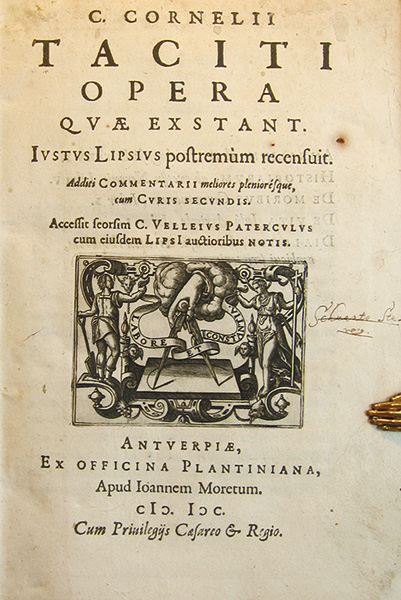
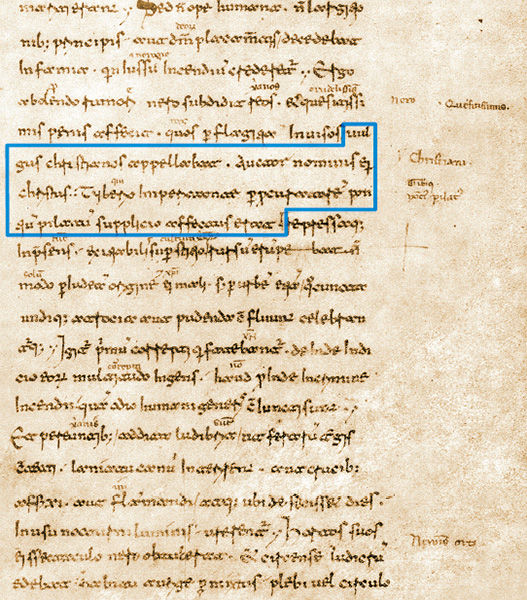


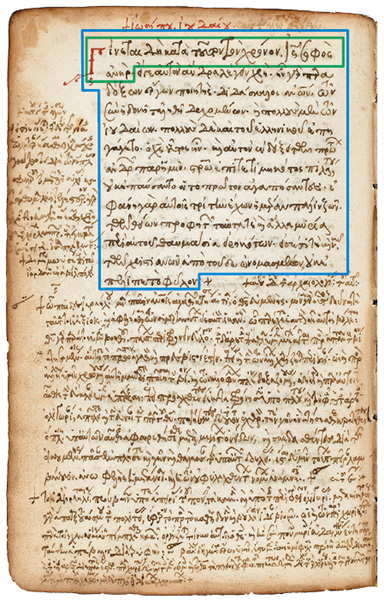




 Psalm 119: 38