Unenlightened – A Western Missionary’s View of Buddhism

“Buddhism is more than 2,500 years old, but it came to widespread prominence in Europe and the U.S. only about 50 years ago. Since then, Buddhist thought has become deeply rooted in American popular culture through music, books and films. Many American’s encounter the teachings of Buddhism’s founder, Siddhartha Gautama, when seeking a way to empty themselves of desire and attachment while embracing peace of mind through meditation.

Gautama is called the Buddha (enlightened one) by his followers. The simple response God’s Word gives to the notion of human enlightenment is that our Lord Jesus Christ is the true light and life. Without Him, there is only darkness and death (see John 1: 1-13).

How enlightening is Buddhism? Having been a witness for Christ in Buddhist contexts both overseas and here in the U.S. for more than 20 years, I have come to view the Buddhism practices in the U.S. as a trick or illusion that contains just enough truth to provide false hope. Rather than offering its adherents truth with the power to save or set them free, it merely helps them marginally reduce the stress that overwhelms their peers who have succumbed to this world’s strivings and vanity. Jesus sets us free for eternity.

While Buddhism in the West is darkness masquerading as light, a very different kind of Buddhism is widely practiced in parts of Nepal and throughout Tibet. The spiritist Buddhism in the part of the world where Gautama was born is not disguised as false light –it openly reveals itself as the blackest darkness. There, Buddhists work to appease spirits whom they know to be evil.

When those of us who have served among Nepali and Tibetan Buddhists describe them as intentionally serving evil spirts and seeking to be filled with their power, it may sound to some as if we are overstating the religion’s dangers. Sadly, however, out description is no exaggeration, and millions of lost Buddhists remain enslaved to evil throughout Nepal and Tibet.

People in the U.S., including Christians, are also astonished when we describe the persecution of Christians in these countries by Buddhists. But it is important understand that children in these areas are forced to leave their families and enter Buddhist monasteries, that young adults who come to faith in Christ are disowned by their Buddhist parents, and that Christian families are driven from their home in Buddhist areas. All of this is done explicitly to appease and court favor with evil spirits we know to be demons — the fallen angels who, like their master, work only to steal, kill and destroy (John 10:10).

The stories in this magazine help us to understand the dark side of this supposedly “enlightened” belief system. And we hope they will encourage you to pray for our Christian brothers and sisters who are willing to pay the price to see Buddhists set free by the gospel’s power.

Source: Cole Richards, President —The Voice of the Martyrs

How the Bible Created the Soul of Western Civilization: An Interview with Vishal Mangalwadi – Part 2

PART TWO

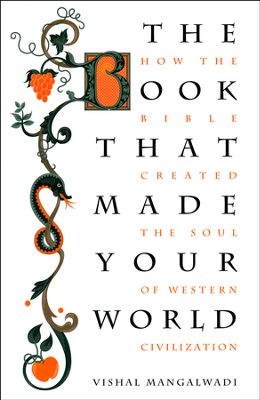
Bible Gateway interviewed Vishal Mangalwadi about his book, The Book That Made Your World: How the Bible Created the Soul of Western Civilization (Thomas Nelson, 2012).

How did the Bible trigger the West’s passion for medical advancement?

Vishal Mangalwadi: Mainstream Hinduism taught that matter (including the human body) was evil—illusion or maya. In contrast, the first chapter of the Bible declared the material realm, including the human body, to be very good. Genesis 3 taught that sickness and death came as a curse upon human sin. The Lord Jesus came to give us abundant and eternal life. His soul did not reincarnate. His crucified body was resurrected and glorified. The Bible teaches that God will resurrect our perishable bodies as immortal and glorified bodies.

Because of God’s high view of the human person, including his body, the Lord Jesus healed the sick and commissioned his disciples to a ministry of healing. Therefore, medieval Roman Catholic monasteries did not simply pray, preach, and practice piety. Many of them took care of the sick. They studied, and taught medicine. The Schola Medica Salernitana became the world’s first medical school in the South Italian city of Salerno. It grew out of a 9th century dispensary in a monastery. This monastic tradition blossomed into modern medicine after the 16th century biblical Reformation.

What is the biblical ideal of human dignity and how did it inform the West’s social structure?

Vishal Mangalwadi: Gautam Buddha, the founder of Buddhism, saw human life as suffering. Thomas Hobbes, the only atheist in English Enlightenment, viewed life as “nasty, brutish, and short.” Pope Innocent III detailed “The Misery of Man.” Secular intellectuals have no option but to see man as nothing more than an evolved animal.

Species, races, and individuals do not evolve equal. Evolution does not bestow any rights upon any animal. Western notions of human dignity, equality, and inalienable rights are the Bible’s unique contribution to the modern world. Pico della Mirandela (1463-94) articulated the Bible’s case for human dignity in An Oration on the Dignity of Man. His case rested upon (a) creation of man in God’s own image and (b) God’s incarnation in the Jesus of Nazareth.

God became man in order to save man, because man was made in God’s image – precious and immortal. Full implications of these doctrines are still being worked out. Yet, much of our future will be shaped by the question: Is man merely another animal (organic intelligence) or is he uniquely God’s image—so precious to God that He would come to this earth to save him?

How did the Bible equip the West to cultivate compassion?

Vishal Mangalwadi: Through parables such as that of the Good Samaritan, the Lord Jesus explained the command ‘Love your neighbor as yourself.’ He exemplified it by blessing those who cursed and killed him. Jesus courted the wrath of religious establishment by caring for the sick even on Sabbath. He reinforced prophets such as IsaiahJeremiah, and Amos, by teaching that God’s holy law was made for man’s good. Therefore, a religiosity that did not care for individuals was worse than worthless. It was obnoxious. What we do for the littlest of his brothers, we do for him.

What is your response to people who say the Bible subjugates women?

Vishal Mangalwadi: The women’s lib movement started in America because social inequality between men and women was obvious. Many women got paid less then men for the same work. They were allowed to serve coffee after worship, but not communion during the worship. They could play piano in a church but not pray. Yet, crucial questions are: who told America that men and women were created equal; that sin brought subjugation as a curse; that the curse was nailed upon the cross of Calvary? The question that triggered my reflections was: Why didn’t the Saudi women burn their burqas and their bras? What empowered American women to launch the women’s lib movement? Was it because American women were more oppressed than the Muslim of Hindu women? Or was it because something had already made American women stronger than other women around the world? My counter-intuitive discovery was that it was the Bible that empowered women.

No culture has ever required a husband to love his wife. Every culture, including Jewish and post-Christian Western cultures, have permitted husbands to divorce their wives and/or take other women. In 1831-32, French magistrate Alexis de Tocqueville observed that American women had become much stronger than European women because the biblical ideal of marriage had had the biggest impact in America. No country in the world will even try to impeach a president who lies about his private sex life.

The Bible emancipated Western women because it alone asserted theological equality of male and female and also because it defined God’s idea of marriage as a one-man one-woman lifelong and exclusive relationship. A woman is liberated to develop herself and to strive for her dignity when she knows that her fallen husband is not permitted to despise her, divorce her, covet his neighbor’s wife or to take another woman as a girlfriend, concubine, or wife. He has to love her, irrespective of the level of her intelligence, charm, abilities, and fallenness.

Roman wives were the victims of Rome’s playboy culture. Many of them followed and financed the Apostle Paul and (over time) won the Roman empire for Christ, because they understood better than modern feminists that Paul was emancipating them.

Men and women are equal, but husbands and wives (like parents and children and all other formal relations) have to live in a hierarchical relationship. No institution can function on the basis of equality-without-hierarchy. Christian marriages are being destroyed because the Western church has surrendered to the world’s folly that equality precludes authority. The Christian idea of marriage is unique. It can be sustained only if we take seriously the Bible’s idea of the fallenness of men and women and the necessity of wives submitting to fallen husbands, and husbands loving fallen wives.

How is human equality a biblical principle?

Vishal Mangalwadi: Sociologically, the modern idea of human equality was born when Martin Luther discovered the New Testament doctrine of the “priesthood of all believers.” Gradually, this truth began to challenge the West’s social/racial injustices.

George Whitfield was the first white revivalist in America, who began preaching to the blacks. His preaching evoked protests: “Do you really want us to kneel with our slaves and drink communion from the same cup?”

In order to counter deep rooted prejudices, in 1740, Whitfield began writing a series of articles. These explained how and why the Bible teaches human equality. Whitfield’s writings created the consensus which Thomas Jefferson articulated in the original draft of the Declaration of Independence as, “We hold these truths to be sacred and undeniable that all men are created equal.” By “sacred” Jefferson meant derived from sacred Scriptures. Under pressure from Benjamin Franklin, the Declaration was changed to read, “We hold these truths to be self-evident that all men are created equal.”

To Indian sages, inequality was self-evident. That is why they invented the caste-system which still survives. Equality was “self-evident” even to American Deists because their worldview was shaped by the Bible. Now that evolution is shaping everyone’s intellectual lenses, only a fool will be able to assert that all men have evolved equal.

What role did the Bible play in the establishment of the university?

Vishal Mangalwadi: No Hindu ashram ever grew into a university. No Orthodox Christian monastery developed into a university in Eastern Europe, Greece, or Russia. Augustinian monasteries and Cathedral schools blossomed into West European universities such as Oxford, Cambridge, Paris, Prague, Heidelberg, and Wittenberg because St. Augustine taught that the human mind was God’s supreme gift to mankind. The mind was made in God’s image, therefore, in order to be godly, one had to cultivate the mind as well as piety.

These monasteries were different than every other center of religious education. Young boys came to a monastery to learn to pray and become a priest. But in these monasteries they had to study logic, literature, philosophy, mathematics, and rhetoric as well. This is what created the West’s uniquely rational religious leader, who prayed as well as studied birds and the solar system.

Following the Reformation, Christian thinkers realized that God wants all men to be saved and come to the knowledge of the truth (1 Timothy 2:4-7). In order to know truth, man has to study three books: The book of God’s words (the Bible), the book of God’s works (in nature and culture), and the book of God’s reason (logic and mathematics that run the human mind and physical universe.) This insight was captured in Harvard Crest in 1643. VERITAS is written on these three books. Today, the university has degenerated into a factory producing laborers for the market and the state because, without God’s word, the university has been forced to shy away from the very concept of truth.

Since the Bible is not a “fax from Heaven,” explain how sentences written by humans can be considered the Word of God?

Vishal Mangalwadi: Prophet Elijah said to king Ahab, “As the Lord, the God of Israel, lives, before whom I stand, there shall be neither dew nor rain these years, except by my word” (1 Kings 17:1). By the end of the chapter, the Sidonian widow of Zarephath exclaimed, “Now I know that you are a man of God, and the word of the Lord in your mouth is truth.” (vs. 24). Eventually Ahab was forced to acknowledge that Elijah’s words—a man’s words—were, in fact, the word of God.

God said to Jeremiah, “Behold, I have put my words in your mouth…I am watching over my word to perform it.” (Jeremiah 1:8-11). God’s word includes the words He gives His men and also men’s words which He watches to perform, fulfill, and honor. Daniel and his friends were willing to go into the lions’ den and fiery furnace because 70 years of Jewish history had confirmed to them that Jeremiah’s words, disregarded by their fathers, were in fact God’s word.

The gospel is that Jesus Christ died “according to the Scriptures,” was buried and rose again the third day, “according to the Scriptures” (1 Corinthians 15:3-4). That means that Jesus didn’t have to die. In the Garden of Gethsemane Peter gave him the opportunity to evade arrest. During his trial, Pilate gave to Jesus plenty of room to escape crucifixion. The Lord Jesus sacrificed his life because he believed that the words of Scripture, written by fallen and fallible men, were in fact God’s words.

As you observe the West’s treatment of the Bible, where do you see western society headed?

Vishal Mangalwadi: Germany, the birthplace of biblical Reformation, became the arch villain of the 20th century, because during the 19th century, German theology undermined the Bible’s authority. I see post-biblical America as the greatest terror to the 21st century. I think the future of greed-driven American capitalism is best captured by James Cameron in his terrible, pagan, and commercially hit movie, Avatar.

Muslim nations cannot be the world’s biggest threats because while Islam can build a strong Caliphate, it does not and cannot build nations. Protestantism has built history’s greatest nations; therefore, the world has the most to fear from Protestant nations that destroy the very foundations of their morality and civility.

What are your thoughts about Bible Gateway as a way to reinvigorate civilization’s soul?

Vishal Mangalwadi: Bible Gateway is the only site I use to get into the Bible. (Though I am yet to cultivate the discipline to use everything that it offers.) I appreciate this interview because the new generation needs to learn why the Bible must be studied, trusted, obeyed, and applied.

Is there anything else you’d like to say?

Vishal Mangalwadi: Christianity has lost America because the church forgot that “God wants all men to be saved and come to the knowledge of the truth…” for this reason Paul the apostle was appointed a “preacher” and a “teacher of the gentiles in faith and truth” (1 Timothy 2:4-7). The American church has the capacity to disciple the nation, but for over a century it has lacked the theology for discipling nations. It has been preoccupied with saving souls, not with discipling nations.

The good news is that the state of Minnesota just started an education revolution that can disciple America. Students will enroll in an accredited college, but go to the local church to study online as a cohort in a face-to-face mentorship with a credentialed Academic Pastor. A student will get a college degree for under $10,000 a year. Check out www.VirtuesCampus.com.

Bio: Vishal Mangalwadi, LLD, was born and raised in India. He studied eastern religion and philosophy in India, Hindu ashrams, and at L’Abri Fellowship in Switzerland. He is a dynamic and engaging speaker who has lectured in 35 countries. He is a social reformer, political columnist, and author of 14 books. Christianity Today calls him ‘India’s foremost Christian intellectual.’

SOURCE: The Bible Gateway Blog – Jonathan Petersen

How the Bible Created the Soul of Western Civilization: An Interview with Vishal Mangalwadi

(Blog note: every Christian needs to read this article. Please share it with someone you know. Carl)

Part 1

What triggered the West’s passion for scientific, medical, and technological advancement? How did the biblical notion of human dignity inform the West’s social structure and how it intersects with other worldviews? How did the Bible create a fertile ground for women to find social and economic empowerment? How has the Bible uniquely equipped the West to cultivate compassion, human rights, prosperity, and strong families? What is the role of the Bible in the transformation of education? How has the modern literary notion of a hero been shaped by the Bible’s archetypal protagonist?

Bible Gateway interviewed Vishal Mangalwadi about his book, The Book That Made Your World: How the Bible Created the Soul of Western Civilization (Thomas Nelson, 2012).

Click to buy your copy of The Book That Made Your World in the Bible Gateway Store

Why did you dedicate The Book That Made Your World to Arun Shourie, a Hindu who is critical of the Bible?

Vishal Mangalwadi: In 1994, Arun Shourie, at that time one of India’s foremost public intellectuals, attacked Western missions and the Bible. He powerfully rehashed some of Thomas Paine’s arguments from The Age of Reason (1793-94). Mr. Shourie studied in the best Christian college in India before getting a PhD from an American university that had been founded by Methodists. I realized that this good and learned gentleman was clueless about what the Bible is and what it has done because his Christian professors in India and in America had no idea.

Therefore, moved by the Holy Spirit, I began responding to him with books such as Missionary Conspiracy: Letters to a Postmodern Hindu (1995), Fascism: Modern & Postmodern (1998—my intro to a book by Gene Edward Veith), and then The Book That Made Your World: How the Bible Created the Soul of Western Civilization (2012).

In spite of Western skepticism, many Chinese intellectuals sense that the Bible was the foundation of the West’s amazing development. In contrast, Hindus such as Mr. Shourie follow ill-informed, in fact, arrogant and foolish, Western repudiation of the Bible. They think that India can be made a great nation by returning to Hindu worldview, which destroyed India in the first place.

One book will not convince skeptics, but it can become a seed that multiplies into many PhD theses, popular books, TV shows, and films. I dedicated the book to Arun Shourie to help intelligent Indians discover the rock upon which India can realize its potential to be a great civilization—a blessing to all the nations.

You write that your book is not so much about the Bible as it is about great literature, art, science, technology, heroism, and virtues. Explain what you mean.

Vishal Mangalwadi: My book is not “Bible study.” It is a study of the global impact of the Bible and it’s worldview. The Bible was the book of the last millennium. No other book was translated, published, distributed, studied, or debated like it. What impact did it have on the world? That is the question my book explores.

Why do you call the Bible the soul of Western civilization?

Vishal Mangalwadi: Although the West has amputated its soul, I call the Bible the soul of Western Civilization because it propelled the development of everything good in the West: its notion of human dignity, human rights, human equality, justice, optimism, heroism, rationality, family, education, universities, technology, science, culture of compassion, great literature, heroism, economic progress, political freedom. Take, for example, democracy.

The myth that modern democracy came from Greece was invented only in the 20th century by John Herman Randall of Columbia College (New York) and Mortimer Adler and Robert Maynard Hutchins of the University of Chicago. The reality is that in his classic, Republic, Plato, the greatest of Greek philosophers, had already condemned democracy as Mobocracy—the worst of all political systems. Plato proposed that the ideal republic should be ruled by philosopher-kings. His disciple, Aristotle, trained Alexander-the-Great to be a philosopher-king, who turned out to be one of the most ruthless conquerors in history. In turn, Alexander inspired India’s first empire builder, Chandragupta Maurya.

Later Alexander inspired Machiavelli’s The Prince—which examines how a successful prince acquires and retains power. Machiavelli was the flowering of European Renaissance that produced tyrants such as Napoleon. The biblical Reformation led to the birth of modern democracy. Without the Bible, western democracy will become obnoxious as did the Greek democracies.

To give another example, the West’s confidence in human reason came not from Greece, but from the Bible via Augustine. Hinduism, Buddhism, and their products such as Greek gnosticism knew that unaided intellect cannot know truth. The Enlightenment corrupted western confidence in reason by (over time) separating it from revelation. After Nietzsche and Freud, everyone knows that here is no reason to trust human reason, unless it is made in the image of Logos and strives to conform to it.

Why do you begin your book recounting the suicide of rock musician Kurt Cobain and then contrasting him with Johann Sebastian Bach?

Vishal Mangalwadi: The first chapter uses music as an entry point into the West’s soul. It contrasts Christian West with (post-Christian) West without its soul. The chapter inquires: What made the West a uniquely optimistic and musical civilization, able to sing “Joy to the world (fallen, miserable and full of suffering)?”

Bach and Cobain were musical geniuses. Both lost their parents at nine. Bach’s parents died and Cobain’s separated. Bach’s faith in resurrection enabled him to celebrate “The Passion” (Suffering) of St. Matthew and St. John. Cobain inherited Bach’s musical tradition without its philosophy. Therefore, his music could only scream at suffering, making him an icon of a generation lost without a map of reality. Buddhism offered no hope to Cobain. Therefore, he cursed life and committed suicide.

Buddhism originated in India. Its pessimistic philosophy gave us great art and literature, but no hope, music, or musical instruments. Islam (and Orthodox Christianity) also ruled out music; therefore, it too pre-empted development of technology.

The German publisher published 10,000 copies of the first chapter as a stand-alone booklet. It is proving to be an excellent work of worldview evangelism. I hope someone will print it in Japanese, since Bach is Japan’s fifth evangelist.

How was the Bible “the force that created modern India”?

Vishal Mangalwadi: Why are “native” Americans Indians? Why are “native” Australians Indians? Why is Indonesia, Indian-Asia? Why were Columbus and Vasco de Gama looking for sea-routes to India (and not to “Spice-land”)?

The European mind was fascinated with India, because India, not Japan, Korea, or China, is the Eastern-most land mentioned in the Bible (Esther 1:1). By “India” the Persians meant “Sindustan,” the land around the river Sind (now in Pakistan). Up until the 1850s, no one living in Bengal or Kerala ever thought that he was living in “India.” That is why Michael Madhusudan Dutt (1824-1873), the pioneer of ‘Indian’ nationalism, actually wrote only about ‘Bengali nationalism.’

The pre-Columbus European concept of geographic India came from the Roman Catholic reading of the Bible. That is why Vasco de Gama’s coming to Kerala and Goa was the sea-route to “India.” Protestant reading of the Bible coined the ‘abstract’ concept of India as a geo-political nation state, half-a-century before England actually made India a nation in 1858. Prior to William Carey, no “Indian” had ever existed who started a paper (or organization) such as Friend of India (1818).

Lord Thomas Babington Macaulay, persuaded British Parliament in 1833, that Britain must govern Indians in such a way as to train them to govern themselves as an independent nation. Macaulay grew up in the company of the evangelical member of Parliament, William Wilberforce, in the Calpham community. He followed up his rhetoric by coming to India to give us the ‘Indian Penal Code’ along with the Jewish-biblical idea of rule of law. He helped transform our education and civil services. He played a critical role in the establishment of our first universities in Calcutta, Bombay, and Madras in 1858. These began as examination-conducting institutions to fulfil the vision of Macaulay’s brother-in-law, Charles Travelyan. The latter had defined the mission of Christian education in 1838 in his classic On the Education of the People of India. The objective of that herculean mission, he said, was to prepare Indians to govern themselves as a free nation.

After Macaulay and Travelyan, it took five more decades before an Englishman could inspire a few graduates of Calcutta’s Christian education to create the “Indian National Congress” (1885). Then it took 70 more years to prepare leaders such as Gandhi, Ambedkar, and Nehru, who could, in fact, lead and govern a free India.

India became a free nation in 1947. It could have attained that status if it had even one Indian, who thought of India as a nation during the “Mutiny” of 1857. When Indian soldiers started killing Englishmen and liberated Delhi, educated Brahmins and Hindu merchants organized prayer meetings around the country to pray for British victory over Indian mutineers. This was partly because the rebels who succeeded in defeating the British in Meerut and Delhi decided to revive the Mogul Empire by declaring Bahadur Shah as their emperor.

Most Hindu, Muslim, and Sikh soldiers and rulers disapproved of the revival of that exploitative and useless empire. Many decided to fight against fellow Indians to defend the British Raj. This was because, contrary to current, ill-informed (or deceptive?) debaters such as Shahi Tharoor, most of the Indians who actually lived under the British, perceived it as better than all other options available to “India”.

Mogul Empire had been so corrupt and inept that in 1738-39, the Persian invader Nadir Shah, met hardly any resistance as he travelled 1000 KMs. within the Mogul’s (Indian) empire, from Ghazani to Delhi to plunder the Mogul capital. The Empire’s rottenness had encouraged the Marathas to conquer and plunder Hindu and Muslim kingdoms. This threat of the Marathas and/or invaders from the Khyber Pass had forced Hindu/Muslim kings to take refuge under the Company Raj. Most Indians opposed the 1857 Mutiny, now called the First War of National Independence, because they could not trust Indians to rule India with justice and equity.

While the Hindu and Muslim rulers, intelligentsia, and merchants preferred the Company Raj over Indian rajas, it was the Bible-shaped conscience that saw the Company as a “gang of public robbers” (Macaulay) and its rule as the “rule of evil genii.” Yet, Independent India chose to remain a member of British Commonwealth and import its political, economic, and social ideals and institutions, because the Bible succeeded in (a) transforming India’s governance under the British, and (b) training enough Indians to govern India as a modern, democratic, nation-state.

Dr. Babu Verghese’s massive study, Let There Be India: The Bible’s Impact on Nation-Building, details how the Bible translators created modern India by turning our dialects into literary languages, bringing modern education, printing, literature, and modern press, and the modern ideas of human equality, dignity, and rights (his book is available from ManagerGoodBooks@gmail.com).

Part 2 will follow Part 1 on Psalm 119:38 Blog. Thank you, Carl

Source: Bible Gateway Blog -Jonathan Petersen

Did Jesus Study in India Under Gurus?

Question: The gospels are silent about the approximately 18 years between the last time we hear of Jesus in the temple as a boy of 12 (Luke 2:41–52) and the beginning of His ministry at about 30 years of age (Luke 3:23). I have come across the report a number of times, not only in The Aquarian Gospel, but in newspapers as well, that during these missing years Jesus was in India studying under the gurus. The wisdom He acquired there supposedly became the basis for His ministry. Why not?

Response: The most widely circulated report involved an alleged Nicholas Notovitch, who claimed that while traveling in Tibet in the late 1800s he was told by Tibetan lamas that a record reporting the visit of Jesus existed in a Himalayan monastery. In the early 1900s another visitor to Tibet was allegedly told the same thing. However, no one capable of reading and translating such “records” ever saw them, no copy was brought to the West for examination, and now the story is that the “records” have been destroyed.1

If the Bible were based upon no better evidence than that, the critics would have justifiably dismissed it long ago. Yet such speculative claims are instantly given credence by those who demand proof for anything the Bible says. That double standard betrays an intense bias on the part of skeptics who claim to be interested only in the truth.

All of the Evidence Is to the Contrary

First of all, there is not a particle of historical or archaeological evidence that Jesus ever visited India, much less studied there. Moreover, this theory is refuted by everything that Jesus said and did during His ministry. The teachings that Jesus brought to the Jews were in agreement with all of their Scriptures (which He frequently quoted as authoritative) and without the slightest taint of either Hinduism or Buddhism. Had He studied under the Masters of India or Tibet, He would have been obligated to uphold their teaching and to honor His guru. In fact, His teachings were the very antithesis of Eastern mysticism of any kind.

Furthermore, the New Testament account, which holds together consistently, is not compatible with Jesus ever having made such extensive travels. The people in his hometown of Nazareth knew him as “the carpenter, the son of Mary, the brother of James and Joses and of Juda and Simon” (Mark 6:3). The implication certainly is that He was a familiar hometown personality who had grown up and continued in the local community, not that He was a Jewish Marco Polo who had traveled to exotic and distant places.

Friends and acquaintances were astonished when Jesus suddenly began to travel about Galilee and preach to great crowds. To family and neighbors it was a scandal for Jesus to present Himself as a religious teacher. They treated him with a contempt born of familiarity, not with the awe they surely would have given one who had traveled widely and studied in such far-off lands as India and Tibet.

Every guru who comes to the West lauds and honors his Master, because every Hindu, including the gurus themselves, must have a guru whom he follows. Yet the alleged “Guru Jesus” never referred to His guru or quoted any religious writings except the Jewish Scriptures. He claimed to have been sent not by some Master in the East but by His Father in heaven (John 5:23, 30, 36; etc.), a term unknown to the gurus and hated by the rabbis.

The gurus claim to be men who, through yoga and ascetic practices, have attained to the mystical “realization” that “Atman [individual soul] is identical with Brahman [universal soul]” and have thereby become “Self-realized” gods. Had Jesus studied under them, He would have taught the same delusion. Yet in complete contradiction to that impossible dream and far from claiming to be a man struggling upward to godhood, Jesus presented Himself as the very I AM (Yahweh) of the Old Testament, the God of Israel who had stooped down to become a man:

If ye believe not that I AM, ye shall die in your sins. . . . Before Abraham was, I AM. . . . Now I tell you [this] before it come to pass, that, when it is come to pass, ye may believe that I AM. . . . A little while, and ye shall not see me . . . because I go to the Father. . . . I came forth from the Father and am come into the world; again, I leave the world and go to the Father. . . . I and my Father are one. [Emphasis added] (John 8:24, 58; 13:19; 16:16, 28; 10:30)

Irreconcilable Differences Between Christ and the Gurus

The gurus deny the existence of sin or of any absolute moral standards. Each person’s dharma is different and an individual matter to be discovered on the mystical journey to union with Brahman. In complete contrast, Christ claimed to be the “light of the world” (John 8:12), whose very life exposed the evil in mankind. Moreover, He promised to send the Holy Spirit to convince the world of “sin, and of righteousness, and of judgment” (John 16:8). Jesus announced that He had come to call sinners to repentance (Mark 2:17) and to save them from eternal judgment by His sacrifice of Himself for the sins of the whole world.

Christ’s life and teachings stand in the fullest contradiction to the Hinduism He would have learned in India had He studied there and which He surely would have practiced and taught to the Jews when He returned to Israel. This theory finds absolutely no support in the New Testament record given to us by eyewitnesses:

  • The gurus teach a continuing cycle of death and reincarnation, whereas Jesus was resurrected as He said He would be, and He promised the same deliverance from death to His followers. Reincarnation and resurrection are opposites; one cannot believe in both.
  • The gurus teach a continual returning to this earth in life after life to work out one’s supposed “karma,” while Jesus taught forgiveness of sins by grace, thus fitting one for heaven.
  • To the gurus, heaven is a mystical state of oneness with the Absolute. Jesus, on the other hand, taught that being in heaven is to dwell forever in His Father’s house of “many mansions” (John 14:1–4).
  • The gurus are all vegetarians. Jesus ate the Passover lamb, fed the multitudes with fish, and even after His resurrection ate fish as a demonstration to His doubting disciples that He was bodily resurrected and not a “ghost,” as they supposed.
  • There have been thousands of gurus, but Jesus claimed to be the one and only Son of God, the only Savior of sinners.
  • The gurus teach that there are many ways to God. Jesus declared: “I am the way, the truth, and the life; no man cometh unto the Father but by me” (John 14:6).
  • Everything Jesus said and did opposes the teachings of Hinduism and Buddhism and disproves the false claim that He studied in India or Tibet.

This fraudulent theory demonstrates once again how impossible it would be to invent a fictitious history of Jesus and to make it fit into actual events on this earth. The erroneous theory that Jesus studied in India under the gurus simply won’t fit into the New Testament record at all—and if it did, the New Testament would be incompatible with the Old instead of being its fulfillment, as it had to be. Nor would either the Old or New Testament records fit into the history of the world unless both were true. The perfect harmony of Scripture with established history is revealed by any careful and honest study of both.

1. Larry Whitham, “Book backs theory Jesus visited India before public life,” in Washington Times, November 27, 1987, p. E6.

—An excerpt from In Defense of the Faith (pp. 123-27) by Dave Hunt

Source: Berean Call