“Let any one who has a garden ask the gardener what makes the plants grow so luxuriantly, what makes them produce such sweet and pretty flowers. He will answer, ” The warm summer sun and the damp dew of evening, the cold north wind and the drenching rain, — these all help forward the growth of your plants. Were it not for each, the flowers would not be so bright and blooming.”
Just so it is with the children of God, who are called “trees of righteousness, the planting of the Lord.” Sometimes they are in trouble; affliction of some kind comes upon them, which tries them, and makes them to grow in faith and patience. Then, again, the Lord raises them up, causing his face to shine upon them, just as the sun warms and revives the earth when the winter is past.
Oh, yes, the Lord’s people require both the north and the south wind to blow upon them, that they may bring forth much fruit to the glory and praise of God.
“Awake, O north wind; and come thou south; blow upon my garden, that the spices thereof may flow out. Let my beloved come into his garden, and eat his pleasant fruits.” (Caut. iv, 16)”
From Martin Luther edited by Miss Whately (1897)
All discipline for the moment seems not to be joyful, but sorrowful; yet to those who have been trained by it, afterwards it yields the peaceful fruit of righteousness. (Hebrews 12: 11)
May the blessings of God be upon your life as you experience all the trials and tribulation that living in this world brings. May your “garden” bring forth much fruit.
The global surge of Islamist activity, marked by violent acts, protests, and religious tensions, has sparked significant concern for Christians and Western societies. From terrorist attacks in New Orleans and violent demonstrations in Europe to widespread grooming and abuse scandals in Britain and brutal persecution of Christians in Africa, these events reflect both historical patterns of conquest within Islam and the modern implications of Islamism. This escalating threat underscores the urgent need for vigilance, prayer, and support for persecuted Christians worldwide.
The rough start to 2025 did not start on January 1. On New Year’s Day, a U.S. Army veteran plowed a truck into a crowd in New Orleans in a terrorist attack done in the name of the Islamic State. A few hours later, pro-Palestinian demonstrators blocked Sixth Avenue in New York, calling to globalize the intifada. Across the Atlantic, a report was released about Muslim “grooming gangs” preying on lower-class white girls in Britain, although “grooming” is too mild of a descriptor for what the report claimed.
Since 2000, 250,000 British girls have been drugged, sexually assaulted, and trafficked. Those who reported their assaults were blamed or ignored. Fathers who attempted to rescue their daughters were arrested. People who tried to expose this behavior were imprisoned. Apparently, officials were afraid of being labeled racist or being accused of inciting racial tensions. They were more fearful of being insensitive than protecting girls from sexual abuse and exploitation.
Across Europe, Christmas markets were attacked and disrupted by Muslim demonstrations. In many European cities, Muslims regularly pray publicly in areas in acts designed to cause maximum disturbance. This is something rare in actual Islamic nations and indicates the intent of Muslims to claim new territory as their own. On New Year’s Day, immigrants, mostly Muslim, rioted in Brussels, Berlin, and other cities.
Also, in what’s become a terrible tradition on holy days in Nigeria, Christians again suffered a series of murderous attacks over Christmas at the hands of Islamic Fulani herdsmen and ISIS-related groups. According to a report from Open Doors, at least 25 were killed, some while returning from a Christmas Day church service. 21 Christians were also killed in Christmastide attacks in the Democratic Republic of Congo.
Most Muslims are peaceful and would condemn such attacks in the name of their faith. However, a significant percentage of Muslims are Islamists, and Islamists who believe that Islam is destined to rule the world often think that jihad is how this domination will happen. Islamism is not an aberrant form of Islam, as is often claimed. In view of the history of Islam, Islamists more closely reflect the life of Mohammed and the history of Islam than is often acknowledged.
Mohammed, a merchant turned religious leader turned warlord, initially attempted to convert the surrounding Arabs by preaching to them. When that failed, he turned to raiding and sought conversions by military conquest. As his power expanded and Mohammed’s raiding extended into Persia and the Byzantine Empire, he allowed his warriors to take non-Muslims as sex slaves, similar to what is happening today in Britain.
Mohammed’s successors also expanded Muslim territory by conquest. In fact, conquest is the primary means by which Islam has spread across the world. Some groups, like the Turks, converted to Islam to avoid slave raids. Others allied with the Caliphate for economic reasons or to obtain better military technology. In some areas, Muslims were welcomed as merchants and granted concessions until, when they were strong enough, the Muslims took over those regions. A recent parallel is Lebanon, once a majority Christian country until Palestinian refugees consolidated enough power to topple the government.
Muslims often claim that jihad does not mean “religious war” but rather “struggle” and that the “greater jihad,” according to the Qur’an, is the struggle to submit to the will of Allah. That is true according to the Qur’an, but in Islamic literature and history, jihad overwhelmingly refers to religious warfare. In principle, jihad as warfare is to be defensive. However, in practice, and according to Mohammad, anyone who is called but refuses to convert to Islam is a threat to the Islamic community and subject to jihad.
The early chapters of the Qur’an contain statements prohibiting coercion in religion, as well as positive statements about Christians and Jews. However, these statements are considered by Islamists to be abrogated by later statements prohibiting friendship with Christians and Jews. Included in these later passages are particularly vicious statements against the Jews. Historically, in Muslim countries, Christians and Jews were considered second-class citizens, with limited rights and increasing prohibitions on their behavior, often designed to humiliate them.
Many critics and scholars suggest that Islam needs a Reformation, like what happened in the sixteenth century within Christianity. Arguably, Islamism is that reformation, a return to the authoritative sources of Islam, a literal reading of the Qur’an, an embrace of Sharia law, and an emphasis on the personal example of Mohammad.
Clearly, the rise of Islamism around the world holds serious implications for Christians and the West. Even more, the implications are immediate for our persecuted brethren in Islamic countries and in borderland territories like Nigeria. Pray for these brothers and sisters in Christ living under Islamic rule.
By John Stonestreet – President of the Colson Center for Christian Worldview, and radio host of BreakPoint, a daily national radio program.
“Buddhism is more than 2,500 years old, but it came to widespread prominence in Europe and the U.S. only about 50 years ago. Since then, Buddhist thought has become deeply rooted in American popular culture through music, books and films. Many American’s encounter the teachings of Buddhism’s founder, Siddhartha Gautama, when seeking a way to empty themselves of desire and attachment while embracing peace of mind through meditation.
Gautama is called the Buddha (enlightened one) by his followers. The simple response God’s Word gives to the notion of human enlightenment is that our Lord Jesus Christ is the true light and life. Without Him, there is only darkness and death (see John 1: 1-13).
How enlightening is Buddhism? Having been a witness for Christ in Buddhist contexts both overseas and here in the U.S. for more than 20 years, I have come to view the Buddhism practices in the U.S. as a trick or illusion that contains just enough truth to provide false hope. Rather than offering its adherents truth with the power to save or set them free, it merely helps them marginally reduce the stress that overwhelms their peers who have succumbed to this world’s strivings and vanity. Jesus sets us free for eternity.
While Buddhism in the West is darkness masquerading as light, a very different kind of Buddhism is widely practiced in parts of Nepal and throughout Tibet. The spiritist Buddhism in the part of the world where Gautama was born is not disguised as false light –it openly reveals itself as the blackest darkness. There, Buddhists work to appease spirits whom they know to be evil.
When those of us who have served among Nepali and Tibetan Buddhists describe them as intentionally serving evil spirts and seeking to be filled with their power, it may sound to some as if we are overstating the religion’s dangers. Sadly, however, out description is no exaggeration, and millions of lost Buddhists remain enslaved to evil throughout Nepal and Tibet.
People in the U.S., including Christians, are also astonished when we describe the persecution of Christians in these countries by Buddhists. But it is important understand that children in these areas are forced to leave their families and enter Buddhist monasteries, that young adults who come to faith in Christ are disowned by their Buddhist parents, and that Christian families are driven from their home in Buddhist areas. All of this is done explicitly to appease and court favor with evil spirits we know to be demons — the fallen angels who, like their master, work only to steal, kill and destroy (John 10:10).
The stories in this magazine help us to understand the dark side of this supposedly “enlightened” belief system. And we hope they will encourage you to pray for our Christian brothers and sisters who are willing to pay the price to see Buddhists set free by the gospel’s power.
In one village in southeastern Fujian near the Guangdong border, Chinese believers told a remarkable story of God’s provision and power. An elderly brother had believed in the Lord for many years when the Communists took control of the area in 1949. The Blessed Old Man, as other believers affectionately dubbed him, came from an impoverished family and had never learned to read or write properly. Despite these simple impediments, after he received the Lord Jesus he proved to be a powerful evangelist, leading hundreds of people to faith in Christ throughout the district.
Hatching a plan to give Christianity a black eye and to show the supremacy of Marxism, the government decided to make an example of the old preacher by giving him the best house in the village and a generous supply of food. They also appointed him chairman of the village’s Communist committee, thinking that when he abandoned his religion they would display him as a shining example of the goodness of Communism and the futility of Christianity.
The Blessed Old Man, however, belonged to Jesus Christ. Instead of being seduced by the Communists,
…he used the large house he had been provided to hold house church meetings and distributed the food he was given to those believers in need. After some time, the government saw that their plan was badly backfiring, so they issued an ultimatum to the “chairman”. He had to choose between his faith and the new lifestyle and status he had been afforded by the authorities. Although he knew that he would return to a life of extreme poverty and hardship, the old brother did not hesitate for a moment. “ I choose Jesus!” he boldly declared.
The enraged officials threw him out of the house. He had nowhere to go, but another believer provided him with a small room on the side of a shack. China at the time was suffering terribly from Mao’s disastrous economic experiments, and millions of people were starving to death. Although the old man now had somewhere to stay, there was no food available to eat. All the meager crops were taken by the government, and the other Christians were too poor to help him.
For some days the old man wasted away in his tiny room, with no food passing his lips. He grew weak and ill and knew that his life would soon be snuffed out. Then one morning he awoke to find a hole in the bottom of the wall. He didn’t know what had caused it and repaired the damage. A few hours later he found another hole and started to wonder if these strange occurrences were from the Lord. While he was still pondering it, a large rat came through the hole with some food in its mouth. After entering the room, the rat dropped the food on the floor and then left. A short time later it returned and did the same again. A small collection of nuts and vegetables lay on the dirt floor!
Each morning the rat paid a visit to the elderly brother. In response to his commitment, God had saved the old man from starvation by instructing a rat to feed him! The miraculous provisions continued for several months. On some days the rat brought more food than usual. Those were the days when the old man was expecting a visitor!
Excerpt from Fujian – The Blessed Province – The China Chronicles, Paul Hattaway, Asia Harvest (Langham Global Library), p. 245-246
God says “I will not, I will not cease to uphold or sustain thee; I will not, I will not, I will not forsake someone in a state of defeat or helplessness in the midst of hostile circumstances.” (Expanded Greek Translation of Hebrew 13:5 by Dr. Kenneth Wuest.)
Be encouraged Saints… regardless of your circumstances. God sees you, is in you, and has not forsaken you.
“God is not so much interested in how much work we do for Him, as He is in how much we resemble His Son.”
Is the suffering which God is allowing in your life accomplishing it’s intended purpose or not?
The apostle Peter uses the term “fiery trial” (I Peter 4:12) to describe a process that is like the refining of silver or gold in a furnace. The unrefined ore is placed in a crucible and melted in a furnace until the dross or impurities rise to the top. Then the impurities are skimmed off and thrown away. Now the smelter can see his reflection in the ore which tells him that the ore has been purified.
The metaphor describes what suffering is suppose to do in the Christian. The suffering is to make us aware of and bring us to repentance about the pride, arrogance, rebellion, self-sufficiency, hard-headedness, lack of faith, lack of compassion and other fleshly attributes that are in our heart and manifested in our personality. Prior to the suffering we may not see these sins but everyone else does.
As He removes this dross from His children’s life it makes for humility, purifies and increases our faith, and enriches our lives. People around us can clearly see more of Jesus manifested in our life.
If we respond wrong to suffering and hold onto the dross, we are on dangerous ground because God is committed to conforming His children to the image of His Beloved Son. We do not want the smelter to turn up the heat to get rid of that stubborn dross! Better to walk with a repentant heart and let Him purify our soul.
“Make sure that none of you suffers as a murder, or thief, or evildoer, or a troublesome meddler; but if anyone suffers as a Christian, he is not to be ashamed, but is to glorify God in this name.” I Peter 4: 15-16
During a city council meeting last week, Dearborn Heights, Michigan Mayor Abdullah Hammoud uttered remarks that, in any other context, would have incited a nationwide media firestorm.
When a Christian resident objected to renaming a local road after a news publisher who glorified Hamas and Hezbollah, the mayor responded that he was simply “not welcome here.” The leftist media responded to this inflammatory comment by ignoring it.
During public comment, local resident Ted Barham registered his objection to the county renaming a section of Warren Avenue after Osama Siblani, the publisher of Arab American News, due to his support for terrorism in statements like, “The blood of the martyrs irrigates the land of Palestine.”
“The best suggestion I have for you is to not drive on Warren Avenue or to close your eyes while you’re doing it. His name is up there, and I spoke at a ceremony celebrating it because he’s done a lot for this community,” retorted Mayor Hammoud. He reviled Barham as “a bigot,” “racist,” and “an Islamophobe” before concluding, “Although you live here, I want you to know as mayor, you are not welcome here. And the day you move out of the city will be the day that I launch a parade celebrating the fact that you moved out of this city.” So much for inclusion.
“Dearborn is one of … a couple of cities now … that has a Muslim mayor. It has a … majority Muslim community,” responded former Brown University researcher Dr. Andrew Bostom. “From the mindset of a leader of really what’s a Muslim community, he did nothing wrong. He’s protecting the mores of this Muslim community … The problem is the non-Muslim political and religious leaders that are afraid to call out these behaviors and just label them as unacceptable.”
It would be simple to condemn Hammoud’s comments, if the media or Michigan Governor Gretchen Whitmer (D) cared to. Hammoud made these comments in an official meeting, on video, for the whole world to see. “He said this from the city council in his role as the mayor. So it wasn’t like he posted this somewhere on social media. He said it from his official post and capacity!” exclaimed FRC President Tony Perkins on “Washington Watch.”
But the only tune being played by the leftist media is crickets.
Perkins anticipated a critic’s response, “There are going to be people who say, ‘Well, you believe in religious freedom. What if a Christian was the mayor?’”
Consider the hypothetical scenario: a predominantly Christian community decides to name a street after the late James Dobson, to honor his labor for American families; a local LGBT activist stands up at a city council meeting to protest Dobson’s affirmation of a biblical view of marriage and sexuality; and the (openly Christian) mayor calls the activist a string of unpleasant names and invites him to pack his bags.
Of course, local Christian churches should be the first to rebuke such an un-Christian response. Christians want to see everyone come to know Jesus; they don’t want people to move away simply because they don’t yet know him. But equally certain is the ensuing denunciation across the leftist media landscape. Politico reporter Heidi Przybyla would write another breathless prediction about the imminent takeover of Christian nationalism. “60 Minutes” would sympathetically film an in-depth portrait of LGBT rights in the town. The New Yorker would run a snooty essay implying that they expected nothing less from a pack of rabid Bible-thumpers.
In other words, if the roles were reversed, the current media silence would swell into the roar of Niagara Falls!
So, why is the media silent now? Why does it show no interest in the exclusionary discrimination directed by a Muslim government official toward a Christian? Where are the condemnations of Islamic nationalism, or the pleas for non-sectarian neutrality?
To ask these questions is not to equate Christianity and Islam. “Christianity allows freedom,” Perkins pointed out, while Islam requires submission. The Muslims in Dearborn Heights want to honor a man who praised terrorism. If a Christian town did honor Dr. Dobson, they would honor a man who praised God’s design for the family. It’s also telling that the case of Muslim exclusion is real, while the case of Christian exclusion is hypothetical.
Such exclusion “is not considered negative from an Islamic perspective,” Bostom stated. “This is the way Christians are supposed to behave in a Muslim community. They are supposed to bend to the will of the Muslim majority and not do anything that offends the sensibilities of Muslims.”
In fact, “there’s not a single Muslim country or region where Christians are free and safe,” he continued. “Countries such as Nigeria, Congo, Burkina Faso, Cameroon, Niger, the Central African Republic have massacred or forcibly displaced millions of African Christians [as] jihadists [have been] allowed to roam free in these countries within the past 10 years.”
“Christians in many Muslim countries can be detained without trial, arrested, sentenced, and imprisoned,” Bostom added. “They’re incarcerated for their faith in Bangladesh and Iran. They’re being driven underground in places like Yemen and Algeria.”
In fact, it’s worth asking why the media says so little about the extensive persecution Christians face across the Muslim world. Sixteen million Christians have been driven from their homes across Africa, said Bostom, compared to two million residents of the Gaza Strip. But who gets all the media sympathy?
Notably, Muslims in Western nations do not suffer the same sort of religious discrimination that Muslims experience in Islamic nations. “Muslims … have a protected status in this country,” said Bostom. “There’s all kinds of public opprobrium cast upon anyone … who says something that’s deemed negative about Muslims.”
The difference is that Western nations have been influenced by the liberalizing values of Christianity (in the classical sense where “liberal” is simply a synonym for “free”). Thus, Western nations — at least before they became post-Christian nations — have long recognized inalienable human rights, based in a person’s inherent dignity, which ultimately comes from God. Christianity teaches that a man cannot be forced to believe anything against his will, so Western nations allow that man should not be forced to say anything against his will. Christianity extols the value of work, so Western nations protect the right of property.
These human rights are nowhere more secure than in America, where constitutional amendments have codified the right to free speech, free religion, free assembly, and more. “That’s why, in America, you have a Muslim mayor in a Muslim community,” said Perkins. “Not that I endorse it, but because of the freedom that’s allowed under the Christian ethic. You don’t see that in a Muslim-majority country.”
Islam, by contrast, is illiberal. In many nations conquered by Islam, the native population was forced to convert or die. To this day, many Islamic nations still have laws discriminating against non-Muslims, prohibiting any Muslim from changing his or her religion, and punishing anyone seeking to convert a Muslim. Where Muslim countries have moderated these laws, it has usually been due to diplomatic pressure from Western powers like the United States.
Countries are not guaranteed to maintain their character if their people and customs change theirs. For America, this means that our traditions of freedom will not survive an Islamic takeover. “What you’re seeing play out [in Dearborn is] what a lot of us have feared,” said Bostom. “In a predominantly Muslim enclave, city, town, etc., you will see application of Islamic law.”
“But is that the American way,” asked Perkins, “that we have to surrender our First Amendment freedoms, because we’re living in an enclave of Muslims?” Not according to the model of ordered liberty that prevailed in previous eras of U.S. history, he concluded. When President John Adams said the U.S. Constitution would only work for a “moral and religious people,” he said, “I would bet my life … that he was not referring to the Quran. He was referring to the Bible.”
“The problem is that we don’t have … the political strength, the religious strength, the social strength to just say, ‘This is intolerable,’” Bostom responded. That weakness is due to American culture unmooring itself from its “common religious ethic” in the word of God, said Perkins. For decades, an anti-Christian ideology has crept through the institutions, sowing division, mistrust, and the spirit of lawlessness (2 Thessalonians 2:7).
This refers, of course, to the Marxist ideology of the Left, which rejects the very notion of “good authority” in order to establish its own totalitarian rule. It offers a profane facsimile of freedom, which is merely a rejection of all norms. In practice, Marxism is every bit as illiberal as Islam, demanding submission and persecuting those who refuse.
Perhaps this ideological fraternity is the more fundamental reason why the leftist media has failed to criticize Islam’s persecution of Christianity.
Such conditions should surprise no Christian, because sinful nations — allied only because their common master is Satan — have joined forces to conspire against God’s people for at least 3,000 years. “Why do the nations rage and the peoples plot in vain? The kings of the earth set themselves, and the rulers take counsel together, against the Lord and against his Anointed,” wrote David (Psalm 2:1-2). The goal of sinful people and sinful rulers is to throw off God’s authority (Psalm 2:3), but God’s triumph is already sure (Psalm 2:4-9). It was true in David’s day, it was true in Jesus’s day (Acts 4:25-28), and it remains true today.
For this reason, Christians need not stoop to the censorious tactics of our enemies. God’s kingdom advances by open profession of the truth. “We persuade others” (2 Corinthians 5:11); we don’t silence them. Let evil men do what they will, but Christians rely on free and open debate, “We implore you on behalf of Christ, be reconciled to God” (2 Corinthians 5:20).
The following ancient tradition by the Polynesians was reported by English Missionary John Williams (1796-1839) who arrived in Tahiti in autumn of 1817 and was eaten by cannibals in November 1839 in the New Hebrides.
“…the heavens were originally so close to the earth that men could not walk, but were compelled to crawl” under them. “This was found a very serious evil; but at length an individual conceived the sublime idea of elevating the heavens to a more convenient height. For this purpose he put forth his utmost energy, and the first effort raised them to the top of a tender plant called teve, about four feet high. There he deposited them until he was refreshed, when by a second effort he lifted them to the height of a tree called Kauariki, which is as large as the sycamore. By the third attempt he carried them to the summits of the mountains; and after a long interval of repose, and by a most prodigious effort, he elevated them to their present situation.” For this, as a mighty benefactor of mankind, “this individual was deified; and up to the moment that Christianity was embraced, the deluded inhabitants worshipped him as the ‘Elevator of the heavens.” 1
“Now, what could more graphically describe the position of mankind soon after the flood, and the proceedings of Nimrod as Phoroneus, “The Emancipator,” than this Polynesian fable?
“While the awful catastrophe by which God has showed His avenging justice on the sinners of the old world was yet fresh in the minds of men, and so long as Noah, and the upright among his descendants, sought with all earnestness to impress upon all under their control the lessons which that solemn event was so well fitted to teach, “heaven,” that is, God, must have seemed very near to earth. To maintain the union between heaven and earth, and to keep it as close as possible, must have been the grand aim of all who loved God and the best interests of the human race.
“But this implied the restraining and discountenancing of all vice and all those “pleasures of sin,” after which the natural mind, unrenewed and unsanctified, continually pants. This must have been secretly felt by every unholy mind as a state of insufferable bondage. “The carnal mind is enmity against God, ” is “not subject to His law,” neither indeed is “able to be” so. It says to the Almighty, “Depart from us, for we desire not the knowledge of Thy ways.” So long as the influence of the great father” (Noah) “of the new world was in the ascendant, while his maxims were regarded, and a holy atmosphere surrounded the world, no wonder that those who were alienated from God and godliness, felt heaven and its influence and authority to be intolerably near, and that in such circumstances they “could not walk,” but only “crawl,”– that is, that they had no freedom to “walk after the sight of their own eyes and the imaginations of their own hearts.”
“From this bondage Nimrod emancipated them. By the apostasy he introduced, by the free life he developed among those who rallied around him, and by separating them from the holy influences that had previously less or more controlled them, he helped them to put God and the strict spirituality of His laws at a distance, and thus he became the “Elevator of the heavens,” making men feel and act as if heaven were afar off the earth, and as if either the God of heaven “could not see through the dark cloud,” or did not regard with displeasure the breakers of His laws. Then all such would feel that they could breathe freely, and that now they could walk at liberty. For this, such men could not but regard Nimrod as a high benefactor.
“According to the system which Nimrod was the grand instrument in introducing, men were led to believe that a real spiritual change of heart was unnecessary, and that so far as change was needful, they could be regenerated by mere external means.
“Looking at the subject in the light of the Bacchanalian orgies, which, as the reader has seen, commemorated the history of Nimrod, it is evident that he led mankind to seek their chief good in sensual enjoyment, and showed them how they might enjoy the pleasures of sin, without any fear of the wrath of a holy God. In his various expeditions he was always accompanied by troops of women; and by music and song, and games and revelries, and everything that could please the natural heart, he commended himself to the good graces of mankind. “2
And so it continues in 2025 because when God confused the languages at Babel after the worldwide flood, the newly created language groups that dispersed around the world took with them the rebellious teaching of Babel and the worship of Nimrod into their new countries; therefore, today the nations are still in bondage to idols and false gods.
Thank you King Jesus for the Gospel that sets men free and brings them into your heavenly kingdom which one day will come to earth when You will reign from Jerusalem bringing justice.
Come Lord Jesus!
Carl. 1.Source: English Missionary John Williams (1796-1839) who arrived in Tahiti in autumn of 1817 and was eaten by cannibals in November 1839 in the New Hebrides. He wrote Narrative of Missionary Enterprises in the South Sea Islands which you can find on the internet for free.
2. Alexander Hislop, The Two Babylons (Or, The Papal Worship Proved To Be The Worship of Nimrod), Printed in United States 2013. Hislop (1807-1865) was a Scottish minister.
What would you do if you had no access to Scripture? Most Americans have multiple Bibles at home, dozens of translations at our fingertips, and devotional apps on every device. Yet for believers living in hostile areas and restricted nations, a single torn page of the New Testament is a treasure worth suffering for.
For many Christians around the world, owning a Bible is illegal. It can cost a believer their freedom or even their life. Yet, in the darkest prison cells and most hostile corners of the world, the Word of God remains the most desired possession.
During 25+ years serving at The Voice of the Martyrs, I’ve had the honor to meet with persecuted Christians living and serving in the most dangerous and difficult places to follow Christ. Often, they share their inspiring testimonies.
Recently I came across five powerful stories about what having access to Scripture meant to imprisoned Christians.
1. Brother Joe
Brother Joe, a former prisoner in North Africa, received a smuggled portion of the Bible — just Psalms and part of the Gospel of John. For him, those verses were life itself.
“I would cry over the words,” he said. “Not because I was sad, but because it was like Jesus Himself was sitting in my cell with me.”
Even as Brother Joe endured torture, he began copying verses by hand to share with other prisoners. The guards tried to stop him, but the Word kept spreading. As the prophet Isaiah wrote, “The word of our God shall stand forever.”
2. Helen Berhane
Helen Berhane, an Eritrean gospel singer who was imprisoned in a metal shipping container for over two years, had no Bible at all — but she had memorized verses before her arrest.
“The Word became my song, my food, my comfort,” she shared. “I had no book, but I had Him.”
Even today, years later, those memorized verses continue to sustain her.
3. Aaron
Aaron, a front-line worker, told me about a woman jailed for leading Bible studies in China, where the underground church is heavily persecuted. Fellow inmates, recalling verses they had memorized, pieced together entire chapters from memory. When a contraband Bible finally arrived, they tore it apart — not to destroy it, but to share it.
“In that cell,” Aaron said, “the Bible wasn’t just a book — it was their breath.”
4. Ali
Perhaps the most startling transformation came in the life of Ali, a former jihadist who encountered the Gospel of Luke in prison. The Bible turned his world upside down.
“I had studied violence all my life,” he said. “Then I met Jesus in a jail cell in the pages of that book. That Bible broke me.”
Ali found, for the first time, a God who loves His enemies and sent His Son to die for them.
The Bible is more than print on paper — it’s living and active. The Word of God has the power to sustain people’s faith under the most intense persecution. For the millions of Christians in hostile nations, a Bible is not just a comfort. It is what carries them through their torture and suffering.
5. Iranian prisoner
Hormoz Shariat, the founder of Iran Alive Ministries known as “the Billy Graham of Iran,” shared how one Iranian prisoner risked his life to possess a single page of Scripture. That page became a spark. He memorized it and passed it to another inmate, who did the same.
“They shared one torn page like it was gold,” Shariat said. “It was enough to bring light into total darkness.”
In Iran, where printing or importing Farsi Bibles is illegal, believers face prison or death for sharing God’s Word. And yet, they do it anyway. The hunger for the Bible is so deep that even a fragment — one Psalm, one parable — is worth everything.
Every April, VOM focuses on getting Bibles to persecuted Christians. This year, our ministry has identified 458,000 Christians, by name, who are waiting for a Bible in hostile areas and restricted nations.
Through front-line workers, the ministry is positioned to deliver these Bibles directly into the hands of those who need them most. Imagine being the reason a believer in prison experiences the presence of Christ in their darkest hour!
There are many lessons to learn from others who have suffered for their faith. The stories here are just a small example of the power of God’s Word to bring hope and strength to our brothers and sisters in Christ.
Maybe our first lesson is not to take for granted what others are risking everything to hold.
Todd Nettleton is Vice President for Message at The Voice of the Martyrs and host of The Voice of the Martyrs Radio. He is the author of When Faith Is Forbidden: 40 Days on the Frontlines with Persecuted Christians.
READER NOTE: Voice of The Martyrs charges $10 per Bible per their donation page. Asia Harvest charges $3 to print and deliver a Bible per their donation page. Asia Harvest and the underground church in China estimate that for every Bible given to a believer in China, at least one other individual comes to Christ. Not a bad $3 investment in the Kingdom of God!
Asia Harvest’s ministry is limited to Asia. They print Bibles in 163 different Asian languages. Our family has supported this effort for about three years.
Voice of the Martyrs ministry is worldwide evidently.
May you do your part to spread His Word in this dark world.
“Some want to live within the sound of church or chapel bell. I want to run a rescue shop within a yard of hell.” William Booth, founder of the Salvation Army
From time to time, we receive very sensitive reports from our partners in Asia. We often refrain from sharing such stories to protect the safety of our partners, while striving to create a balanced newsletters that don’t overly burden our readers and leave them with broken hearts.
Sadly, many of the stories include suffering and reflect some of the worst depravity of mankind.
While we love to encourage readers with stories of revival and Gospel breakthroughs, to only share those would be unbalanced. Asia is also a place of intense spiritual darkness, and sometimes things that are difficult to read are necessary to share so that believers around the world can know how to pray.
Now take a moment to consider William Booth’s quote cited above. Have you ever considered what it might actually look like to run a rescue shop just outside the boundary of hell? What we are about to share with you in this newsletter is the result of believers doing just that in Myanmar today.
Last year, we were excited to receive a call from one of our dearest ministry partners on the field in Asia. He is seeing God move powerfully among hungry hearts, with thousands of people having been added to the family of God.
However, what he shared that day caused our hearts to grieve and tears to fill our eyes. …the Lord is saving countless beautiful children in Myanmar. Yet Satan does not let any genuine move of God go unchallenged, and the story we are about to share is both gripping and heavy. Please read it through to the end, as there is a message of hope at its conclusion.
THE FOLLOWING TRUE STORY IS NOT RECOMMENDED FOR CHILDREN. READER DISCRETION IS ADVISED.
Eva (not her real name) was just 11 years old when a great darkness visited the slum she calls home…
It happened on a sunny day, just like any other. The streets were buzzing with life as schoolchildren were on holiday and were making the most of their young lives in the impoverished neighborhood.
“Following me for some free candy!” one child shouted to groups of playing children. Eva’s belly growled at the thought of eating something sweet. She frequently felt hunger pangs at home due to a lack of food, so she welcomed the invitation and hurried over along with the other children for some free candy.
Eva had noticed that some of her friends as well as others had disappeared from time to time, never to return. This made many in her village aware of the dangers around them and suspicious of strangers. But the young boy leading them to get candy was a familiar face in the neighborhood, and his parents met the group of children along the way, putting Eva’s heart at ease.
As the group walked quite a distance from the village, the boy’s parents excitedly told them about a free medical clinic that would be distributing candy along with a free vaccine for each child. Coming from destitute families who can’t afford the most basic medical procedures without becoming enslaved by debt to violent gang lenders, the children considered the offer of medical help one less cost for their parent to worry about.
Finally, beyond earshot of the village, the group of now 20 children, along with a pregnant mother, entered the local graveyard. It seemed like an odd place for candy and vaccines to be distributed, but sure enough, there was a table set up with medical instruments operated by staff dressed in white lab coats.
The children formed a line and quickly, one by one, received an injection in the arm, followed by a piece of candy. While they were all enjoying their candy, Eva noticed something very odd beginning to happen to each one of them.
A strange fog clouded their judgement and made them dizzy.
And then it happened.
The pregnant mother was suddenly murdered right in front of the children by these criminals dressed as doctors and nurses. With no concern for the sanctity of human life, they proceeded to slash open the deceased mother’s stomach, pulling her precious unborn child from her womb.
Terror of the worst kind gripped every child. Drugged beyond the point of being able to resist and now threatened with death themselves if they did not cooperate, the children were herded into the backs of open-bed trucks and driven through their village to a nearby fishing pier, where they were placed on boats.
Eva inwardly screamed for help, but no words made it to her lips because of the drug-induced state she was in. It was at that horrifying moment that she remembered the words she had heard at a Christian meeting she had attended since she gave her life to Jesus. It was there that she first learned that Jesus cares for everyone and can save people when they call upon His name.
“Jesus!” she cried out in Burmese. It was all she was capable of saying.
The boat that took the children across the river docked on the far side, and each child was whisked through the fish market and hurriedly pushed into cars that drove them away. Eva watched with crippling fear as she was pushed closer to one of the cars, its door opening for her as she approached.
Then, out of nowhere, two very tall white, angelic beings appeared! They released her from the arms of her captors, brought her back to the pier, and put her on a boat returning to her village on the other side of the river. Eva made it safely home and has been slowly recovering from the trauma, but sadly, none of the 19 other children have returned to their families since that day.
Most children who disappear in Myanmar under these circumstances do not live to tell their stories. Asia Harvest has since learned from our partners in the slums that the 19 children were most likely sent to various hospitals, where they were sedated before surgeons removed all their organs, killing them in the process. The murder of the pregnant mother and the nature of the diabolical events of that day confirm these children were victims of human organ harvesting. Key organs, such as livers, kidneys, hearts, and lungs, are sold for transplant in wealthier countries.
Ongoing civil war in Myanmar has torn the country apart and resulted in the breakdown of society and the failure of the justice system. As a result, the police do nothing to assist victims, creating an environment in which such monstrous evil can thrive.
While the Church in Myanmar lacks the human ability to get judicial help against these threats, God’s children there have learned that the Lord Jesus is the true source of their rescue. The Scriptures have become very real in their lives, such as Psalm 20:7: “Some trust in chariots and some in horses, but we trust in the name of the Lord our God.”
Perhaps God moving so mightily in Myanmar today –the likes of which have never been seen before among the Buddhist majority — is Heaven’s response to the cries of desperate believers who lack an army of chariots and human forces to rescue them. With no such resources outside of Christ, they have been discovering the blessing that this “last resort” was all along their only lasting hope.
Through this profound discovery, God’s revival fires are burning ever brighter amidst Myanmar’s darkest hours.
Please pray for Eva to completely heal from the deep trauma she endured and for the 19 families who now live with the painful void of their children having been so brutally snatched from them.
Every day our coworkers help precious children like Eva, and multitudes of young children and teenagers have been rescued who would have otherwise been trafficked by gangs in sex work, drug dealing, and many other types of modern-day slavery. By the power of the Holy Spirit, thousands of at-risk families have come to a saving knowledge of Jesus. Not only have many vulnerable individuals come to Christ and been radically transformed, but many traffickers and gang members have also repented and surrendered their lives to the Lord Jesus!
Last year, Asia Harvest leaders visited the very slum where this diabolical incident occurred, and we even crossed on the same boats that took the kidnapped children across the river. We have personally witnessed the powerful work the Holy Spirit is doing in those poor communities, and we can declare with great conviction that Jesus IS the answer and the only hope for Myanmar and the world.
The End.
Thank you for taking time to read this article. Please pray for the people and Christians of Myanmar. Please visit Asia Harvest if you wish to learn more about how to help their work through The Children’ Fund or Bibles for Asia ($3 each) fund. While seeking an Asia ministry we could trust, we were directed to Asia Harvest by a close friend who worked as an underground missionary in communist China for many years. We give monthly to their work.
(The following is an article from Biblical Archaeology Society by Lawrence Mykytiuk (bio at end of article). If you are interested in archaeology and its relationship to the Bible, we recommend looking at this organization.)
After two decades toiling in the quiet groves of academe, I published an article in BAR titled “Archaeology Confirms 50 Real People in the Bible.”a The enormous interest this article generated was a complete surprise to me. Nearly 40 websites in six languages, reflecting a wide spectrum of secular and religious orientations, linked to BAR’s supplementary web page.b Some even posted translations.
I thought about following up with a similar article on people in the New Testament, but I soon realized that this would be so dominated by the question of Jesus’ existence that I needed to consider this question separately. This is that article:
Did Jesus of Nazareth, who was called Christ, exist as a real human being, “the man Christ Jesus” according to 1 Timothy 2:5?
The sources normally discussed fall into three main categories: (1) classical (that is, Greco-Roman), (2) Jewish and (3) Christian. But when people ask whether it is possible to prove that Jesus of Nazareth actually existed, as John P. Meier pointed out decades ago, “The implication is that the Biblical evidence for Jesus is biased because it is encased in a theological text written by committed believers. What they really want to know is: Is there extra-Biblical evidence … for Jesus’ existence?”c
Therefore, this article will cover classical and Jewish writings almost exclusively.
Tacitus—or more formally, Caius/Gaius (or Publius) Cornelius Tacitus (55/56–c. 118 C.E.)—was a Roman senator, orator and ethnographer, and arguably the best of Roman historians. His name is based on the Latin word tacitus, “silent,” from which we get the English word tacit. Interestingly, his compact prose uses silence and implications in a masterful way. One argument for the authenticity of the quotation below is that it is written in true Tacitean Latin. But first a short introduction.
Tacitus’s last major work, titled Annals, written c. 116–117 C.E., includes a biography of Nero. In 64 C.E., during a fire in Rome, Nero was suspected of secretly ordering the burning of a part of town where he wanted to carry out a building project, so he tried to shift the blame to Christians. This was the occasion for Tacitus to mention Christians, whom he despised. This is what he wrote—the following excerpt is translated from Latin by Robert Van Voorst:
[N]either human effort nor the emperor’s generosity nor the placating of the gods ended the scandalous belief that the fire had been ordered [by Nero]. Therefore, to put down the rumor, Nero substituted as culprits and punished in the most unusual ways those hated for their shameful acts … whom the crowd called “Chrestians.” The founder of this name, Christ [Christus in Latin], had been executed in the reign of Tiberius by the procurator Pontius Pilate … Suppressed for a time, the deadly superstition erupted again not only in Judea, the origin of this evil, but also in the city [Rome], where all things horrible and shameful from everywhere come together and become popular.
Tacitus’s terse statement about “Christus” clearly corroborates the New Testament on certain historical details of Jesus’ death. Tacitus presents four pieces of accurate knowledge about Jesus: (1) Christus, used by Tacitus to refer to Jesus, was one distinctive way by which some referred to him, even though Tacitus mistakenly took it for a personal name rather than an epithet or title; (2) this Christus was associated with the beginning of the movement of Christians, whose name originated from his; (3) he was executed by the Roman governor of Judea; and (4) the time of his death was during Pontius Pilate’s governorship of Judea, during the reign of Tiberius. (Many New Testament scholars date Jesus’ death to c. 29 C.E.; Pilate governed Judea in 26–36 C.E., while Tiberius was emperor 14–37 C.E.)
Tacitus, like classical authors in general, does not reveal the source(s) he used. But this should not detract from our confidence in Tacitus’s assertions. Scholars generally disagree about what his sources were. Tacitus was certainly among Rome’s best historians—arguably the best of all—at the top of his game as a historian and never given to careless writing.
Earlier in his career, when Tacitus was Proconsul of Asia, he likely supervised trials, questioned people accused of being Christians and judged and punished those whom he found guilty, as his friend Pliny the Younger had done when he too was a provincial governor. Thus Tacitus stood a very good chance of becoming aware of information that he characteristically would have wanted to verify before accepting it as true.
The other strong evidence that speaks directly about Jesus as a real person comes from Josephus, a Jewish priest who grew up as an aristocrat in first-century Palestine and ended up living in Rome, supported by the patronage of three successive emperors. In the early days of the first Jewish Revolt against Rome (66–70 C.E.), Josephus was a commander in Galilee but soon surrendered and became a prisoner of war. He then prophesied that his conqueror, the Roman commander Vespasian, would become emperor, and when this actually happened, Vespasian freed him. “From then on Josephus lived in Rome under the protection of the Flavians and there composed his historical and apologetic writings” (Gerd Theissen and Annette Merz). He even took the name Flavius, after the family name of his patron, the emperor Vespasian, and set it before his birth name, becoming, in true Roman style, Flavius Josephus. Most Jews viewed him as a despicable traitor. It was by command of Vespasian’s son Titus that a Roman army in 70 C.E. destroyed Jerusalem and burned the Temple, stealing its contents as spoils of war, which are partly portrayed in the imagery of their gloating triumph on the Arch of Titus in Rome. After Titus succeeded his father as emperor, Josephus accepted the son’s imperial patronage, as he did of Titus’s brother and successor, Domitian.
Yet in his own mind, Josephus remained a Jew both in his outlook and in his writings that extol Judaism. At the same time, by aligning himself with Roman emperors who were at that time the worst enemies of the Jewish people, he chose to ignore Jewish popular opinion.
Josephus stood in a unique position as a Jew who was secure in Roman imperial patronage and protection, eager to express pride in his Jewish heritage and yet personally independent of the Jewish community at large. Thus, in introducing Romans to Judaism, he felt free to write historical views for Roman consumption that were strongly at variance with rabbinic views.
In his two great works, The Jewish War and Jewish Antiquities, both written in Greek for educated people, Josephus tried to appeal to aristocrats in the Roman world, presenting Judaism as a religion to be admired for its moral and philosophical depth. The Jewish War doesn’t mention Jesus except in some versions in likely later additions by others, but Jewish Antiquities does mention Jesus—twice.
The shorter of these two references to Jesus (in Book 20) is incidental to identifying Jesus’ brother James, the leader of the church in Jerusalem. In the temporary absence of a Roman governor between Festus’s death and governor Albinus’s arrival in 62 C.E., the high priest Ananus instigated James’s execution. Josephus described it:
Being therefore this kind of person [i.e., a heartless Sadducee], Ananus, thinking that he had a favorable opportunity because Festus had died and Albinus was still on his way, called a meeting [literally, “sanhedrin”] of judges and brought into it the brother of Jesus-who-is-called-Messiah … James by name, and some others. He made the accusation that they had transgressed the law, and he handed them over to be stoned.
James is otherwise a barely noticed, minor figure in Josephus’s lengthy tome. The sole reason for referring to James at all was that his death resulted in Ananus losing his position as high priest. James (Jacob) was a common Jewish name at this time. Many men named James are mentioned in Josephus’s works, so Josephus needed to specify which one he meant. The common custom of simply giving the father’s name (James, son of Joseph) would not work here, because James’s father’s name was also very common. Therefore Josephus identified this James by reference to his famous brother Jesus. But James’s brother Jesus (Yehoshua) also had a very common name. Josephus mentions at least 12 other men named Jesus. Therefore Josephus specified which Jesus he was referring to by adding the phrase “who is called Messiah,” or, since he was writing in Greek, Christos. This phrase was necessary to identify clearly first Jesus and, via Jesus, James, the subject of the discussion. This extraneous reference to Jesus would have made no sense if Jesus had not been a real person.
Few scholars have ever doubted the authenticity of this short account. On the contrary, the huge majority accepts it as genuine. The phrase intended to specify which Jesus, translated “who is called Christ,” signifies either that he was mentioned earlier in the book or that readers knew him well enough to grasp the reference to him in identifying James. The latter is unlikely. First-century Romans generally had little or no idea who Christus was. It is much more likely that he was mentioned earlier in Jewish Antiquities. Also, the fact that the term “Messiah”/“Christ” is not defined here suggests that an earlier passage in Jewish Antiquities has already mentioned something of its significance. This phrase is also appropriate for a Jewish historian like Josephus because the reference to Jesus is a noncommittal, neutral statement about what some people called Jesus and not a confession of faith that actually asserts that he was Christ.
This phrase—“who is called Christ”—is very unlikely to have been added by a Christian for two reasons. First, in the New Testament and in the early Church Fathers of the first two centuries C.E., Christians consistently refer to James as “the brother of the Lord” or “of the Savior” and similar terms, not “the brother of Jesus,” presumably because the name Jesus was very common and did not necessarily refer to their Lord. Second, Josephus’s description in Jewish Antiquities of how and when James was executed disagrees with Christian tradition, likewise implying a non-Christian author.
This short identification of James by the title that some people used in order to specify his brother gains credibility as an affirmation of Jesus’ existence because the passage is not about Jesus. Rather, his name appears in a functional phrase that is called for by the sense of the passage. It can only be useful for the identification of James if it is a reference to a real person, namely, “Jesus who is called Christ.”
This clear reference to Jesus is sometimes overlooked in debates about Josephus’s other, longer reference to Jesus (to be treated next). Quite a few people are aware of the questions and doubts regarding the longer mention of Jesus, but often this other clear, simple reference and its strength as evidence for Jesus’ existence does not receive due attention.
The longer passage in Josephus’s Jewish Antiquities (Book 18) that refers to Jesus is known as the Testimonium Flavianum.
If it has any value in relation to the question of Jesus’ existence, it counts as additional evidence for Jesus’ existence. The Testimonium Flavianum reads as follows; the parts that are especially suspicious because they sound Christian are in italics:
Around this time there lived Jesus, a wise man, if indeed one ought to call him a man. For he was one who did surprising deeds, and a teacher of such people as accept the truth gladly. He won over many Jews and many of the Greeks. He was the Messiah. When Pilate, upon hearing him accused by men of the highest standing among us, had condemned him to be crucified, those who in the first place came to love him did not give up their affection for him, for on the third day, he appeared to them restored to life. The prophets of God had prophesied this and countless other marvelous things about him. And the tribe of Christians, so called after him, have still to this day not died out.
All surviving manuscripts of the Testimonium Flavianum that are in Greek, like the original, contain the same version of this passage, with no significant differences.
The main question is: Did Flavius Josephus write this entire report about Jesus and his followers, or did a forger or forgers alter it or possibly insert the whole report? There are three ways to answer this question:
Alternative 1: The whole passage is authentic, written by Josephus.
Alternative 2: The whole passage is a forgery, inserted into Jewish Antiquities.
Alternative 3: It is only partly authentic, containing some material from Josephus, but also some later additions by another hand(s).
Regarding Alternative 1, today almost no scholar accepts the authenticity of the entire standard Greek Testimonium Flavianum. In contrast to the obviously Christian statement “He was the Messiah” in the Testimonium, Josephus elsewhere “writes as a passionate advocate of Judaism,” says Josephus expert Steve Mason. “Everywhere Josephus praises the excellent constitution of the Jews, codified by Moses, and declares its peerless, comprehensive qualities … Josephus rejoices over converts to Judaism. In all this, there is not the slightest hint of any belief in Jesus” as seems to be reflected in the Testimonium.
The bold affirmation of Jesus as Messiah reads as a resounding Christian confession that echoes St. Peter himself! It cannot be Josephus. Alternative 1 is clearly out.
Regarding Alternative 2—the whole Testimonium Flavianum is a forgery—this is very unlikely. What is said, and the expressions in Greek that are used to say it, despite a few words that don’t seem characteristic of Josephus, generally fit much better with Josephus’s writings than with Christian writings. It is hypothetically possible that a forger could have learned to imitate Josephus’s style or that a reviser adjusted the passage to that style, but such a deep level of attention, based on an extensive, detailed reading of Josephus’s works and such a meticulous adoption of his vocabulary and style, goes far beyond what a forger or a reviser would need to do.
Even more important, the short passage (treated above) that mentions Jesus in order to identify James appears in a later section of the book (Book 20) and implies that Jesus was mentioned previously.
The best-informed among the Romans understood Christus to be nothing more than a man’s personal name, on the level of Publius and Marcus. First-century Romans generally had no idea that calling someone “Christus” was an exalted reference, implying belief that he was the chosen one, God’s anointed. The Testimonium, in Book 18, appropriately found in the section that deals with Pilate’s time as governor of Judea, is apparently one of Josephus’s characteristic digressions, this time occasioned by mention of Pilate. It provides background for Josephus’s only other written mention of Jesus (in Book 20), and it connects the name Jesus with his Christian followers. The short reference to Jesus in the later book depends on the longer one in the earlier (Book 18). If the longer one is not genuine, this passage lacks its essential background. Alternative 2 should be rejected.
Alternative 3—that the Testimonium Flavianum is based on an original report by Josephus that has been modified by others, probably Christian scribes, seems most likely. After extracting what appear to be Christian additions, the remaining text appears to be pure Josephus. As a Romanized Jew, Josephus would not have presented these beliefs as his own. Interestingly, in three openly Christian, non-Greek versions of the Testimonium Flavianum analyzed by Steve Mason, variations indicate changes were made by others besides Josephus. The Latin version says Jesus “was believed to be the Messiah.” The Syriac version is best translated, “He was thought to be the Messiah.” And the Arabic version with open coyness suggests, “He was perhaps the Messiah concerning whom the prophets have recounted wonders.” Alternative 3 has the support of the overwhelming majority of scholars.
We can learn quite a bit about Jesus from Tacitus and Josephus, two famous historians who were not Christian. Almost all the following statements about Jesus, which are asserted in the New Testament, are corroborated or confirmed by the relevant passages in Tacitus and Josephus. These independent historical sources—one a non-Christian Roman and the other Jewish—confirm what we are told in the Gospels:
1. He existed as a man. The historian Josephus grew up in a priestly family in first-century Palestine and wrote only decades after Jesus’ death. Jesus’ known associates, such as Jesus’ brother James, were his contemporaries. The historical and cultural context was second nature to Josephus. “If any Jewish writer were ever in a position to know about the non-existence of Jesus, it would have been Josephus. His implicit affirmation of the existence of Jesus has been, and still is, the most significant obstacle for those who argue that the extra-Biblical evidence is not probative on this point,” Robert Van Voorst observes. And Tacitus was careful enough not to report real executions of nonexistent people.
2. His personal name was Jesus, as Josephus informs us.
3. He was called Christos in Greek, which is a translation of the Hebrew word Messiah, both of which mean “anointed” or “(the) anointed one,” as Josephus states and Tacitus implies, unaware, by reporting, as Romans thought, that his name was Christus.
4. He had a brother named James (Jacob), as Josephus reports.
5. He won over both Jews and “Greeks” (i.e., Gentiles of Hellenistic culture), according to Josephus, although it is anachronistic to say that they were “many” at the end of his life. Large growth in the number of Jesus’ actual followers came only after his death.
6. Jewish leaders of the day expressed unfavorable opinions about him, at least according to some versions of the Testimonium Flavianum.
7. Pilate rendered the decision that he should be executed, as both Tacitus and Josephus state.
8. His execution was specifically by crucifixion, according to Josephus.
9. He was executed during Pontius Pilate’s governorship over Judea (26–36 C.E.), as Josephus implies and Tacitus states, adding that it was during Tiberius’s reign.
Some of Jesus’ followers did not abandon their personal loyalty to him even after his crucifixion but submitted to his teaching. They believed that Jesus later appeared to them alive in accordance with prophecies, most likely those found in the Hebrew Bible. A well-attested link between Jesus and Christians is that Christ, as a term used to identify Jesus, became the basis of the term used to identify his followers: Christians. The Christian movement began in Judea, according to Tacitus. Josephus observes that it continued during the first century. Tacitus deplores the fact that during the second century it had spread as far as Rome.
As far as we know, no ancient person ever seriously argued that Jesus did not exist. Referring to the first several centuries C.E., even a scholar as cautious and thorough as Robert Van Voorst freely observes, “… [N]o pagans and Jews who opposed Christianity denied Jesus’ historicity or even questioned it.”
Nondenial of Jesus’ existence is particularly notable in rabbinic writings of those first several centuries C.E.: “… [I]f anyone in the ancient world had a reason to dislike the Christian faith, it was the rabbis. To argue successfully that Jesus never existed but was a creation of early Christians would have been the most effective polemic against Christianity … [Yet] all Jewish sources treated Jesus as a fully historical person … [T]he rabbis … used the real events of Jesus’ life against him” (Van Voorst).
Thus his birth, ministry and death occasioned claims that his birth was illegitimate and that he performed miracles by evil magic, encouraged apostasy and was justly executed for his own sins. But they do not deny his existence.
Lucian of Samosata (c. 115–200 C.E.) was a Greek satirist who wrote The Passing of Peregrinus, about a former Christian who later became a famous Cynic and revolutionary and died in 165 C.E. In two sections of Peregrinus—here translated by Craig A. Evans—Lucian, while discussing Peregrinus’s career, without naming Jesus, clearly refers to him, albeit with contempt in the midst of satire:
It was then that he learned the marvelous wisdom of the Christians, by associating with their priests and scribes in Palestine. And—what else?—in short order he made them look like children, for he was a prophet, cult leader, head of the congregation and everything, all by himself. He interpreted and explained some of their books, and wrote many himself. They revered him as a god, used him as a lawgiver, and set him down as a protector—to be sure, after that other whom they still worship, the man who was crucified in Palestine because he introduced this new cult into the world.
For having convinced themselves that they are going to be immortal and live forever, the poor wretches despise death and most even willingly give themselves up. Furthermore, their first lawgiver persuaded them that they are all brothers of one another after they have transgressed once for all by denying the Greek gods and by worshiping that crucified sophist himself and living according to his laws.
Although Lucian was aware of the Christians’ “books” (some of which might have been parts of the New Testament), his many bits of misinformation make it seem very likely that he did not read them. The compound term “priests and scribes,” for example, seems to have been borrowed from Judaism, and indeed, Christianity and Judaism were sometimes confused among classical authors.
Lucian seems to have gathered all of his information from sources independent of the New Testament and other Christian writings. For this reason, this writing of his is usually valued as independent evidence for the existence of Jesus.
This is true despite his ridicule and contempt for Christians and their “crucified sophist.” “Sophist” was a derisive term used for cheats or for teachers who only taught for money. Lucian despised Christians for worshiping someone thought to be a criminal worthy of death and especially despised “the man who was crucified.”
Other testimony that has some value, but much less, as evidence regarding the existence of Jesus appears in the writings of the following people:
Celsus, the Platonist philosopher, considered Jesus to be a magician who made exorbitant claims.
Pliny the Younger, a Roman governor and friend of Tacitus, wrote about early Christian worship of Christ “as to a god.”
Suetonius, a Roman writer, lawyer and historian, wrote of riots in 49 C.E. among Jews in Rome which might have been about Christus but which he thought were incited by “the instigator Chrestus,” whose identification with Jesus is not completely certain.
Mara bar Serapion, a prisoner of war held by the Romans, wrote a letter to his son that described “the wise Jewish king” in a way that seems to indicate Jesus but does not specify his identity.
Other documentary sources are doubt-ful or irrelevant.
One can label the evidence treated above as documentary (sometimes called literary) or as archaeological. Almost all sources covered above exist in the form of documents that have been copied and preserved over the course of many centuries, rather than excavated in archaeological digs. Therefore, although some writers call them archaeological evidence, I prefer to say that these truly ancient texts are ancient documentary sources, rather than archaeological discoveries.
Some ossuaries (bone boxes) have come to light that are inscribed simply with the name Jesus (Yeshu or Yeshua‘ in Hebrew), but no one suggests that this was Jesus of Nazareth. The name Jesus was very common at this time, as was Joseph. So as far as we know, these ordinary ossuaries have nothing to do with the New Testament Jesus. Even the ossuary from the East Talpiot district of Jerusalem, whose inscription is translated “Yeshua‘, son of Joseph,” does not refer to him.
As for the famous James ossuary first published in 2002,d whose inscription is translated “Jacob, son of Joseph, brother of Yeshua‘,” more smoothly rendered, “James, son of Joseph, brother of Jesus,” it is unprovenanced, and it will likely take decades to settle the matter of whether it is authentic. Following well-established, sound methodology, I do not base conclusions on materials whose authenticity is uncertain, because they might be forged. Therefore the James ossuary, which is treated in many other publications, is not included here.
As a final observation: In New Testament scholarship generally, a number of specialists consider the question of whether Jesus existed to have been finally and conclusively settled in the affirmative. A few vocal scholars, however, still deny that he ever lived.
Lawrence Mykytiuk is Emeritus Professor of Library Science and former Associate Professor of History (courtesy) at Purdue University. He holds a Ph.D. in Hebrew and Semitic Studies and is the author of Identifying Biblical Persons in Northwest Semitic Inscriptions of 1200–539 B.C.E. (2004).
By Anugrah Kumar, Christian Post Contributor Thursday, February 20, 2025
Seventy Christians were discovered beheaded inside a Protestant church in the Democratic Republic of Congo’s North Kivu Province, according to reports, which say the victims had been kidnapped by suspected Allied Democratic Forces terrorists.
The terrorists arrived in Mayba, a village in the territory of Lubero, at around 4 a.m. last Thursday and ordered residents to quietly get out, said Open Doors, adding that at least 20 Christian men and women had to leave their homes, leading to their capture.
Later, concerned residents gathered to plan a rescue, but the armed group is said to have surrounded the village and managed to seize 50 more believers. The abducted residents were then taken to a Protestant church in Kasanga, where they were found beheaded, said the ministry.
Families in the area could not immediately bury their relatives because of persistent security threats.
The U.S.-based persecution watchdog International Christian Concern called the attack “a brutal massacre,” and said the ADF held the hostages for days before executing them.
“This recent massacre, where 70 Christians lost their lives, is not an isolated incident but part of a grim tapestry of violence that has claimed over 6 million lives in the DRC over two decades of on-and-off war,” said ICC President Jeff King in a statement provided to The Christian Post. “The vast majority of the DRC’s residents are Christian, so this is a religious genocide carried out by radical Islamic terrorists (the ADF).”
He continued, “It’s time for more than prayers; we must demand an all-African military force to intervene in this failed state, to restore order and save countless more people from becoming victims of this endless cycle of bloodshed.”
Open Doors quoted a local primary school director, speaking from Kombo school, as saying that churches and health centers in the region had already halted operations due to widespread violence. They had to relocate all their activities.
Many Christians have reportedly fled Lubero for safety. One community elder from the local CECA20 church commented, “We don’t know what to do or how to pray; we’ve had enough of massacres. May God’s will alone be done.”
The ADF, which is associated with the Islamic State terror group, has intensified assaults in northeastern Congo for several years. In 2014, the group escalated attacks in Beni territory of North Kivu province, later expanding into Irumu and Mambasa in Ituri province.
A local news outlet reported that more than 200 individuals were killed in Baswagha chiefdom last month.
DRC moved six places higher on the World Watch List, ranking 35th in the most recent evaluation. Recorded deaths for faith-related reasons rose from 261 to 355 last year, and thousands of people were internally displaced.
Houses in affected regions have been looted, churches closed and some Christian villages left abandoned. In the midst of this turmoil, the presence of M23 rebels, reportedly supported by Rwanda, has contributed to the insecurity.
Rwanda has been accused of supporting M23 in the hope of annexing some of its mineral rich territory. Rwanda, in turn, has accused DRC of supporting anti-government militias in its territory and of harboring those responsible for the 1994 Rwandan genocide.
Amid the exchange of blame between Rwanda and the DRC, M23 recently claimed control of the eastern Congolese city of Goma. Local Christian leaders have pledged to work toward peace and harmony among neighbors.
Meanwhile, John Samuel, Open Doors’ legal expert for sub-Saharan Africa, described the violence as taking place “in a context of impunity, where almost no one is held accountable.”
Samuel urged the international Christian community to “remain in prayer for Christians and vulnerable communities in eastern DRC” and to seek “an end to violence” while advocating “impartial” and “transparent” efforts by the government.
A previous report by the U.S. State Department noted, “The Islamic State of Iraq and Syria-Democratic Republic of the Congo (ISIS-DRC), known locally as the Allied Democratic Forces (ADF), a U.S.-designated terrorist organization, continued to attack civilians indiscriminately in North Kivu and Ituri Provinces, on occasion targeting churches and religious leaders. The violence targeted all communities, but most victims were Christian, the religious majority.”
It is believed that there are around 7 million internally displaced people in the DRC, more than any other country in the world. Christian charity World Vision has called on the international community to do more to help child refugees in the country. Since 1998, it is believed that over 6 million people have been killed in the conflict.
While doing research for a family book, I ran across an old article I had saved concerning a story about a 16th-century Bible that had once been baked in a loaf of bread.
The odd event occurred during the 30-Years War from 1618 -48. A family named Stepan lived in what is now Czechoslovakia. One of their prized possessions was a Bohemian-language Bible printed in 1541. The Pope of the Roman Catholic Church at that time had prohibited anyone from having a Bible in his possession. If you were found with one you were labeled a “heretic” and the Roman Catholic Inquisition could have the owner tortured, burned alive at the stake or murdered by some other means. In other words, just owning a Bible could cost you your life.
The oral history of the Stepan family states it occurred as follows: “the dough was ready and just about to be placed in the oven when “the searchers” appeared at the door. Without hesitation, the mother stuffed the Bible into the raw dough and put it in the oven.” The priest never thought to check the interior of the hot oven. After the priest left and the bread was done, the precious Bible came out unscathed! And they preserved their lives!
“Another time the family says the Bible was placed in a metal box and buried in the owner’s yard until a Bible-burning fervor has passed the Catholics in the area. It was hidden in the chimney at another time. “
In 1893 the descendants of the Stepan family immigrated to the United States settling in Pawnee County, Nebraska. In 1915 the eldest son, Joseph Stepan, who was entrusted with the family’s most precious possession, would move to Libuse, Louisiana.
Later due to lack of male heirs in the Stepan family, the Bible became joint property of all the Stepan descendants. It was exhibited in the Nebraska Historical Society museum in Lincoln, Nebraska for a time. As of this writing, the last place I know it was exhibited is an historical museum in or near Table Rock, Nebraska.
Ironically, that museum is in an old Roman Catholic Church!
Please Read Your Bible,
Carl
Note: The Bible has been banned numerous times by the popes of the Roman Catholic Church. It started after pope Innocent III had the Albigensians murdered in southern France in the early 1200s. One historical book I have read said after these innocent people were killed, the pope banned the Bible because he realized the reason these noble people would rather die than become Catholics was because they read and believed the Bible.
Here lies the reason the popes wanted it banned. If you read it under the leadership of the Holy Spirit and not the Roman Catholic Church, you will learn the truth and you will be set free from the tradition and commandment of men which is what the Roman Catholic Church is built on.
This is why millions of people over the centuries have chosen to die than bow to the popes and their corrupt doctrine. Credible historians say that 50 million people died at the hands of the Dominicans and the Jesuits during the 600-year Inquisition. Some were Jews and Muslims, but most were born again believers in Jesus Christ who rejected the pope and his doctrine. Why? Because they had read and believed the revelation that God had given in Holy Scripture.
“Our only safety is to have Christ ever before us as our all-governing object; and the more steadfastly we look on Him, the more will His character be mirrored on our souls, and the more distinctly shall we reflect it to others. In looking to Him, we are enlightened; to have any other object before us is to be in blindness of popish bigotry and the clouds that arise in the Christian’s heart of self-occupation. To be true witnesses of a heavenly Christ, we must be heavenly minded, and heavenly in our ways. And heavenly-mindedness is the result, not of trying to be so, but of occupation with a heavenly Christ, according to the revelation which we have of Him, through the power of the Holy Spirit. In what direction is the eye? is always the important question, for the heart is sure to follow the eye, and the feet the heart.
The following passage may be accepted as a practical view of Christianity, both negatively and positively. “For the grace of God that bringeth salvation hath appeared to all men, teaching us, that denying ungodliness and worldly lusts, we should live soberly, righteously, and godly in the present world; looking for that blessed hope, and the glorious appearing of the great God and Saviour Jesus Christ; who gave Himself for us, that He might redeem us from all iniquity, and purifying unto Himself a peculiar people, zealous of good works” (Titus 2: 11-14).”
Source: Andrew Miller, Miller’s Church History (PICKERING & INGLIS LTD, London 1976), p. 898
These two paragraphs express the lesson learned from the Roman Catholic pope and Emperor Philip’s attempt to kill the Reformation in the Netherlands by murdering the Protestants over a span of 40 YEARS. This occurred in the 1500s.
By John Doane, Op-ed contributor Sunday, October 20, 2024
Lutheran reverend Yousef Zamgila (L) speaks to members of his congregation at the small improvised church they helped set up in a neighbours yard in Omdurman, Khartoums twin city, on August 22, 2019. Sudan’s Christians suffered decades of persecution under the regime of Islamist general Omar al-Bashir. | JEAN MARC MOJON/AFP via Getty Images
Several years ago Tony Campolo wrote, “I place my highest priority on the words of Jesus, emphasizing the 25th chapter of Matthew, where Jesus makes clear that on Judgment Day the defining question will be how each of us responded to those he calls ‘the least of these.’”
President Obama, speaking to the Pope at the occasion of his visit to the White House in 2015, stated “You call on all of us, Catholic and non-Catholic alike, to put the ‘least of these’ at the center of our concerns.” And then the President went on to identify “the poor and the marginalized” as the “least of these.”
Others identify those needing adoption or the homeless as “the least of these.” Former NIH director Francis Collins in his recent book The Road to Wisdom identified “the poor, the sick, the orphans, the prisoners, [as] the least of these that Jesus said we are most called to help.”
Since Jesus makes this such an important issue, it would behoove us to identify those whom the Bible itself would call the “least of these.”
Notice that in Matthew 25:40 Jesus said, “… inasmuch as you did it to one of the least of these my brethren, you did it to Me.” So the “least of these” are His brethren. Who are Jesus’ brethren? Hebrews 2:11 answers, “For both He who sanctifies and those who are being sanctified are all one, for which reason He is not ashamed to call them brethren.” Romans 8:29 calls Jesus “the firstborn among many brethren.” 1 John 3:13-14 counsels us “Do not marvel, my brethren, if the world hates you,” but “We know that we have passed from death to life because we love the brethren.”
So, love for the brethren (Christians) is a sign that we have eternal life, just as in Matthew 25 Jesus indicates that those who care for the least of His brethren are welcomed into His eternal Kingdom.
Some Christian writers have identified the brethren of Jesus in Matthew 25 as disciples called to preach the Gospel, such as those sent out by Jesus in Matthew 10. Those may indeed risk hunger, loneliness, nakedness and imprisonment, but the ones mentioned in Matthew 25 evidently refer to those who actually suffer such things.
Now we know from the rest of the Bible (e.g. Romans 4:3-8 and Romans 10:9) that our righteousness is based on our faith in the finished work of Jesus for the forgiveness of sins and belief in His resurrection. So, the works on behalf of the least of Jesus’ brethren mentioned in Matthew 25 do not earn us salvation. Rather, they are a sign that we are already saved, as James said, “I will show you my faith by my works” (James 2:18).
Why is this important? First of all, this passage from Matthew should not be used for virtue signaling, to drum up support for one’s favorite charity, or to promote a government program. Our salvation is never based on our works, however good they may seem. Secondly, notice that the passage in Matthew 25 is part of the so-called Olivet Discourse starting in Matthew 24 where Jesus spoke to his disciples in private. In that context, Matthew 25: 31-46 gives His brethren, His disciples, a way to distinguish between others “blessed of My Father” (v. 34) and those deserving of “everlasting fire prepared for the devil and his angels” (v. 41).
As in other places, Jesus was sorting out appearances from reality. For example, before the breakup of the Soviet Union, many leaders in the World Council of Churches and major Christian denominations refused to believe that Christians were in prison for their faith in communist countries, even when presented with exhaustive evidence. Such leaders preferred to associate with leaders of state-controlled churches in those countries. Other nominal Christians either deny that Christians were suffering persecution in communist countries, or they were indifferent about helping them. The ones suffering persecution were indeed in prison. Their families were naked and hungry, because they had no income, and the governments forbade others from helping them. Like St. Paul, they were made “the filth of the world, the offscouring of all things” (1 Corinthians 4:13), surely the “least” ones.
Meanwhile, laymen supported efforts to bring relief to families of Christian martyrs and those in prison. When the communist governments of Eastern Europe collapsed, more Christians understood the magnitude of the persecution that had occurred. More Christians also became involved in helping our persecuted brethren elsewhere.
Nevertheless, one can still discern differences in how Christians and the world respond to the persecution of Jesus’ brethren. Believers still suffer severe persecution in communist China, North Korea, and Cuba. Recently it has also become fashionable to discourage criticism of Islam. However, it’s not fashionable to help Christians persecuted by Muslims in Nigeria or Iran, by Hindus in India or by Buddhists in Myanmar.
The worldly media generally ignores or downplays such persecution, and so it takes effort by Christians to identify it. Christians suffering this persecution are the “least” of Jesus’ brethren, hated by the world (1 John 3:13). But while they are persecuted, practical help provides encouragement that they are not forsaken (2 Corinthians 4:9). One can “visit” them also through prayer and letter writing.
Our priority is always our own household (1 Timothy 5:8) and our brothers and sisters in the household of faith (Galatians 6:10). When we help our persecuted brothers and sisters we exhibit our love for Christ, since Christ dwells within each believer (Colossians 1:2 and 1:27). Unbelievers do not have that love, because suffering for the name of Christ is foolishness to them. It is God Himself who puts that love into our hearts, so it is no cause for boasting.
John Doane received a bachelor’s degree from Yale, a PhD from MIT, and worked in microwave technology for Bell Laboratories, Princeton University and General Atomics. He served on the Board of Directors of Jesus to the Communist World (which later became Voice of the Martyrs). His recent articles have been published in the Creation Research Society Quarterly and The Christian Post.
Of chalices they make helmet and sword and sell by the bucket the blood of the Lord. Michelangelo
What a shocking statement! When I initially read this, I was shocked by the second part, “sell by the bucket the blood of the Lord.”
The author of this famous quote is Michelangelo, the famous painter hired by pope Julius II (1503-1513) to paint the ceiling of the Sistine Chapel in Vatican City. He also painted the Last Judgement. The chapel is in the Apostolic Palace in Vatican City which is the residence of the pope and where the new popes are decided.
The chapel is named after and was built by pope Sixtus IV (1471-1484). You may remember him from your study of church history as the pope who taxed the numerous brothels in Rome with a Church tax. He added to this considerable profit by charging a tax on mistresses kept by priests, though he paid no tax on his own mistresses. This revenue stream was a side “benefit” of the Vatican’s doctrine of celibacy.
The word ‘they’ in the quote refers to the pope of his day, Julius, and his passion for fighting “holy wars” to extend the papal territories. Unfortunately for those who resisted the popes and their errors, Julius was not the only pope who believed the killing of those who disagreed with them was approved by Jesus Christ. It is estimated by credible historians that approximately 50 million true Christians, Jews, even some Catholics and others died during the 605 years the Roman Catholic popes operated the Inquisition.
The shocking, second part of the quote stated, “sell by the bucket the blood of the Lord”, refers to the pope’s selling “salvation” for gold, silver, precious gems, mammon or service to whatever cause the pope was promoting. Pope Urban II in 1096, who inspired the first ungodly, unchristian crusade to retake Jerusalem, promised “salvation” to those who killed the heretics (Muslims and Jews) or died in battle. Martin Luther, himself a Catholic monk, lit the fuse of the Reformation in the 1500s because pope Leo X was selling “salvation” through indulgences in what we now know as Germany. Leo used the money to rebuild Saint Peter’s Basilica.
The apostle Peter said this about the blood of Jesus: “For you know that you were redeemed from your empty way of life inherited from your ancestors, not with perishable things like silver or gold, but with the precious blood of Christ, like that of an unblemished and spotless lamb.”
The Lord’s blood is precious to God the Father and is the ransom paid for the salvation of those who repent and believe in the good news of Jesus Christ.
Iranian Christians attend the New Year mass at the Saint Targmanchats Armenian Church in Tehran on Jan. 1, 2023. | Atta Kenare/AFP via Getty Images
(Dear Reader please pray for our brother and sisters in Iran. Carl)
As the underground Church continues to grow in Muslim-majority Iran, Bible translators are putting their lives on the line to bring the Gospel into the local dialects so that their friends and neighbors can have access to the written word of God for the first time.
Through the work of the translation agency unfoldingWord, Christians in Iran and across the globe have been able to translate the Gospel themselves into more native languages.
The Christian Post interviewed a representative from unfoldingWord, Evan Thompson, who preferred to use a fake name or pseudonym for his safety.
“There are 1.45 billion people in the world who speak about 5,500 languages that do not have the whole Bible in their heart languages. … The Church has expanded exponentially in the last 20 years. And what these folks have learned is that you can lead someone to Christ, but if they don’t have a church, they don’t survive on their own,” Thompson said.
“You can start a church, but if that church doesn’t have the Bible in its heart language, it will typically only last one generation. Iran, for example, has churches operating underground. And there are thousands of underground churches in many other parts of the world,” he added.
UnfoldingWord, a nonprofit organization that has been around for roughly seven years, “works with Church leaders around the world who are seeking to establish their churches in sound doctrine, but lack access to Bible translations in the languages their people speak.”
A day in the life of Iranian Bible translators
The Christian Post heard from two Iranian women risking their lives to help translate unfoldingWord’s Open Bible story resources from Farsi into other Iranian dialects for evangelizing.
Both women Bible translators have chosen not to give their real names for this article to protect their identities and maintain their safety.
The first woman, using the name Miriam, said she gave her heart to Christ after coming to the realization that she is “God’s child and daughter.”
Miriam is part of a people group in Iran that is made up of millions of natives. She says she is often treated as a second-class citizen because of how those from other people groups view her status in her people group.
Miriam’s life could be in danger if the Iranian government finds out that she follows Jesus in the Islamic Republic, which Open Doors ranks as the eighth-most hostile country for Christians.
“God is my Father. I feel deeply honored to be part of this work of bringing God’s Word to my people,” Miriam said.
Despite having children and knowing that her life is at risk for believing in Jesus, Miriam said she will not stop working to translate the Gospel into her heart language.
“I cannot even imagine leaving this work unfinished. I must complete this work and see the result. I want to see my beloved ones experience salvation in Christ. This is my dream; that my people can talk about God and speak His name freely without any hesitation; without any fear they can talk about God,” she said.
Miriam was introduced to Christianity through a friend in college who gave her a Farsi New Testament. She had to read the Bible alone and in secret, an act that left her without much of a clear understanding of the Christian faith.
After college, Miriam married into a strict Muslim family. But, no matter how hard she tried to adapt to the strict religious practices of Islam, she could not find God as a Muslim.
Miriam said she didn’t give her life entirely to Jesus until after she heard about Transform, an online class offered in Iran that covered the basic teachings of Christianity.
She watched the classes secretly through various digital platforms. And during one of the class sessions, she gave her life to Christ.
Following her conversion, Miriam’s husband caught her one day watching the Transform Iran pastor on television.
Miriam could no longer hold back the truth about her faith from her husband.
“By the grace of God, he did not get angry. He said, ‘I know you are a serious-minded woman, and if this is important to you, it’s OK,'” Miriam recalled.
Miriam’s husband began watching the class with her, and several months later, he also gave his life to Christ.
Before her husband’s conversion, the Transform Iran pastor asked her if she would get involved in Bible translation because of her expertise in her heart language.
Miriam accepted the offer even if that meant risking her life to help translate the Bible into more Iranian tongues.
“We are not allowed to study our heart languages in Iranian public schools. This is a limitation for our people. I have this language specialty and experience, this expertise so that I can help my own people. People like my mother can read this book,” Miriam said.
“I have a Bible in Farsi, and I can read it. But I cannot understand the more complicated concepts in it because Farsi is not my heart language. I couldn’t establish a relationship with the Bible in Farsi. I’m very fluent in Farsi. I studied hard and had great teachers. Still, I cannot establish a relationship with the Bible in Farsi,” she continued.
“How about other people who don’t have my educational advantages? My family and friends? Having the Gospel in my heart language makes it much easier to talk to my family about Jesus. They can understand and accept Him easily.”
‘Jesus fed me’
Another Iranian Bible translator who is using the pseudonym Stella accepted Jesus into her heart after her husband died of cancer.
Following her husband’s death, Stella was left alone to care for her young son. During that time, she relied on the peace of God as her only hope.
“God has helped me. The Name of Jesus Christ was in my life. I didn’t need anybody. Jesus fed me, put clothes on me and gave me peace,” she said.
Stella learned more about God through a Bible translated into Farsi. At first, she thought Christianity was a religion. But, now she understands that Christianity is a relationship.
“When I was a new believer, I was thinking that, ‘OK, I’m going to just switch religions.’ But, when I got to know the Holy Spirit, I understood that this is a relationship, not religion,” Stella said.
Stella is currently working on a Bible translation in her heart language. Her sister-in-law became a Christian thanks to her work translating the Bible. Stella worked for five years alongside her family as they helped her review the translation of the Bible, and now she works as part of a larger Bible translating group.
“I love my mother language. I’m telling the poetry; I write the context. I write the sentence. I record it. … I know all of this is God’s work for us. God wants us to do this. … I am thinking about my mom, my father, my childhood. And everyone that doesn’t have it right now. I really want to bring God to my town and my people,” she said.
A dire need for Bible translations
Before unfoldingWord was launched, traditional Bible translation agencies across the globe have done “marvelous work” and continue to do so, Thompson noted.
However, he said the number of Western Bible translators that Bible translation agencies can send overseas is dropping, and the demand for Bible translation is increasing rapidly.
“The group that founded unfoldingWord developed a way to address this problem. We call it church-centric Bible translation. … It’s Bible translation incorporated into the life of the Church as part of its discipleship,” Thompson noted.
“Most of those unreached people have neighbors who know Christ, and they’re taking the Gospel to them. And what unfoldingWord does is we equip the Church in every people group with a goal of translating the Bible in every language.”
To help local churches translate the Bible, unfoldingWord provides people groups with open-source software and open-licensed biblical content that’s breaking the copyright barriers to source texts.
The organization also has comprehensive translation guides to answer difficult Bible translation questions. The organization offers essential doctrinal education to protect the theological integrity of the translations.
“unfoldingWord provides training for indigenous Bible translation teams over Zoom and sometimes in neutral locations,” Thompson said.
The training locations are kept secret to protect participants in certain countries where practicing Christianity is not accepted.
“Our training allows for indigenous Bible translation teams to be able to use best practices when they are translating the Bible for themselves. One of the ways that I like to say it is: ‘We don’t make Bible translations. We help develop Bible translators.’ Because that’s what the Church really needs all over the world.”
Issues bringing translations to Iran
Thompson said unfoldingWord has aided Iranian natives who have translated the Bible into dozens of native languages.
However, he said there are some unfortunate limitations to the organization’s ability to aid translators in Iran. He cited strict government policies prohibiting Iranians from studying their heart languages or their native tongues in public schools.
“All of these oppressive countries, like Sudan, like Iran, and some others we could name, are trying to Islamasize their whole population. And one of the ways that they do that is by forcing them to speak this one national language, and it’s causing their heart languages to die out,” Thompson said.
In Iran, the government recognizes Farsi as the national language. However, many natives speak other Iranian dialects more fluently.
“It’s very much like anybody that comes to America from someplace else, and we put them in American schools to learn English. Unless their family makes it a point to keep their native languages … alive in their families, by the second or third generation, the kids can’t speak their native language anymore,” Thompson said.
The few responsible for the many
Miriam believes God has blessed her with a huge responsibility to help translate the Bible into more Iranian languages.
“This is not just a scientific book. This is God’s Word. I felt some tension. I was scared that I would not do the work well enough, but I’m very happy to make it available so that my people can establish a relationship with the Bible. That’s why I got involved with this Bible translation project,” she said.
When asked if she can imagine the day when the Bible is completed in even more Iranian languages, Miriam said it will take many years, and she doesn’t know if she’ll live long enough to see the project’s conclusion.
“I want my children to experience the result of my work so that they can know Jesus through their heart language. I never thought this project would grow like this. But I’ve learned that it’s not just about me,” Miriam said.
“I need this team that has been pulled together. For safety, we have many people working on this project secretly. There may be several Christians in one Iranian family, but they cannot share their faith with each other openly,” she continued.
“We need more people who can speak my heart language to continue working on this project. … I want to ask for prayer … to recruit people into the project who know our language well.”
(Dear Reader: This ministry was recommended to us by a friend who served in Communist China for years and it is worthy of your support. May God bless you and the church in China. Carl)
This newsletter shares insights into the current situation in China, both politically and for the Body of Christ. In addition to our standard newsletter, we want to share links to articles and videos that give further context into some of the claims we have made.
For those who are serious about learning more of the situation in China today, please click on this link to go to a page with a list of links to extra resources on the situation in China.
Please note we have selected just a few of the most interesting and helpful pages out of hundreds that are available online. Pages from other websites should open in separate windows on your browser.
President Xi Jinping and His Role in the World
“How long, Lord, will the wicked, how long will the wicked be jubilant? They pour out arrogant words; all the evildoers are full of boasting. They crush your people, Lord; they oppress your inheritance….
Does he who disciplines nations not punish? Does he who teaches mankind lack knowledge? The Lord knows all human plans; he knows that they are futile.” – Psalm 94:3-5, 10-11
OVER THE PAST SEVERAL YEARS many people from around the world have asked us to help them understand what’s going on in China.
Many Christians are shocked, because for years all they heard was how revival was bringing millions of Chinese into God’s kingdom.
Suddenly, all news from the Church in China stopped in its tracks, as a new Emperor, Xi Jinping, caused the Body of Christ to adopt a defensive posture.
Who is this man who has “purged” (i.e., killed or imprisoned) hundreds of thousands of people, and who has created such a stench across Asia that 20 neighboring countries — from Central Asia to India and the Philippines — now have disputes with China.
Let’s take a closer look at this man who has so enlarged the Chinese military and covert influence that a World War seems inevitable if things continue on their present trajectory.
We deliberately used the term “Emperor” to describe Xi Jinping. While technically he is the atheistic head of the Chinese Communist Party, for thousands of years China was ruled by Emperors whose authority was absolute.
There were no elections, debates, or protests against emperors. Any perceived hesitancy to obey an emperor’s edict was met with swift and severe punishment. In there paranoia, many Chinese emperors killed millions of their subjects to consolidate their power.
Although emperors have not officially ruled China since 1912, in reality Communist leaders like Mao and Xi have been emperors in all but name. It is important to understand that Chinese emperors were never viewed merely as leaders of China.
You may know that the Chinese name for their country, Zhong Guo, means “Middle Kingdom.” The belief that their country is the center of the world is deeply ingrained in the hearts and minds of every Chinese generation.
Emperors are believed to have a “Mandate of Heaven,” by which they receive the authority to rule. This philosophy, which dates back 2,500 years, assumes that because there is only one heaven, there can only be one emperor and one state with legitimacy in the whole world.
Over the years we have frequently met Chinese from all walks of life who are glad and proud that China is now throwing its weight around in the world. From taxi drivers in Singapore to businessmen in San Francisco, countless Chinese believe that now is the time for China to rise up and seize its destiny as world leader—economically, culturally, and militarily. It
is not so much a desire as a statement of fact. Even among Chinese Christians we have met few who would ever dare to openly criticize Xi Jinping or his decisions. After all, he is the emperor, appointed by heaven itself. Opponents are seen as evildoers and are mercilessly crushed. Just ask people in Hong Kong how life has changed since Xi came to power.
The Mandate of Heaven philosophy spread to many parts of East Asia in the centuries before Christ. It explains why countries like North Korea have been unable to throw off its heavy yoke of rule by the Kim family for so long, Japanese emperors were also seen as heaven- sent leaders who were invincible because of the Mandate of Heaven. The Japanese belief of invincibility abruptly ended when two atomic bombs fell on Japan in 1945.
In 2016, we began to report that a major shift was happening in China, and the new dynamic would change the way Christians function in China, while the country itself would become a huge threat to democracies.
China decided it was time to throw off its “Century of humiliation” at the hands of foreign powers and take its rightful place as leader of the world, with Xi Jinping on the throne.
A Prediction…
WE DO NOT BELIEVE THE RISE OF CHINA will lead to world domination.
“Emperor” Xi’s harsh authoritarian rule, as he has consolidated absolute power in China and made enemies all around Asia and the world, has not been working out too well.
The economy in China is in tatters (far worse than reports in Western media), and a growing number of Chinese are beginning to quietly question if their leader is taking the country on a path that will end well for them.
Many nations now see China as the number one threat to global security and Xi’s aggressive stance has brought about the formation of military alliances to counter his plans.
It has been said that “power corrupts, and absolute power corrupts absolutely.” Strongmen like Xi Jinping believe they operate with impunity, as it is their birthright. Above all else, the thing they desire most is regime survival.
For that reason, Xi constantly purges his leaders, isolating himself more and more while at the same time changing the constitution to guarantee he will never be replaced. Emperors of China were never changed. They ruled for life.
Do we think that Xi and the Chinese Communist Party will reach their goals of world domination?
No, for the following SEVEN REASONS:
1 GOD HAS THE FINAL SAY.
We believe it is not a coincidence that as soon as China launched its campaign to systematically destroy Christianity in 2016-17, their economy began to disintegrate. Ultimately, the battle for the 1.4 billion souls of China is what is at stake.
The Lord Jesus Christ has purchased a pure bride numbering over 100 million believers in China. They are the apple of His eye, and He will not stand by and let His precious inheritance be decimated.
2 THE DEMOGRAPHICS FOR CHINA ARE A NIGHTMARE.
With a rapidly ageing population and a lack of young people of tax-paying age to pay for Xi’s military expansion, things are likely to stagnate and deteriorate in China.
Some economists estimate that China needs 400 million more people of working age to keep its economy going forward and fund their military aspirations, but they have “sown the wind and reaped the whirlwind.” (Hosea 8:7)
The Communist Party’s one-child policy, accompanied by hundreds of millions of forced abortions, has wiped out a generation of Chinese. The very people they need to pay for their plans don’t exist. They were sacrificed on the altar of the Communist Party death cult.
3 THE POPULATION OF CHINA IS ALREADY IN RAPID DECLINE
with some provinces shrinking by millions of people each year. Some experts calculate that by the end of this century the population of China may be half of what it is now. Two years ago, it was hardly noticed when the government lowered the national population by 121 million from previous inflated figures.
An increasing number of young people in China today have no desire to have children, which are considered an economic inconvenience. That unnatural instinct has been suppressed by generations of Marxist propaganda that work and money—not faith in God and a loving family—are the keys to happiness.
4 STRETCHED TO BREAKING POINT.
Xi’s reign has been greatly helped by his access to technology that previous rulers like Mao Zedong could never have dreamed of.
A friend who recently returned from his first visit to China in several years was shocked at the changes he experienced. He said:
“Everywhere I experienced anti-foreign sentiment from unfriendly people, and I saw many people paying for things with their faces. By allowing their faces to be scanned, payments are deducted directly from their accounts. No phone or bank card is needed, and cash is practically unheard of.”
With more than 400 million facial recognition cameras watching and evaluating their every move, and Xi demanding complete obedience to the Marxist-socialist agenda, many people feel stretched to breaking point and are increasingly fed up with the system.
5 XI HAS TRIED TO REPLACE GOD WITH A CULT OF HIMSELF.
He wants to be all-seeing, all- knowing, and all-powerful. He has erected giant billboards and posters of his face (like the one on the cover of this newsletter) and he demands unwavering devotion and commitment to his cause. In tens of thousands of churches across China, crosses and Scripture verses have been forcibly removed and replaced with posters of Xi and Mao, or with Chinese flags.
The Chinese Communist Party always claims there is no God, while setting themselves up as gods who must be obeyed and worshipped at all times.
Interestingly, in churches where posters of the Ten Commandments were displayed, instead of the authorities removing them they just scratched out the first commandment that says: “You shall have no other gods before me.”
They didn’t object to any of the other nine commandments, but only the first one upset them. Why? Because like Satan, they desire to fill the role of God in people’s lives.
6 A GENERAL MALAISE HAS COME UPON THE YOUTH OF CHINA.
After studying hard all their lives, tens of millions of university graduates can’t find any work at all, and a new expression, tang ping, or “lying down flat” swept over many Chinese young people.
Countless millions have lost the desire to excel, and they now see life as meaningless.
More recently, during Xi’s harsh Covid restrictions, tang ping has been replaced by a new catch-phrase: bai lan, meaning “let it rot.” These developments refer to a voluntary retreat from pursuing goals and will expediate decay in Chinese society and the economy.
7 XI JINPING SEEMS TO HAVE A PERSONAL HATRED FOR CHRISTIANITY.
After systematically expelling almost all foreign Christians from China over the past 6 or 7 years, a widespread persecution has afflicted God’s people in every part of the nation, but especially in the border provinces.
The Communist Party has even been working on a new Bible, removing passages they don’t like, and replacing them with socialist teachings.
One proposed change is the story of the woman at the well. The Communist Party didn’t like that she was forgiven, so they are reportedly changing it.
So instead of Jesus telling her, “Go and sin no more,” the new Communist Bible has Jesus picking up a stone and stoning her to death! Let’s see if God will allow such blatant blasphemy and corruption of His holy Word to go unpunished.
ORLANDO — Eric Metaxas isn’t afraid to speak difficult truths into an increasingly secularized culture, and he’s issuing a clarion call to the American Church to do likewise, warning that neglecting this call will lead to disastrous consequences.
“There are many pastors and Christian leaders being silent in the face of evil today,” the bestselling author and radio host told The Christian Post. “They are not all consciously working for the devil, they are, nonetheless, effectively working for the devil because they are unaware that what they’re doing is not what God calls His Church to do.”
Metaxas penned his latest book, Letter to the American Church, out of a conviction that the Church must “wake up” to the realities of evil and stand for biblical truth. In it, he draws from both history and the Bible to highlight the need for the church to speak out against societal evils.
“There are all kinds of figures from history and in the Scripture who understand that, ‘My duty is to God, and if that makes me unpopular, if that makes me attacked, who cares?’” he said.UnmuteAdvanced SettingsFullscreenPauseUp Next
According to Metaxas, the Church’s silence on critical issues effectively aids the forces of evil.
In his book, he draws sobering parallels between the modern church and the German Church of the 1930s, in which “pastors were somehow fooled into buying the idea that … we’re not supposed to go against the governing authorities.”
“What the German church did in the ’30s, they had no idea that they were getting this stuff wrong. They had all kinds of theological reasons why they thought it was good not to comment on politics,” he said. “We now see what the results were; it was a nightmare out of the pit of Hell. The evil that was unleashed because of the silence of the German Church is part of the ugliest history imaginable.”
“We look at Germany, and it’s very easy for us to say, ‘Oh, they should have spoken out against the Nazis,’” he added. “But we have pastors today who are effectively not speaking out against the Nazis. The Chinese Communist Party is as wicked as the Nazis ever were, with infinitely greater technology. They are doing satanic things. The Uighur Muslims in China are being murdered for their organs, which can be sold for a lot of money that accrues to the Communist Party. Where is the Church on that issue? How can you not be outraged?”
The Bonhoeffer: Pastor, Martyr, Prophet, Spy author added that many Americans have been sheltered from the harsh realities faced by others in the world and thus fail to recognize the value of their freedoms and the need to defend them. Just like the German Church, he said, the American Church has grown “complacent.”
“The German Church woke up when it was too late, and evil overtook that nation in Europe,” he said. “The blame lies at the foot of the German Church. And I think the same can be said of the American Church today if we don’t wake up.”
“What we have is a blessing from God, entrusted to us to protect, to keep and to give to our children and grandchildren,” he stressed. “If you don’t get that, it just sort of drifts away. We are at a moment where it’s drifting away very quickly.”
Metaxas contended that the cultural zeitgeist and misguided interpretations of biblical principles have led to the belief that the Church should remain apolitical — an idea he dismisses as nonsensical. The Church, Metaxas said, must understand its duty to God and not prioritize personal comfort or congregational numbers over speaking the truth.
“Imagine if a pastor got up and said, ‘I have no position on slavery. I have no position on legalized racism and apartheid. I have no political position on Jim Crow laws.’ You wouldn’t go to that church. You’d say, ‘What an idiot, what a moral pygmy that he thinks that he can be a pastor and not have an opinion on those issues,’” Metaxas said.
Pastors are called to speak out on all issues that affect human lives and dignity, he stressed: “You have an obligation to speak truth on these issues,” he said. “So any pastor that has his head in the sand on these issues, God will hold him responsible.”
While avoiding controversial or divisive topics might seem appealing, the author emphasizes that it ultimately “devalues the Gospel” and hinders evangelism.
“For every person that’s going to get ticked off that you said something, there’s another person that’s going to say, ’Thank goodness somebody is saying this; I didn’t know where to look anymore.’”
People are “looking for leadership from Christians,” Metaxas said. He pointed out that pastors who have been boldly speaking out against the “lunacy” of transgender ideology, cultural Marxism, critical race theory, open borders and defunding the police have seen their congregations surge in attendance.
“Things have gotten so bad that a lot of people finally are understanding, ‘OK, maybe I missed something. Maybe we had it so good that we forgot that evil is still alive, that we haven’t defeated evil, and we have to do what God calls us to do in the midst of it, and we haven’t been doing it,’” he said.
Historically, when the Church has drifted along with culture,” it has gone “dramatically badly,” Metaxas said.
“The issues are always different issues, but the results are always the same, and the guilt is always the same. God wants us to be alive to what is happening,” he said.
“Everything’s at stake. God has always looked to His Church, and we have dramatically disappointed Him in the past. I don’t believe it’s His will that we disappoint him this time, but it really is up to individual Christians.”
Prominent pastor and author Voddie Baucham has identified three signs a church is abandoning Scriptural truths for modern, Neo-Marxist ideology in a culture where truth is under attack and Christianity is increasingly marginalized.
In an interview with The Christian Post, the 54-year-old dean of theology at African Christian University in Zambia highlighted several concerning trends in modern churches that he fears are eroding the foundations of Christianity, beginning with a de-emphasis of the Bible, where there is a lack of commitment to systematically teach and exposit the Scriptures.
“There’s not a commitment to a systematic exposition of the Bible, and what we hear from the pulpit is rooted and grounded in more psychology and philosophy than text and theology,” Baucham said.
The second red flag involves the church’s alignment with post-Christian culture. Baucham noted that some leaders preach messages that resonate with the values and agendas of the secular world, including issues related to LGBTQ+ concerns.
“You begin to hear things in the church, from the pulpit, from the leadership that resonate with this post-Christian culture, for example, the LGBTQ-plus, whatever agendas,” he said.
Finally, he said apologizing for essential Christian doctrines is another red flag indicating a departure from true, biblical Christianity.
“We’re apologizing for the ‘creation myth.’ We’re apologizing for the Gospel. We’re apologizing for the Reformation. We’re apologizing for Christian morality, these sorts of things. These are some signs that things have gone very wrong,” he said.
A May 2021 survey from Evangelical pollster George Barna found that just 6% of Americans have a “biblical worldview.” Similarly, survey data compiled in January 2020 showed that only 2% of millennials hold a biblical worldview, even though 61% identify as Christian.
Baucham, who is gearing up for a revised release of his 2004 book The Ever-Loving Truth: Can Faith Survive in a Post-Christian Culture?explained that for many decades, the Western Church has assumed and then forgotten the essence of the Gospel, leading to a foundation built on shifting sand rather than the solid rock of Christ.
The ramifications of that, he lamented, are becoming increasingly visible in today’s post-Christian America.
“For a long time, because of the assumptions of the culture, one of the things that we did was we assumed the Gospel,” Baucham said. “The message of the Gospel is an offensive message in a lost and dying world. But we assumed the Gospel. Then, after we assumed the Gospel, we forgot the Gospel and we left the Gospel behind. And we begin to build churches — and really, I use that term loosely because, in many instances, they aren’t churches — and gather people based on commonalities that were not Gospel-centered. We gathered people because we liked the same kind of music or we were in the same social class. We had those things as our foundation instead of having the Gospel as our foundation.”
Baucham, who previously served as pastor of Grace Family Baptist Church in Texas, stressed that the Gospel message is considered “offensive to the world.” And, in an attempt to avoid offense, many churches have neglected its transformative power. He warned that such churches, lacking a Gospel-centered foundation, are ill-prepared for the challenges of the post-Christian era.
“In this post-Christian era, where we’re all being sort of painted with the same brush, people who have not relied on the Gospel to build solid foundations are seeing their sheep scattered. They’re really not legitimate sheep in the first place, and they also don’t really know how to respond, because the response in many instances has been, ‘No, no, no, no, we’re not like them.’ And ‘them,’ of course, are conservative, Bible-believing Evangelicals, those people who have always been vilified by the culture at large.
“But that’s not working anymore,” he said, “because it’s not enough to just not hold firmly to the truths of the Gospel and to not hold firmly to those things that the culture finds offensive. Any identification now with Christianity, which is seen as the sort of ultimate hegemonic boogeyman in modern, Neo Marxist culture, is offensive. So, a lot of people are caught off guard because of compromises that they made a long time ago that looked like they were paying off.
Baucham issued an urgent call for a bold return to the core of Christianity: the unadulterated Gospel. He emphasized the need for churches to stand firm on biblical truths without compromise, even in the face of cultural pressure and vilification.
“We need to prepare ourselves for the opposition, not only the opposition coming, but for the opposition that’s already here,” he said. “We need to know what we believe and why we believe it. We need to be prepared to give an answer to those who ask us for the reason for the hope that is in us. We need to be prepared to speak to this post-Christian culture. Finally, we need to be prepared to accept the consequences of doing so, which are unpleasant.”
The Ever-Loving Truth: Can Faith Survive in a Post-Christian Culture? will be released on Sept. 16.
In the gospels Christ teaches that God is almighty. But there is so much suffering in the world that God sometimes seems to be powerless. His Son, who was executed like a common criminal, continues to suffer every time a Christian is martyred. And atheist rulers try to chase Him from their countries. If God were almighty, wouldn’t He end the injustice and suffering?
A Communist prosecutor in the Soviet Union before its dissolution, lured or coerced a number of Christian children to disclose the names of their Sunday school teachers. As a result, four leading Christians in the town were sentenced to prison. Although these children could not have known the consequences of their actions, their consciences may forever accuse them as Judases.
Also in the Soviet Union, the children of a Christian family were placed in a home for mentally disabled children because they believed in Christ. One year later, their parents succeeded in getting them out of the home and having them evaluated by doctors in another town, and the children were found to be mentally healthy. Will these children ever recover from what they suffered?
Why does Almighty God ordain or even allow so much suffering? Is He almighty, or is He powerless? The suffering that all of us must endure prompts us to ask the same question.
First, we must examine our understanding of the word might. Many of us probably view the word as meaning the power to crush, subdue, suppress, or punish. But the word can also be used in a more positive way, as in the might to love, to be patient and quiet, to suffer innocently and to be good to wrongdoers.
While beating a Christian, a Communist officer told him, “I am almighty, as you suppose your God to be. I can kill you.” The Christian boldly replied, “The power is all on my side. I can love you while you torture me to death”. Such is God’s might which is reflected in the deep tranquility of the souls of saints. They do not ask “Why all the sorrow?” because they have learned to love the cross, accepting rejection and discomfort. When we take this attitude, our perplexity ceases.
Suffering drives some to despair and torments their soul, while others are grateful for it. I have seen faithful Christian prisoners dancing for joy. They recognize God’s might and patiently show love towards their torturers. God’s love will conquer.
We cannot understand God’s reasons for allowing suffering, but someday we will know as we are known by God (1 Corinthians 13:12). And cannot God compensate in eternity for suffering endured here for a little while? The saint is not a man who is illuminated by God. He is nothing, through whom God’s power shines to love even the worst of men. Who knows if today’s murderer may not be a future disciple?
We bless the Father, the Son, and the Holy Ghost, advancing on the path of faith without tormenting ourselves with endless questions about suffering. May we embrace these unanswered questions as we learn to glorify Christ joyfully.
Author: Richard Wurmbrand (1909 -2001) was imprisoned in Communist Romania because of his faith in Christ. You can read his complete story in Wurmbrand: Tortured for Christ – The Complete Story.


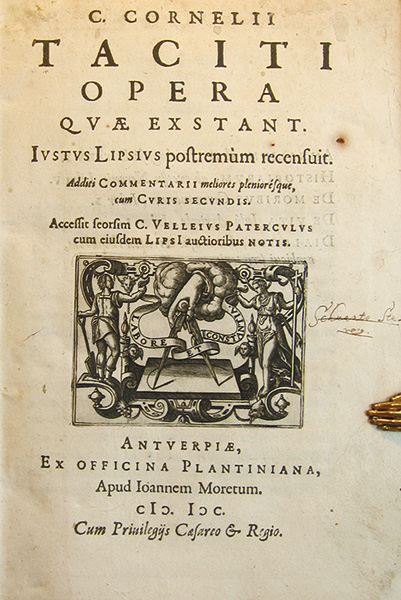
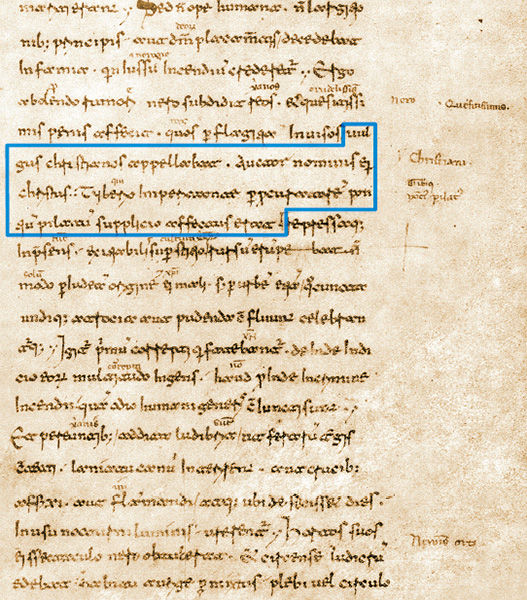


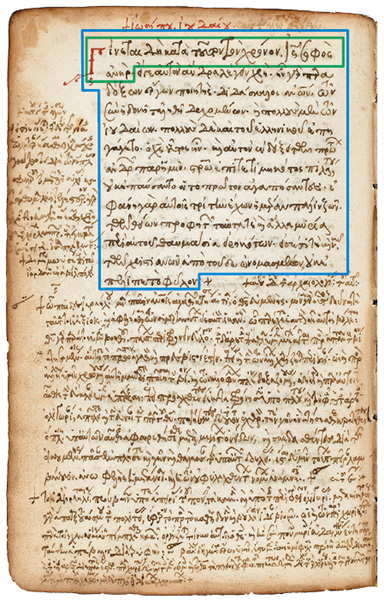

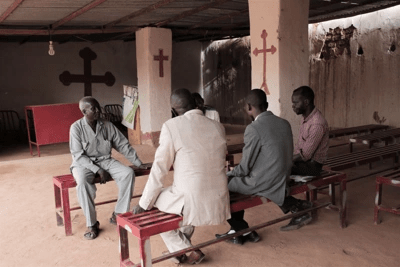




 Psalm 119: 38