A Christian response to the occult

By Christopher L. Reese and from Christian Post

Christians hold various opinions about Halloween, but one thing it certainly points to is the human fascination with the supernatural. Although many in the West pride themselves on being secular and scientific, everyone has an innate curiosity about what may lie beyond the world we experience with our five senses. History shows humans have always acknowledged the existence of the supernatural and engaged in practices to worship or manipulate it.

This is unsurprising in light of the fact that humans are spiritual beings (e.g., Matt. 10:28), and that we interact with the spiritual realm — for example, by entering into a relationship with God, who is also spirit (John 4:24). The author of Ecclesiastes tells us that God has “set eternity in the human heart” (Eccles. 3:11), and Augustine echoes this when he writes, “You have made us for yourself, O Lord, and our heart is restless until it rests in you.”1

Although humankind should seek transcendence in God, because of the fall, many seek it elsewhere. If one is coming into contact with the spiritual realm apart from God, they are interacting with the only other spiritual reality that exists, that of Satan and his demons — the world of the occult.

What C. S. Lewis perceptively wrote about demons also applies to the occult in general: “There are two equal and opposite errors into which our race can fall about the devils. One is to disbelieve in their existence. The other is to believe, and to feel an excessive and unhealthy interest in them.”2 In the same way, it is a mistake either to deny or underestimate the reality of the occult, or to spend a great deal of time and energy dwelling on it (unless one is called to a ministry that requires deeper engagement). Yet, since the occult is prevalent in the world, we should be aware, at least, of the main forms that it takes. As Paul wrote, “we are not unaware of [Satan’s] schemes” (2 Corinthians 2:11).

What is the occult and how widespread is it in the US?

The occult can be defined as “[Phenomena], events, and religious practices engaging a practitioner in a realm of the supernatural that is rooted in things secret or hidden.”3 More specifically, “The term frequently refers to certain practices (occult ‘arts’) that include divination, fortunetelling, spiritism (necromancy), and magic.”4

The US government doesn’t keep detailed records on religious affiliation, so precise numbers of occult-oriented religions aren’t available. But the Pew Research Center’s 2014 Religious Landscape Study estimated that 0.4% of the US population, about 1.3 million people, subscribe to a “New Age” religion, with most of these identifying as Wiccan or Pagan. By comparison, the Presbyterian Church (USA) has about 1.2 million members.5

In 2007, an executive with Barnes & Noble estimated the American “Pagan Buying Audience” as numbering 10 million people.6

What are some examples of occult groups and practices in the US?

Since the largest occult-oriented groups cited in the Pew survey above consist of New Age and Wiccan or Pagan adherents, we’ll examine the beliefs of those groups below, followed by a brief discussion of some of the most common occult practices. There is a tremendously diverse spectrum of beliefs among both New Agers and Pagans/Wiccans, so the following survey attempts to identify the beliefs most commonly shared by these respective groups.7

New Age movement

The New Age movement is a “loosely structured network of individuals and organizations who share a vision of a new age of enlightenment and harmony . . . and who subscribe to a common ‘worldview.’”8 As with Wiccans, there is a vast array of beliefs among New Agers (though many don’t necessarily identify with this label). Despite the diversity of beliefs, there are some commonalities, including the following.

  • An emphasis on personal experience and mysticism rather than dogma.
  • A belief in monism (all reality is one) or pantheism (everything is God).
  • Adoption of beliefs from a variety of world religions and/or mystical traditions.
  • Rejection of the idea that any single religion or belief system is exclusively true.
  • Humans are divine and don’t need salvation, but enlightenment, which involves embracing one’s true divine identity.
  • A belief in the sacredness of the earth, which is sometimes viewed as a living organism.
  • Belief that humans can bring about a utopia through enlightenment and personal transformation.
  • There are various organizations devoted to New Age beliefs, but most adherents engage in spiritual practices alone, or with a small group. Popular practices include astrology, the use of crystals (for meditation or healing), the pursuit of altered states of consciousness (sometimes using hallucinogenic drugs), attempting to interact with spiritual beings (through mediums or channeling), and the use of psychic powers to gain knowledge beyond the five senses.

Paganism/Wicca

Paganism is an umbrella term that encompasses modern attempts to revive pre-Christian religions (such as Greek, Roman, and Germanic), but mostly consists of those who identify as Wiccans (witches).9 There is no centralized Wiccan teaching authority, or set of beliefs that all adherents agree to, but the following are generally applicable.

  • An emphasis on practice and personal experience rather than dogma.
  • Belief in gods and goddesses, or pantheism (everything is God), or panentheism (everything is part of God), or animism (everything possesses a spiritual essence), or a combination of these.
  • Most Wiccans deny the existence of Satan.
  • Humans are basically good and divine, or potentially divine. Sin as defined by Christianity does not exist, but one can be in disharmony with oneself, others, or supernatural beings. Since there is no sin, salvation isn’t necessary.
  • All living things are sacred.
  • Magic (sometimes spelled with a “k” [magick] to distinguish it from tricks performed by illusionists) can be used to bring about change in people and the world, and can be used for both good and evil purposes.
  • Many Wiccans believe in some form of reincarnation.
  • Many Wiccans celebrate eight Sabbats (festivals) throughout the year, and perform rituals either privately or with other Wiccans. Some Wiccans meet in small, autonomous groups called covens.

Of these two groups, New Age beliefs are far more popular and prevalent in the US. Many of these ideas have taken root in popular culture and are promoted by celebrities, movies and TV shows, music, and bestselling books.

Practices

Necromancy

Necromancy refers to the attempt to contact the spirits of the dead in order to obtain otherwise hidden knowledge or to communicate with deceased relatives or friends, often for the purpose of emotional comfort or closure. Mediums claim the ability to act as a bridge between the living and the dead, and the attempt to contact spirits is sometimes called a séance (from the French word for “session”).

Divination

Divination is the attempt to gain knowledge of future events or other hidden knowledge by interpreting signs, contacting spiritual entities, or through supernatural powers. Divination has been practiced throughout human history and is still prevalent today. Modern forms include the use of tarot cards, psychic readings, astrology, palm reading, and Ouija boards.

Magic

Magic can be defined as the use of rituals or actions performed for the purpose of manipulating natural or supernatural forces or beings. Both necromancy and divination can be considered forms of magic, as well as the casting of spells, which often involve incantations, physical rituals, and the use of herbs, potions, or amulets.10

A Christian response

Space prohibits a detailed response to each of the beliefs and practices listed above, but the following comments briefly address some of the big-picture issues raised by the occult, along with most of the practices described above.11

First, occult beliefs and activities are an attempt to circumvent God’s authority and go beyond the revelation provided in Scripture. This temptation is as old as humankind itself and was precisely what Satan offered Adam and Eve in the garden. Satan insisted that there was knowledge to be had that God was withholding and that gaining this knowledge would elevate the human couple to a godlike status (Gen. 3).

In this light, it’s not surprising that Paul refers to false teachings as “things taught by demons” and that some who abandon the faith “follow deceiving spirits” (1 Tim. 4:1). Much of Satan’s activity in the world involves producing and disseminating ideas that contradict or distort God’s revelation.

The occult is also a form of idolatry — giving ultimate allegiance to someone or something other than God. Whether it’s the Mother Goddess worshiped by some Wiccans, or a deified self-pursued by New Agers, all occult belief systems replace the Creator who has revealed himself in Scripture with some type of counterfeit deity.

In addition, all of the categories of occult activities noted above (necromancy, divination, magic) are expressly prohibited in Scripture. As the Lord warned the Israelites before they entered the promised land:

Let no one be found among you who sacrifices their son or daughter in the fire, who practices divination or sorcery, interprets omens, engages in witchcraft, or casts spells, or who is a medium or spiritist or who consults the dead. Anyone who does these things is detestable to the Lord; because of these same detestable practices the Lord your God will drive out those nations before you (Deut. 18:10-12).

We are all tempted to try to discover what will happen in the future or to gain other knowledge not attainable through natural means. But as the late biblical scholar Merrill Unger pointed out:

“There is everything wrong in prying into the future, which God has not revealed and, for our own welfare, does not want us to know. Such knowledge is contrary to God’s Word and will, but it is the kind of knowledge that Satan and demons give. . . . Although God has revealed His general plan for the future for both the saved and the unsaved, it is not normally His purpose for us to know the specifics of that plan or the details of individual lives.”12

Thus, Moses told the people of Israel, “The secret things belong to the Lord our God, but the things revealed belong to us and to our children forever” (Deut. 29:29).

Finally, participation in occult activities opens a person up to demonic influence. This is true for both Christians and non-Christians. Paul warned the Corinthians that “the sacrifices of pagans are offered to demons, not to God, and I do not want you to be participants with demons. You cannot drink the cup of the Lord and the cup of demons too; you cannot have a part in both the Lord’s table and the table of demons” (1 Cor. 10:20-21).

The following true stories illustrate this danger.

Heath Adamson’s story

Heath Adamson, who is now a leader in his Christian denomination, became interested in the occult as a young boy. “What started out as intrigue and entertainment,” he writes, “quickly led to a lifestyle of encounter with the stuff of Hollywood lore. I remember watching a chair slide across the floor and a candle floating off the coffee table.” He continues, “I had night terrors so bad, so horrific, I was tormented for years. In junior high, the anxiety produced ulcers. Specialists couldn’t confirm what was wrong. I felt trapped, breathless, and alone.”

In high school, he had “regular encounters with the demonic realm, became addicted to numerous drugs, looked like a human skeleton, and lived life in quiet desperation.”

A classmate invited Heath to church, and afterward, at home he felt God’s presence for the first time. “I remember the warm tears falling down my face. Crying wasn’t something I did. It was almost as if the sky opened up and, for the first time in my life, I sensed real and pure love.”

Heath began to pray regularly and continued to attend church services with his classmate. On one Wednesday evening he responded to an invitation to receive Christ, and “[m]y body was supernaturally and instantaneously healed. My substance addictions vanished. It’s almost as if I met myself for the first time.” Like many others, Heath found deliverance from the occult through Jesus Christ.13

The minister and his sister

The late Christian apologist Walter Martin relates meeting a Christian minister and his wife in New York after one of Martin’s lectures. The minister shared with Martin that he had come from a family of spiritists who practiced mediumship and held séances. The minister had come to Christ many years ago, but his sister was still involved and frequently used an Ouija board to communicate with spirits. The minister was concerned about his sister, and one night he and his wife decided to confront her.

In an attempt to show his sister that the Ouija board was evil, he began asking it questions. “What do you feel toward me?” he asked the board, which then spelled out the answer “H-A-T-E.” “What do you think of the Bible?” he asked. The board replied with an obscenity. With that, the minister stood up and exclaimed, “I’ll have no more to do with this. It’s devilish,” and threw his Bible onto the middle of the board. He recounted to Martin what happened next:

At that moment, the board levitated off the table and flipped the Bible into the air with such force that it flew across the room and hit the wall. My sister and my wife screamed.

As I stood there looking at it, something smashed me in my stomach and knocked me to the floor. I was doubled over — breathless — with my head between my knees, and the only thing I could gasp was, “Jesus, Jesus, Jesus. Help!”

But I was lying on the floor in such a convincing position that my wife and sister came over to help me. When we pulled up my shirt, there was a red welt the size of a fist over my solar plexus! At that juncture, my sister recognized that I had been hit — but by nothing visible in that room. The next thing I knew, we were all having a prayer meeting. My sister came out of the occult to Christ, and the Ouija board was splintered and burned.14

Thus, the occult should never be taken lightly, even by Christians.

Deliverance from the occult

The following six steps are crucial for anyone who desires to break free from the occult.15

1. Receive Christ as your Lord and Savior

The first step in departing from the darkness and entering the light is to be born again into God’s kingdom through Jesus’ sacrificial death on the cross for your sins. Those who come to Christ are “called . . . out of darkness into [God’s] wonderful light” (1 Peter 2:9). One of the reasons Christ died was “so that by his death he might break the power of him who holds the power of death — that is, the devil — and free those who all their lives were held in slavery by their fear of death” (Heb. 2:14-15).

2. Confess the sin of involvement in the occult

Scripture declares that “If we confess our sins, [God] is faithful and just and will forgive us our sins and purify us from all unrighteousness” (1 John 1:9).

3. Destroy all occult objects

The book of Acts describes how many who had practiced sorcery in the city of Ephesus came to Christ and “brought their scrolls together and burned them publicly” (Acts 19:18-19). “Having occult items around such as game boards, cards, and statues may provide a source of temptation to return. Removing all such objects helps avoid facing that temptation and dealing with memories.”16

4. Break off all occult associations

Communication with spirits (which in reality are demons) must cease, and you must no longer associate with friends or others who remain involved in the occult. Seek out new friends who are mature Christians who can help you grow in your relationship with Christ, and find a Bible-believing church where you can worship and serve.

5. Immerse yourself in God’s Word

As Paul instructed the Christians in Rome, “Do not conform to the pattern of this world, but be transformed by the renewing of your mind. Then you will be able to test and approve what God’s will is — his good, pleasing and perfect will” (Romans 12:2). Our minds are transformed as we read, study, meditate on, and memorize God’s Word. Scripture is also the “sword of the Spirit” by which we repel Satan’s attacks (Eph. 6:17; see Jesus’ example of doing this in Matt. 4:1-11).

6. If necessary, seek additional help

If you find yourself struggling even after following the steps above, find a Christian counselor or minister to talk to, especially someone who has experience helping people formerly involved in the occult.

Notes

  1. Confessions, 1.1.
  2. C. S. Lewis, The Screwtape Letters (San Francisco: HarperOne, 2001), ix.
  3. Larry A. Nichols, George A. Mather, and Alvin J. Schmidt, Encyclopedic Dictionary of Cults, Sects, and World Religions (Grand Rapids, MI: Zondervan, 2006), 428.
  4. Ronald Enroth, “Occult,” in Evangelical Dictionary of Theology, ed. Daniel J. Treier and Walter A. Elwell (Grand Rapids, MI: Baker Academic, 2017), 608.
  5. Cited in Iqbal Ahmed, “The Many Faces of the Occult,” The Atlantic Selects, December 23, 2019, https://www.theatlantic.com/video/index/604084/pagans/. I’ve updated the estimate for the membership of the PCUSA, and tried to use a slightly more precise figure for the number of New Age adherents.
  6. Patheos, “How Many Pagans Are There?”, https://www.patheos.com/library/answers-to-frequently-asked-religion-questions/how-many-pagans-are-there.
  7. I’m indebted to the following sources for the description of beliefs and practices: Walter Martin, Jill Martin Rische, and Kurt Van Gorden, The Kingdom of the Occult, 5th ed. (Nashville: Thomas Nelson, 2008); Ron Rhodes, New Age Movement, Zondervan Guide to Cults and Religious Movements (Grand Rapids: Zondervan, 2016); Craig Hawkins, Goddess Worship, Witchcraft, and Neo-Paganism, Zondervan Guide to Cults and Religious Movements (Grand Rapids: Zondervan, 2016).
  8. Ron Rhodes, New Age Movement, Zondervan Guide to Cults and Religious Movements (Grand Rapids: Zondervan, 2016), 9-10.
  9. Sabina Magliocco, “Neopaganism,” in The Cambridge Companion to New Religious Movements, edited by Olav Hammer and Mikael Rothstein (Cambridge: Cambridge University Press, 2012), 150–66.
  10. “Magic (Supernatural),” in Wikipedia, https://en.wikipedia.org/w/index.php?title=Magic_(supernatural)&oldid=1110907032.
  11. For a more in-depth critique, see the volumes listed in footnote 7.
  12. Merrill F. Unger, What Demons Can Do to Saints (Chicago, IL: Moody Publishers, 1991), 26.
  13. Heath Adamson, “Her Prayers Helped Pull Me Out of Occult-Fueled Madness,” ChristianityToday.com, https://www.christianitytoday.com/ct/2018/november/heath-adamson-prayers-helped-pull-occult-madness.html.
  14. Martin, Rische, and Gorden, The Kingdom of the Occult, 5th ed. (Nashville: Thomas Nelson, 2008), 9-10.
  15. This list is a modified version of the one found here: Patrick Zukeran, “The World of the Occult: A Christian Worldview Perspective,” Probe Ministries (blog), May 27, 2003, https://probe.org/the-world-of-the-occult/.
  16. Ibid.

Originally published at The Worldview Bulletin Newsletter. 

Christopher L. Reese (MDiv, ThM) is a writer, editor, and journalist. He is the founder and editor of The Worldview Bulletin and a general editor of the Dictionary of Christianity and Science (Zondervan, 2017) and Three Views on Christianity and Science (Zondervan, 2021). His work has appeared in Christianity Today, Bible Gateway, Beliefnet, Summit Ministries, and other sites.     

Reading the Bible brings about human flourishing

During trying times like these, with many storms upon us (literally and figuratively), no book provides greater comfort than the Bible.

Yet how many actually read it? Although there are studies noting a drop of Bible-reading among Americans in recent times, nonetheless, 47 million are reported to be “Scripture engaged.” No other book would come close to that kind of readership.

As of this writing, the education department of the state of Oklahoma is planning to purchase 55,000 Bibles for the public schools. I’m sure the left is gnashing their teeth over such a plan.

But historically the Bible was the reason that education for the masses was developed in America in the first place. The Puritan forefathers created schools for the masses (a forerunner to the public schools), so that children could learn to read, so they could read the Bible for themselves.

Someone might argue, “Well, that was the Puritans. But surely the founding fathers didn’t agree with that.”

But actually, they did argue for that in 1787 and in 1789 when the founders adopted the Northwest Ordinance. As new territories became states in the newly formed United States, they were to follow the same basic template.

Here’s what Article III of the Northwest Ordinance had to say about schools, which were voluntary at that time and often run by churches: “Religion, morality, and knowledge, being necessary for good government and the happiness of mankind, schools and the means of education shall forever be encouraged.”

The Bible was the chief textbook in one way or another for the first 200-300 years of America — and that’s when the children could read, because of it. It was the Bible that gave birth to Harvard, William and Mary, Yale, Princeton, Dartmouth, Brown, and so on.

It was only when the schools explicitly went against the Scriptures that American education went off the rails. Now there are major portions of society who can’t read, despite years of schooling.

Meanwhile, is there a correlation between reading the Scriptures and human flourishing?

Many social science studies have shown that church is good for society, that attending church on a regular basis lengthens your life (on average), and that attending church often improves the quality of your life as well.  Dr. Byron Johnson of Baylor’s Institute for Studies of Religion has spent years assessing studies on the impact of applied religion (generally, Christianity) leading to positive personal and societal improvement. Dr. Johnson even wrote a book showing how Christian belief and practice help lower criminal behavior. The book is appropriately titled, More God, Less Crime.

But what about Bible reading? A recent study that Dr. Johnson wrote, along with M. Bradshaw and S. J. Jang, is entitled, “Assessing the Link Between Bible Reading and Flourishing among Military Families.”

Before exploring their results (which were positive), the study mentions earlier related findings: “Previous research shows salutary associations between multiple dimensions of religiosity (including reading sacred texts) and different aspects of flourishing (e.g., physical health, psychological well-being, character and virtue, social connections and support).”

The abstract of the study noted: “Bible reading may promote overall mental, physical, and social well-being.”

They list at three of their findings on how the Bible fosters human flourishing: “First, Bible reading is likely to promote psychological well-being by helping individuals develop a close relationship with a loving and caring God who engages in the lives of individuals.”

They continue: “Second, Bible reading may facilitate feelings of divine control that help cope with stress. Third, positive and encouraging messages in the Bible may also promote purpose in life and guidance seeking, which may also enhance flourishing.”

I have found personally that when I started reading the Bible myself as a young man, it was such a great source of knowledge, for wisdom, for direction, for personal relations, etc.

The Bible was important to great Americans like George Washington, whose writings and speeches are filled with Biblical phrases, such as “And every man shall rest under his own vine and fig tree, and there shall be none to make them afraid.” This was Washington’s vision for America.

Even Jefferson collected many of the teachings of Jesus (including a few miracles) in a document for Native Americans, so they could benefit from them, just as we have. People mistakenly call this unpublished work “The Jefferson Bible.” But as Jefferson noted once, the morality of Jesus is the most sublime and greatest moral teaching of all time.

President Lincoln called the Scriptures “the best gift God has ever given men,” through which we learn about the Savior.  Millions of Americans have revered the Bible.

As Ronald Reagan once said of the holy book, “Inside its pages lie all the answers to all the problems that man has ever known.”

To promote human flourishing, spread the message of the Scriptures.

Jerry Newcombe, D.Min., is the executive director of the Providence Forum, an outreach of D. James Kennedy Ministries, where Jerry also serves as senior producer and an on-air host. He has written/co-written 33 books, including George Washington’s Sacred Fire (with Providence Forum founder Peter Lillback, Ph.D.) and What If Jesus Had Never Been Born? (with D. James Kennedy, Ph.D.). http://www.djkm.org?    @newcombejerry      www.jerrynewcombe.com

Source: Christian Post

Formed in Secret, Revealed in Time

In the early 1950s, oil and gas were discovered by seismograph crews deep in the earth on land owned by many of my relatives in South Louisiana. In 1957, the first well was drilled on my grandparents’ farm on what became known as the Perry Point Oil Field. Over the next few years, many wells were drilled, and most became oil producers that revolutionized the lives of those who had leased acreage within the survey pool. Rice farmers who owned lots of acreage were richly blessed.

The greatest resources discovered by man have been formed by unusual events and elements deep in the earth over thousands of years. This was all done in secretly, known only to its Creator, Almighty God. In His infinite wisdom, God knew that there would be a time when man would need resources to sustain his progress and existence. That which He formed in secret has been revealed in the fullness of time by man’s increasing knowledge and ingenuity.

There is a greater creation of God that surpasses the temporal value of oil, gas, coal, gold, diamonds, and all precious metals, which were also formed in secret. The Psalmist identifies that in Psalm 139:13-18: “For You created my inmost being; You knit me together in my mother’s womb. I praise You for I am fearfully and wonderfully made; Your works are wonderful; I know that full well. My frame was not hidden from You when I was made in the secret place. When I was woven together in the depths of the earth, Your eyes saw my unformed body. All the days ordained for me were written in Your book before one of them came to be. How precious to me are Your thoughts, O God! How vast are the sum of them!”

You and I are extremely valuable in God’s sight. He allowed His own son, Jesus Christ, to be involved in His creation and then to provide through His earthly birth, life, death, resurrection, and ascension to Heaven the promise of salvation and hope of eternal life for all who will believe in His name. Remember, God Loves You!

Author: Chaplain Ron Perry with Marketplace Chaplain

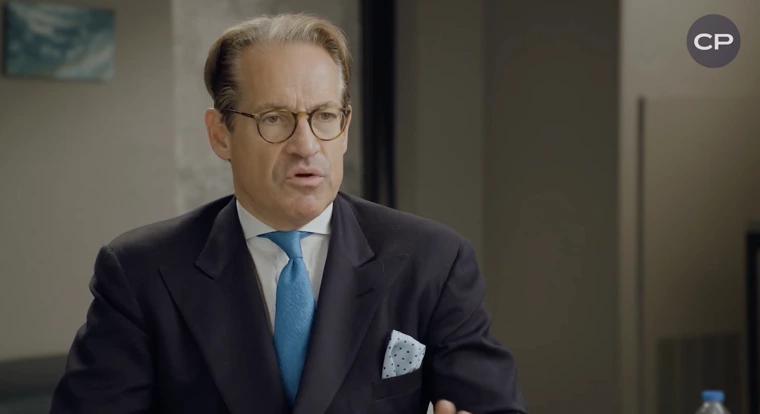
Eric Metaxas calls on the Church to ‘wake up’ or face disastrous consequences: ‘Everything’s at stake’

By Leah MarieAnn Klett, Assistant Editor 

ORLANDO — Eric Metaxas isn’t afraid to speak difficult truths into an increasingly secularized culture, and he’s issuing a clarion call to the American Church to do likewise, warning that neglecting this call will lead to disastrous consequences.

“There are many pastors and Christian leaders being silent in the face of evil today,” the bestselling author and radio host told The Christian Post. “They are not all consciously working for the devil, they are, nonetheless, effectively working for the devil because they are unaware that what they’re doing is not what God calls His Church to do.”

Metaxas penned his latest book, Letter to the American Church, out of a conviction that the Church must “wake up” to the realities of evil and stand for biblical truth. In it, he draws from both history and the Bible to highlight the need for the church to speak out against societal evils.

“There are all kinds of figures from history and in the Scripture who understand that, ‘My duty is to God, and if that makes me unpopular, if that makes me attacked, who cares?’” he said.UnmuteAdvanced SettingsFullscreenPauseUp Next

According to Metaxas, the Church’s silence on critical issues effectively aids the forces of evil.

In his book, he draws sobering parallels between the modern church and the German Church of the 1930s, in which “pastors were somehow fooled into buying the idea that … we’re not supposed to go against the governing authorities.”

“What the German church did in the ’30s, they had no idea that they were getting this stuff wrong. They had all kinds of theological reasons why they thought it was good not to comment on politics,” he said. “We now see what the results were; it was a nightmare out of the pit of Hell. The evil that was unleashed because of the silence of the German Church is part of the ugliest history imaginable.”

“We look at Germany, and it’s very easy for us to say, ‘Oh, they should have spoken out against the Nazis,’” he added. “But we have pastors today who are effectively not speaking out against the Nazis. The Chinese Communist Party is as wicked as the Nazis ever were, with infinitely greater technology. They are doing satanic things. The Uighur Muslims in China are being murdered for their organs, which can be sold for a lot of money that accrues to the Communist Party. Where is the Church on that issue? How can you not be outraged?”

The Bonhoeffer: Pastor, Martyr, Prophet, Spy author added that many Americans have been sheltered from the harsh realities faced by others in the world and thus fail to recognize the value of their freedoms and the need to defend them. Just like the German Church, he said, the American Church has grown “complacent.”

“The German Church woke up when it was too late, and evil overtook that nation in Europe,” he said. “The blame lies at the foot of the German Church. And I think the same can be said of the American Church today if we don’t wake up.”

“What we have is a blessing from God, entrusted to us to protect, to keep and to give to our children and grandchildren,” he stressed. “If you don’t get that, it just sort of drifts away. We are at a moment where it’s drifting away very quickly.”

Metaxas contended that the cultural zeitgeist and misguided interpretations of biblical principles have led to the belief that the Church should remain apolitical — an idea he dismisses as nonsensical. The Church, Metaxas said, must understand its duty to God and not prioritize personal comfort or congregational numbers over speaking the truth.

“Imagine if a pastor got up and said, ‘I have no position on slavery. I have no position on legalized racism and apartheid. I have no political position on Jim Crow laws.’ You wouldn’t go to that church. You’d say, ‘What an idiot, what a moral pygmy that he thinks that he can be a pastor and not have an opinion on those issues,’” Metaxas said. 

Pastors are called to speak out on all issues that affect human lives and dignity, he stressed: “You have an obligation to speak truth on these issues,” he said. “So any pastor that has his head in the sand on these issues, God will hold him responsible.”

While avoiding controversial or divisive topics might seem appealing, the author emphasizes that it ultimately “devalues the Gospel” and hinders evangelism.

“For every person that’s going to get ticked off that you said something, there’s another person that’s going to say, ’Thank goodness somebody is saying this; I didn’t know where to look anymore.’”

People are “looking for leadership from Christians,” Metaxas said. He pointed out that pastors who have been boldly speaking out against the “lunacy” of transgender ideology, cultural Marxism, critical race theory, open borders and defunding the police have seen their congregations surge in attendance. 

“Things have gotten so bad that a lot of people finally are understanding, ‘OK, maybe I missed something. Maybe we had it so good that we forgot that evil is still alive, that we haven’t defeated evil, and we have to do what God calls us to do in the midst of it, and we haven’t been doing it,’” he said. 

Historically, when the Church has drifted along with culture,” it has gone “dramatically badly,” Metaxas said. 

“The issues are always different issues, but the results are always the same, and the guilt is always the same. God wants us to be alive to what is happening,” he said. 

“Everything’s at stake. God has always looked to His Church, and we have dramatically disappointed Him in the past. I don’t believe it’s His will that we disappoint him this time, but it really is up to individual Christians.”

Letter to the American Church is available everywhere books are sold. 

Leah M. Klett is a reporter for The Christian Post. She can be reached at: leah.klett@christianpost.com

Kirk Cameron: The Republic Depends on Us Recapturing the Hearts, Minds of Our Children

Source: Breitbart

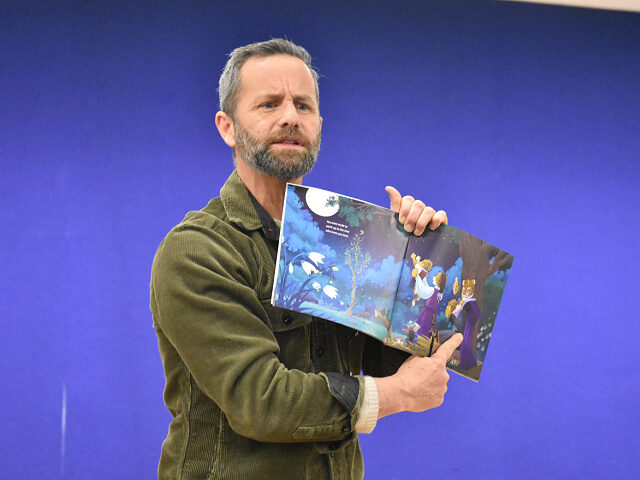
The future of the republic depends on those who are willing to recapture the hearts and minds of our children, said actor, director, and author Kirk Cameron during an interview Monday on SiriusXM’s Breitbart News Daily with host Alex Marlow.

“I believe parents are realizing the most sacred job in the world and the most powerful force for good belongs — wait for it — to parents,” Cameron explained:

That’s why God gives children to moms and dads, not the government. Whoever succeeds in telling children the stories gets to control the future. Dictators know that, patriots know that, liberty loving people understand that. And we can’t outsource parenting to public libraries and public schools. That’s why I’m doing this. That’s why I’m hitting the road and I’m joining forces with grandparents, with parents, with patriots, concerned Americans, to prayerfully and purposefully take back the hearts and minds of our children. The Republic depends upon it.

His comments come after a massive crowd filled the Indianapolis Public Library’s main branch on December 29 to hear him read his recently published children’s book, As You Grow, Breitbart News reported.

“The library organization initially denied Cameron the opportunity to read the book for its story hour but later caved and allowed the event to happen,” the Breitbart News reported, adding Cameron has criticized libraries that barred him from doing a public reading of his book but offered “drag queen story hours” for children.

As You Grow, teaches young readers about love, joy, and gentleness, according to the BRAVE Books website.

When asked what drove him to use different forms of media to promote positive values about America and his faith, Cameron said, “I’ve got great parents, I’ve got a Bible and a newspaper, and a little bit of history tells me that if good people don’t commit to doing the right thing over the long haul, we lose.”

“History is replete with examples of that and what we have in America is rare and precious, it’s called liberty. It’s called freedom, and that’s what I want to fight for for my kids,” he added.

“If we don’t want to have blood on our hands and be filled with guilty consciouses in our sunset years, we’ve got to do everything we can to plant the seeds of liberty, of faith, and morality, so that our children can have a bright and hopeful future. That’s why I’m doing this,” Cameron concluded.

Faux term ‘Christian nationalist’ used in political warfare

By Jorge Gomez, Op-ed contributor, Christian Post (November 10, 2022), originally published at First Liberty

The label “Christian nationalist” is appearing more frequently and is being used to silence people of faith, according to experts.

Dr. Mark David Hall, an author and professor at George Fox University, recently discussed the history behind the term. He argues that the political Left started using it well over a decade ago “to label Christians who bring their faith into the public square for ends they don’t like.”

National security and intelligence expert Dr. Stephen Coughlin similarly argues the label is part of a politically driven effort to suppress religious opinions that defy modern orthodoxy and Leftist ideology:

“What they did was they created a faux term ‘Christian nationalism,’ and they gave it all these negative attributes and then used that to attack Christians. It’s part of what you call an ‘intersectional line of attack’ in a political warfare model, which is the Maoist insurgency model, which we believe is the premier principal form of Marxism.”

Former congresswoman and current dean of the Regent University School of Government, Michele Bachmann, contends the surge in use is no coincidence, especially so close to a midterm election. She explains:

“It’s all about holding on to power. That’s what it’s about. There’s only one party in power now in the United States, in Washington, D.C. They don’t want to let it go … And what they have seen is the power of the Church, the epicenter of power in the United States. Opposing their agenda is the Church and the principles of the Bible. They don’t like pastors preaching on issues. They don’t like congregants being inspired from the Bible. And so that’s why we’re the target. They want to silence us.”

What exactly does “Christian nationalism” mean? There is no settled definition, but broadly speaking, radicals use “Christian nationalism” to conflate racism, white supremacy and identity, religion, and patriotism. They often add in fascism, theocracy, and authoritarianism.

An attack on religious liberty and America’s founding values

The use of the “Christian nationalist” label contradicts the principles and values of our country. Its perpetual misuse is especially harmful to religious liberty.

Among the many problems is how it demonizes public prayer and virtually any other commonplace religious activity. Whether a political leader or an everyday person, anytime there is a public expression of faith, the term is leveled against them as wanting to establish a Christian theocracy.

In other words, if a citizen exercises their constitutionally protected and inalienable right to religious freedom, that person runs the risk of being labeled a “Christian nationalist.” And once you carry that label, it essentially means you’re a pariah, someone who should be vilified and not allowed to participate in the marketplace or society.

This, of course, is nothing new. As Dr. Coughlin explained, this is a tactic straight out of the Marxist playbook. Whenever a political force wants to wield power and authority, religious people and religious liberty are the first ones on the target list.

Radicals and dictators know fully well that houses of worship and people of faith are the ultimate check on authoritarian power. Their allegiance is not to the government. A free people know their loyalty is to God above all, the true provider and source of our freedoms. If a tyrant succeeds at destroying religious freedom and religious institutions, they can remove the most effective challenge to their rule.

Vilifying the faithful is a timeless tool of authoritarians. Liberally tossing around the “Christian nationalist” label and slapping it on anyone who lives out their faith is a direct attack on religious freedom. Make no mistake. Radicals want to normalize the use of this loaded term to chip away and destroy one of the building blocks of our republic.

Loving God and country

The political Left regularly screams “Christian nationalism” when a person of faith shows patriotism and pride in their country. If you say America was founded on Judeo-Christian principles, you’ll quickly be accused of trying to establish a theocracy. But that’s simply not true and is based on a wildly distorted view of our nation’s history.

This use of “Christian nationalism” typically relies on a misguided understanding of the “separation of Church and State,” which radicals interpret to mean that there can be no intersection between religion and government. They claim that any religious expression or influence in the public square cannot be tolerated, because it would violate this strict wall of separation.

Understood in context, however, the “separation of Church and state” does not mean religious exercise or prayer is banned on government property. This phrase doesn’t even appear in the text of the Constitution. The original intent was never to keep religion locked inside the walls of a church or synagogue. Instead, it was to protect houses of worship and religious people from state intrusion and harassment. It’s misleading to argue that government and religion should never, under any circumstances, be mixed together.

Additionally, no matter how much secularists or the political Left deny it, the United States was, in fact, founded by people who valued biblical principles. From George Washington to Thomas Jefferson, James Madison, and other Founders, an overwhelming majority of them expressed belief in the Divine, a Creator who is the ultimate grantor of our rights and freedoms, as is clearly referenced in the Declaration of Independence. One of the foremost constitutional theorists of the founding generation, John Adams, observed, “Our Constitution was made only for a moral and religious People. It is wholly inadequate to the government of any other.”

America’s Founders were a prime example that faith and patriotism are not mutually exclusive. They demonstrated that it’s possible to serve God and be committed to the American constitutional experience — to the cause of liberty, human rights, representative democracy, and the rule of law.

More than two centuries later, a strong majority of Americans still believe in this truth. Pew Research recently found 60% of Americans think the Founders originally intended the U.S. to be a “Christian nation.” However, 52% said the federal government should never declare an official religion. This shows that most people believe in the core principles of the First Amendment. That is, we can freely worship God while also cherishing our system of government.

Being a religious person who also loves their nation does not make one a “Christian nationalist.” Quite the opposite. Someone who serves God and country is embodying the best of America’s traditions. We’re a nation built on religious freedom, which means Christians — and people of any faith — do not have to be forced to choose between loving our republic and loving the One True God.

Self-Governing

“We have staked the whole future of American civilization not on the power of government, far from it. We have staked the future of all of our political institutions upon the capacity of each and all of us to govern ourselves according to the Ten Commandments of God.”– James Madison, Primary Author of the U.S. Constitution, Fourth President of the United States of America